Peony Seafood Restaurant
Peony Seafood Restaurant has anchored Oakland's Chinatown dining scene at 388 9th Street for decades, drawing a loyal Chinese-American clientele that returns for its dim sum service and Cantonese seafood. The dining room operates on the scale of a traditional Hong Kong-style banquet hall, making it a reference point for the neighborhood's broader Cantonese tradition rather than a boutique alternative to it.
Pearl is the En Primeur Club membership app — saves, bookings, and concierge access live there. Same editors, same standards.
- Address
- 388 9th St STE 288, Oakland, CA 94607
- Phone
- +15102868866
- Website
- peonyrestaurant.com
- Directions
- Get directions
 Saves & bookings on Pearl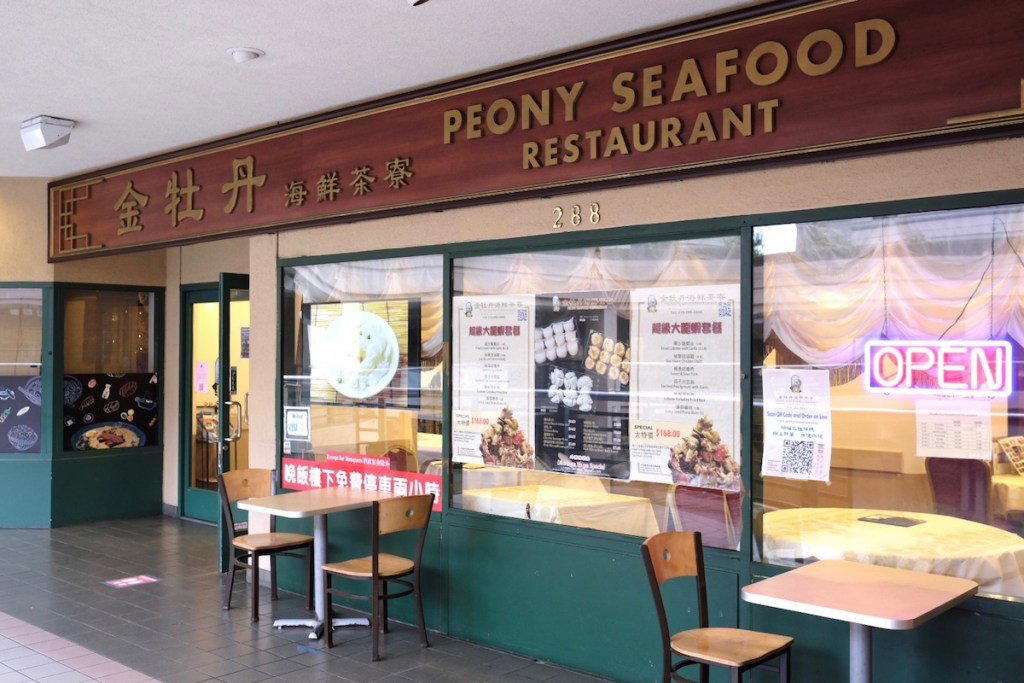
What the Room Tells You Before the Food Arrives
The corner of 9th and Webster in Oakland's Chinatown has its own logic. On weekend mornings, the pavement outside fills with families who have already done the mental math: Peony Seafood Restaurant, on the second floor of the Pacific Renaissance Plaza at 388 9th Street, runs one of the largest dim sum operations in the East Bay, and the crowd outside is not waiting because they have nowhere else to go. They are waiting because they have been here before and they are coming back.
That kind of loyalty is a category signal in itself. In a city where the dining conversation has increasingly shifted toward newer formats, the tasting-menu rooms south of Lake Merritt, the counter-service specialists along Telegraph, the Cantonese banquet hall has held its own gravitational pull, particularly among the Chinese-American families who treat it less like a restaurant and more like a recurring appointment. The room inside Peony is large by any measure, the kind of scale that makes sense only in the context of Hong Kong-style dim sum service, where carts, timing, and volume are as much a part of the format as the food itself.
The Regulars and What They Already Know
One instructive way to read a restaurant like Peony is to watch what the regular tables order without looking at the menu. Dim sum service at a Cantonese banquet hall of this scale operates partly through official channels, the carts, the printed tick-sheet, and partly through institutional memory. Families who have been coming for years know which carts to flag early, which items move fast on a Sunday, and when to arrive to secure a table without a long wait on the street below.
This is the unwritten operating knowledge of a room with real regulars, and it separates Peony from restaurants that serve a similar menu to a more transient clientele. The Cantonese dim sum tradition is built on exactly this kind of accumulated familiarity: har gow skins that hold their shape at the right temperature, char siu bao with the right balance of filling to dough, turnip cake with a crust that arrives from the pan rather than sitting under a heat lamp. These are not dishes that reveal themselves on a first visit. They reward return.
Oakland's Chinatown has sustained this tradition across generations, in part because the neighborhood's Chinese-American population has remained residentially dense enough to support restaurants that serve a genuine local base rather than a tourist or destination-dining audience. Peony sits inside that dynamic, operating at a scale that would not be viable without a loyal, recurring clientele. That scale is also what gives it a comparable set that looks different from the mid-century Cantonese restaurants that once defined San Francisco's Chinatown: it is closer in format and ambition to the large dim sum houses of the San Gabriel Valley than to a small neighborhood teahouse.
For context on how Oakland's dining scene has diversified around this Chinatown anchor, the broader restaurant range is worth mapping: 8th St Cafe 文記茶餐廳 operates in a smaller, more casual register of the same Cantonese-adjacent tradition, while spots like 3 Bottled Fish and Agave Uptown represent the city's wider culinary spread. alaMar Dominican Kitchen and Alem's Coffee point further to Oakland's cross-cultural range.
Cantonese Seafood in the Banquet Hall Format
The seafood component of Peony's identity matters as much as the dim sum. Cantonese seafood cooking at the banquet-hall level operates on different terms than the fish-forward tasting menus found at places like Le Bernardin in New York City or Providence in Los Angeles. The Cantonese approach is less about the arc of a meal and more about technique applied to specific ingredients: live tank seafood steamed with ginger and scallion, whole fish with a sauce that does not overwhelm the flesh, crab preparations that require the table to work for the reward.
These dishes are not ordered casually. A table of regulars at Peony on a Saturday evening will have already decided what they want before they sit down, and the decisions will be shaped by what is in the tank that day. That is a different kind of engagement with a menu than you find at more concept-driven restaurants. For reference, tasting-menu formats at places like Lazy Bear in San Francisco, Alinea in Chicago, or Single Thread Farm in Healdsburg control the sequence entirely; the Cantonese banquet table runs on a negotiation between the kitchen's available product and the accumulated knowledge of the people ordering. The formats are incomparable in intent, which is exactly the point.
The broader tradition Peony operates within has its own critical reference points: 8½ Otto e Mezzo Bombana in Hong Kong represents the formal end of that city's dining spectrum, while Oakland's Cantonese restaurants sit closer to the everyday institution end. For American fine-dining comparison, restaurants like The French Laundry in Napa, Addison in San Diego, Blue Hill at Stone Barns in Tarrytown, The Inn at Little Washington, Atomix in New York City, and Emeril's in New Orleans occupy an entirely different tier in both format and price. Peony operates on volume, occasion, and tradition rather than on scarcity and curation.
Know Before You Go
| Address | 388 9th St, Suite 288, Oakland, CA 94607 (Pacific Renaissance Plaza, second floor) |
| Neighborhood | Oakland Chinatown |
| Format | Large-format Cantonese banquet hall; dim sum service and seafood dining |
| Timing | Weekend dim sum draws the longest waits; arriving before peak service hours reduces time outside |
| Getting There | BART to Oakland City Center/12th Street station; the Pacific Renaissance Plaza is a short walk into Chinatown |
Comparable Options
Comparable venues nearby, for context on price, style, and recognition.
| Venue | Cuisine | Price | Notes |
|---|---|---|---|
| Peony Seafood RestaurantThis venue — the venue you are viewing | Traditional Cantonese Dim Sum & Seafood | $$ | Not listed |
| Big Dish Restaurant | Chinese Dim Sum and Rice Plates | $$ | Chinatown |
| Dragon Gate Bar and Grille | Taiwanese-Chinese Fusion | $$ | Jack London Square |
| Spices! 3 | Authentic Sichuan & Taiwanese Chinese | $$ | Downtown |
| Shanghai Restaurant | Shanghai Chinese | $$ | Chinatown |
| Classic Guilin Rice Noodle | Authentic Guilin Rice Noodles | $$ | Chinatown |
Continue exploring
More in Oakland
Restaurants in Oakland
Browse all →
Bars in Oakland
Browse all →
Hotels in Oakland
Browse all →

At a Glance
- Classic
- Lively
- Well Known
- Group Dining
- Casual Hangout
- Family
- Standalone
- Beer Program
Current opening hours
- Monday
- 10:30 AM–2:30 PM, 5–9 PM
- Tuesday
- Closed
- Wednesday
- 10:30 AM–2:30 PM, 5–9 PM
- Thursday
- 10:30 AM–2:30 PM, 5–9 PM
- Friday
- 10:30 AM–2:30 PM, 5–9 PM
- Saturday
- 10 AM–2:30 PM, 5–9 PM
- Sunday
- 10 AM–2:30 PM, 5–9 PM
Hours can change for holidays and private events. Last verified .
Casual, bustling dim sum hall atmosphere with moderate noise levels; located on the second floor of Pacific Renaissance Plaza with authentic Hong Kong-style dining experience.