Classic Guilin Rice Noodle
Classic Guilin Rice Noodle at 188 10th St brings one of southern China's most distinctive noodle traditions to Oakland's Chinatown-adjacent corridor. The kitchen focuses on the rice noodle preparations associated with Guilin, Guangxi, a style defined by its clear, deeply savory broth and layered toppings. For Oakland diners tracking regional Chinese specificity, this address occupies a different register from the Cantonese-dominant options nearby.
Pearl is the En Primeur Club membership app — saves, bookings, and concierge access live there. Same editors, same standards.
- Address
- 188 10th St, Oakland, CA 94607
- Phone
- (510) 250-9333
- Website
- fencuisine.com
- Directions
- Get directions
 Saves & bookings on Pearl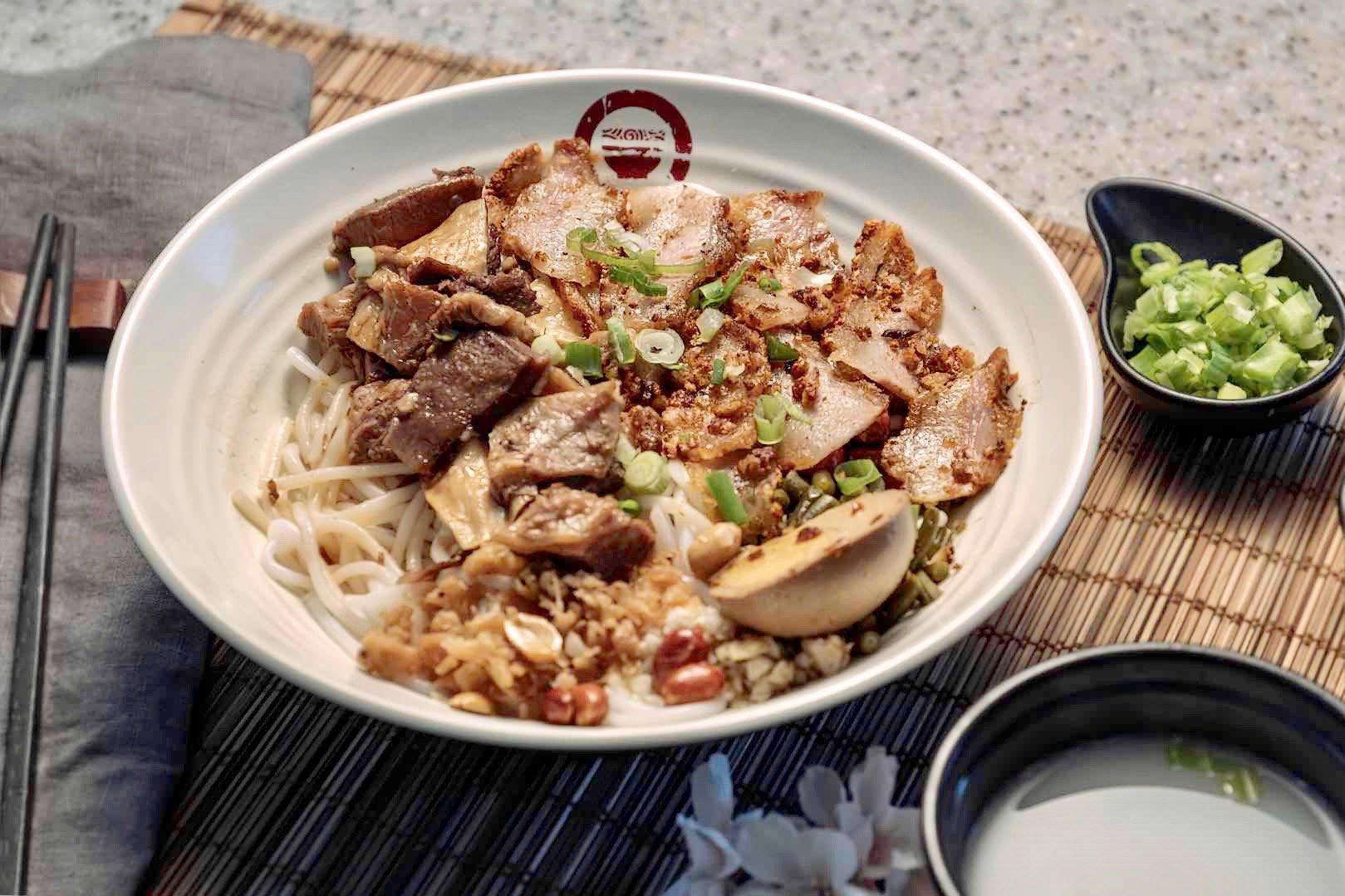
A Southern Chinese Noodle Tradition in Oakland's Chinatown Corridor
Oakland's 10th Street, running through the edge of the city's Chinatown district, carries a particular kind of street-level density: phone repair shops, import grocers, and a rotating cast of small restaurants serving communities that have been here for generations alongside newer arrivals. The block around 188 10th St sits inside that zone, where the sensory cues are less curated destination dining and more functional neighbourhood eating, the smell of anise and dried chili drifting from kitchen vents, the sound of Cantonese and Mandarin overlapping at the counter, fluorescent light reflecting off laminate tables. It is, in other words, the kind of context in which Guilin rice noodles make sense.
Guilin mi fen, the rice noodle style originating in Guilin, in the Guangxi Zhuang Autonomous Region of southern China, is one of the country's most regionally specific comfort foods. The broth is the diagnostic element: slow-cooked, typically with pork bones and a proprietary spice blend that varies by cook and family, arriving clear but carrying a depth that takes hours to build. The noodles themselves are round and slightly firm, made from rice flour, and serve as a neutral base for the toppings and broth rather than as the star. At specialist shops in Guilin itself, the toppings, braised pork, fried soybeans, pickled long beans, chili paste, scallion, are laid out buffet-style and diners customize their bowl at the counter. That format, which collapses the distance between kitchen and eater, is part of what makes the dish feel democratic even when the cooking underneath is technically demanding.
Where Classic Guilin Rice Noodle Sits in Oakland's Chinese Food Scene
Oakland's Chinese food geography is more layered than San Francisco's tends to get credit for, and Oakland's Chinatown has historically been anchored in Cantonese cooking, the cuisine of the immigration waves that built the neighbourhood from the late 19th century onward. Guilin-style cooking represents a different regional lineage entirely: Guangxi rather than Guangdong, a cuisine with stronger Southeast Asian adjacency and a spice profile that reads differently from the gentler aromatics of Cantonese soups.
The emergence of Guilin rice noodle specialists in American cities has tracked, roughly, with the growth of Mandarin-speaking immigrant communities and the broader diversification of Chinese regional cuisine in the US market. Cities like Los Angeles and the San Gabriel Valley developed this earlier and at scale; the Bay Area has followed more gradually. Within Oakland specifically, a restaurant focused on this single regional format occupies a relatively narrow niche, distinct from the broader Cantonese offer at places like 8th St Cafe 文記茶餐廳 nearby, and operating at a price point and format entirely removed from the tasting-menu tier represented by venues like Lazy Bear in San Francisco or Single Thread Farm in Healdsburg.
The comparison that matters here is not against fine dining, not against Le Bernardin in New York City or The French Laundry in Napa or Atomix in New York City or Providence in Los Angeles or Addison in San Diego or Smyth in Chicago or Blue Hill at Stone Barns in Tarrytown or The Inn at Little Washington or Emeril's in New Orleans or Atelier Moessmer Norbert Niederkofler in Brunico. The comparison is against other regional Chinese specialists, and within that set, a restaurant that commits to a single noodle tradition and does it with consistency earns a different kind of credibility than one covering ten cuisines under a pan-Asian banner.
Other spots along Oakland's Chinatown edge anchor themselves in similarly specific traditions. 3 Bottled Fish operates in its own defined lane, as does Agave Uptown further north, and alaMar Dominican Kitchen for Caribbean-focused cooking. The neighbourhood's food culture has always run on this principle of community-specific restaurants serving what they know deeply, rather than what the broadest possible market wants. Alem's Coffee operates on the same logic for Ethiopian coffee ceremony. These are not restaurants optimized for algorithm-driven discovery; they are optimized for the people who already know what they want.
The Sensory Register of a Guilin Noodle Shop
The experience of eating Guilin rice noodles in a specialist shop is governed by smell and temperature more than by visual presentation. The broth arrives hot enough to produce visible steam, and the spice blend, typically including star anise, cassia bark, and dried tangerine peel alongside more shop-specific aromatics, reaches the nose before the bowl reaches the table. The noodles themselves are white and smooth, with a slight translucency, and they carry the broth rather than competing with it. The textural contrast comes from the toppings: something crisp (often fried soybeans or peanuts), something yielding (braised meat), something sharp (pickled vegetables or chili oil), and scallion across the leading for brightness.
This is a format in which repetition is a virtue. Regulars know what they want before they sit down, and the rhythm of a well-run Guilin noodle counter is fast and low on ceremony. That efficiency is part of what makes it distinctive against the broader Oakland dining scene, which has moved in recent years toward longer, more deliberate meal formats. The quick-service noodle bowl sits at the opposite end of that spectrum, and for the midday or early-evening diner who wants depth of flavour without a two-hour commitment, it fills a gap that most of the city's more ambitious restaurants are not trying to fill.
Category Peers
Comparable venues nearby, for context on price, style, and recognition.
| Venue | Cuisine | Price | Notes |
|---|---|---|---|
| Classic Guilin Rice NoodleThis venue — the venue you are viewing | Authentic Guilin Rice Noodles | $$ | Not listed |
| Gourmet Delight Restaurant | Cantonese Roasted Meats Deli | $ | Chinatown |
| Shanghai Restaurant | Shanghai Chinese | $$ | Chinatown |
| Dragon Gate Bar and Grille | Taiwanese-Chinese Fusion | $$ | Jack London Square |
| Shan Dong | Shandong-Style Chinese Noodles & Dumplings | $$ | Chinatown |
| Peony Seafood Restaurant | Traditional Cantonese Dim Sum & Seafood | $$ | Chinatown |
Continue exploring
More in Oakland
Restaurants in Oakland
Browse all →

Bars in Oakland
Browse all →
Hotels in Oakland
Browse all →








At a Glance
- Classic
- Casual Hangout
Current opening hours
- Monday
- 10:30 AM–6 PM
- Tuesday
- 10:30 AM–6 PM
- Wednesday
- 10:30 AM–6 PM
- Thursday
- 10:30 AM–6 PM
- Friday
- 10:30 AM–6 PM
- Saturday
- 10:30 AM–6 PM
- Sunday
- 10:30 AM–6 PM
Hours can change for holidays and private events. Last verified .
Casual neighborhood spot serving traditional Chinese noodle dishes.