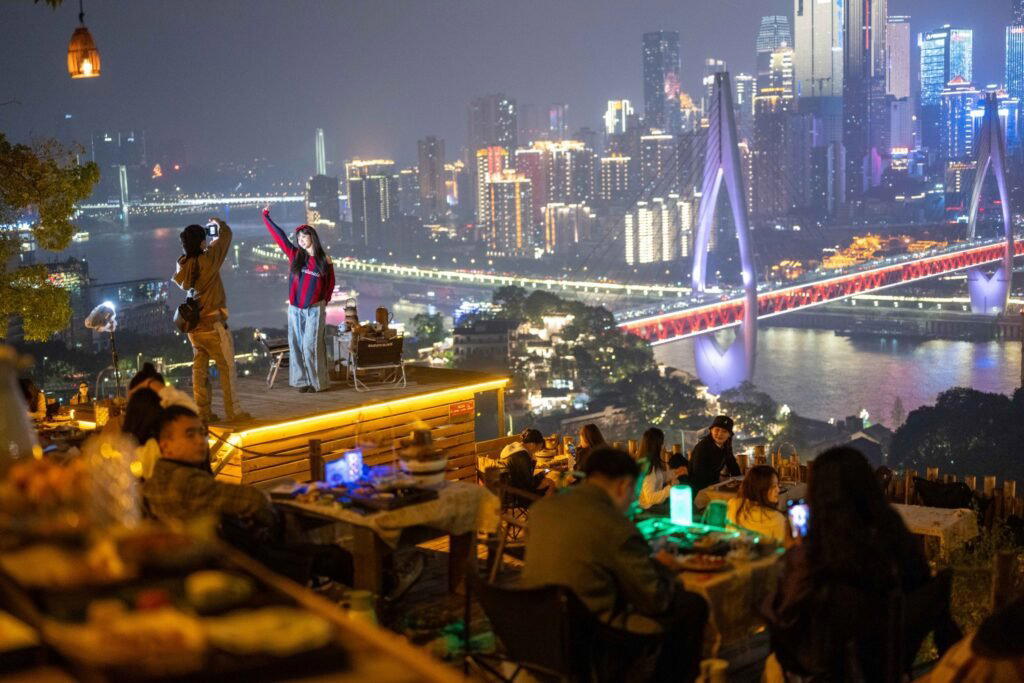
Peijie Hotpot operates in Chongqing, the city that defines mala hotpot for the rest of China. In a dining category where ingredient sourcing separates serious operators from volume chains, Peijie sits within a scene that prizes fresh-cut beef, house-pressed tallow broth, and market-driven accompaniments over standardised supply chains. For visitors tracing hotpot to its origin, Chongqing remains the reference point.

Pearl is the En Primeur Club membership app — saves, bookings, and concierge access live there. Same editors, same standards.
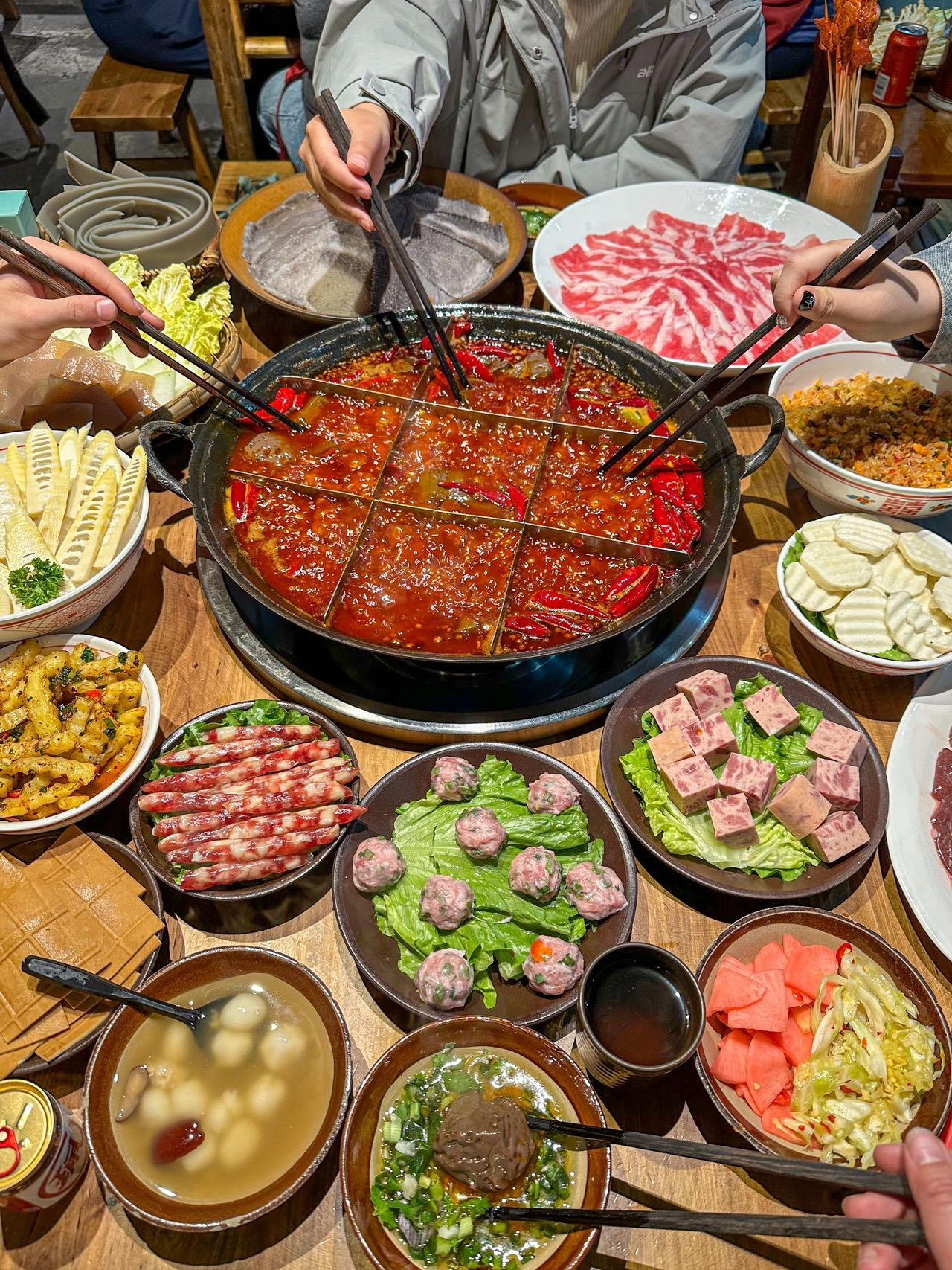
Where Chongqing Hotpot Begins: The Sourcing Standard
Chongqing did not adopt hotpot; it built the template that every other Chinese city has since modified, diluted, or repackaged. The city's version is defined by a beef-tallow broth loaded with dried chillies, Sichuan peppercorns, doubanjiang, and a roster of aromatics that varies by operator but stays within a fairly narrow ancestral range. What separates the operators worth seeking out from those running volume businesses is not the recipe, most have access to comparable formulas, but the sourcing discipline behind the ingredients that go into the pot.
Peijie Hotpot operates within this tradition. Chongqing's hotpot scene has grown large enough to support multiple tiers, from street-level communal tables around Jiefangbei and the riverside districts to mid-tier operators with private dining rooms and a sharper focus on provenance. The city's geography reinforces this: proximity to Sichuan's agricultural basin means that fresh ingredients, thin-sliced fresh beef, water spinach, lotus root, tripe, and the fatty cuts preferred for high-heat broth, cycle through the supply chain on short timelines. Operators who take sourcing seriously are buying from that regional system, not from centralised national distributors.
The Ingredient Logic Behind Chongqing's Leading Hotpot
The fresh-cut beef question is the sharpest dividing line in Chongqing hotpot. Pre-frozen, machine-sliced product is easier to portion, easier to store, and cheaper to procure. Fresh-cut, hand-sliced beef, taken from the animal within a day or two and sliced to order or in small batches, cooks differently in the pot: it tightens faster, holds its texture, and interacts with the broth in a way that frozen product does not replicate. Diners who eat hotpot regularly can identify the difference immediately.
The broth itself carries a second sourcing question. Tallow-based broths, rendered from beef fat rather than constructed from vegetable oils or artificial flavour compounds, carry a depth and a specific mouthfeel that marks the Chongqing style as distinct from Sichuan hotpot served elsewhere in China. House-rendered tallow, produced from local supply rather than processed through commercial channels, is increasingly a differentiator in the city's better-regarded operators. Alongside that, the quality of the dried chillies and Hanyuan peppercorns matters more than it might appear: Hanyuan county in Sichuan produces the peppercorn variety associated with the highest-intensity mala sensation, and operators using that specific source rather than mass-market Sichuan peppercorn blends produce a noticeably different numbing heat profile.
Visiting Chongqing specifically for hotpot means making a series of choices that come down to this sourcing logic. Peijie Hotpot fits into the city's mid-to-serious tier, where these questions are asked and generally answered in the affirmative. For broader orientation across the Chongqing dining scene, including operators at different price points and in different categories, our full Chongqing restaurants guide covers the field in detail.
Positioning Within the Chongqing Hotpot Field
The city now has enough hotpot operators that the category has stratified in the way that ramen in Tokyo or barbecue in Seoul has stratified: volume chains at one end, serious independent operators at the other, and a middle tier that borrows the aesthetics of the serious tier without always committing to the sourcing standards. Peijie sits in that conversation alongside operators like YAN SHE HOT POT, which represents another point on the Chongqing hotpot spectrum worth considering on the same visit.
Chongqing's dining scene has diversified considerably beyond hotpot, and the city now supports restaurants across multiple categories. Camellia Seasons and Feilong Tang Restaurant cover different parts of the Chinese fine dining register, while Plant Mean addresses the city's growing plant-forward dining interest. Robin's Grill and Teppanyaki handles the international grill format. None of these overlap with hotpot, which means Peijie serves a specific and non-substitutable function in a multi-restaurant Chongqing itinerary.
For reference across the broader Chinese restaurant scene, the sourcing-driven approach that defines serious Chongqing hotpot has parallels in how operators like Xin Rong Ji in Chengdu and Ru Yuan in Hangzhou approach ingredient discipline in their respective categories. At the fine dining end of the Chinese spectrum, Imperial Treasure Fine Chinese Cuisine in Guangzhou and Dai Yuet Heen in Nanjing illustrate how ingredient provenance shapes Chinese restaurant identity across entirely different formats. Internationally, restaurants like Le Bernardin in New York City and Atomix in New York City demonstrate the same principle in Western fine dining contexts: sourcing clarity is the foundation on which everything else is built.
Planning a Visit
Chongqing hotpot is an evening format in most serious operators, with lunch service available but dinner being the primary sitting where the full experience, broth at temperature, table turnover at a reasonable pace, cold beer or baijiu alongside, comes together properly. The city's hotpot culture is communal and unhurried; a table moves through several rounds of ingredients over 90 minutes to two hours, which is the intended format rather than a pacing problem. Visitors arriving from other Chinese cities where hotpot is faster and more streamlined should adjust their expectations accordingly.
Booking practices at Chongqing hotpot operators vary widely; some accept walk-ins on the understanding that waits of 30 to 60 minutes during peak evening hours (7pm to 9pm) are standard, while others have moved to reservation systems as the city's dining scene has professionalised. Checking ahead of arrival is advisable for weekend evenings specifically. For additional planning context across Chongqing's restaurant categories, including options at different price points and neighbourhoods, Xin Rong Ji (Xinyuan South Road) in Beijing, 102 House in Shanghai, and Chef Tam's Seasons in Macau offer useful benchmarks for how ingredient-led Chinese dining is positioned at different price tiers across the region. Related destination context can also be found through coverage of Dingshan·Jiangyan (Xiangcheng) in Suzhou, Fleurs Et Festin in Xiamen, and Jiangnan Wok‧Rong in Fuzhou for a fuller picture of how regional Chinese dining is evolving.
At-a-Glance Comparison
Comparable venues nearby, for context on price, style, and recognition.
| Venue | Cuisine | Price | Notes |
|---|---|---|---|
| Peijie HotpotThis venue — the venue you are viewing | Authentic Chongqing Hotpot | $$ | Not listed |
| Feilong Tang Restaurant | Contemporary Sichuan | $$$ | Chongqing |
| 珮姐老火锅(洪崖洞店) | Chongqing Hotpot | $$ | 洪崖洞 |
| YAN SHE HOT POT | Hot Pot | Not listed | Chongqing |
| 余家庄生态鱼 | Chongqing Ecological Fish | $ | Miaoya Township |
| Camellia Seasons | Elegant Sichuan Cuisine | $$$ | Jiefangbei |
Continue exploring
More in Chongqing
Restaurants in Chongqing
Browse all →






At a Glance
- Lively
- Energetic
- Group Dining
- Casual Hangout
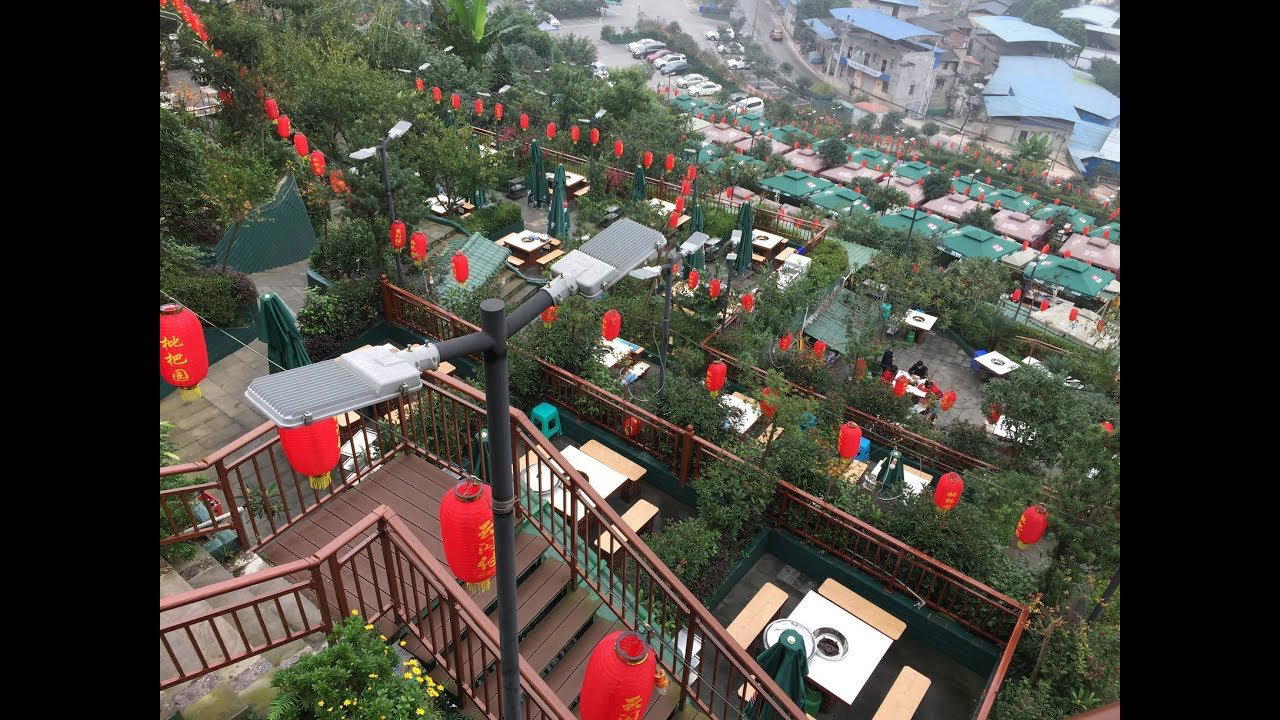
Energetic atmosphere centered around spicy, aromatic hotpot dining.