Pedrocchino sits on Via Roma in Campodoro, a small comune in the Padovan plain where the Veneto's agricultural identity is close to the surface. In a region that has produced some of Italy's most-discussed destination restaurants, this address occupies a quieter register, the kind of local dining room that anchors a community rather than draws a travelling press contingent. Visitors to the greater Padova area will find it a grounding counterpoint to the region's more decorated tables.
Pearl is the En Primeur Club membership app — saves, bookings, and concierge access live there. Same editors, same standards.
- Address
- Via Roma, 13, 35010 Campodoro PD, Italy
- Phone
- +393396881851
- Website
- pedrocchinopizza.it
- Directions
- Get directions
 Saves & bookings on Pearl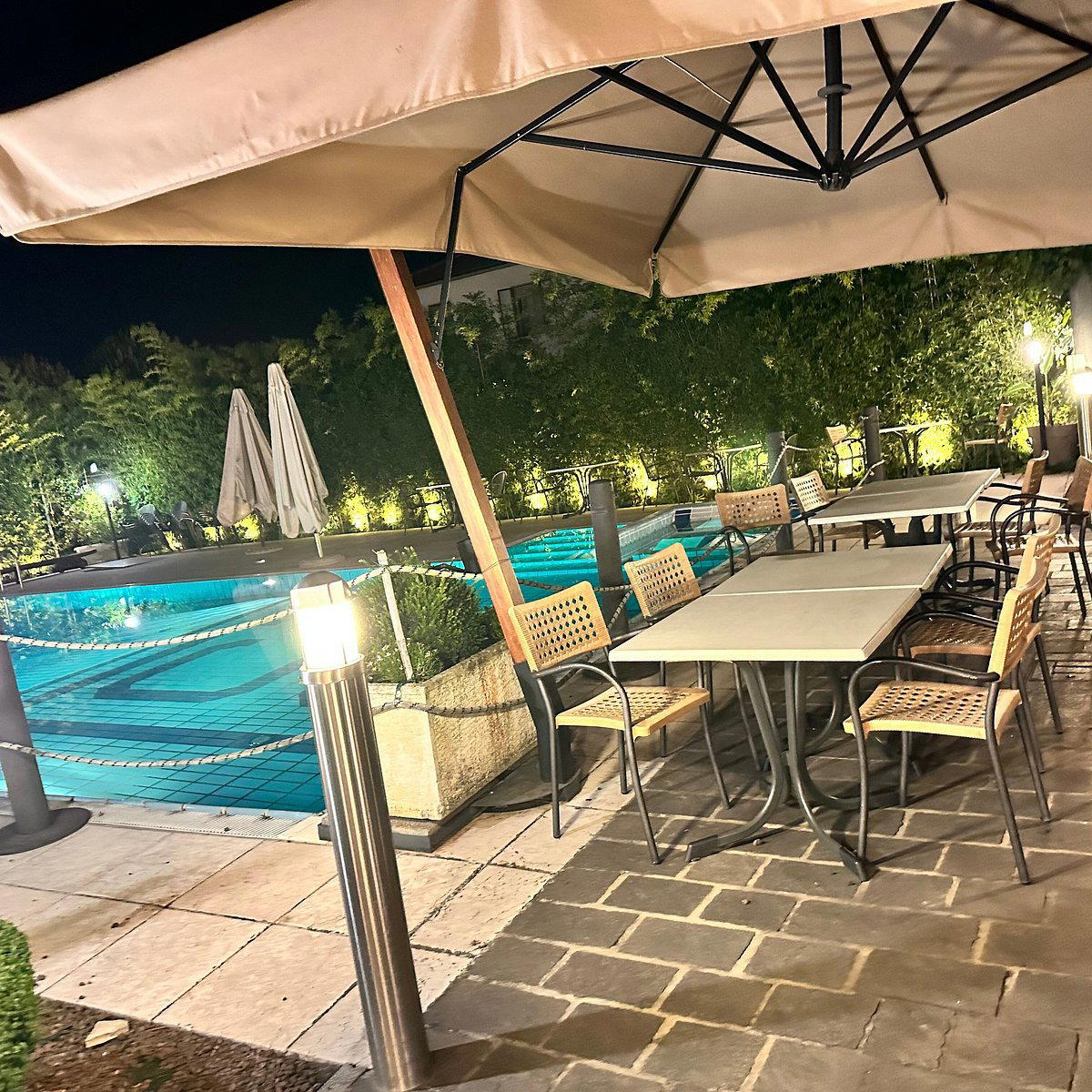
The Padovan Plain and What It Puts on the Table
The stretch of flat agricultural land between Padova and Vicenza is not the part of the Veneto that appears in most restaurant guides. The narrative tends to jump from Padova's medieval markets directly to the celebrity kitchens of Rubano or the hills of the Berici and Euganei. Campodoro, a comune of a few thousand residents about twenty kilometres northwest of Padova's centro storico, sits in the middle of that overlooked zone, a working agricultural settlement rather than a gastronomic destination in any formal sense. Via Roma, which runs through the heart of the town, is the kind of street where the rhythm is set by the calendar of the fields rather than the rhythms of the restaurant trade. Pedrocchino occupies this address not as an anomaly but as a fixture, the sort of establishment whose meaning is inseparable from the community around it.
That community context matters for understanding what the Veneto produces at its most unmediated. The Padovan plain is serious farming territory: radicchio from Chioggia and Treviso, corn for polenta, maize-fed poultry, river fish from the Brenta drainage system, and the dairy products of small local operations. These are not boutique ingredients marketed to metropolitan buyers; they are staple materials whose quality is simply a function of place and proximity. In a region that includes Le Calandre in Rubano, and Casa Perbellini 12 Apostoli in Verona, the supply chains that feed those kitchens often run through places like Campodoro. The ingredient often travels toward fame; Pedrocchino sits at the source end of that journey.
A Setting That Reads Its Location
Arriving on Via Roma, the physical environment communicates plainly: this is a neighbourhood address rather than a destination restaurant. The architecture of Campodoro reflects the functional pragmatism of the Veneto's agricultural interior, low, solid buildings, wide streets designed for farm vehicles as much as pedestrians, the kind of spatial quiet that makes mid-afternoon feel genuinely still. The approach to a place like this carries none of the anticipatory theatre that surrounds Italy's more decorated tables. There are no doormen, no curated planting schemes, no choreography for arrival. What exists instead is legibility: a restaurant that announces itself as what it is, positioned where its community can use it. For the traveller used to reading restaurants as destinations, the experience of arriving at Pedrocchino requires a recalibration, the cues are local rather than touristic, and that is the point.
The Veneto's interior plain produces this category of establishment with some regularity: the osteria or trattoria that operates in genuine continuity with its town, where the menu follows what is available locally and the room fills with people who have been coming for years. It is a format that Italy has always had in abundance, and one that the country's highest-profile restaurant culture has largely grown out of rather than away from. When Osteria Francescana in Modena and Dal Pescatore in Runate are discussed as expressions of regional identity, the argument rests partly on how deeply their sourcing is embedded in local agricultural networks. The undecorated local dining room is the substrate from which those aspirations grow.
Ingredient Geography in the Padovan Context
The editorial angle that makes sense for a restaurant in Campodoro is not awards or chef biography, is not documented in the record, but ingredient geography. The Padovan plain's agricultural production is specific and seasonal in ways that a restaurant on Via Roma would have direct access to. Radicchio di Chioggia, harvested in late autumn through winter, is one of the Veneto's most internationally recognised contributions to Italian produce; it appears at tables from Enoteca Pinchiorri in Florence to Enrico Bartolini in Milan, where its bitterness is often worked into complex preparations. At a local Padovan table, it would appear more directly: grilled, braised with pancetta, or softened in risotto. The ingredient's trajectory from field to fine-dining kitchen passes through the kind of restaurant that simply uses it because it is there and in season.
Polenta remains the carbohydrate of the Veneto's interior in a way that pasta is not, and the varieties of corn grown in this part of the plain produce a grain with regional character distinct from what arrives in supermarket bags. Baccalà alla vicentina, salt cod worked slowly with milk, onion, and anchovy, is the area's canonical preparation, a dish whose geography is specific to the Vicenza side of the province but whose influence runs through the whole Padovan plain. River fish from the Brenta and its tributaries, freshwater species that appear less frequently in export-facing cuisine, complete the sourcing picture of an honest local kitchen in this part of the Veneto. Italy's most-discussed restaurant scenes, from the seafood intelligence of Uliassi in Senigallia to the mountain produce rigour of Atelier Moessmer Norbert Niederkofler in Brunico, all argue, in different registers, for the primacy of place-specific sourcing. The local trattoria of the Padovan plain makes the same argument at a different volume.
How This Fits the Wider Italian Picture
Italy's restaurant ecology operates at multiple altitudes simultaneously, and the gap between a neighbourhood address in Campodoro and a three-star table in Rubano is not merely a matter of price or ambition. The two ends of that spectrum depend on each other: the high-end kitchen needs the agricultural infrastructure, the producer relationships, and the culinary memory that local dining rooms preserve. Piazza Duomo in Alba, Reale in Castel di Sangro, and Quattro Passi in Marina del Cantone all articulate strong regional identities; none of those identities would hold without the unremarked local cooking culture that underlies them. A restaurant in Campodoro sits at that foundation, and understanding it requires some willingness to read the ecosystem rather than the accolade list.
For practical planning: Campodoro is best reached by car from Padova, which is itself well-served by high-speed rail from Venice, Milan, and Bologna. The town has no tourist infrastructure to speak of, which means booking ahead, or at minimum calling ahead, should contact details become available, is sensible. Check directly before visiting. Those making a wider Veneto circuit might also consider the contrast with Da Vittorio in Brusaporto or the Rome-level formality of La Pergola, both representing the decorated end of the Italian spectrum against which a place like Pedrocchino reads differently, but not lesser.
Comparable Venues
Comparable venues nearby, for context on price, style, and recognition.
| Venue | Cuisine | Price | Notes |
|---|---|---|---|
| PedrocchinoThis venue — the venue you are viewing | Italian Pizza & Cakes | $$ | Not listed |
| Trattoria Ca' D'Oro - Cucina Tipica Veneziana | Traditional Venetian Trattoria | $$ | Cannaregio |
| Montenapoleone | Italian Fusion Pizza & Grill | $$ | center |
| All' Incrocio | Neapolitan Pizza | $$ | :null |
| Trattoria da'a Marisa | Traditional Venetian Trattoria | $$ | Cannaregio |
| All'Antico Girone | Traditional Italian Seafood in Historic Tower | $$ | Old Town |
Recognition history
Dated appearances from independent guides and award organizations, with the underlying list record or original source where available.
50 Top Pizza Italia #77
50 Top Pizza
Continue exploring
More in Campodoro
Restaurants in Campodoro
Browse all →
Bars in Campodoro
Browse all →
Hotels in Campodoro
Browse all →
At a Glance
- Cozy
- Rustic
- Casual Hangout
- Family
- Natural Wine
- Local Sourcing
- Organic
Current opening hours
- Monday
- 6:30 PM–12 AM
- Tuesday
- 6:30 PM–12 AM
- Wednesday
- 6:30 PM–12 AM
- Thursday
- Closed
- Friday
- 6:30 PM–12 AM
- Saturday
- 6:30 PM–12 AM
- Sunday
- 6:30 PM–12 AM
Hours can change for holidays and private events. Last verified .
Relaxed and tasty pizza experience with creative yet balanced flavor combinations in a casual setting.