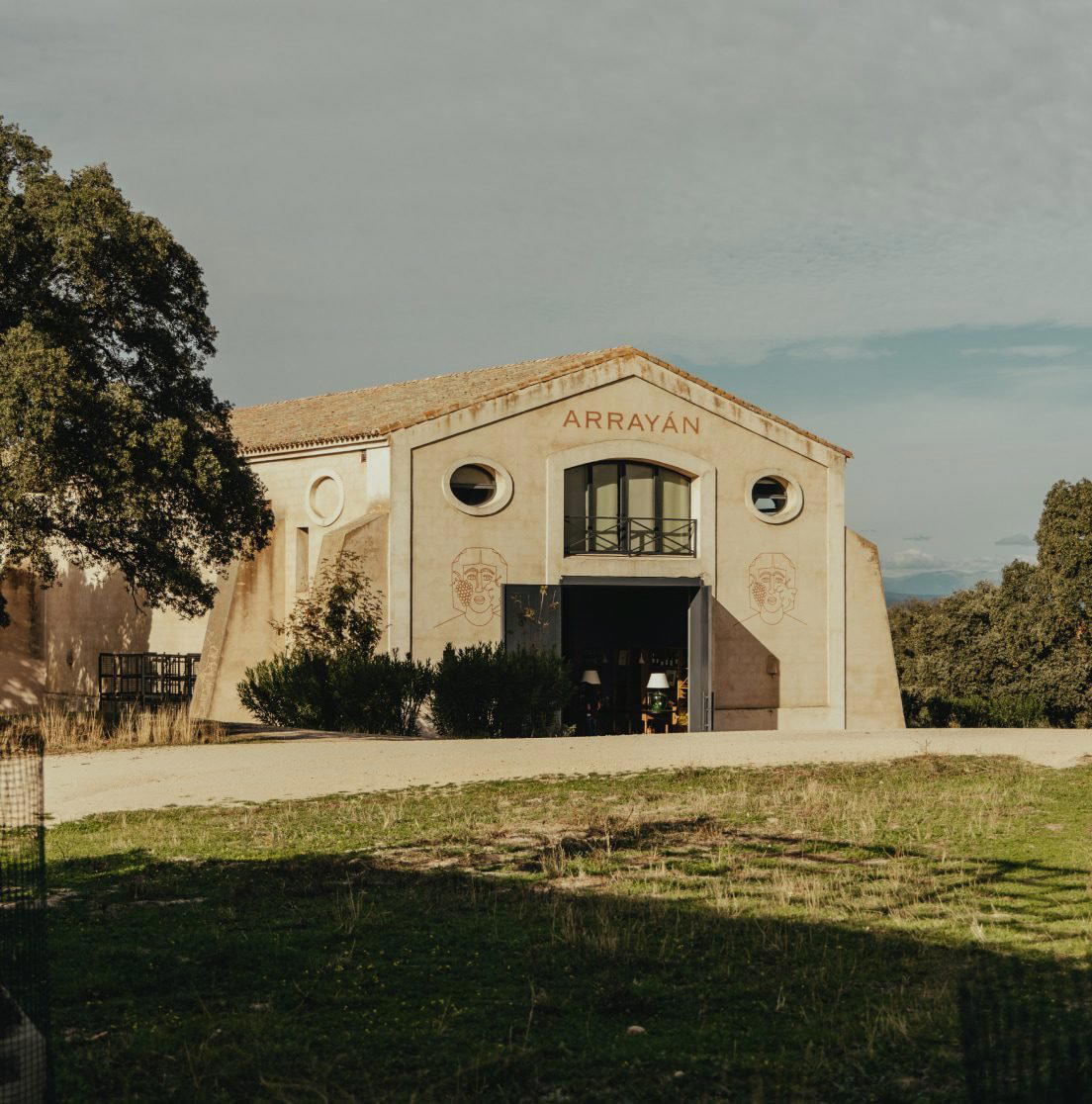
Our verdict
Pampeano Asador Argentino brings the Argentine asador tradition to Arganzuela, one of Madrid's less tourist-trodden southern districts. The format is built around live-fire cooking and the unhurried pacing that defines the South American asado ritual, positioning it in a different register from Madrid's Michelin-heavy creative circuit. An address for those who want smoke, char, and a meal measured in hours rather than courses.

Pearl is the En Primeur Club membership app, where members save venues, book tables and use the concierge.
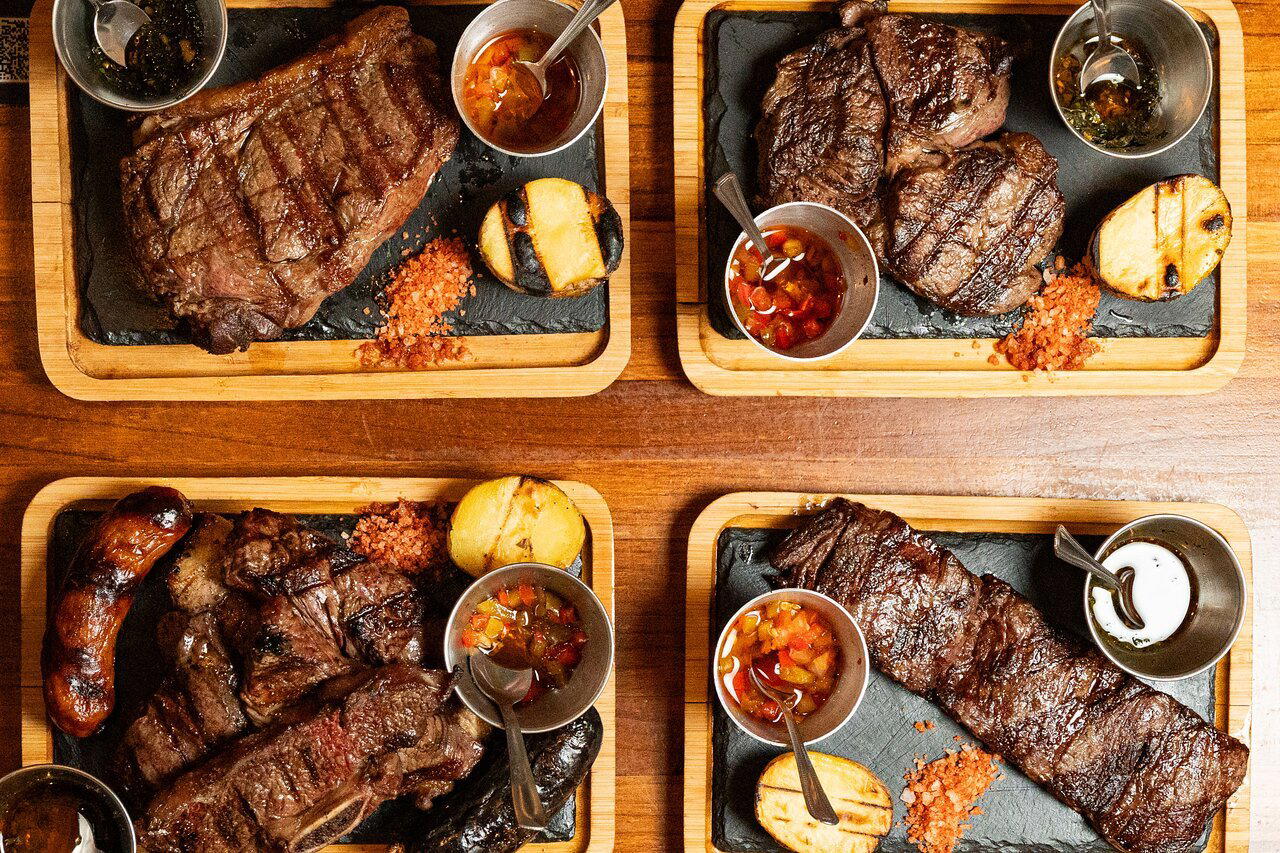
Fire, Ritual, and the Slow Architecture of the Argentine Asado
There is a particular grammar to the Argentine asado that has nothing to do with hunger and everything to do with time. The parrilla is lit well before anyone sits down. The first cuts arrive not as a starter in the European sense but as an opening statement, a signal that the afternoon or evening belongs to the fire and the people gathered around it. Madrid has absorbed many international dining formats over the past decade, but the asador tradition, with its insistence on patience, sequence, and shared abundance, sits apart from the city's dominant creative-tasting-menu culture. Pampeano Asador Argentino, on Calle de Canarias in the Arganzuela district, operates inside that tradition rather than reinterpreting it for a European audience.
Arganzuela and the Logic of the Southern Barrios
Madrid's dining attention clusters heavily in Salamanca, Chueca, and the Centro, where the concentration of Michelin-decorated addresses is highest. Arganzuela, south of the Manzanares and removed from those circuits, runs on different energy. It is a residential district with deep working-class roots, and the dining there tends toward the functional and the local rather than the performative. An Argentine asador fits that grain: the format has never required a high-design room or a destination postcode to work, because the theatre lives in the fire itself and in the duration of the meal. For a venue like Pampeano, the neighbourhood is a reasonable fit, close enough to the city centre to draw from a broad Madrid clientele, far enough from the tourist density that the room likely fills with people who chose it deliberately.
Madrid's broader restaurant scene places a heavy premium on creative Spanish cooking. The addresses that dominate critical attention, DiverXO, Coque, Deessa, DSTAgE, and Paco Roncero, are all operating in the €€€€ tier with tasting menus as the primary format. Pampeano sits in a different register entirely: where those kitchens build meals around intellectual progression and technical precision, the asador builds meals around fire management, cut selection, and the social rhythm of sharing. These are not competing for the same evening.
The Ritual of the Asado at the Table
The Argentine asado is one of the few dining formats in which the sequence of the meal is dictated less by a kitchen's pacing decisions than by the fire's own logic. A properly run parrilla begins with offal and secondary cuts, mollejas, chorizos criollos, morcilla, which cook faster and serve as a prologue while the larger pieces come up to temperature over lower, slower heat. The main event, whether that is a tira de asado, a vacío, or a costilla, arrives later and without urgency. The expectation is that the meal will take time, that the table will talk between courses, and that the wine, almost certainly Argentine, almost certainly Malbec, will be poured throughout rather than matched course by course in the European fashion.
This is a dining ritual with strong social architecture. The asado is a communal format by design: cuts arrive to share, the table grazes rather than orders individually, and the parrillero's judgments about doneness and sequencing are trusted without the table needing to specify. For diners accustomed to the precision choreography of Madrid's tasting-menu circuit or the à la carte logic of a Spanish taberna, the shift in agency can feel unfamiliar. You are, to a degree, a guest of the fire.
Spain has its own live-fire traditions, the txokos of the Basque Country, the embers of Castilian asadores, the charcoal-grilled fish of Andalucía, but the Argentine format carries distinct DNA. The cuts are different (the Argentine cow is butchered along different seam lines than the Spanish), the seasoning is minimal by design (salt, occasionally chimichurri, nothing that obscures the quality of the meat), and the pacing is more explicitly social. Among the small number of Argentine asadors operating in Madrid, the format represents a specific import: not Iberian live-fire cooking adapted for local palates, but the South American tradition translated with reasonable fidelity.
Where Pampeano Sits Among Madrid's Fire-Driven Addresses
Madrid has seen growing interest in fire-forward cooking over the past several years. The Smoked Room, operating in the €€€€ bracket as a progressive asador with contemporary technique, represents one end of that spectrum, a format that takes live-fire as its premise but applies fine-dining precision throughout. Pampeano occupies a different position: the Argentine asador is a more vernacular form, less concerned with technique as a display and more concerned with the quality of the animal and the honesty of the fire. Neither is a better version of the other; they are answering different questions about what a meal built around smoke and heat should feel like.
For reference, Spain's decorated fire-forward addresses sit at a significant remove from what Pampeano is doing. Venues like Aponiente in El Puerto de Santa María, Azurmendi in Larrabetzu, or El Celler de Can Roca in Girona operate in a register defined by research, innovation, and Michelin recognition. Elsewhere in Spain, addresses such as Arzak in San Sebastián, Martin Berasategui in Lasarte-Oria, Mugaritz in Errenteria, Quique Dacosta in Dénia, Ricard Camarena in València, Cocina Hermanos Torres in Barcelona, and Atrio in Cáceres define what Spanish fine dining looks like at its decorated peak. Pampeano is not competing in that field. See our full Madrid restaurants guide for a broader map of the city's dining options across all price tiers and formats.
Planning Your Visit
Pampeano Asador Argentino is located at Calle de Canarias 62, in the Arganzuela district of Madrid (28045). The address is south of the city centre and accessible from the Legazpi metro station on Line 3. Given the neighbourhood's local character, the atmosphere will differ from the more destination-oriented restaurants in Salamanca or Almagro.
| Venue | Format | Price tier | Booking lead time |
|---|---|---|---|
| Pampeano Asador Argentino | Argentine asador / live-fire | Not confirmed | Not confirmed |
| DiverXO | Progressive tasting menu | €€€€ | Weeks to months in advance |
| Coque | Spanish creative tasting menu | €€€€ | Weeks in advance |
| Smoked Room | Progressive asador / contemporary | €€€€ | Weeks in advance |
For the broader Madrid dining picture across price tiers and formats, the EP Club Madrid guide covers the city's key addresses. For international comparison on fire-forward dining formats, Le Bernardin in New York City and Atomix in New York City illustrate what the top tier of ingredient-focused dining looks like in a different market entirely.
Frequently asked questions
Is Pampeano Asador Argentino okay with children?
The asado format at Pampeano, based around a long, communal fire-cooked meal at Calle de Canarias 62 in Arganzuela, suits families with older children who can sit through an unhurried, multi-course service. The pacing is dictated by the parrilla, not the kitchen clock, so very young children may struggle with the rhythm. Nothing in the venue's format signals a strictly adult-only environment.
What's the vibe at Pampeano Asador Argentino?
Pampeano occupies the southern barrio of Arganzuela, away from Madrid's more performative dining corridors in Salamanca or Chueca. The atmosphere follows the logic of the Argentine asado: slow, communal, and structured around fire rather than theatrical plating. Expect a neighbourhood register rather than a scene-driven one.
How does Pampeano Asador Argentino compare to other fire-cooking restaurants in Madrid?
Madrid's fire-driven dining now spans a wide range, from progressive tasting menus at The Smoked Room to traditional wood-grill formats in the outer barrios. Pampeano sits in the latter category as an asador argentino, applying the South American parrilla tradition rather than contemporary ember-cooking techniques. Located in Arganzuela at Calle de Canarias 62, it operates in a part of the city where rents and dining expectations differ from the centro, which shapes both the price register and the clientele.
What dish is Pampeano Asador Argentino famous for?
Pampeano is an asador, meaning the parrilla is the central organising principle of the menu. In the Argentine asado tradition, the sequence typically moves from achuras (offal cuts) and morcilla through to larger beef cuts, all cooked over wood or charcoal.
Cost Snapshot
Comparable venues nearby, for context on price, style, and recognition.
| Venue | Cuisine | Price | Awards | Notes |
|---|---|---|---|---|
| Pampeano Asador ArgentinoThis venue (the venue you are viewing) | Argentine Asador Parrilla | $30–50 | Not listed | Not listed |
| El Coleccionista | Gastronomic Cocktails | Not listed | Not listed | Castellana, Gastronomic Cocktails |
| Café Federal | Aussie-Inspired Brunch Cafe | $20–30 | Not listed | Universidad, Aussie-Inspired Brunch Cafe |
| Perla del Pacífico | Authentic Ecuadorian | $10–20 | Not listed | Pueblo Nuevo, Authentic Ecuadorian |
| Dry Martini Madrid | Cocktail Bar & Tapas | Not listed | Not listed | Arguelles, Cocktail Bar & Tapas |
| Arzábal | Modern Spanish Tapas | $50–100 | Macarfi 7.1 Food Rating · Guía Repsol 1 Sol | Lavapies, Modern Spanish Tapas |