Set beneath the arcades of the Palais Royal garden, this address at 110 Galerie de Valois occupies one of Paris's most historically charged dining settings. The kitchen works at the intersection of classical French technique and produce-led cooking, placing it in a competitive tier alongside the 1st arrondissement's most serious rooms. Booking ahead is strongly advised for both lunch and dinner.
- Address
- 110 Gal de Valois, 75001 Paris, France
- Phone
- +33 1 40 20 00 27
- Website
- restaurantdupalaisroyal.com
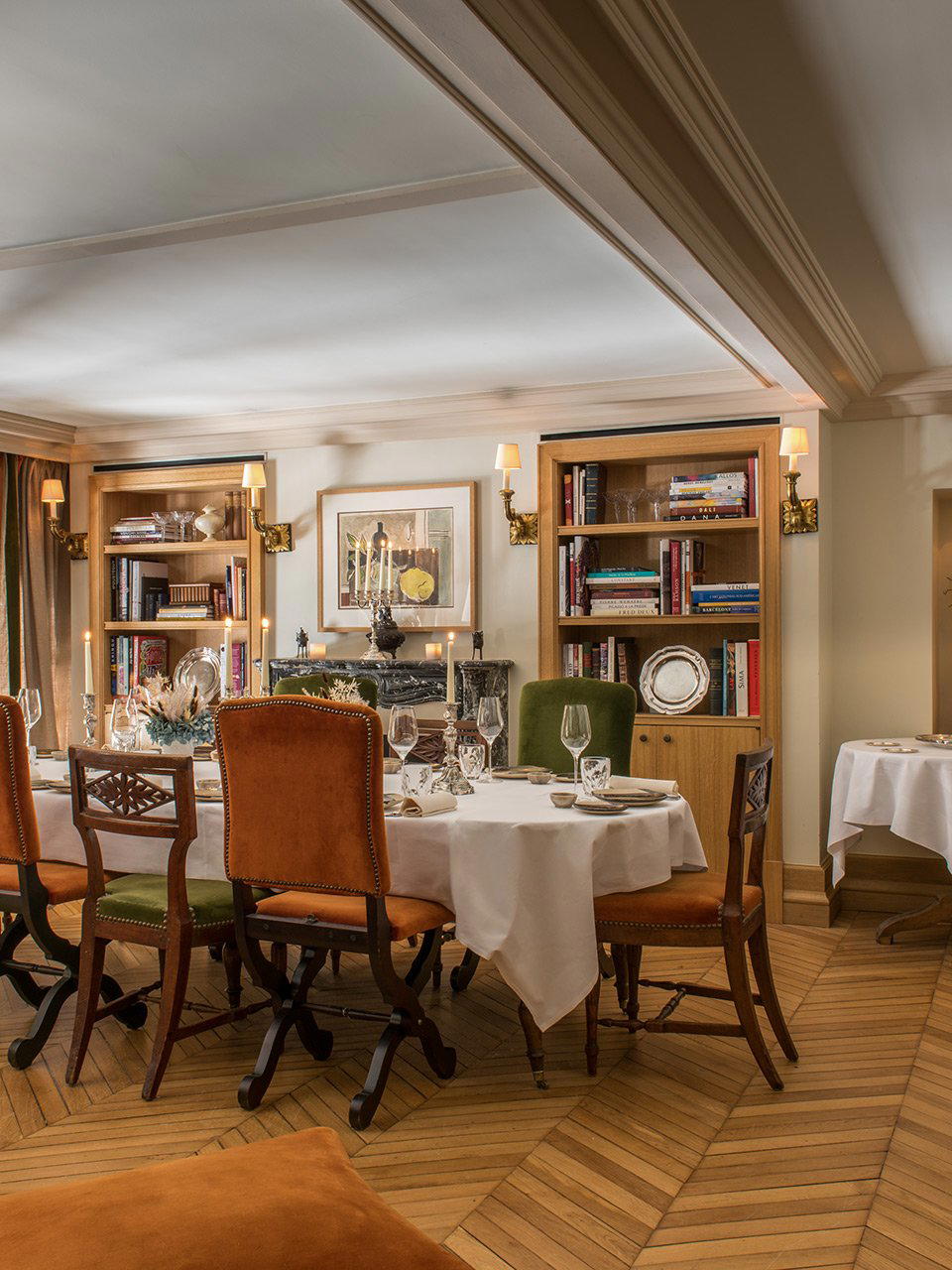
Dining Beneath the Arcades: What the Palais Royal Setting Demands
Palais Royal Restaurant Paris is a formal contemporary French restaurant in Paris, with Mediterranean influences, at 110 Galerie de Valois, 75001 Paris, France. Few dining addresses in Paris arrive with as much physical context as 110 Galerie de Valois. The Palais Royal garden, laid out under Cardinal Richelieu and later the commercial and intellectual heart of pre-Revolutionary Paris, frames the approach: stone arcades, clipped linden trees, and a courtyard that operates at a remove from the noise of the Rue de Rivoli just beyond the perimeter. That separation is the first thing you register. Whatever is served inside must answer to a setting that has housed galleries, dueling grounds, and the card rooms where Napoleon reportedly lost his watch. The physical weight of the location is not incidental; it sets a register that the kitchen has to meet.
In the broader geography of the 1st arrondissement, this corner of the Palais Royal sits within walking distance of some of the most scrutinized dining rooms in the country. L'Ambroisie, a few minutes east on the Place des Vosges, has held three Michelin stars across four decades and operates as the benchmark for classical French cuisine in Paris. Kei, on the Rue Coq Héron, applies Japanese precision to French product and represents one of the more considered fusions in a city where the word is frequently misused.
The Intersection of French Technique and Regional Produce
The broader movement in serious French cooking over the past two decades has been a pull toward terroir specificity: not just French produce in general, but product traceable to named farms, particular valleys, or single growers. What has changed more recently is the way kitchens handle those materials once they arrive. The classical brigade system, with its reduction sauces and long-cooked foundations, now coexists with approaches drawn from Japanese kaiseki, Nordic preservation, and Basque fire-first cooking. Mirazur in Menton and Flocons de Sel in Megève both demonstrate how French kitchens at altitude or on the coast have absorbed these global influences without abandoning their regional anchors. In Paris, the same logic applies in an urban register: the product still leads, but the techniques that frame it are drawn from a wider archive than any single national tradition.
That intersection of imported method and indigenous produce is where the most interesting cooking in the French capital now happens. A sauce built on a Breton butter base but clarified using Japanese techniques; a Normandy cream deployed with a restraint that owes something to Scandinavian cooking; a Loire Valley pigeon treated with the low-intervention approach more common in natural wine circles than in grand kitchens. None of these moves are radical individually, but their combination marks a generation of cooking that is post-classical without being anti-classical. Houses like Alléno Paris au Pavillon Ledoyen have pushed extraction and fermentation into the heart of a three-Michelin-star program, demonstrating that the techniques themselves can carry the weight of serious French cuisine.
Where the Palais Royal Fits in Paris's Fine Dining Tier
Paris's premium dining tier has consolidated around a relatively small number of addresses that compete on ingredient sourcing, kitchen lineage, and room design in roughly equal measure. The €€€€ price bracket, occupied by peers like Le Cinq at the Four Seasons George V and Arpège, is one where the room is expected to perform as much as the plate. Arpège, under Alain Passard, shifted its entire program toward vegetable-forward cooking two decades ago and became a reference point for produce-led haute cuisine internationally. The Palais Royal address fits within this tier by location and context, operating in a part of the city where the expectation is set by rooms with long institutional histories and deeply embedded critical reputations.
The French tradition of cooking rooted in a specific regional larder, what writers from Elizabeth David to Patricia Wells documented across the postwar decades, runs through the entire genealogy of Paris fine dining. Paul Bocuse's Auberge du Pont de Collonges near Lyon and Auberge de l'Ill in Illhaeusern both represent institutions where the kitchen's relationship to a named geographic larder became the central argument. Bras in Laguiole extended that logic to the Aubrac plateau with the gargouillou, a dish that indexed the kitchen to a specific landscape. Les Prés d'Eugénie in Eugénie-les-Bains and Georges Blanc in Vonnas each represent a version of French gastronomy rooted in a particular pays. Paris kitchens working at this level must contend with the fact that they draw their produce from elsewhere: the city is the market, not the source. That displacement is where technique becomes the primary language.
Beyond France, the model of classically trained kitchens importing global technique onto local product plays out in different ways. Le Bernardin in New York has held four James Beard Awards and applies French discipline to American waters, while Lazy Bear in San Francisco runs a communal tasting format that applies fine dining rigor to a Californian larder. Troisgros in Ouches and Auberge du Vieux Puits in Fontjoncouse represent the French regional model at its most territorial. La Table du Castellet in Le Castellet grounds its program in Provençal produce. In each case, the logic is the same: method in service of place.
Planning Your Visit
The restaurant sits at 110 Galerie de Valois, accessible from the Palais Royal garden or through the arcade from the street side. The nearest metro stations are Palais Royal-Musée du Louvre on lines 1 and 7, a short walk through the garden passage. For dining in this part of the 1st arrondissement, advance reservations are standard practice. The restaurant is formal, and planning ahead is essential.
City Peers
Comparable venues nearby, for context on price, style, and recognition.
| Venue | Cuisine | Price | Notes |
|---|---|---|---|
| Palais Royal Restaurant ParisThis venue — the venue you are viewing | Contemporary French with Mediterranean Influences | $$$$ | |
| Verjus | Modern French Fine Dining | $$$$ | 1st arrondissement |
| La Pagode de Cos | Modern French with Global Influences | $$$$ | Madeleine |
| Restaurant Monsieur Lancaster | Modern French Regional Fine Dining | $$$$ | 8th Arr. |
| Baronne | Modern French Grill | $$$$ | 8th arrondissement |
| Nuna (Le Commandant Charcot) | Contemporary French Fine Dining by Alain Ducasse | $$$$ | onboard Le Commandant Charcot |
Continue exploring
More in Paris
Restaurants in Paris
Browse all →
Bars in Paris
Browse all →
Hotels in Paris
Browse all →

At a Glance
- Romantic
- Elegant
- Sophisticated
- Intimate
- Date Night
- Special Occasion
- Celebration
- Business Dinner
- Garden
- Private Dining
- Historic Building
- Design Destination
- Terrace
- Extensive Wine List
- Sommelier Led
- Farm To Table
- Local Sourcing
- Garden
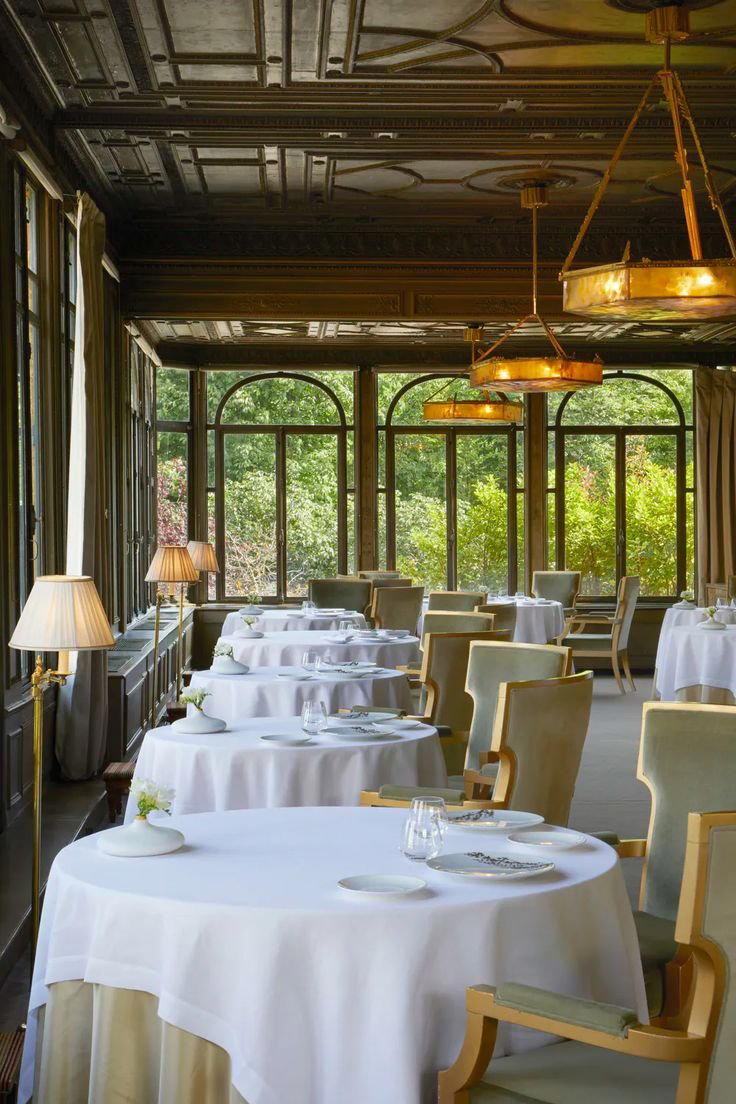
Luxurious and intimate with contemporary furniture harmonizing with classical architecture, warm lighting, and refined tableware creating an ethereally charming atmosphere.