Osteria NOI
Osteria NOI sits in Waldprechting, a quiet commune near Seekirchen am Wallersee in the Salzburg region, where the question of what ends up on the plate is inseparable from what grows, grazes, and ferments nearby. The restaurant's name signals an Italian-inflected sensibility, NOI meaning 'us' in Italian, operating within an Austrian agricultural context that gives it a distinct position among the region's serious dining options.
Pearl is the En Primeur Club membership app — saves, bookings, and concierge access live there. Same editors, same standards.
- Address
- Mühlbachstraße 21, 5201 Seekirchen am Wallersee, Austria
- Phone
- +434362122263
- Website
- osteria-noi.at
- Directions
- Get directions
 Saves & bookings on Pearl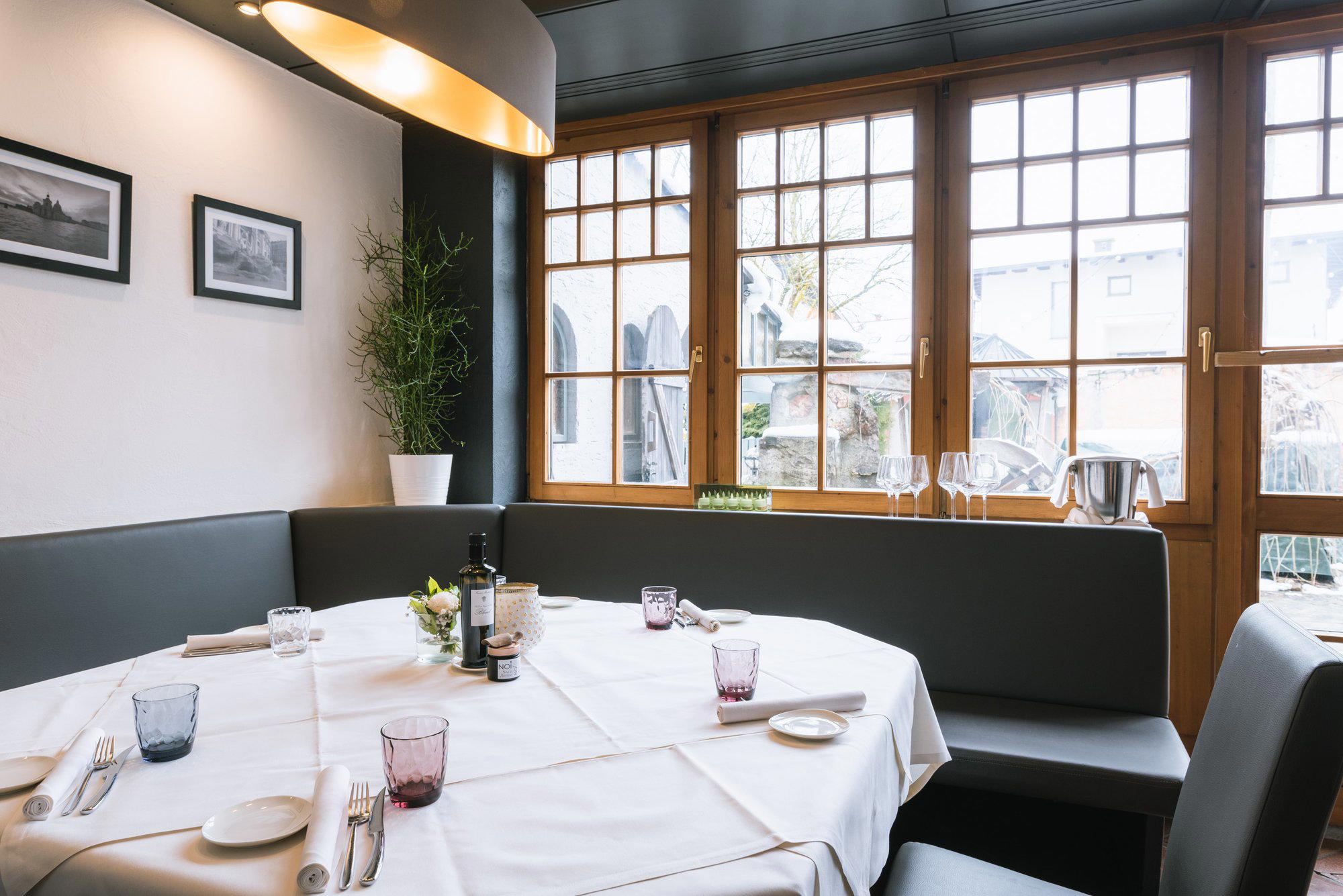
Where the Salzburg Hinterland Meets the Table
The road into Waldprechting offers little warning of what awaits at Mühlbachstraße 21. The Flachgau, the broad flat zone between Salzburg city and the Wallersee lake district, is farming country: fields of grain, smallholdings, orchards whose output rarely makes it onto a menu outside the immediate radius. That agricultural density is not incidental to understanding Osteria NOI, it is the entire context. Restaurants that choose to operate in this kind of territory, rather than the more legible prestige of Salzburg's old town or a lakeside terrace, are almost always making a deliberate argument about proximity to source.
The name itself frames expectations. Osteria, the Italian designation for a relaxed, host-driven dining room historically oriented around local wine and seasonal food, travels well to this corner of Austria. The Salzburg region has long absorbed Italian influences through its alpine geography, the same passes that moved salt and trade for centuries moved culinary ideas too. An osteria format here is not an affectation; it is a reference to a tradition of unpretentious cooking where ingredient provenance carries more weight than presentation theatrics.
Sourcing in the Flachgau: Why the Address Is Part of the Argument
Austria's serious restaurant scene has spent the last two decades arguing, with increasing credibility, that its agricultural regions produce raw materials that compete with any European peer. The case rests on specific facts: the Salzburg lake district's dairy, the alpine meadow beef of the surrounding Tennengau and Pongau, the game from managed forests, the freshwater fish of the Wallersee and Mondsee, these are not marketing fictions but ingredients with traceable geography and seasonal rhythm.
Restaurants in this tier, whether the formally decorated Döllerer in Golling an der Salzach or the herb-driven Kräuterreich by Vitus Winkler in Sankt Veit im Pongau, have built their identities partly on the argument that staying close to the source is itself a form of ambition. An osteria in Waldprechting fits inside that broader regional pattern: the address, rather than signalling remoteness, functions as a credentialing move. You are in proximity to the produce, not at a remove from it.
The Flachgau's relative agricultural flatness distinguishes it from the more dramatic alpine sourcing stories of venues like Gourmetrestaurant Tannenhof in Sankt Anton am Arlberg or Griggeler Stuba in Lech, where altitude and isolation are part of the narrative. Here the story is quieter: farms close enough to supply daily, a kitchen operating with the logistics of a neighbourhood producer relationship rather than a long-distance procurement chain.
The Osteria Format and What It Asks of the Kitchen
Among European dining formats, the osteria occupies an interesting middle position. It carries none of the formality of a ristorante, but it makes demands that simpler trattoria formats do not: the wine list should have depth and regional specificity, the kitchen should be capable of cooking seasonal ingredients without over-elaborating them, and the room should feel like somewhere a regular would return to without occasion. That last quality is harder to achieve than a tasting menu, because it requires consistency at a lower register of spectacle.
The broader Austrian restaurant scene has several points of reference for this approach. Landhaus Bacher in Mautern an der Donau has long demonstrated how classical Austrian cooking, properly sourced and executed without excess intervention, retains a relevance that more fashionable formats struggle to sustain across decades. Taubenkobel in Schützen am Gebirge in the Burgenland makes a parallel argument about wine-country informality anchored in serious produce. Osteria NOI in Waldprechting is operating in that tradition even if its scale and recognition differ significantly from those established names.
At the other end of Austria's serious dining spectrum, venues like Steirereck im Stadtpark in Vienna and Ikarus in Salzburg work in registers of technical ambition and international reference that a neighbourhood osteria explicitly declines. That declination is a choice, not a limitation. The formats serve different purposes, and a diner choosing Waldprechting over Salzburg city is making an implicit statement about what kind of evening they are after.
Placing Osteria NOI Within the Region's Dining Geography
Seekirchen am Wallersee, the commune that administratively contains Waldprechting, sits roughly 15 kilometres northeast of Salzburg city centre. The drive from Salzburg along the A1 takes under 20 minutes outside peak commuter hours, which means the restaurant is genuinely accessible as a dinner destination from the city without requiring overnight accommodation. That accessibility places it in a different competitive position from more remote venues like Obauer in Werfen or Ois in Neufelden, where the journey is part of the commitment.
The Wallersee itself is a modest lake by Salzkammergut standards, lacking the tourist infrastructure of Wolfgangsee or Mondsee, which partly explains why the area retains a working agricultural character rather than converting to hospitality at scale. Restaurants that open here are self-selecting for a local clientele and an audience willing to seek rather than stumble. Nearby, Atelier Fischer in Sankt Gilgen works a similar logic on the Wolfgangsee, though in a village that draws considerably more leisure traffic.
For readers comparing nearby Austrian addresses, the broader local options are worth exploring. Further afield in Austria's serious dining geography, Schwarzer Adler in Hall in Tirol, Stüva in Ischgl, Artis in Graz, and Restaurant 141 by Joachim Jaud in Mieming represent different regional inflections of the same broader argument about Austrian produce and European dining tradition. For international comparison points in ingredient-led cooking, Le Bernardin in New York City and Atomix in New York City demonstrate what sourcing discipline looks like at a different scale of scrutiny and recognition.
Planning a Visit
The restaurant is located at Mühlbachstraße 21, 5201 Seekirchen am Wallersee. The Flachgau operates on a quieter rhythm than Salzburg city, and restaurants in this area tend to observe seasonal closures and limited weekly schedules more strictly than urban venues. Confirming hours and reservation availability directly before planning a trip is advisable, particularly outside summer and the pre-Christmas period when rural Austrian restaurants often reduce service days.
At-a-Glance Comparison
Comparable venues nearby, for context on price, style, and recognition.
| Venue | Cuisine | Price | Notes |
|---|---|---|---|
| Osteria NOIThis venue — the venue you are viewing | Italian Osteria | $$ | Not listed |
| Cosmic Pizza | Neapolitan Pizza | $$ | Froschheim |
| Hostaria Bigoli Al Mercato | Veneto Osteria | $$ | city center |
| Jamie's Italian | Italian Trattoria | $$ | Vienna Airport |
| Das Eggenberg | Modern Italian Pizza and All-Day Dining | $$ | Eggenberg |
| Memory | Italian Pizza and Mediterranean | $$ | Dorf |
Continue exploring
More in Waldprechting
Restaurants in Waldprechting
Browse all →
Bars in Waldprechting
Browse all →
At a Glance
- Date Night
Current opening hours
- Monday
- Closed
- Tuesday
- 2:30–11:30 PM
- Wednesday
- 2:30–11:30 PM
- Thursday
- 2:30–11:30 PM
- Friday
- 2:30–11:30 PM
- Saturday
- 2:30–11:30 PM
- Sunday
- Closed
Hours can change for holidays and private events. Last verified .