Osteria della Villetta


Michelin Bib Gourmand
Our verdict
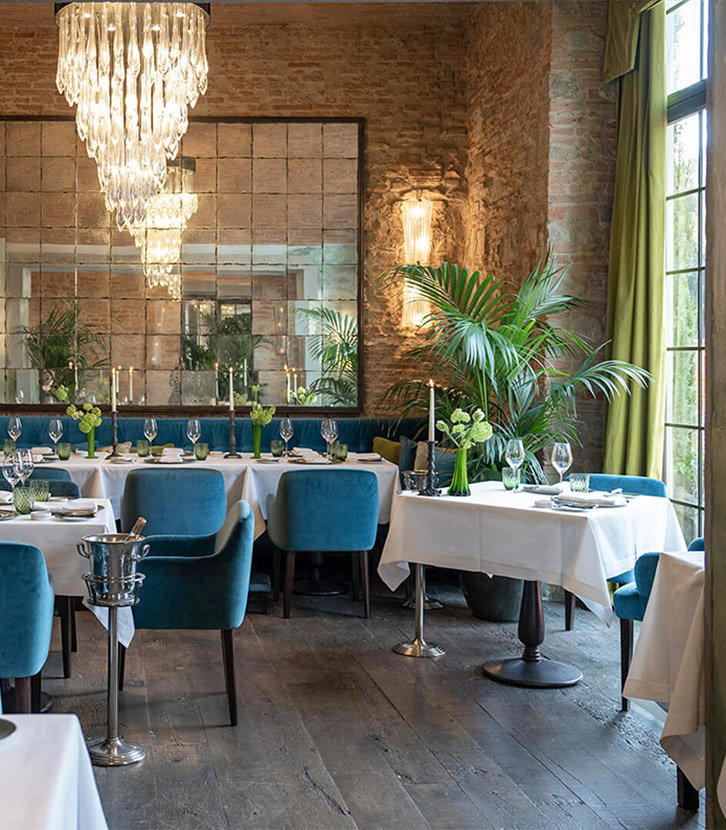
A Michelin Bib Gourmand holder ranked #265 in Opinionated About Dining's 2025 Casual Europe list, Osteria della Villetta has anchored Palazzolo sull'Oglio's dining scene for over a century. Art Nouveau interiors frame a kitchen built around Brescian tradition, seasonal produce, and vegetables grown in the restaurant's own garden. The wine list draws from Franciacorta, Barolo, and Barbaresco.

Pearl is the En Primeur Club membership app, where members save venues, book tables and use the concierge.
The menu
What to order
- Manzo all'olio con polenta
- Gnocchi burro e salvia
- Lingua con giardiniera
A Century of Cooking Where the Garden Leads the Kitchen
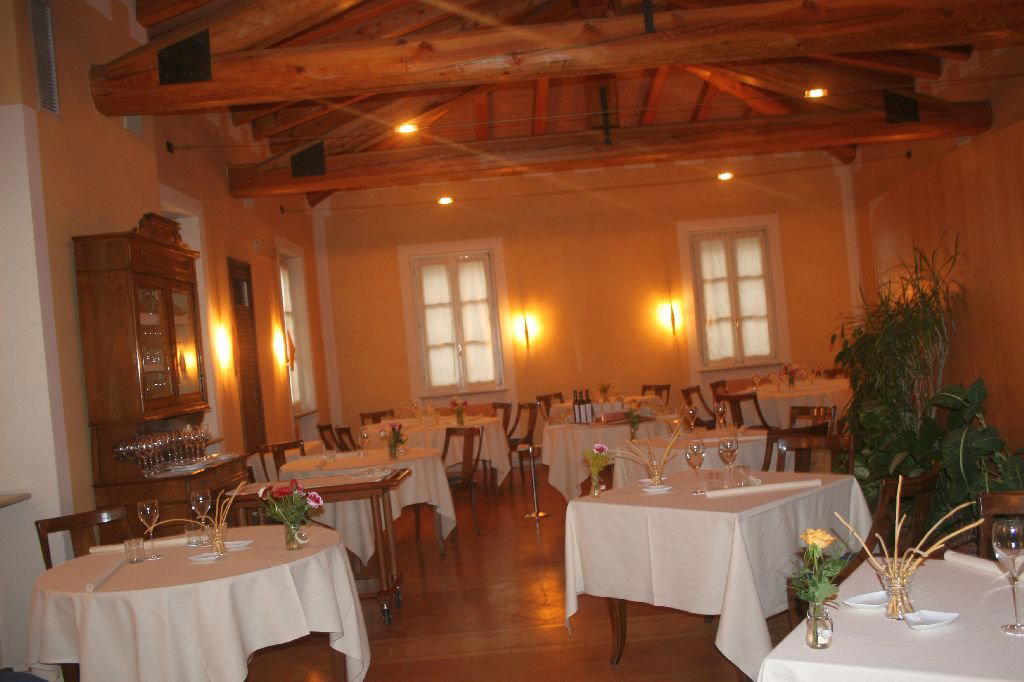
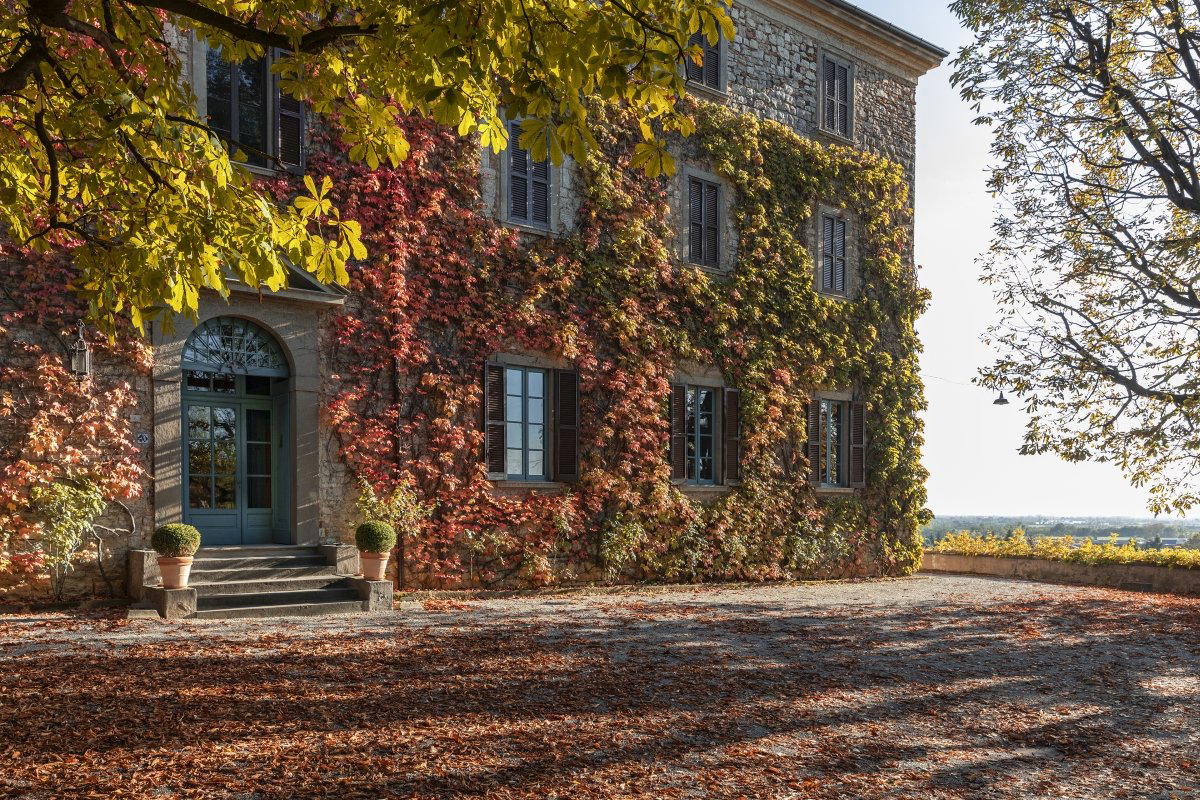
On Via Guglielmo Marconi in Palazzolo sull'Oglio, a small Brescia-province town bisected by the Oglio river, the entrance to Osteria della Villetta announces itself through the kind of Art Nouveau detailing that most Italian towns lost to postwar renovation. The ironwork, the tiled surfaces, the proportions of the dining room: they belong to a building that has been feeding people for more than a hundred years, and that continuity shapes everything about how the kitchen operates. This is not a restaurant performing nostalgia. It is a place where the past is simply the operating manual.
In the broader context of Italian regional dining, that kind of unbroken lineage is increasingly rare. The osteria format, once the backbone of Italian civic eating, has bifurcated sharply: at one end, properties like Osteria Francescana in Modena have appropriated the name while operating in an entirely different register of ambition and price. At the other end, many original osterias have quietly closed or standardised into generic trattoria menus. Osteria della Villetta has done neither. It holds a Michelin Bib Gourmand for 2025, the guide's recognition for cooking that delivers quality at moderate price, and in 2025 it ranked #265 on Opinionated About Dining's Casual in Europe list, having appeared at #224 in 2024 and as Highly Recommended in 2023. The trajectory is consistent upward recognition without a change in format or price register, which tells you something about the kitchen's discipline.
Where Lombardia Meets the Roman Table
The cuisine is described as a combination of Roman and Lombardian, which at first sounds like an editorial contradiction. Lombardia's cooking tradition runs through butter, risotto, polenta, and slow-braised meats; Rome's runs through offal, guanciale, and a different vocabulary of pasta. The overlap is narrower than a menu might suggest, and navigating that duality well requires a clear sense of which dishes belong where. What connects both traditions, and what makes the combination coherent at Osteria della Villetta, is the shared insistence on ingredient quality over technical display. Both Roman and Lombard cooking are, at their foundations, about what the raw material can do when handled correctly, not about what the chef can impose on it.
That philosophy is grounded here in something concrete: a kitchen garden producing vegetables and olive oil that feed directly into the daily menu. In a season-driven kitchen, a garden does more than reduce procurement costs. It sets the rhythm of the menu and eliminates the middle distance between ground and plate. When the courgettes are ready, the courgette dishes appear. When the garden turns, the kitchen turns. This is not a romantic claim but a structural one: kitchens that grow their own produce cannot fake seasonality, because the garden enforces it. The Bib Gourmand's recurring presence on these pages reflects what that discipline produces at the table. For those tracking how ingredient sourcing connects to dining quality across Northern Italy, the comparison with Dal Pescatore in Runate is instructive: a kitchen at a very different price tier that also anchors its identity in the surrounding landscape. The principles rhyme, even if the settings and prices diverge considerably.
The Wine List as a Regional Map
Italian casual dining wine lists often default to generic house pours or a few bottles chosen for margin rather than character. Osteria della Villetta's list operates differently, drawing from Franciacorta, Barolo, and Barbaresco with enough depth to suggest genuine curatorial investment from owner Massimo. Franciacorta is the obvious regional pick: the DOCG sits roughly 25 kilometres west of Palazzolo sull'Oglio, making it the natural local sparkling option in the way that Champagne functions for restaurants in the Marne valley. The inclusion of Barolo and Barbaresco signals a wider Piedmontese ambition that most casual osterias do not bother with at this price tier.
For context on what that level of wine program commitment looks like further up the price register, Enoteca Pinchiorri in Florence operates one of Italy's most referenced cellar programs, and Piazza Duomo in Alba sits inside the Barolo and Barbaresco production zone itself. Osteria della Villetta is not competing at those levels, but its list reflects the same regional literacy that distinguishes a serious Italian kitchen from one that treats wine as an afterthought. Within Palazzolo sull'Oglio, the contrast with the offer at La Corte provides a useful local reference point for how different dining formats in the same town approach their wine programs.
Format, Hours, and Planning Your Visit
Osteria della Villetta operates on a schedule that reflects its role as a neighbourhood institution rather than a destination dining property. The kitchen is closed on Mondays and Sundays. Tuesday through Friday, lunch service runs from noon to 3pm, with Tuesday offering only that midday window. On Friday and Saturday evenings, dinner service opens at 7:30pm and runs to midnight, giving those two evenings the longest dining window of the week. Wednesday and Saturday offer lunch only alongside Friday and Saturday dinner, making Friday and Saturday the two days where the full range of both services is available.
The price register sits at the entry level of the scale (marked €), consistent with the Bib Gourmand positioning: this is cooking that prioritises value without conceding on sourcing or technique. The address is Via Guglielmo Marconi, 104, Palazzolo sull'Oglio, in the Brescia province. For those building a longer stay in the area, the Palazzolo sull'Oglio hotels guide covers accommodation options, and the bars guide and wineries guide map the broader drinking and tasting picture in the town and its surroundings.
Where Osteria della Villetta Sits in the Italian Dining Spectrum
Italy's restaurant landscape above the casual tier is well documented internationally: Enrico Bartolini in Milan, Le Calandre in Rubano, Reale in Castel di Sangro, and Uliassi in Senigallia all occupy the upper register of Italian fine dining, where tasting menus and technical ambition define the offer. At the opposite end, the osteria tradition is the category where Italian cooking's civic function lives: affordable, seasonal, rooted in place, and built for repeat visits. Osteria della Villetta's consistent Bib Gourmand recognition across 2024 and 2025, and its improving Opinionated About Dining position, confirm that it is performing at the ceiling of that casual category. That is where the Bib Gourmand is most meaningful: not as a consolation prize for restaurants that didn't reach higher, but as a recognition that a kitchen is doing the hardest thing in the casual register, which is to cook well and keep prices accessible over a long period.
For a broader picture of where to eat across the town, the full Palazzolo sull'Oglio restaurants guide covers the dining scene in full, and the experiences guide maps what else the area offers beyond the table.
What Do People Recommend at Osteria della Villetta?
Regulars and reviewers consistently point to the kitchen's vegetable-driven dishes as the most direct expression of what makes the place work. With produce coming from the restaurant's own garden, the seasonal plates shift through the year in a way that reflects what the soil is producing rather than what a supplier is offering. The Brescian classics anchor the menu: this is Lombardian cooking at its most recognisable, built on familiar technique and quality sourcing rather than novelty. The wine list draws particular attention for a casual osteria, with the Franciacorta selection reflecting the proximity of the DOCG and the Barolo and Barbaresco choices reflecting owner Massimo's documented interest in Piedmontese reds. The Art Nouveau dining room and retro atmosphere are cited frequently in reviews as a material part of the experience: the setting and the cooking reinforce each other in a way that is difficult to manufacture and takes decades to accumulate.
Frequently asked questions
Has Osteria della Villetta won any awards?
Osteria della Villetta has received recognition including: A bastion of tradition for over a hundred years, Art Nouveau furnishings and a retro atmosphere are the accompaniment to Brescian classics and familiar recipes: always based on seasonal ingredients, as in the case of the many vegetables fro….
What's Osteria della Villetta's location?
Osteria della Villetta is located at Via Guglielmo Marconi, 104, 25036 Palazzolo sull'Oglio BS, Italy, Palazzolo sull'Oglio.
What do people recommend at Osteria della Villetta?
Reviewers and regulars consistently point to the vegetable-driven dishes as the clearest expression of the kitchen's character, drawing directly on produce from the osteria's own garden. That same garden supplies the extra virgin olive oil used throughout. The Brescian classics anchored in seasonal ingredients are the consistent thread across positive coverage, which includes a Michelin Bib Gourmand in both 2024 and 2025 and an Opinionated About Dining ranking of #265 in Europe for 2025.
What price level is Osteria della Villetta?
Pricing at Osteria della Villetta is listed as €.
Cost and Credentials
| Venue | Cuisine | Price | Awards | Notes |
|---|---|---|---|---|
| Osteria della VillettaThis venue (the venue you are viewing) | Traditional Brescia Osteria | $50–100 | Michelin Bib Gourmand | Not listed |
| Atelier Moessmer Norbert Niederkofler | Modern Alpine Fine Dining | $300–500 | 3 Michelin Stars · World's 50 Best #20 | Italian, Creative |
| Dal Pescatore | Classic Italian Fine Dining | $200–300 | 3 Michelin Stars · World's 50 Best #38 | Italian, Italian Contemporary |
| Enoteca Pinchiorri | Contemporary Italian Fine Dining | $200–300 | 3 Michelin Stars · World's 50 Best #32 | Italian - French, Italian Contemporary |
| Enrico Bartolini | Modern Italian Fine Dining | $300–500 | 3 Michelin Stars · World's 50 Best #85 | Creative |
| Osteria Francescana | Avant-Garde Italian Contemporary | $300–500 | 3 Michelin Stars · World's 50 Best #1 | Progressive Italian, Creative |
Recognition history
Dated appearances from independent guides and award organizations, with the underlying list record or original source where available.
Michelin Bib Gourmand
Michelin
Opinionated About Dining Casual in Europe Recommended
Opinionated About Dining
Full recognition history (7 entries)
Michelin Bib Gourmand
Michelin
Opinionated About Dining Casual in Europe Ranked #265
Opinionated About Dining
Michelin Bib Gourmand
Michelin
Opinionated About Dining Casual in Europe Ranked #224
Opinionated About Dining
Opinionated About Dining Casual in Europe Highly Recommended
Opinionated About Dining
Continue exploring
More in Palazzolo sull'Oglio
Restaurants in Palazzolo sull'Oglio
All restaurants in Palazzolo sull'Oglio →
Bars in Palazzolo sull'Oglio
Browse all →
Hotels in Palazzolo sull'Oglio
Browse all →

Details
- Rustic
- Classic
- Cozy
- Intimate
- Special Occasion
- Family
- Historic Building
- Extensive Wine List
- Local Sourcing
- A La Carte
- Vegetarian Friendly
- Gluten Free Options
Current opening hours
- Monday
- Closed
- Tuesday
- 12:15–3 PM
- Wednesday
- 12:15–3 PM
- Thursday
- 12:15–3 PM
- Friday
- 12:15–3 PM, 7:30 PM–12 AM
- Saturday
- 12:15–3 PM, 7:30 PM–12 AM
- Sunday
- Closed
Hours can change for holidays and private events. Hours as of .
Liberty-style furnishings and retro atmosphere with warm, familial welcome in wooden-table rooms rich in history.