Osteria Delbianco
Osteria Delbianco serves Northern Italian cooking at 22 E 49th St, with Lasagna Omaggio alla Nonna Delbianco, Polpette della Nonna, and Fritto Misto dell'Adriatico; conversational pacing suits lunch or dinner.
Pearl is the En Primeur Club membership app — saves, bookings, and concierge access live there. Same editors, same standards.
- Address
- 22 E 49th St, New York, NY 10017
- Phone
- +12128385972
- Website
- osteriadelbianco.com
- Directions
- Get directions
 Saves & bookings on Pearl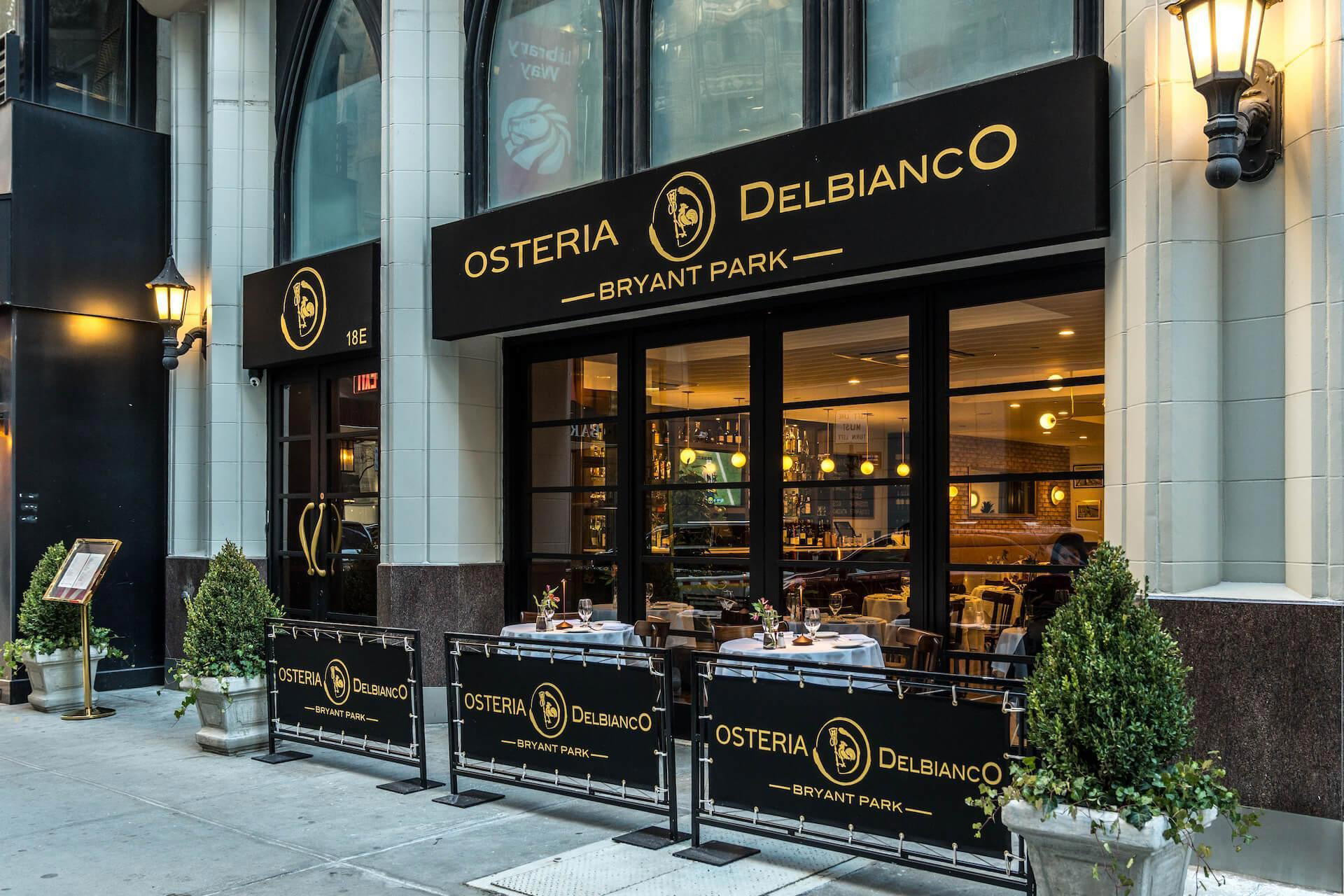
Italian in Midtown: What the Address Reveals
East 49th Street sits in a stretch of Midtown Manhattan where the dining calculus has always been complicated. The neighbourhood feeds a dense population of office workers at lunch and theatre-goers and hotel guests at dinner, which historically rewarded volume and convenience over precision. Against that backdrop, an osteria format, rooted in the Italian tradition of restrained, ingredient-led cooking served in an unpretentious room, carries a specific kind of signal. It announces that the kitchen is betting on the food itself rather than on spectacle or location alone.
The osteria category occupies a distinct position in New York's Italian dining scene. It sits above the neighbourhood trattoria in ambition but below the formal ristorante in ceremony. The leading examples in the city use that middle register deliberately: fewer courses than a tasting menu, more care than a casual pasta bar, and a wine list that rewards curiosity rather than just recognisable labels. Osteria Delbianco at 22 E 49th St operates within that tradition, in a corridor where competitors range from expense-account French rooms to quick corporate lunches. That context matters when reading its menu.
How the Menu Is Built, and What It Argues
Italian menus structured around the osteria model typically move through antipasti, primi, secondi, and contorni in a way that resists compression. Each stage has a distinct logic: the antipasto opens appetite rather than sating it, the primo (almost always pasta or risotto in a serious Italian kitchen) is the structural and technical centrepiece, and the secondo anchors the meal in protein and season. Contorni arrive separately, a reminder that vegetables deserve their own attention rather than being absorbed into a composed plate.
This architecture is deliberately slower than the two-course business lunch format that dominates Midtown. It asks the diner to commit to a sequence, and in doing so it differentiates itself from the abbreviated menus that much of the neighbourhood runs. In New York's broader Italian dining scene, which spans everything from the red-sauce institutions of the outer boroughs to the hyper-refined Italian-American tasting formats at the summit of the market, the osteria approach holds a specific editorial position. It insists that technique and sourcing matter even at a mid-register price point, and it signals that pasta is a course, not a compromise.
The wine list in an osteria of this type typically prioritises regional Italian producers over international hedging. That means bottles from Piedmont, Campania, Sicily, and Friuli appear not as exotic alternatives but as the natural accompaniments to the food. A kitchen that takes the antipasto-primo-secondo structure seriously will generally build its cellar to match, medium-weight reds, high-acid whites, and amaro-anchored digestivo options that make the end of a meal as considered as the beginning.
Midtown Italian in Competitive Context
New York's upper-tier dining rooms operate in a comparable set that includes deeply credentialled French and contemporary tables. Le Bernardin and Per Se sit at the apex of that formal end, where a meal is structured as a single extended event. Atomix and Jungsik New York represent the progressive Korean counter that has redefined what a New York tasting format can look like. Masa occupies a category of its own at the far end of the price spectrum. Osteria Delbianco does not compete in that bracket. Its competitive set is the serious mid-market Italian room: places where the cooking has genuine discipline but the format does not require a special occasion or a three-month lead time to experience.
That positioning is meaningful. Midtown has always struggled to sustain serious Italian cooking at an accessible price point because rents and labour costs push kitchens toward either simplified menus or inflated prices. An osteria that holds the traditional course structure without climbing into tasting-menu territory is making an argument about value and accessibility that the neighbourhood genuinely needs.
For comparison, high-ambition American tables in other cities, Alinea in Chicago, The French Laundry in Napa, Lazy Bear in San Francisco, Single Thread Farm in Healdsburg, Blue Hill at Stone Barns in Tarrytown, Providence in Los Angeles, Addison in San Diego, The Inn at Little Washington, Bacchanalia in Atlanta, and Emeril's in New Orleans, each operate at price points and formality levels calibrated to their markets. The Italian osteria format makes a different bet: that a well-built traditional menu, executed with ingredient awareness and technical care, is a credible alternative to the tasting-menu arms race. Internationally, that argument has been validated at rooms like 8½ Otto e Mezzo Bombana in Hong Kong and, at a far more formal register, Alain Ducasse at Louis XV in Monte Carlo.
See our full New York City restaurants guide for a broader map of where Italian cooking sits relative to the city's other dining traditions.
Know Before You Go
Address: 22 E 49th St, New York, NY 10017
Neighbourhood: Midtown Manhattan, between Park and Madison Avenues
Getting There: The 49th St station (6 train) and the 5th Ave/53rd St station (E, M trains) are both within a few minutes' walk. Grand Central Terminal is walkable.
Leading For: A structured Italian meal that follows the traditional course sequence; business lunches where the food deserves as much attention as the conversation
Note: Open daily from 11:30 AM to 10 PM. Reservations are recommended.
Cuisine and Recognition
Comparable venues nearby, for context on price, style, and recognition.
| Venue | Cuisine | Price | Notes |
|---|---|---|---|
| Osteria DelbiancoThis venue — the venue you are viewing | Northern Italian | $$ | Not listed |
| Paulie Gee’s, East Village slice shop | New York-Style Pizza | $$ | East Village |
| Paulie Gee’s | Neapolitan-Inspired Pizza | $$ | Gowanus |
| Patsy's Pizzeria | Classic Coal-Oven Neapolitan Pizza | $$ | Murray Hill-Kips Bay |
| Nocello | Northern Italian Trattoria | $$ | Hell's Kitchen |
| Patrizia's Of Manhattan | Authentic Family-Style Italian | $$ | Murray Hill-Kips Bay |
Continue exploring
More in New York City
Restaurants in New York City
Browse all →
Bars in New York City
Browse all →
Hotels in New York City
Browse all →




At a Glance
- Cozy
- Elegant
- Classic
- Intimate
- Date Night
- Business Dinner
Current opening hours
- Monday
- 11:30 AM–10 PM
- Tuesday
- 11:30 AM–10 PM
- Wednesday
- 11:30 AM–10 PM
- Thursday
- 11:30 AM–10 PM
- Friday
- 11:30 AM–10 PM
- Saturday
- 11:30 AM–10 PM
- Sunday
- 11:30 AM–10 PM
Hours can change for holidays and private events. Last verified .
Warm and inviting bistro-style atmosphere with elegant white tablecloths and charming slender lamps.