Paulie Gee’s — East Village slice shop
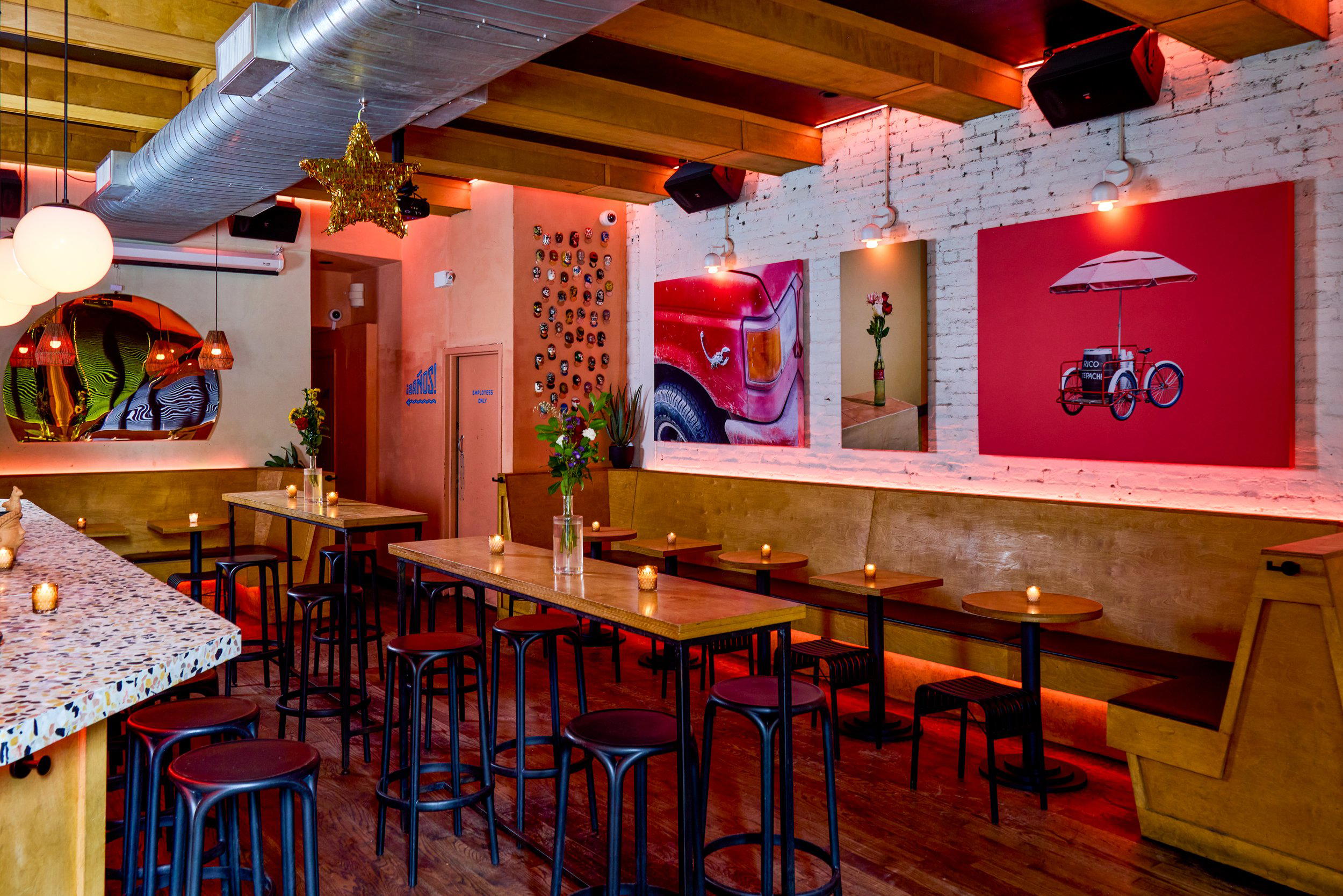
Paulie Gee's East Village slice shop, operated by George Lin, occupies a specific tier in New York's pizza conversation: the serious slice counter that treats sourcing and format with the same rigor applied to the city's tasting-menu rooms. Slices, squares, and a committed vegan lineup make it a reference point for how a neighborhood pizza format can be executed with genuine intention.
Pearl is the En Primeur Club membership app — saves, bookings, and concierge access live there. Same editors, same standards.
- Address
- New York City, United States
- Directions
- Get directions
 Saves & bookings on Pearl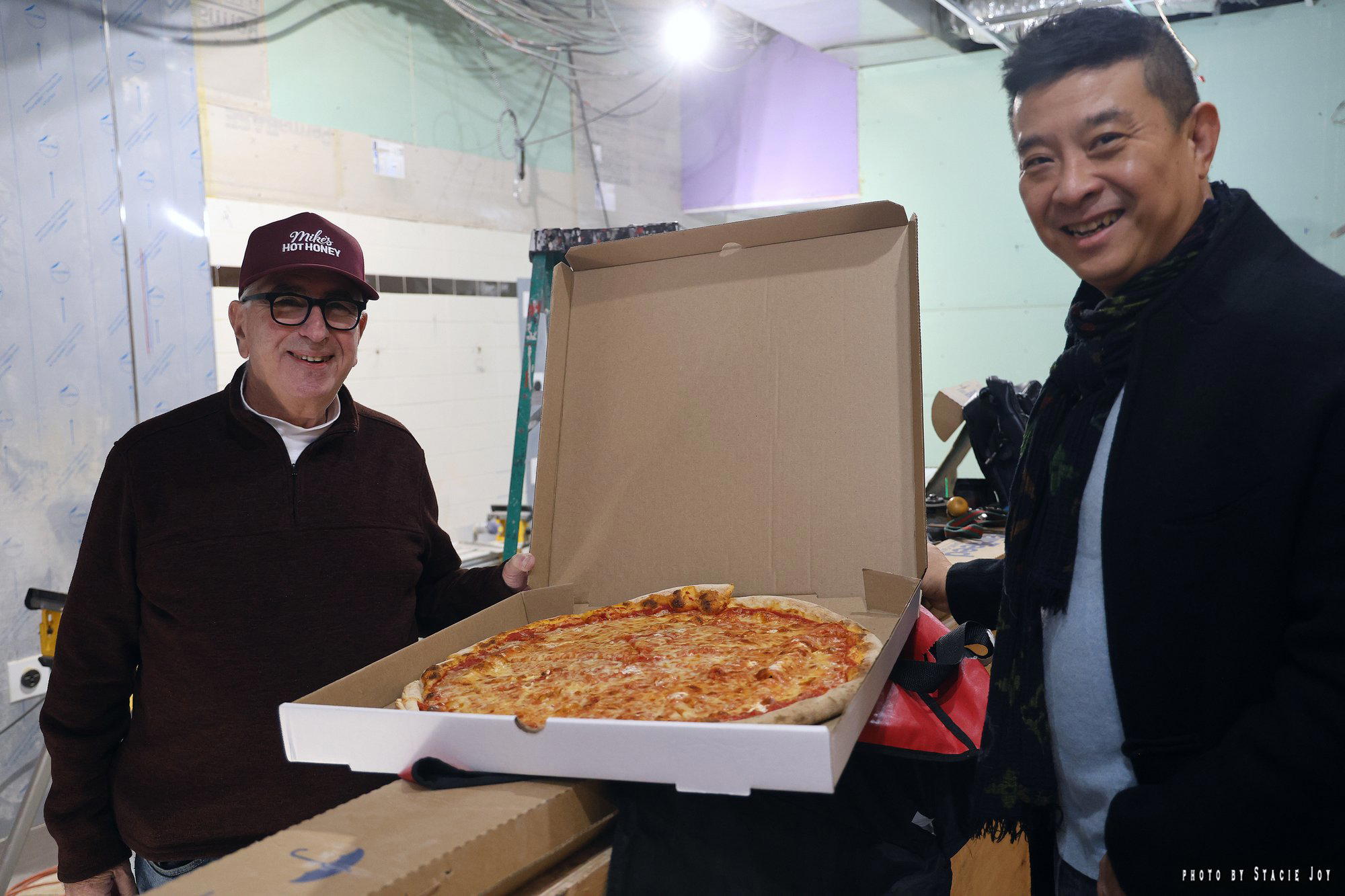
The Slice Counter as Deliberate Format
New York's pizza conversation has long split along familiar fault lines: the old-guard coal-oven institutions of the outer boroughs, the Neapolitan-inflected newcomers chasing wood-fire credentials, and the slice shops that function as the city's ambient background noise. A smaller, more considered tier has emerged within that last category over the past decade, counters where the slice format is treated as a serious discipline rather than a convenience category. Paulie Gee's East Village location, operated by George Lin, belongs to that tier. The address puts it in a neighborhood where the dining conversation usually skews toward contemporary tasting rooms and fermentation-forward wine bars, which makes the presence of a dedicated slice counter with a genuine vegan program all the more pointed.
The East Village has a longer institutional memory for affordable, neighborhood-first eating than most Manhattan ZIP codes, and a slice shop with real sourcing convictions fits that context more naturally here than it might in, say, the West Village or Tribeca. This is not a destination from a hotel concierge recommendation alongside Le Bernardin, Masa, or Per Se. It operates on a different register entirely, one where the decision framework is about daily eating, neighborhood loyalty, and the specific pleasure of a well-made slice rather than occasion dining.
What Sourcing Means at the Slice Level
The sustainability conversation in American restaurants has largely been conducted at the high end, farm-integrated tasting rooms in Healdsburg, ingredient-obsessed chef's counter formats like Lazy Bear in San Francisco, or the hyper-sourced procurement programs at places like The French Laundry in Napa. The infrastructure built around that conversation, relationships with small farms, attention to waste streams, intentional menu design, rarely filters down to the slice counter format, which operates on thin margins, high volume, and rapid turnover.
When a slice shop starts asking harder questions about what goes on and in its dough, the economics become genuinely complicated. Flour sourcing, dairy provenance, the integrity of tomato supply, these are not abstract concerns at the pizza level, where ingredient cost sits in direct tension with the price point that defines the format's accessibility. The Paulie Gee's operation, which grew from a Brooklyn original with a reputation for ingredient attention and a serious vegan program, carries that orientation into the East Village format. The vegan lineup here is not a regulatory checkbox or a marketing pivot toward a demographic; it is a structural part of what the shop offers, which signals a different relationship to menu design than most pizza counters maintain.
The Vegan Slice as a Technical Problem
Across American pizza culture, vegan offerings tend to default to subtraction: remove the cheese, add vegetables, call it done. The result is rarely interesting. A committed vegan pizza program requires approaching the format as an entirely separate technical problem, how to build crust texture without dairy fat, how to achieve the savory depth that melted cheese provides through other means, how to source plant-based alternatives that behave correctly under high heat. This is the gap that separates a serious vegan program from a token one, and it is where the Paulie Gee's lineage has historically distinguished itself from the broader New York pizza market.
For comparison, the vegan-option conversation at full-service restaurants in this city, even at the level of a technically ambitious tasting menu in Chicago or a seafood-centric room like Providence in Los Angeles, involves kitchen infrastructure that a slice counter simply does not have. The fact that a slice operation addresses the technical challenge at all is worth noting, and the fact that it does so with apparent conviction rather than minimum compliance is the editorial point.
Squares and Slices: Format Distinctions That Matter
The presence of both round slices and square cuts on the menu is a format decision that carries more information than it might appear to. Round slices signal Neapolitan or New York-style lineage, where the single large pie is cut into triangular portions. Square cuts, sometimes called Sicilian in the New York context, sometimes simply called grandma style depending on the thickness and crumb structure, represent a different dough tradition entirely, one that prioritizes a thick, focaccia-adjacent base with a crisp bottom and an open crumb. Running both formats in a slice shop requires managing two distinct dough programs, two bake profiles, and two sets of topping logics. It is a more operationally demanding approach than specializing in one format, and it serves a customer whose preferences span both traditions rather than chasing a single demographic.
New York's slice culture, viewed against the tasting-menu tier where the city's international dining reputation is made, the rooms that draw visitors from Hong Kong to compare against Bombana or from Monte Carlo to benchmark against Alain Ducasse's Louis XV, operates as a parallel value system. The metrics are entirely different: not wine pairings or service choreography, but crust structure, sauce-to-cheese ratio, reheating discipline, and whether the fold holds. The East Village location sits inside that parallel system and takes it seriously.
Planning Your Visit
The East Village address places Paulie Gee's East Village slice shop within walking distance of the neighborhood's broader dining circuit. Walk-in is the operating format for a slice counter, no reservation infrastructure applies here, which means timing against peak lunch and dinner hours is the relevant logistical consideration rather than booking windows. The vegan options are part of the standing menu rather than a rotating special, so they can be planned for rather than hoped for. For broader context on where this sits within the city's dining range, see our full New York City restaurants guide, and for the surrounding neighborhood's other entry points, bars, hotels, experiences, our New York City bars guide, hotels guide, and experiences guide cover the broader picture. The New York City wineries guide rounds out the full city coverage for those building a multi-day itinerary.
Credentials Lens
Comparable venues nearby, for context on price, style, and recognition.
| Venue | Cuisine | Price | Notes |
|---|---|---|---|
| Paulie Gee’s, East Village slice shopThis venue — the venue you are viewing | New York-Style Pizza | $$ | Not listed |
| Novelli Cafe & Restaurant | Italian & Middle Eastern Fusion | $$ | Crown Heights (South) |
| Frankies 457 Spuntino | Italian-American Trattoria | $$ | Carroll Gardens-Cobble Hill-Gowanus-Red Hook |
| Pizza Studio Tamaki | Tokyo-Neapolitan Pizza | $$ | East Village |
| Lazzara's Pizza Cafe | Italian Pizza Cafe | $$ | Midtown-Times Square |
| Denino's Greenwich Village | Classic Thin-Crust Italian Pizzeria | $$ | Greenwich Village |
Continue exploring
More in New York City
Restaurants in New York City
Browse all →
Bars in New York City
Browse all →

Hotels in New York City
Browse all →








At a Glance
- Casual
- Lively
- Well Known
- Casual Hangout
- Solo
- Group Dining
- Late Night
- Standalone
- Beer Program
- Local Sourcing
Casual, energetic slice shop atmosphere with a focus on quick service and community gathering.