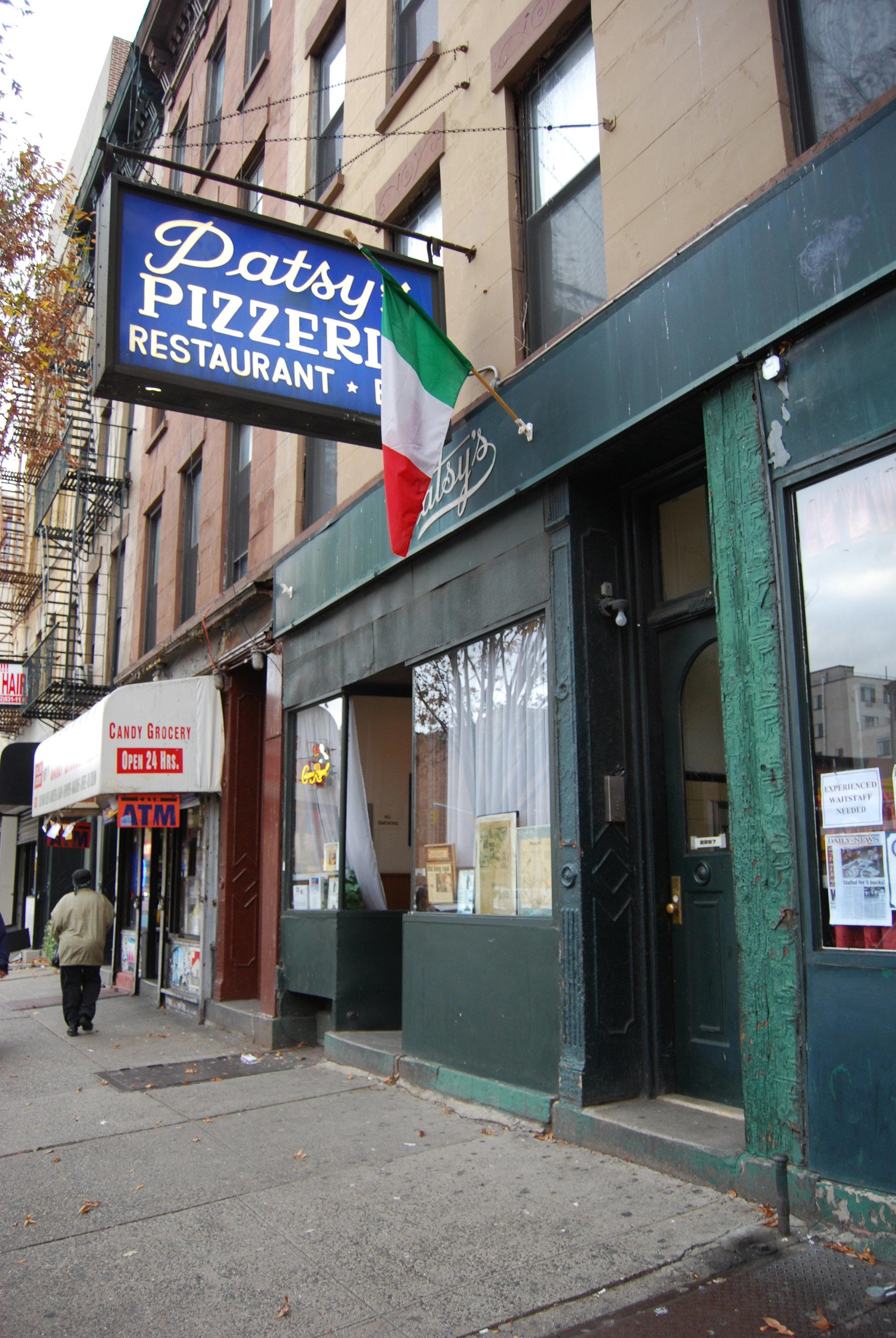
Patsy's Pizzeria
Our verdict
At 801 2nd Ave, Patsy's Pizzeria occupies a corner of Midtown Manhattan where the city's oldest pizza traditions remain in active practice. The coal-fired method and thin-crust New York style place it in a lineage stretching back to East Harlem's early twentieth-century pizzerias. For visitors tracking the original grammar of New York pizza, this address remains a consistent reference point.

Pearl is the En Primeur Club membership app, where members save venues, book tables and use the concierge.
The menu
What to order
- The Original Pizza
- Patsy's Special
Coal, Crust, and the Grammar of New York Pizza
Walk into Patsy's Pizzeria on 2nd Avenue and you are stepping into a format that predates the city's current obsession with sourdough fermentation schedules and wood-fired Neapolitan imports. The coal-fired oven is the defining technical fact here. Coal burns hotter and more evenly than wood, producing a char pattern on the crust that wood ovens rarely replicate with the same consistency. That heat differential is not an aesthetic preference; it is the reason New York's early pizzeria operators chose coal in the first place, and it is why the handful of remaining coal-fired rooms in the city occupy a distinct tier in any serious accounting of the form.
Patsy's belongs to a lineage that traces directly to East Harlem, where the Neapolitan immigrant community established what became the template for New York-style pizza in the first decades of the twentieth century. The thin, foldable slice, the high-gluten flour crust, the restrained sauce application, the low-moisture mozzarella: these are not arbitrary choices but a coherent technical system developed in response to local ingredients, commercial oven constraints, and a customer base that needed a fast, portable meal. Understanding that system is more useful than any star rating when deciding what to order.
Where This Pizza Sits in New York's Current Market
New York's pizza scene has fractured into several distinct competitive sets over the past fifteen years. At one end, a group of destination pizzerias with long reservation windows and tasting-menu-adjacent pricing has emerged, drawing comparisons to the fine-dining tier occupied by rooms like Le Bernardin, Eleven Madison Park, or Per Se. At another end, the fast-casual slice shop has proliferated across every borough. Coal-fired old-school rooms occupy a different bracket entirely: accessible in price, not casual in execution, carrying the weight of documented tradition without the performance of modernity.
Patsy's sits in that middle tier alongside a small number of New York addresses where the coal oven remains the central technical commitment. In a city where Masa and Atomix represent what happens when a single imported tradition is pushed to its technical and financial extreme, Patsy's represents the opposite end of the ambition spectrum: a form that arrived fully developed and has been most faithfully served by practitioners who resist the urge to improve it.
The Technique: Imported Method, American Context
The Neapolitan pizza tradition that arrived in New York in the early 1900s was not transplanted intact. It was adapted. The flour changed. The mozzarella changed. The oven fuel changed. What emerged was not a diluted version of the original but a distinct regional form with its own technical logic.
Coal-fired pizza in New York operates at temperatures that can exceed 800 degrees Fahrenheit, producing a bake time measured in minutes rather than the longer window of lower-heat ovens. The crust has to be thin and properly stretched to survive that environment without burning before the cheese melts. The sauce must be applied sparingly for the same reason. Every element of the formula is calibrated to the oven, which is why coal-fired pizza from a skilled operator looks and tastes categorically different from the same ingredients cooked at a lower temperature. This is not a matter of preference; it is applied thermodynamics.
For readers tracking how local ingredient sourcing intersects with classic technique, Patsy's occupies a different position than farm-to-table tasting rooms like Blue Hill at Stone Barns in nearby Tarrytown, or destination-driven operations like Single Thread Farm in Healdsburg. The ingredient philosophy here is classical rather than curatorial: use the right flour, the right cheese, the right tomatoes, and let the oven do the work. Provenance in this context means fidelity to the original supply chain, not sourcing novelty.
The Broader American Pizza Tradition
New York's coal-fired pizzerias sit within a wider national argument about what constitutes authoritative pizza. That argument now runs from Chicago's deep-dish rooms to the wood-fired California style associated with the West Coast dining scene, and further still to modern tasting-format operations that treat pizza as a vehicle for technique. Rooms like Lazy Bear in San Francisco and Smyth in Chicago operate at the far end of that spectrum, where culinary ambition and local-ingredients philosophy intersect in elaborate tasting formats.
Patsy's is not in that conversation and does not need to be. Its authority derives from continuity and technical specificity, not from reinvention. For the reader building a serious map of American dining, it sits alongside places like Emeril's in New Orleans or Frasca Food and Wine in Boulder as a venue whose relevance is inseparable from the regional tradition it represents. The Italian roots also connect to a transatlantic thread; for context on how original-source Italian cooking operates at its most refined, Dal Pescatore in Runate and Atelier Moessmer Norbert Niederkofler in Brunico offer instructive reference points for how Italian regional cooking treats product integrity as its primary technical discipline.
Planning Your Visit
Patsy's Pizzeria is located at 801 2nd Ave, New York, NY 10017, in Midtown Manhattan. The address is walkable from Grand Central Terminal and accessible from multiple subway lines along the east side. For readers building a broader New York dining itinerary that spans from this price tier up through the city's tasting-menu upper bracket, our full New York City restaurants guide maps the full range. Additional fine-dining reference points across the US, including The French Laundry in Napa, Providence in Los Angeles, Addison in San Diego, and The Inn at Little Washington, are covered in the EP Club US directory.
Quick reference: 801 2nd Ave, Midtown Manhattan. Coal-fired New York-style pizza. Walk-in friendly; no advance booking infrastructure is publicly documented.
Frequently asked questions
Where exactly is Patsy's Pizzeria?
Patsy's Pizzeria is located at 801 2nd Ave, New York, NY 10017, New York City.
How does Patsy's Pizzeria on 2nd Avenue fit into New York City's coal-fired pizza tradition?
Coal-fired pizza in New York City traces back to the early twentieth century, and Patsy's is part of that documented lineage rather than a recent entrant to the format. The 2nd Avenue address places it in Midtown, distinct from the Brooklyn and East Harlem coal-oven establishments that anchor the tradition's origin points. That geography matters: Midtown coal-fired pizza operates in a higher-traffic, more tourist-adjacent context than the neighbourhood originals, yet the oven method remains the same imported technique.
What should I eat at Patsy's Pizzeria?
The coal-fired pizza is the reason to come to 801 2nd Ave. The format here predates the city's current sourdough-fermentation wave, so the focus is on crust structure and char produced by the coal oven rather than on toppings complexity. Order plainly and let the technique speak.
Should I book Patsy's Pizzeria in advance?
Patsy's Pizzeria on 2nd Avenue draws both Midtown regulars and visitors arriving from nearby Grand Central Terminal, so timing matters more than a formal reservation strategy. Arriving outside peak lunch and dinner windows on weekdays tends to ease the wait. Check current booking options directly with the venue.
What's the signature at Patsy's Pizzeria?
The coal-fired oven is the defining element. In New York City's pizza conversation, coal-fired crust occupies a specific historical register, separate from both the wood-fired Neapolitan revival and the New Haven apizza tradition. Patsy's 2nd Avenue location sits squarely in that coal-oven lineage.
Credentials Lens
| Venue | Cuisine | Price | Awards | Notes |
|---|---|---|---|---|
| Patsy's PizzeriaThis venue (the venue you are viewing) | Classic Coal-Oven Neapolitan Pizza | $20–30 | Not listed | Not listed |
| Le Bernardin | French Seafood Fine Dining | $300–500 | 3 Michelin Stars · World's 50 Best #13 | French, Seafood |
| Atomix | Modern Korean Tasting Menu | $300–500 | 2 Michelin Stars · World's 50 Best #7 | Modern Korean, Korean |
| Per Se | French Fine Dining Tasting Menu | $300–500 | 3 Michelin Stars · World's 50 Best #40 | French, Contemporary |
| Masa | Traditional Japanese Omakase | $500+ | 2 Michelin Stars · World's 50 Best #27 | Sushi, Japanese |
| Eleven Madison Park | Contemporary Plant-Based Fine Dining | $300–500 | 3 Michelin Stars · World's 50 Best #4 | French, Vegan |