Osteria Angelina

Michelin Plate
Our verdict
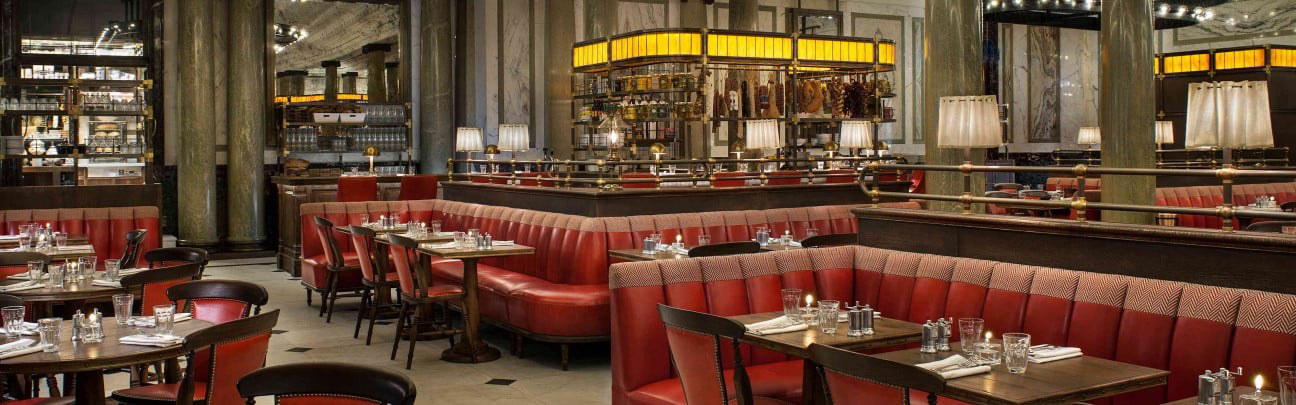
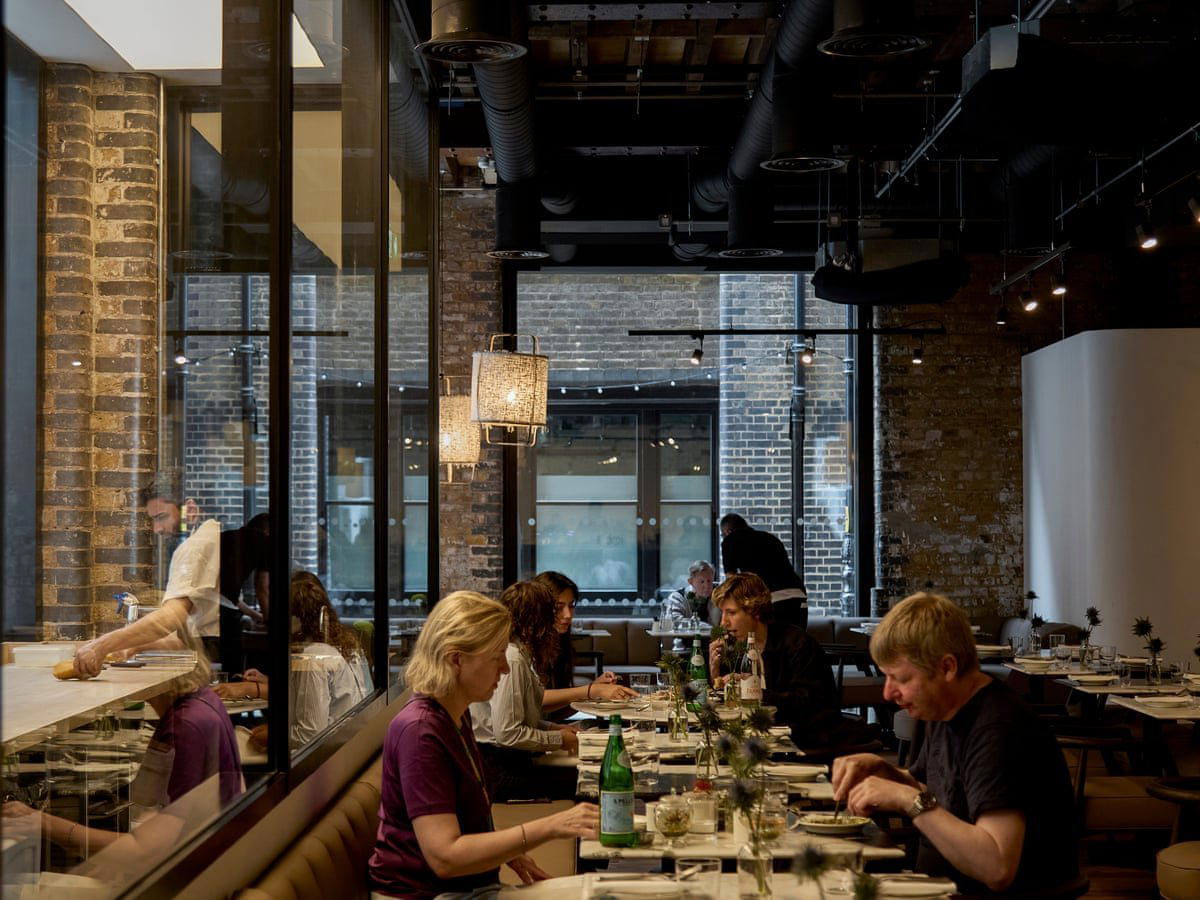
Osteria Angelina in Shoreditch, London serves Italian-Japanese fusion—Itameshi—where an open pasta lab meets precise umami techniques. Must-try dishes include Sicilian Red Prawns with tentsuyu and crispy rice, Tortellini with Truffle and Kombu, and Hamachi Sashimi with truffle soy and furikake. The kitchen focuses on seasonal, shareable plates that balance silky handmade pasta, raw sashimi freshness, and Japanese seasoning like kombu and kosho. Expect a warm, inviting atmosphere in a reworked warehouse loft, a focused wine list of Italian and natural producers, and private dining for up to 20 guests. Reservations via the official site are recommended for dinner, especially weekends.

Pearl is the En Primeur Club membership app, where members save venues, book tables and use the concierge.
The menu
What to order
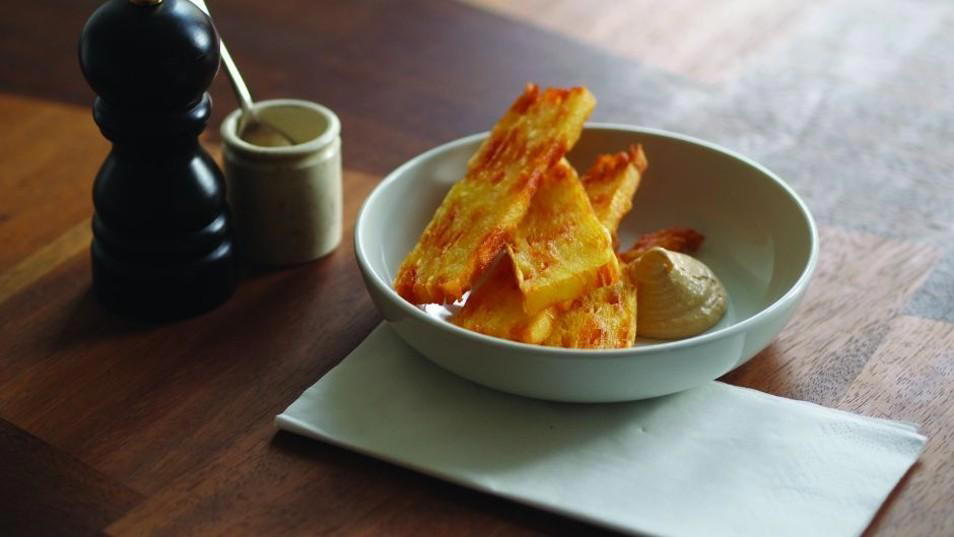
- Hokkaido Milk Bread
- Tortellini Truffle Kombu
- Fazzoletti Duck Ragu
- Hamachi Sashimi
East London's Italian Osteria Format, Placed in Context
Nicholls Clarke Yard in E1 sits within a stretch of East London where the hospitality offer has shifted considerably over the past decade. Bermondsey and Shoreditch set the template: independent operators, neighbourhood pricing, and cooking that draws on European traditions without the formality of the West End's tasting-menu circuit. Osteria Angelina occupies an address inside that broader movement, positioning itself as an Italian osteria format in a district where that category remains less crowded than its French or pan-Asian equivalents.
The osteria model itself carries specific expectations. In Italy, the form sits below the ristorante in ceremony but not necessarily in culinary ambition. Portions are generous, wine lists lean regional, and the room operates with an ease that a tasting-menu counter rarely achieves. London has interpreted this format with varying degrees of fidelity. Where some operators use the label loosely to mean "casual Italian," others hold tightly to the original premise of a dining room where the interaction between kitchen, floor, and cellar is lateral rather than hierarchical. At its finest, the osteria format produces evenings where the service reads as hospitality rather than performance.
The Team Dynamic in an Osteria Setting
Italian restaurants in London have historically succeeded or failed on the coherence of their front-of-house operation as much as on the quality of the cooking. The cuisine itself is unforgiving in its simplicity: a pasta with four ingredients cannot hide behind technique the way a complex reduction can. What fills the gap between adequate and confident is usually a floor team that understands the menu deeply enough to guide choices without over-explaining, and a wine program that complements the cooking rather than running parallel to it.
This is particularly relevant in the E1 corridor, where neighbourhood-format restaurants compete on atmosphere and regularity of visit rather than occasion dining. A guest who returns three or four times a year will notice whether the floor team has retained institutional knowledge, whether the sommelier (or the person carrying that function) has updated the list seasonally, and whether the kitchen and floor are working from the same set of priorities. The osteria format rewards this kind of sustained internal coherence in ways that larger, more transactional operations cannot replicate.
London's Italian dining scene, for context, spans from the Michelin-acknowledged rooms in Mayfair and Knightsbridge to the trattoria-style independents scattered through Islington, Soho, and now increasingly East London. The top end of that spectrum produces technically polished cooking but can feel removed from the Italian original. The neighbourhood tier, when it functions well, offers something closer to the source material: a meal built around conviviality and without the pacing mechanics of a formal tasting menu. For comparison across the broader London dining spectrum, CORE by Clare Smyth (Modern British) and The Ledbury (Modern European, Modern Cuisine) represent what the formal tier looks like, while Dinner by Heston Blumenthal (Modern British, Traditional British) and Sketch, The Lecture Room and Library (Modern French) mark out the occasion-dining end of the market. Osteria Angelina operates in a different register from all of these, and that distance is a feature, not a gap.
East London as a Context for Independent Italian Dining
The E1 postcode has developed a dining identity built around independent operators with defined points of view. Unlike the Mayfair cluster, where rent economics push restaurants toward high-ticket formats, East London rewards operators who build repeat local custom. The Italian osteria fits this context well: it is a format designed for regular rather than singular visits, and it benefits from a neighbourhood that has the food literacy to appreciate restraint in both cooking and pricing.
For those building a broader picture of London's dining geography, the EP Club's full London restaurants guide maps the city's range across formats, price tiers, and neighbourhoods. The London hotels guide, bars guide, wineries guide, and experiences guide complete the picture for visitors planning around Osteria Angelina's location.
Outside London, the UK's formal dining tier is represented by rooms like Restaurant Gordon Ramsay (Contemporary European, French) in the capital itself, and further afield by The Fat Duck in Bray, L'Enclume in Cartmel, Moor Hall in Aughton, Gidleigh Park in Chagford, Hand and Flowers in Marlow, and Le Manoir aux Quat' Saisons, a Belmond Hotel in Great Milton. These make useful reference points for what the tasting-menu and destination-dining formats look like in the UK, against which a neighbourhood osteria in E1 reads as a deliberate alternative. Internationally, Le Bernardin in New York City and Atomix in New York City represent comparable premium-neighbourhood-format ambitions in a different market.
Planning Your Visit
Osteria Angelina is located at 1 Nicholls Clarke Yard, London E1 6SH. The address sits within walking distance of Aldgate East and Whitechapel stations, making it accessible from both the City and the broader East London network. As with most independent osteria-format rooms in this tier, booking ahead is advisable, particularly for weekend covers and larger tables. For current hours, booking availability, and menu information, the venue's own channels are the most reliable source.
Logistics at a Glance
| Detail | Osteria Angelina | Comparable London Formal Rooms |
|---|---|---|
| Format | Neighbourhood osteria | Tasting menu / à la carte formal |
| Price register | Independent neighbourhood tier | ££££ (The Ledbury, CORE, Gordon Ramsay) |
| Location | E1 (East London) | Notting Hill, Chelsea, Mayfair |
| Booking lead time | Typically 4–12 weeks for top-tier rooms | |
| Dress code | Not formally stated | Smart casual to formal depending on room |
Frequently asked questions
What part of town is Osteria Angelina in?
Osteria Angelina is located at 1, Nicholls Clarke Yard, London E1 6SH, United Kingdom, London.
Is Osteria Angelina suitable for a group dinner in East London?
Osteria Angelina is located at 1 Nicholls Clarke Yard, E1, within a yard setting that is atypical for the area and better suited to smaller gatherings than large party dining. The osteria format generally runs tighter room capacities than full-scale trattoria or brasserie operations. For groups larger than four to six, it is worth contacting the venue in advance to confirm availability and any set menu arrangements.
What do people recommend at Osteria Angelina?
Visitors to the E1 dining scene in this format typically report that pasta and antipasti courses carry the most weight. Checking the venue directly before visiting will give you the clearest picture of what is currently on offer.
Do they take walk-ins at Osteria Angelina?
Walk-in policy has not been publicly confirmed for Osteria Angelina at 1 Nicholls Clarke Yard, London E1 6SH. Independent operators in this part of East London vary considerably on reservations versus walk-in availability, and smaller-format osteria rooms tend to fill quickly on evenings and weekends. Contacting the venue directly before arrival is advisable if you do not have a booking.
What has Osteria Angelina built its reputation on?
The osteria format itself signals a commitment to a less theatrical, more produce-led style of Italian hospitality. No formal award record is publicly confirmed at this stage, but its address in Nicholls Clarke Yard places it in a neighbourhood where independent credibility carries weight.
Do they accommodate allergies at Osteria Angelina?
For a venue at 1 Nicholls Clarke Yard, London E1 6SH, the most reliable approach is to check the venue's official channels ahead of your visit to discuss specific dietary requirements. Italian osteria kitchens frequently work with gluten, dairy, and nuts as core ingredients, so advance notice is particularly useful here.
A Quick Peer Check
Comparable venues nearby, for context on price, style, and recognition.
| Venue | Cuisine | Price | Awards | Notes |
|---|---|---|---|---|
| Osteria AngelinaThis venue (the venue you are viewing) | Italian-Japanese Fusion (Itameshi) | $50–100 | Michelin Plate | Not listed |
| The Alchemist | International Fusion with British Influences | $50–100 | Not listed | Covent Garden |
| Pantechnicon | Modern Japanese-Nordic Fusion | $50–100 | Not listed | Belgravia |
| Mission | Seasonal Cafe with Japanese Influences | Not listed | Not listed | Bethnal Green |
| Doost & Amici - Flavorful Dishes of Iran to Italy | Persian-Italian Fusion | $20–30 | Not listed | Vauxhall |
| MBER | Pan-Asian Tapas and Cocktails | $50–100 | Not listed | Monument |
Recognition history
Dated appearances from independent guides and award organizations, with the underlying list record or original source where available.
Michelin Plate
Michelin · 2026 Michelin Plate