Tabelog 100 #72
Our verdict
Osaka’s halal dining scene is strongest where community infrastructure and everyday restaurant culture overlap. Osaka Halal Restaurant, a Pakistani curry and biryani room near Osaka Masjid, has earned Tabelog 100 recognition in Asian and ethnic cuisine while keeping the format informal, family-friendly, and built around halal service rather than tourist-facing spectacle.

Pearl is the En Primeur Club membership app, where members save venues, book tables and use the concierge.
The menu
What to order
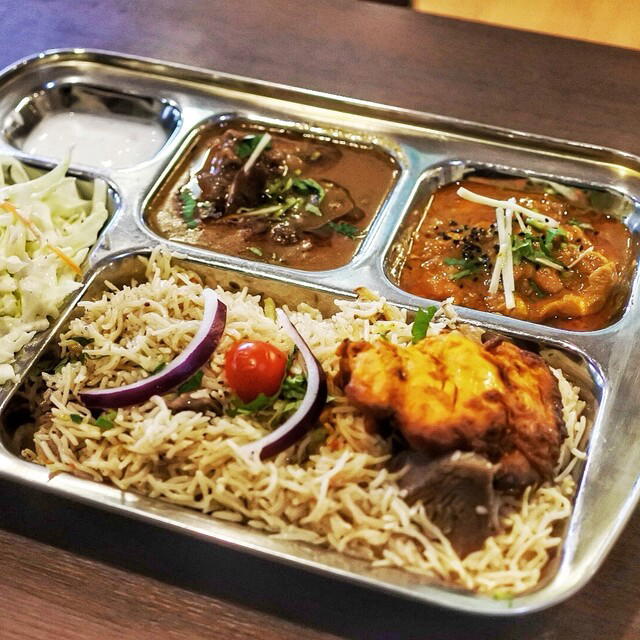
- Chicken Biriyani
- Mutton Biriyani
- Friday buffet with curries, pulao, naan and pakora
- Weekend specials: biryani & haleem (Sat), pulao & nihari (Sun)
Approach Osaka Halal Restaurant and the restaurant reads less as a destination dining room than everyday dining infrastructure. The setting matters in broad terms: a practical Osaka restaurant serving diners who are looking for halal food, familiar curry formats, and a meal that works for repeat use as much as for discovery. Osaka’s dining image often centres on counter theatre, takoyaki queues, ramen lanes, and department-store basements; halal Pakistani food works differently, shaped by practical use and community-facing demand rather than display.
That is the point. Where many acclaimed Osaka meals depend on tiny counters and chef-led choreography, Osaka Halal Restaurant belongs to a more communal tradition. Pakistani, curry, and Indian curry categories suit a room that can be read through shared staples, rice, bread, curry, and everyday comfort. Its Tabelog Hyakumeiten recognition in 2024 gives it a public credential, but the stronger signal is the format: halal dining in Osaka that treats curry-led meals as a complete everyday proposition, not novelty.
A practical room for Pakistani cooking, not a staged dining set
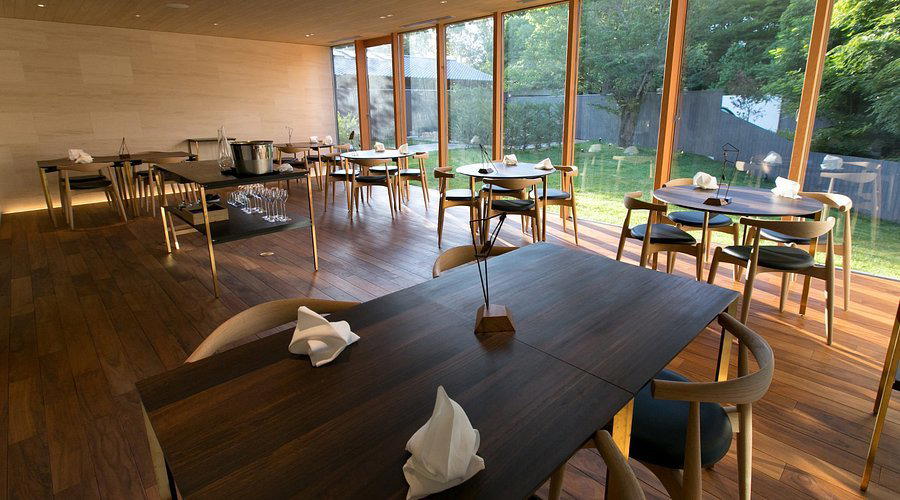
Restaurant design is often discussed through lighting, finishes, and tableware. Here it is function: a space for solo meals, group meals, Muslim diners observing dietary rules, and non-Muslim diners seeking Pakistani food. Its success is not decorative drama but making halal dining feel normal in Osaka, where mainstream restaurants can still prompt questions about ingredients and preparation.
The food categories are practical too. The restaurant is listed as Pakistani, curry, and Indian curry, which signals a broad South Asian frame rather than a single luxury tasting-menu identity. That kind of restaurant rewards diners who arrive ready for rice, bread, curry, and spice-led comfort rather than a staged sequence of courses. It also suits the lower-cost range reflected in its listed lunch and dinner budgets.
Within Osaka’s casual dining tier, the value is clear. Ramen counters such as Shoyu to Kai to Men Soshite Hito to Yume and Men Ippai occupy a similar low-cost bracket, but offer different precision: one bowl, short dwell time, tight turnover. Pakistani halal dining asks for a slower table rhythm, with shared staples and curry-led combinations. Compared with a more polished room such as ku:de kiyo, the contrast is sharper: composed-course dining culture on one side, a halal, curry-centred everyday table on the other.
The reputation is built on halal discipline and regional specificity
Halal restaurants in Japan are often flattened into tourist convenience, but stronger examples carry clearer culinary identity. This one is listed as Pakistani, curry, and Indian curry, showing how Japanese search categories compress South Asian cooking into broad labels. The draw is the specificity implied by that listing: a halal restaurant in Osaka where Pakistani cooking and curry formats are the core reference points rather than an afterthought.
The Tabelog record strengthens that position. Its 2024 Hyakumeiten recognition and 3.58 score place the restaurant among casual venues that have moved from niche recognition into broader Japanese food-list visibility. Tabelog’s score is not a luxury marker; it signals that a low-friction, everyday room has earned attention in a category where diners cross town for specificity.
For travellers using Osaka as a food city rather than a checklist, the comparison helps. The city’s dining range runs from quick casual meals and specialist counters to more polished dining rooms. A Pakistani halal room belongs in that civic map because it shows another appetite: accommodation, repeat use, and religiously grounded hospitality, not just speed, novelty, or precision.
How to read the experience before ordering
The smartest approach is to treat the room as a clue. A halal dining room in Osaka has different pressure points from a restaurant built around nightlife. Lunch, dinner, regular use, and the needs of Muslim travellers can all shape the rhythm of a meal. These are context, not obstacles. Visitors who understand it will read the room better, order with more confidence, and avoid treating a working restaurant as performance.
Etiquette matters. The halal brief is central to the format, and diners should respect that framework rather than treating it as a cosmetic label. Group diners may be part of the audience, and the restaurant’s practical price range makes it accessible for everyday use. Those details make the restaurant especially relevant for Muslim travellers in Osaka, and also matter for non-Muslim diners who want to eat well without misreading the social setting.
For a broader itinerary, this stop counters the usual Osaka crawl. It pairs naturally with research across Our full Osaka restaurants guide, while hotel planning belongs in a broader Osaka hotels guide. Drinking-focused evenings sit elsewhere in Osaka bar research, and wider trip planning can branch into Osaka experiences and other travel planning. Readers comparing Japanese regional food culture beyond Osaka can also think more generally about how casual dining rooms across Japan serve local, religious, and everyday needs without always fitting the usual destination-restaurant script.
The editorial case for Osaka Halal Restaurant is not that it competes with Osaka’s famous counters on their terms. It matters because it expands the city’s dining grammar. The room is functional, the cuisine categories are specific, the halal framework is central, and recognition has come without turning the place into a luxury object. For diners who care how food culture lives in a city, that combination carries more weight than another polished counter with a longer waitlist.
Frequently asked questions
What does dinner at Osaka Halal Restaurant typically cost?
Pricing at Osaka Halal Restaurant is listed as JPY 1,000 - JPY 1,999 JPY 1,000 - JPY 1,999.
Is Osaka Halal Restaurant open every day?
What's the address for Osaka Halal Restaurant?
Osaka Halal Restaurant is located in Osaka.
What has Osaka Halal Restaurant built its reputation on?
Its reputation rests on a clear halal brief, Pakistani cooking, and Tabelog Hyakumeiten recognition in 2024. The listed budget is Dinner: JPY 1,000 - JPY 1,999; Lunch: JPY 1,000 - JPY 1,999.
Is Osaka Halal Restaurant allergy-friendly?
The venue is built around halal service rather than confirmed allergy-specific programming, so the safest reference points are the menu format and direct communication. Reservations and inquiries can be made at +81-6-6475-9786.
A Quick Peer Check
Comparable options at the same price tier.
| Venue | Cuisine | Price | Awards | Notes |
|---|---|---|---|---|
| Osaka Halal RestaurantThis venue (the venue you are viewing) | Traditional Pakistani Halal Restaurant | $10–20 | Tabelog 100 #72 | Not listed |
| ANNAPURNA | Traditional Indian Curry House | $1–10 | Tabelog 100 #61 | Kita |
| Spice Curry Harmonia | Osaka-style spice curry & Indian-inspired curry | $10–20 | Tabelog 100 #9 | Kita |
| Curry & Spice Warung | Osaka Spice Curry & Indian Curry | $10–20 | Tabelog 100 #57 | Nishi |
| Jyonetsu Don Hokuto | Udon and curry udon shop | $1–10 | Tabelog 100 #96 | Nishi |
| Cafe Basara Kaeru dou | Japanese Cafe-Curry | $10–20 | Tabelog 100 #49 | Nishi |
Recognition history
Dated appearances from independent guides and award organizations, with the underlying list record or original source where available.
Tabelog 100 #72 · No. 72
Tabelog · Tabelog 100 - Asian cuisine / Ethnic cuisine - WEST - 2024