Google: 4.9 · 471 reviews
.png)
In Gràcia, Oníric operates at a remove from Barcelona's high-profile creative dining circuit, running a short menu and three tasting formats that reward return visits. The kitchen, led by Jonatan Izquierdo, applies modern technique with an editorial restraint rarely found at this level. A Michelin-recognised programme built on common sense rather than spectacle.
 Discover on Pearl
Pearl is the En Primeur Club membership app — saves, bookings, and concierge access live there. Same editors, same standards.
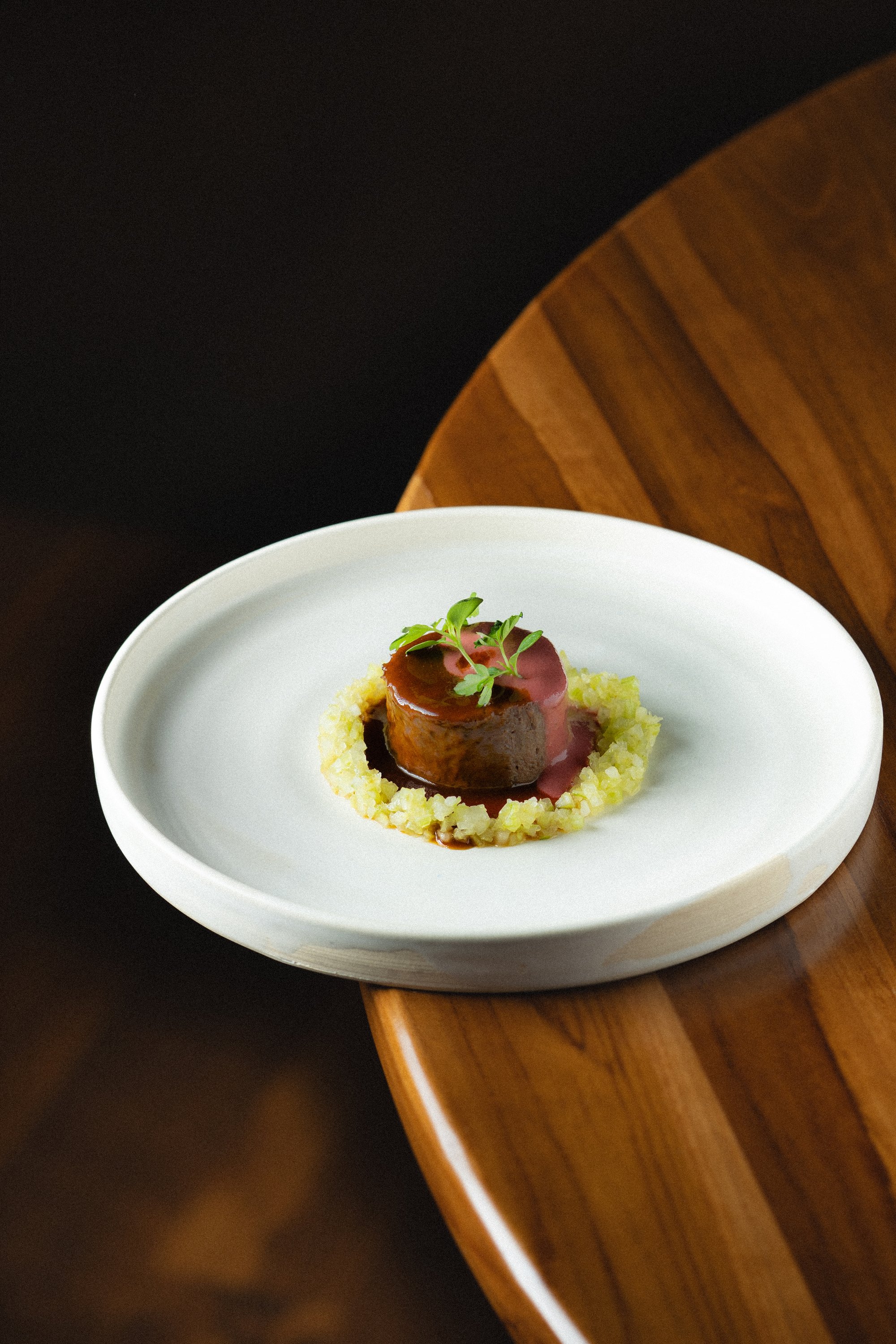
A Neighbourhood Frequency
Gràcia has long operated at a different register from Barcelona's headline dining belt. Where the city's high-investment creative restaurants tend to cluster around Eixample and the waterfront, this barrio sustains a more residential rhythm: smaller rooms, shorter menus, and a clientele that returns on its own terms rather than driven by occasion. Carrer de Rabassa sits inside that pattern. Oníric occupies the kind of address that regulars tend not to broadcast too loudly, which is both a practical observation and a signal about the type of dining it delivers.
The broader context matters here: Barcelona's creative dining tier, represented by names like Disfrutar (Progressive, Creative), Cocina Hermanos Torres, ABaC, Lasarte, and Enigma, is anchored by elaborate multi-course formats, substantial room investments, and price points that reflect all of it. Oníric operates at a different scale without stepping back from creative ambition. That distinction is worth holding onto when deciding where it sits in your Barcelona itinerary.
What Keeps People Coming Back
The regulars at Oníric are not chasing novelty. The format itself is part of what earns loyalty: a contained menu and three defined tasting routes mean the kitchen has real room to refine rather than expand. The Herrén menu, available only at midday on weekdays, follows the logic of a well-executed executive lunch — a format that in Spain has a long tradition of delivering serious cooking to a working crowd without the ceremony of an evening service. The fact that Oníric applies that structure to genuinely modern cooking rather than defaulting to conventional platos del día is a meaningful choice.
Oníric and Somni menus occupy longer formats and longer timelines. Return diners tend to move through all three over successive visits, which is itself a measure of the kitchen's depth. When a table can sustain multiple format-level visits from the same people, the menu has something to say beyond a single sitting.
Recognition that has come to the restaurant captures this sensibility directly, noting the project as one that demonstrates how longed-for and considered cooking can become reality — and specifically calling out the conger eel buñuelos with green curry, coconut, and tamarind as a dish that earns its ambition. That combination is worth parsing: buñuelos are a deeply Spanish form, but the green curry and tamarind pull toward Southeast Asian frameworks. It is a technically risky pairing, and the fact that the critical read on it is convincing rather than merely interesting says something about the kitchen's discipline. Dishes that borrow across culinary traditions without losing coherence are harder to execute than they appear, as any comparison to the approach at Aponiente in El Puerto de Santa María or Quique Dacosta in Dénia , both houses where technique and cultural reference are carefully calibrated , would confirm.
The Logic of Restraint
Spain's modern restaurant scene has been shaped, in part, by a generation of chefs who trained in or alongside kitchens at El Celler de Can Roca in Girona, Arzak in San Sebastián, and Azurmendi in Larrabetzu , places where investment, scale, and conceptual ambition are unified. That model produces exceptional cooking, but it also defines a particular type of dining encounter: high-friction booking, significant spend, and a format designed for destination dining rather than repeat visits.
Oníric sits at a different point in that spectrum. Jonatan Izquierdo at the stove and Laura Humanes managing the dining room constitute a two-person leadership structure that keeps the project at human scale. The small menu is not a limitation; it is a proposition. Restaurants that run contained menus tend to know each dish in detail, and regulars learn to read that depth across visits rather than expecting constant rotation for its own sake.
The common sense framing that Michelin recognition applies to the restaurant is a specific kind of compliment. In creative dining, common sense is often the hardest thing to maintain: technique can become an end in itself, and menus can expand until they lose focus. A kitchen described as building modern cuisine from common sense is one where the editing is as deliberate as the cooking.
Positioning in Barcelona's Creative Tier
Barcelona's top-end restaurants have been well-decorated in recent years, and the competitive frame is dense. Disfrutar and Cocina Hermanos Torres operate at the highest Michelin level; Lasarte and Enigma bring their own structural weight. International comparisons for format-driven creative menus at accessible price points also point toward operations like Atomix in New York City, where a small team and precise format discipline generate disproportionate critical returns.
Oníric is not competing for the same visitor as those rooms. Its peer set is better understood as the small-room, chef-led creative houses found across Spain's mid-tier cities: places where the cooking is the point, the room is modest, and the price reflects that the investment went into ingredients and technique rather than interior design. That positioning is a considered one, and it is why the restaurant's regulars tend to feel some proprietorial attachment to it. Gràcia has a long tradition of that kind of local-specialist loyalty, and Oníric fits the barrio's character.
For those building a broader Spanish itinerary, the contrast with DiverXO in Madrid or the architectural scale of Le Bernardin in New York City is instructive: scale and spend are not the only coordinates for serious creative cooking.
Our full Barcelona restaurants guide places Oníric within the wider city framework. For planning around it, see also our guides to Barcelona hotels, Barcelona bars, Barcelona wineries, and Barcelona experiences.
Know Before You Go
- Address: Carrer de Rabassa, 37, Gràcia, 08024 Barcelona, Spain
- Menu formats: Three options , Herrén (weekday midday only), Oníric, and Somni
- Herrén availability: Lunch service, Monday to Friday only
- Reservations: Advance booking is strongly recommended given the small-room format; contact via the restaurant directly as booking platform details are not confirmed at time of publication
- Recognition: Michelin-noted, with specific praise for the conger eel buñuelos with green curry, coconut, and tamarind
- Neighbourhood: Gràcia , accessible by metro (Fontana or Joanic stations on L3 and L4) and within walking distance of central Eixample
Just the Basics
A small set of peers for context, based on recorded venue fields.
| Venue | Notes | Price |
|---|---|---|
| Oníric | This venue | |
| Disfrutar | Progressive, Creative, €€€€ | €€€€ |
| Cocina Hermanos Torres | Creative, €€€€ | €€€€ |
| Lasarte | Progressive Spanish, Creative, €€€€ | €€€€ |
| Cinc Sentits | Modern Spanish, Creative, €€€€ | €€€€ |
| Enoteca Paco Pérez | Modern Spanish, Modern Cuisine, €€€€ | €€€€ |
Continue exploring
More in Barcelona
Restaurants in Barcelona
Browse all →
Bars in Barcelona
Browse all →
Hotels in Barcelona
Browse all →

At a Glance
- Trendy
- Intimate
- Modern
- Sophisticated
- Date Night
- Special Occasion
- Open Kitchen
- Chefs Counter
- Extensive Wine List
- Local Sourcing
Cozy small space with surreal neon lights, art installations, and open kitchen for an immersive multi-sensory experience.