On Niagara Street in Toronto's King West neighbourhood, Old York Tavern occupies a stretch of the city where the line between neighbourhood local and destination dining has grown increasingly thin. The tavern format, a category that in Toronto now ranges from gastropub to full evening service, positions it as a reference point for how the city drinks and eats across the day. A reliable stop for anyone tracking the evolution of Canadian pub culture in a dense urban context.
Pearl is the En Primeur Club membership app — saves, bookings, and concierge access live there. Same editors, same standards.
- Address
- 167 Niagara St, Toronto, ON M5V 1C9, Canada
- Phone
- +14168699675
- Website
- oldyorktoronto.com
- Directions
- Get directions
 Saves & bookings on Pearl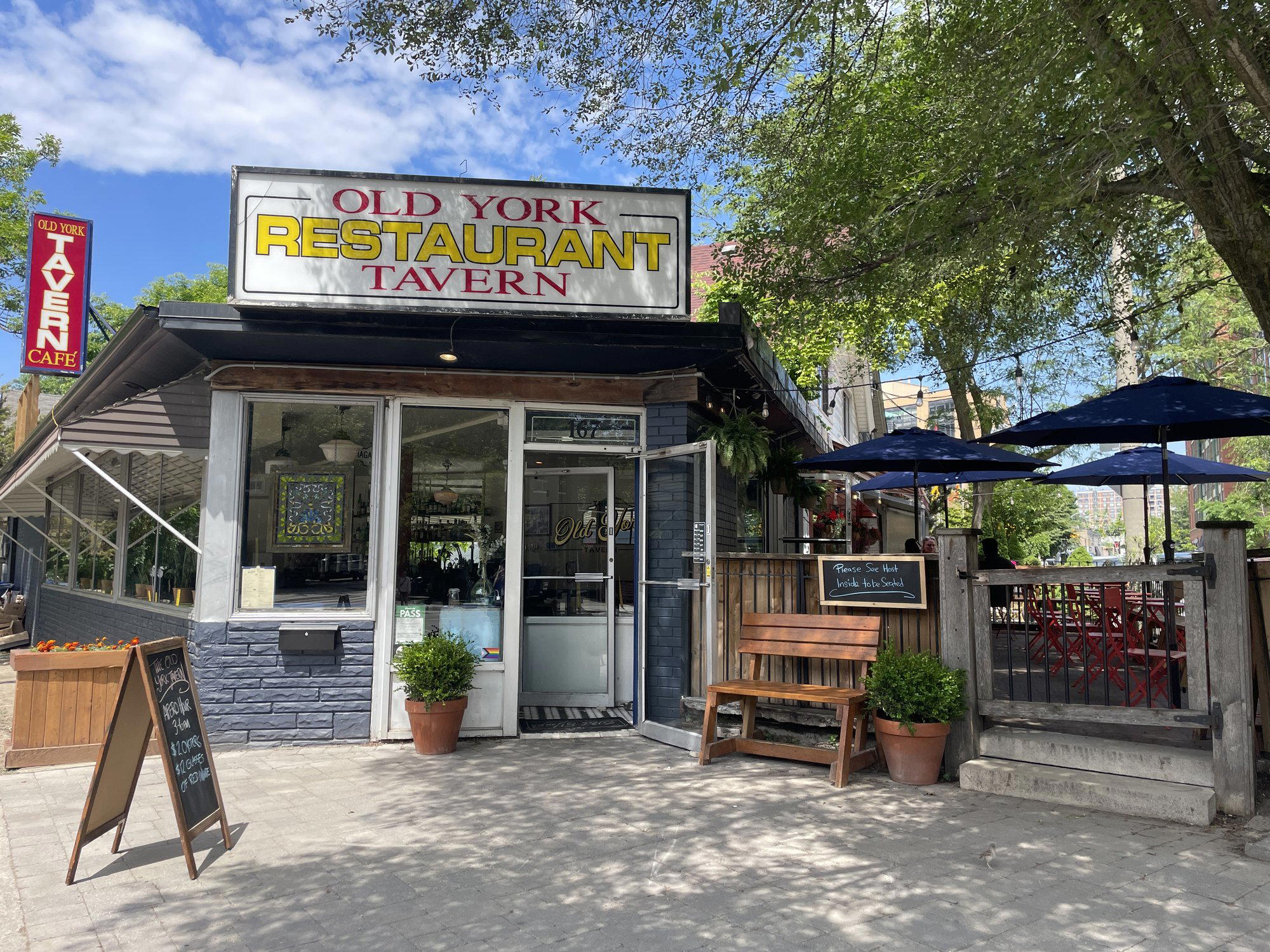
King West After Dark, and Before It
Toronto's King West corridor has undergone a slow but legible transformation over the past decade. What was once a stretch defined by bottle-service nightlife has gradually acquired a more durable identity: neighbourhood restaurants, wine-forward bars, and spots that hold their own across a full day of service rather than existing only for the dinner rush. Old York Tavern, at 167 Niagara Street, sits inside that shift. The address places it at the quieter, more residential end of King West, removed from the louder stretch near Bathurst.
In Toronto, the tavern format carries a specific set of expectations that the city's dining scene has been quietly renegotiating. Historically, the Ontario tavern was a product of liquor licensing law, a place you had to eat in order to drink, and vice versa. That regulatory context has loosened substantially, but the format's legacy lingers in the layout and atmosphere of venues that trace their lineage to it. Old York Tavern reflects how that tradition has been reshaped by the gastropub movement that rewrote British and, subsequently, Canadian pub culture in the 2000s.
Lunch and Dinner: Two Different Rooms
The lunch-versus-dinner divide is one useful way to read any tavern or pub-format space. Daytime service at a King West address like this one tends to draw a working crowd and neighbourhood regulars rather than destination diners. The pace is faster, the expectation is value, and the light through the windows makes the room read differently than it does at 9pm. Evening service, by contrast, is where the competitive pressure from Toronto's broader dining scene becomes relevant. Within walking distance, the city's upper tier of formal restaurants, places like Alo (Contemporary) and DaNico (Italian), operate at a price point and formality level that positions the tavern format as a genuine alternative rather than a consolation.
For diners who find the tasting-menu model of venues like Aburi Hana (Kaiseki, Japanese) or Sushi Masaki Saito (Sushi, Japanese) either financially or structurally unappealing on a given evening, the neighbourhood tavern occupies a necessary position in the city's dining ecology. That positioning is sharper in the evening than at lunch, where the tavern format faces fewer direct competitors.
Canadian pub culture at its more considered end has also been shaped by the provincial licensing framework, which for years created a two-track system: restaurants with full liquor licenses operating like restaurants, and bars with food as an afterthought. The venues that have done interesting work in this space, in Toronto and across the country, have found a way to make the food program compelling enough to stand independently while keeping the atmosphere loose enough to function as a drinking venue. That balance is harder to sustain at dinner, when food critics and destination diners enter the equation, than at lunch, when the standard is set more by speed and price than by culinary ambition.
The Niagara Street Address in Context
The specific block of Niagara Street where Old York Tavern sits is worth noting for anyone travelling to the area. The street runs diagonally off King West, which gives it a slightly different traffic pattern than the surrounding grid. On foot from downtown or the Financial District, it's accessible without being on a major pedestrian artery, which tends to filter out transient foot traffic. The neighbourhood's residential density means the local customer base is substantial, which matters for understanding the room's character on a weekday versus a weekend.
For context on how King West sits relative to Toronto's other dining concentrations: Ossington Avenue to the west and Queen West to the north have both developed stronger dining identities over the past decade, while King West proper remains more mixed in character. Comparing the King West tavern and bar scene to what you find further afield in Canadian dining, whether the more rural ambition of Eigensinn Farm in Singhampton or the focused regional cooking at Restaurant Pearl Morissette in Lincoln, illustrates how much the urban tavern format operates under different constraints and serves a fundamentally different social function.
Internationally, the model that Toronto's better taverns draw from most visibly is the London gastropub as it existed in the early 2000s, before that format became its own kind of cliché. Venues like Le Bernardin in New York City and Atomix in New York City represent the opposite end of the formality spectrum, reference points that clarify, by contrast, what the neighbourhood tavern is and isn't trying to do. Within Canada, the more relevant comparisons are to casual-dining formats in Montreal (where Jérôme Ferrer - Europea in Montreal occupies a different tier) or the wine-bar-adjacent model seen at Barra Fion in Burlington and The Pine in Creemore.
Quebec City's dining scene offers a useful contrast for understanding how different cities treat their tavern and casual dining heritage: Aux Anciens Canadiens in Quebec has built a distinct identity around historical Canadian cuisine, while Tanière³ in Quebec City represents the fine-dining pole of the same city. The tavern occupies neither extreme, which is both its limitation and its utility. Venues like Don Alfonso 1890 (Contemporary Italian, Italian) operate in a different register entirely, Further afield, AnnaLena in Vancouver and Narval in Rimouski illustrate how Canadian cities outside Toronto have developed their own casual-but-considered dining models.
Know Before You Go
| Address | 167 Niagara St, Toronto, ON M5V 1C9, Canada |
|---|---|
| Neighbourhood | King West, Toronto |
| Getting There | Closest TTC streetcar stop on King Street West; 10-15 minute walk from St. Andrew station |
| Booking | |
| Leading For | Neighbourhood dining, casual evening drinks, weekday lunch |
Recognition Snapshot
Comparable venues nearby, for context on price, style, and recognition.
| Venue | Cuisine | Price | Notes |
|---|---|---|---|
| Old York TavernThis venue — the venue you are viewing | American Bistro with French Influences | $$ | Not listed |
| Uncle Betty's Diner | Classic American Diner | $$ | Uptown Yonge |
| The Morning After | Late-Night Brunch & Comfort Food | $$ | CityPlace |
| Goose Island Brewhouse Toronto | American Gastropub | $$ | Saint Lawrence |
| Almond Butterfly Bistro | Gluten-Free American Bistro | $$ | Little Italy |
| The Dirty Bird Chicken + Waffles | Fried Chicken & Waffles | $$ | Kensington |
Continue exploring
More in Toronto
Restaurants in Toronto
Browse all →

Bars in Toronto
Browse all →

Hotels in Toronto
Browse all →

At a Glance
- Cozy
- Classic
- Intimate
- Rustic
- Casual Hangout
- Brunch
- Date Night
- Craft Cocktails
- Local Sourcing
Current opening hours
- Monday
- 11 AM–10 PM
- Tuesday
- 11 AM–10 PM
- Wednesday
- 11 AM–10 PM
- Thursday
- 11 AM–10 PM
- Friday
- 11 AM–11 PM
- Saturday
- 10 AM–11 PM
- Sunday
- 10 AM–10 PM
Hours can change for holidays and private events. Last verified .
Timeless and cozy room with bistro charm, well-suited for lingering over meals and drinks.