Old Mandarin Islamic Restaurant
Our verdict
Old Mandarin Islamic Restaurant on Vicente Street serves northern Chinese halal cooking in San Francisco's Outer Sunset, a neighborhood more associated with dim sum and Cantonese seafood than the lamb-forward, wheat-based traditions of China's Muslim northwest. The kitchen draws on the culinary lineage of Hui and northwestern Chinese cooking, offering a rare point of reference for that tradition on the West Coast.

Pearl is the En Primeur Club membership app, where members save venues, book tables and use the concierge.
The menu
What to order
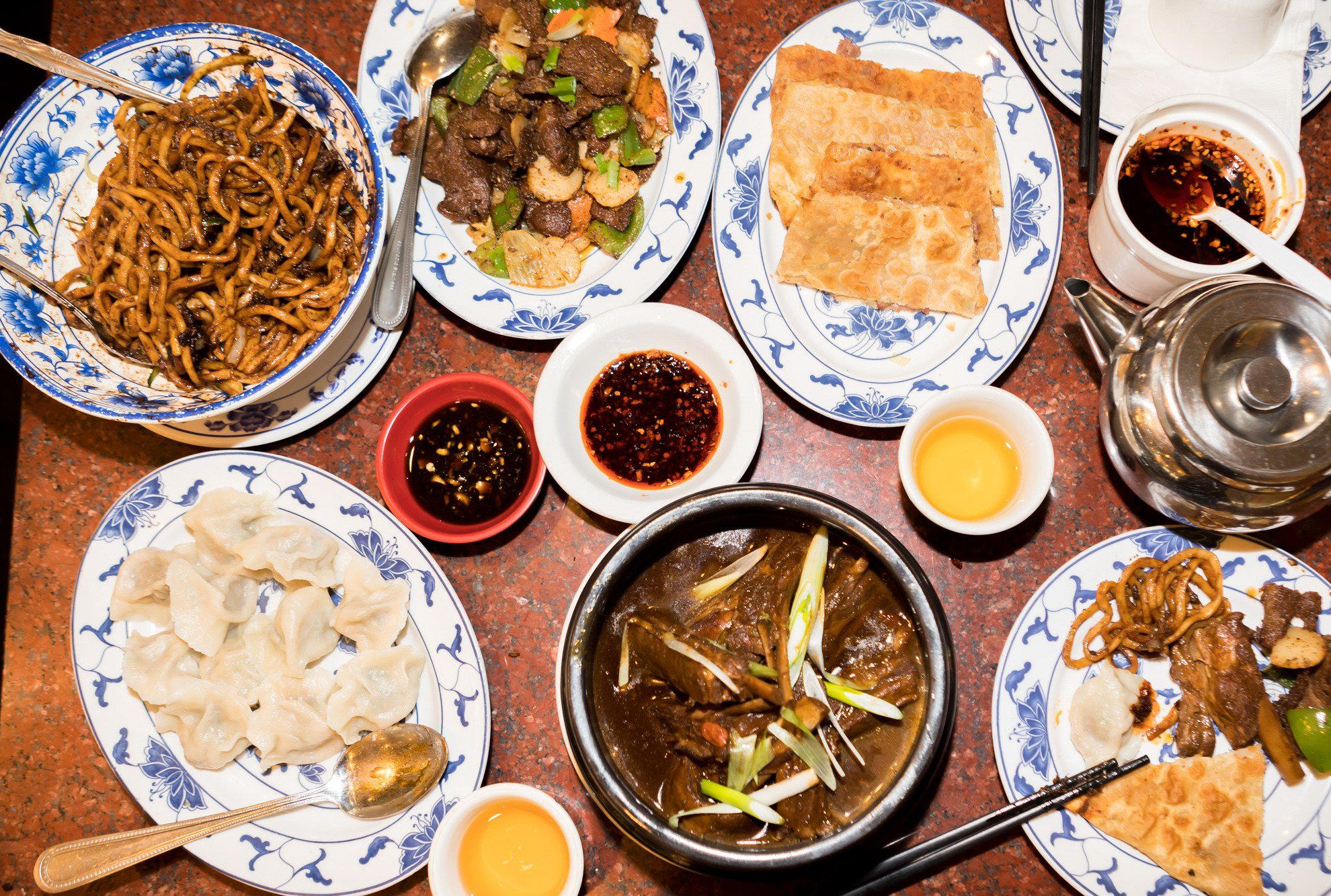
- Cumin Lamb
- Hot & Spicy Hotpot
- West Lake Lamb Dumplings
Northwestern Chinese Cooking at the Edge of the City
San Francisco's Outer Sunset is not where most visitors look for a serious meal. The fog rolls in off the Pacific most afternoons, the streets thin out past 19th Avenue, and the neighborhood's dining identity has long been defined by Cantonese seafood houses and Vietnamese noodle shops rather than anything from China's interior. Old Mandarin Islamic Restaurant, on Vicente Street near the western edge of the city, occupies a specific and underserved niche in that geography: halal-certified, northern Chinese cooking rooted in the wheat-and-lamb traditions of the Hui Muslim community and the broader culinary culture of Gansu, Shaanxi, and Xinjiang provinces.
That regional specificity matters. The food of China's northwest is shaped by ingredient sourcing and religious dietary law in ways that produce a fundamentally different table from the Cantonese or Sichuan cooking that dominates Chinese-American restaurant culture. Lamb replaces pork entirely. Wheat noodles, flatbreads, and hand-pulled dough anchor the menu rather than rice. The seasoning vocabulary runs toward cumin, chili, and fermented black vinegar rather than oyster sauce or doubanjiang. At a moment when American diners are broadly familiar with regional Chinese diversity, the northwestern tradition remains genuinely underrepresented in most cities outside of specific immigrant enclave pockets.
Ingredient Sourcing and the Halal Framework
The halal designation here is not incidental to the menu; it is the organizing principle that shapes sourcing from the ground up. Halal certification requires that animal products meet specific slaughter and handling standards, which in practice means the kitchen sources lamb, beef, and poultry from certified suppliers rather than the conventional supply chains used by most San Francisco restaurants. That sourcing constraint, which many diners treat as a dietary restriction, functions in this context as a quality filter with a documented tradition behind it: Hui Muslim communities across China have maintained halal butchery and cooking lineages for centuries, and the flavor profile that results, particularly with lamb, reflects animal husbandry and handling practices that differ measurably from commodity meat.
For diners who have eaten lamb-forward cooking in Xi'an, Lanzhou, or the night markets of Urumqi, the ingredient sourcing story here is recognizable. For those who haven't, it represents a meaningful point of entry into a tradition where the protein is the frame around which everything else is built, rather than a secondary element in a broader sauce-driven composition.
Where This Fits in San Francisco's Chinese Dining Map
San Francisco carries one of the oldest and most layered Chinese restaurant histories of any American city. The Richmond and Sunset districts alone contain enough regional Chinese cooking to occupy months of serious eating, and the city's Michelin-recognized restaurants include venues like Benu, which operates at the intersection of French and Chinese traditions at the fine-dining tier. But Benu, along with the city's other high-investment contemporary kitchens, such as Atelier Crenn, Lazy Bear, Quince, and Saison, all priced at the $$$$ tier, represents a completely different segment of the market and a different culinary conversation.
Old Mandarin Islamic Restaurant belongs to a separate tier: neighborhood-anchored, cuisine-specific, and oriented toward regulars who treat it as a functional part of their week rather than an occasion restaurant. That positioning is not a limitation. Across American cities, the most reliable carriers of regional culinary tradition tend to be restaurants in this tier, the ones that don't perform for press cycles or adjust their menus for a broader audience. The Outer Sunset location, far from the tourist corridors around the Ferry Building or the Mission, reinforces that orientation.
In a national context, the cluster of restaurants doing serious northwestern Chinese cooking remains thin. Most cities with significant Chinese-American populations have one or two practitioners of this tradition, if any, compared with dozens of Cantonese, Shanghainese, or Sichuan options. For a sense of how ingredient-driven regional specificity plays out at other price tiers and culinary traditions, Blue Hill at Stone Barns in Tarrytown offers the most documented American example of sourcing as a primary editorial frame, though the comparison is one of method rather than cuisine. Further afield, Single Thread Farm in Healdsburg and The French Laundry in Napa represent the California fine-dining end of that conversation. Old Mandarin Islamic Restaurant operates in a different register entirely, one where sourcing discipline is driven by religious obligation and community continuity rather than tasting-menu positioning.
For readers tracking how American cities handle regional specificity at accessible price points, the comparison set extends nationally: Emeril's in New Orleans, Alinea in Chicago, Providence in Los Angeles, Addison in San Diego, Bacchanalia in Atlanta, The Inn at Little Washington, Atomix in New York City, and Le Bernardin all anchor their respective city guides on EP Club. For the broader San Francisco picture, see our full San Francisco restaurants guide. Internationally, the intersection of Chinese culinary tradition with fine-dining frameworks is visible at 8 1/2 Otto e Mezzo Bombana in Hong Kong, though that comparison underscores how distinct the neighborhood-halal register is from any fine-dining frame.
Planning Your Visit
| Venue | Cuisine | Price Tier | Booking |
|---|---|---|---|
| Old Mandarin Islamic Restaurant | Northern Chinese Halal | Not confirmed | Confirm directly |
| Benu | French-Chinese Contemporary | $$$$ | Advance reservation required |
| Lazy Bear | Progressive American | $$$$ | Advance reservation required |
| Quince | Italian Contemporary | $$$$ | Advance reservation required |
Old Mandarin Islamic Restaurant is located at 3132 Vicente St in the Outer Sunset. The neighborhood is accessible by Muni on the N-Judah line, with the Irving Street corridor providing the closest transit stop to Vicente Street. Fog and wind are consistent in this part of the city year-round, with the clearest weather typically in September and October, which also represents a practical window for exploring the Outer Sunset's dining options without the summer marine layer.
Frequently asked questions
What's the address for Old Mandarin Islamic Restaurant?
Old Mandarin Islamic Restaurant is located at 3132 Vicente St, San Francisco, CA 94116, San Francisco.
Does Old Mandarin Islamic Restaurant serve alcohol, and what should non-drinking diners expect?
As a halal-certified establishment on Vicente St in San Francisco, alcohol is not served, which is consistent with halal dietary standards. For non-drinking guests or those seeking a dry dining environment, this is one of very few Chinese restaurants in the city where that is a structural feature of the concept rather than a menu gap. Tea service and traditional non-alcoholic accompaniments to Northwestern Chinese food are the expected beverage format.
What's the best thing to order at Old Mandarin Islamic Restaurant?
The kitchen draws from Northwestern Chinese culinary tradition, where lamb, hand-pulled noodles, and cumin-forward preparations are foundational. Without a current published menu, the clearest guide is to look for dishes rooted in that regional framework, particularly anything involving braised or hand-cut proteins. The halal certification confirms sourcing standards that run through every protein on the menu, so that guides both ingredient quality and preparation method across dishes.
Is Old Mandarin Islamic Restaurant reservation-only?
Given the neighbourhood context and the restaurant's status as a long-standing community fixture, walk-in dining has historically been part of the format, but confirming current policy directly with the venue before visiting is advisable.
What's the defining dish or idea at Old Mandarin Islamic Restaurant?
The organizing idea is Northwestern Chinese cooking within a strict halal framework, which is uncommon enough in San Francisco that it functions as both a culinary and cultural identity marker. This is not Cantonese or Sichuan cooking: the reference points are the Muslim-majority communities of Gansu, Ningxia, and Xinjiang, where lamb replaces pork and spice profiles lean toward cumin and dried chili rather than the fermented pastes of southern China.
Is Old Mandarin Islamic Restaurant allergy-friendly?
The halal certification addresses pork and alcohol exclusions across the menu, which is directly relevant for diners with religious dietary requirements or those avoiding pork-derived ingredients. Guests with clinical allergies should contact the restaurant at 3132 Vicente St directly before visiting.
Is Old Mandarin Islamic Restaurant worth the price?
Pricing data is not publicly listed, but the Outer Sunset neighbourhood context and the format of Northwestern Chinese cooking in San Francisco generally place this category well below the cost of comparable regional-specialist restaurants in higher-profile districts. The value calculation is strengthened by the fact that halal-certified Northwestern Chinese cooking of this specificity has almost no direct competition across the city's Chinese restaurant map.
Same-City Peers
Comparable venues nearby, for context on price, style, and recognition.
| Venue | Cuisine | Price | Notes |
|---|---|---|---|
| Old Mandarin Islamic RestaurantThis venue (the venue you are viewing) | Halal Northern Chinese (Uyghur) | Not listed | Not listed |
| Hon's Wun Tun House | Cantonese Wonton Noodle House | $10–20 | Chinatown |
| Fang | Modern Chinese | $30–50 | Financial District/South Beach |
| Young's Cafe | Chinese-American | Not listed | Chinatown |
| New Sun Hong Kong Restaurant | Cantonese Dim Sum | Not listed | Chinatown |
| M.Y. China | Modern Chinese Noodle House | Not listed | Chinatown |