
Michelin Plate
Our verdict
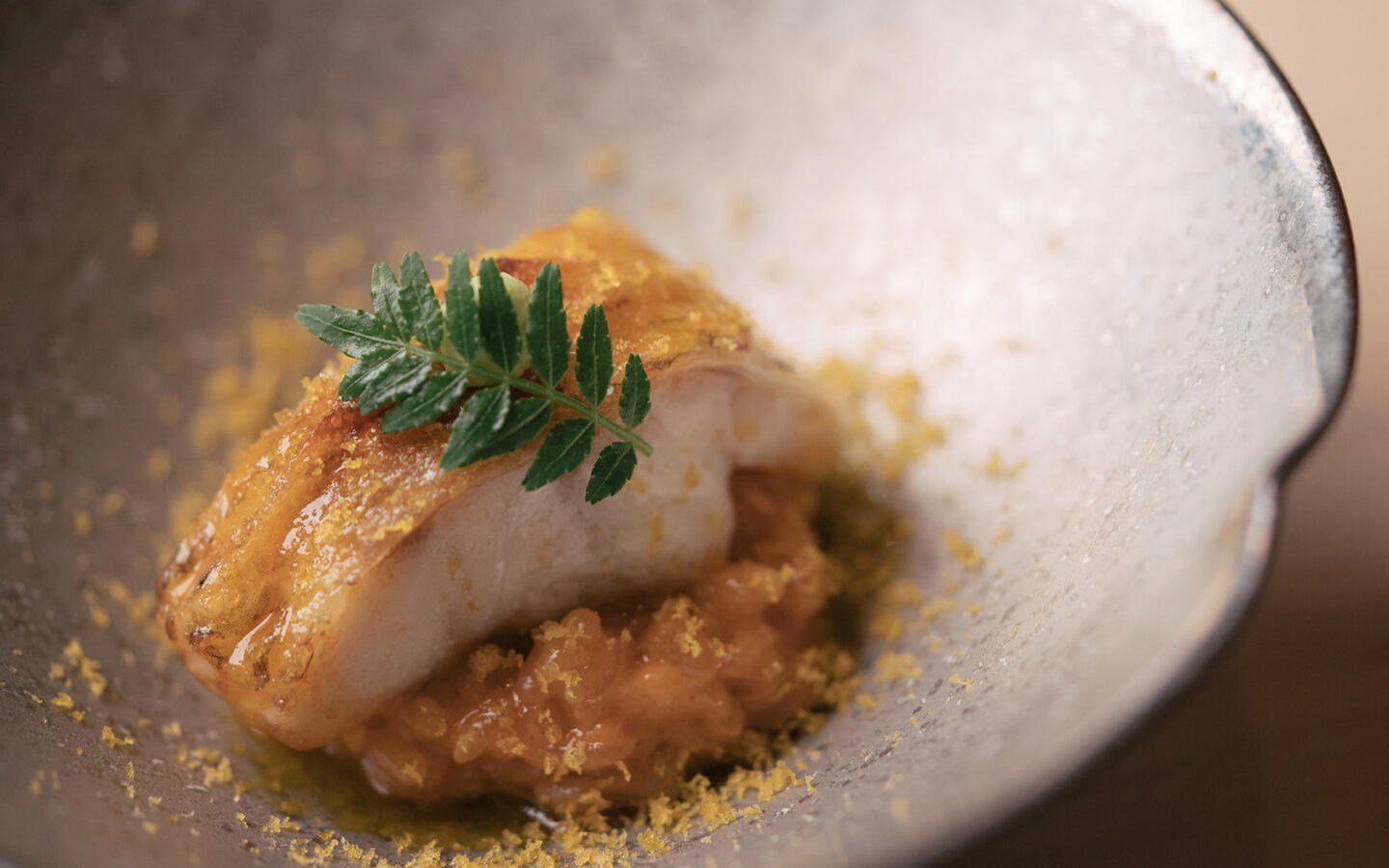
Okeya Kyujiro's Toronto counter on Bellair Street runs the same high-energy omakase format that earned the brand its following in Vancouver and Montreal: drums overhead, whole fish broken down tableside, and courses arriving in rapid succession. Kelp-cured botan ebi with caviar and grilled unagi with sancho pepper represent the kind of theatrical precision the kitchen deploys across the meal. The price reflects the ambition.

Pearl is the En Primeur Club membership app, where members save venues, book tables and use the concierge.
The menu
What to order
- A5 Miyazaki Wagyu
- Hokkaido Uni
- Ootoro
- Crown Melon
When the Counter Becomes a Stage
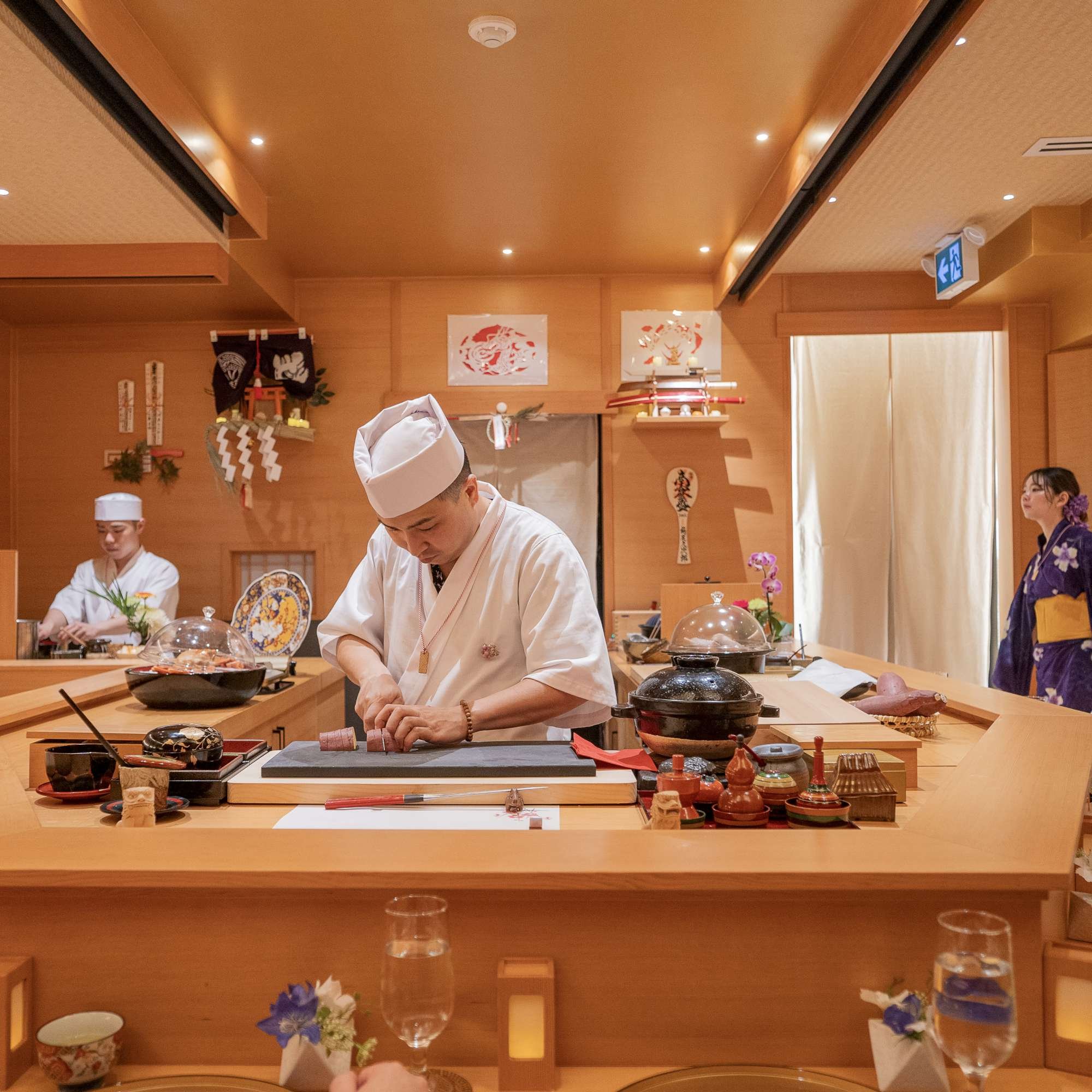
At most omakase counters in Toronto, restraint is the operating principle. Chefs work quietly, conversation stays low, and the room orients itself around the act of listening to a dish. The format at Okeya Kyujiro Toronto, occupying the second floor of 26 Bellair Street in Yorkville, operates on a different register entirely. Drums play overhead. Chefs move with conspicuous theatricality. Whole cuts of fish are carried into the room and broken down at the counter in full view, sliced with the kind of deliberate showmanship that signals the kitchen wants to be watched.
This is not a departure from sushi tradition so much as a specific strand of it, the performative, high-energy counter that treats the meal as choreography. The Toronto outpost extends a format already established in Vancouver and Montreal, applying it to a city whose high-end Japanese dining scene has moved decisively into the premium omakase tier over the past several years. The room is in constant motion, with chefs simultaneously grilling, frying, and slicing while courses arrive at a pace that keeps the table engaged without allowing attention to settle into comfort.
The Arc of the Meal
Tasting-progression menus at this level work leading when they build tension across courses rather than front-loading the premium ingredients. Okeya Kyujiro's sequence follows that logic, using early courses to establish the kitchen's technical vocabulary before moving into the cuts and preparations that justify the price.
The kelp-cured botan ebi with caviar operates as a statement of intent early in the progression: the shrimp's natural sweetness is compressed and deepened by the cure, while the caviar introduces salinity and textural contrast. It signals a kitchen comfortable working across Japanese ingredient traditions without abandoning precision. The grilled unagi with sancho pepper arrives later in the sequence, the pepper's citrus-forward heat cutting through the eel's fat in a way that prevents the course from reading as heavy. A pressed roll of mackerel rounds out the savory arc, the fish's assertive flavour managed by the structure of the pressed format.
Broths and tempura appear at intervals that function as palate resets, a sequencing device common to multi-hour counter formats at this price point. The broths in particular carry the kind of dashi depth that takes time to develop, and their placement in the progression, between richer, more protein-forward courses, gives the meal its internal rhythm.
Toronto's Omakase Tier in Context
Toronto's premium Japanese dining options have expanded considerably over the past decade, and the city now supports a range of counter formats across different price brackets and philosophical approaches. Sushi Masaki Saito occupies the most traditional end of that spectrum, with a Michelin-starred counter built around rigorous Edo-mae technique and minimal theatrical intervention. Aburi Hana approaches Japanese dining from the kaiseki tradition, prioritising seasonal ingredient sequencing over sushi-forward formats.
Okeya Kyujiro positions itself differently from both. The energy in the room is calibrated to feel like an event rather than a ritual, and the theatrical elements, the drums, the tableside butchery, the visible activity of the kitchen, are part of what the ticket price is buying. For diners who find the reverent silence of a traditional omakase counter restrictive, this format offers a legitimate alternative at a comparable spend level.
Further along Toronto's fine dining continuum, restaurants like Alo, DaNico, and Don Alfonso 1890 compete for the same premium dinner spend but operate across different cuisine categories. The relevant comparison set for Okeya Kyujiro is specifically the counter-format Japanese dining tier, where it sits alongside peers in Vancouver and Montreal as part of a multi-city operation rather than a standalone destination.
The Multi-City Context
The brand's presence across Vancouver, Montreal, and Toronto means the format has been stress-tested in different markets. Vancouver's restaurant scene has its own high-energy Japanese counter tradition, shaped partly by the city's proximity to Japanese import routes and its established Aburi restaurant culture. Montreal's dining public, which also supports ambitious tasting-menu formats like Jérôme Ferrer's Europea, responds to theatrical presentation differently than Toronto's more sober fine dining conventions. That Okeya Kyujiro runs the same core format across all three cities suggests confidence in the concept's transferability, even if the room's energy reads somewhat differently depending on the city's baseline dining culture.
For comparison across Canada's broader tasting-menu scene, the contrast with quieter, more ingredient-focused operations, Tanière³ in Quebec City, Narval in Rimouski, or Restaurant Pearl Morissette in Lincoln, underscores what makes Okeya Kyujiro a distinct mode: it is not attempting contemplative dining. The energy is the point.
Planning Your Visit
The venue occupies the second floor at 26 Bellair Street in Yorkville, a neighbourhood that concentrates several of Toronto's premium dining options within a walkable radius. Given the theatrical, high-energy format and the multi-branch reputation the brand carries, demand at the Toronto counter runs ahead of walk-in availability on most evenings. Booking in advance is the practical approach, particularly for weekend seatings or larger parties. The price sits at the top of Toronto's omakase range, consistent with a format that combines premium ingredients, theatrical production, and a multi-course sequence. For the full scope of Toronto's dining options across categories and price tiers, see our full Toronto restaurants guide. For accommodation in the area, our Toronto hotels guide covers the city's premium options, and our Toronto bars guide, wineries guide, and experiences guide round out the picture for longer visits.
Frequently asked questions
Where do I go for Okeya Kyujiro Toronto?
Okeya Kyujiro Toronto is located at 26 Bellair St. #2F, Toronto.
Is Okeya Kyujiro Toronto Michelin-listed?
Okeya Kyujiro Toronto has received recognition including: Even for the most seasoned sushi aficionados, this counter offers a playful, high-energy experience that’s bound to surprise. With branches in Vancouver and Montreal, the restaurant delivers nigiri, tempura, and broths in rollercoaster fash….
What should I order at Okeya Kyujiro Toronto?
There is no à la carte ordering at Okeya Kyujiro. The kitchen runs a set multi-course progression that moves through nigiri, tempura, and broths at its own pace. Documented highlights from the counter include kelp-cured botan ebi with caviar, grilled unagi with sancho pepper, and a pressed mackerel roll, all sequenced by the kitchen, not the guest.
Do I need a reservation for Okeya Kyujiro Toronto?
Yes. The second-floor counter at 26 Bellair Street is a set-format omakase room, which means seat count is fixed and walk-ins are not a realistic option. The brand's established presence in Vancouver and Montreal has already built an audience for the Toronto location, so booking ahead is advisable.
What has Okeya Kyujiro Toronto built its reputation on?
The counter's identity is built around deliberate theatricality: drums playing overhead, chefs breaking down whole fish at the counter, and a room in constant motion with simultaneous grilling, frying, and slicing. That format, stress-tested across branches in Vancouver and Montreal, delivers premium nigiri and Japanese-inspired courses inside a high-energy environment that differs sharply from the restrained tone most Toronto omakase rooms maintain.
How does Okeya Kyujiro Toronto handle allergies?
The set tasting-menu format, built around fish, shellfish, and broths, carries real constraints for guests with significant dietary restrictions or allergies. Guests should check the venue's official channels before booking to confirm what, if any, accommodations are possible within the fixed course structure.
Peers Worth Knowing
Comparable venues nearby, for context on price, style, and recognition.
| Venue | Cuisine | Price | Awards | Notes |
|---|---|---|---|---|
| Okeya Kyujiro TorontoThis venue (the venue you are viewing) | Modern Japanese Omakase | $300–500 | Michelin Plate | Not listed |
| Kiyomi | Traditional Japanese Omakase & Tempura | $100–150 | Not listed | Church and Wellesley |
| JaBistro | Modern Japanese Sushi | $50–100 | Not listed | Entertainment District |
| The Onda | Japanese Omakase | $150–200 | Not listed | Humewood |
| Yukashi | Japanese Kaiseki | Not listed | Michelin Plate | Davisville Village |
| Louix Louis | French-American Contemporary Fine Dining | $100–150 | Star Wine List · Forbes Recommended | Financial District |
Recognition history
Dated appearances from independent guides and award organizations, with the underlying list record or original source where available.
Michelin Plate
Michelin · 2026 Michelin Plate
Continue exploring
More in Toronto
Restaurants in Toronto
All restaurants in Toronto →
Bars in Toronto
All bars in Toronto →

Details
- Intimate
- Elegant
- Sophisticated
- Modern
- Special Occasion
- Date Night
- Celebration
- Chefs Counter
- Open Kitchen
- Sake Program
- Omakase
- Counter Dining
- Sake Program
Current opening hours
- Monday
- Closed
- Tuesday
- Closed
- Wednesday
- Closed
- Thursday
- 7–9:30 PM
- Friday
- 5:30–10 PM
- Saturday
- 12–2 PM, 5:30–10 PM
- Sunday
- 11:30 AM–2:30 PM, 7–9:30 PM
Hours can change for holidays and private events. Hours as of .
Dark, cave-like entrance with tranquility from soft music and water fountain, transitioning to warm lantern-like lighting, bamboo ceilings, and an energetic yet intimate sushi bar atmosphere.