
Oimatsu Miyamoto is an eight-seat Nishitenma yakitori counter with repeated Tabelog 100 Yakitori recognition for western Japan, including the 2025 selection. The draw is the compact, reservation-only counter format: chicken, charcoal, sake and shochu placed in the same disciplined register as Osaka’s serious sushi and kappo rooms, rather than casual skewer-bar territory.
Pearl is the En Primeur Club membership app — saves, bookings, and concierge access live there. Same editors, same standards.
- Address
- 4 Chome-10-17 Nishitenma, Kita Ward, Osaka, 530-0047, Japan
- Phone
- +81 6-6362-7700
- Website
- tabelog.com
 Saves & bookings on Pearl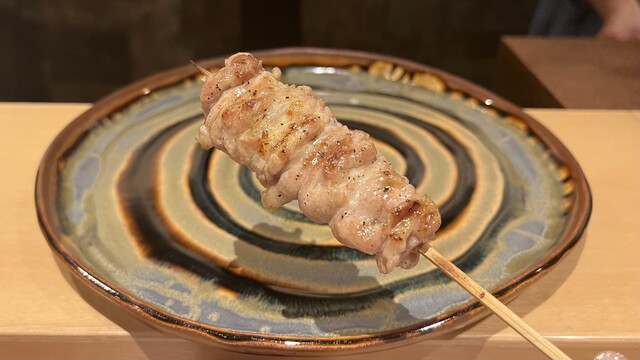
Nishitenma changes tone after dark. Legal offices and older commercial blocks around Oebashi lose their formality, and the important dining rooms become smaller, quieter and more exacting. Here, yakitori is not Osaka’s noisy after-work default. At the serious end, it behaves closer to counter kappo: sequence, rhythm, rules and a few seats setting the evening’s temperature.
Oimatsu Miyamoto belongs to that narrower Osaka category. Its eight-seat counter puts the cooking in direct view, though not as spectacle. High-end Kansai yakitori tests control: heat management, pacing, part-by-part treatment of the bird, and drink pairing favouring sake and shochu over broad international cellar signalling. Repeated inclusion in Tabelog’s Yakitori 100 for western Japan, from 2022 through the 2025 list, puts it in the local critical conversation. Its 4.02 Tabelog score signals hard-won consensus in Japan’s user-review culture, especially for small counters dependent on repeat diners.
Yakitori in Osaka's serious-counter register
Osaka’s visitor reputation often begins with speed: takoyaki, okonomiyaki, kushikatsu, station snacks, late trains and quick decisions. That version is real, but it obscures the city’s counter culture. Serious Osaka dining often prefers compression over theatre: a few seats, fixed rhythm and narrow craft can feel more native than a grand room.
Yakitori fits that temperament when treated as sequence rather than bar snack. Its grammar looks simple only from a distance: chicken is broken into parts, each cooked for fat, fibre and collagen, with the grill as central instrument. At this level, the comparison is less casual skewer houses than sushi counters and kappo rooms where timing and proximity create value. Oimatsu Miyamoto’s counter-only format reinforces that reading. Eight seats leave little room for drift; the evening depends on concentration from both sides.
That also explains why awards matter. A Tabelog 100 selection is not decorative in Japan; it sorts a crowded category. For yakitori, where many rooms are small, local and lightly publicised, repeated recognition signals more clearly than broad international fame. Oimatsu Miyamoto’s 2025 Tabelog 100 Yakitori WEST selection, after earlier selections, places it among restaurants assessed regionally rather than as a tourist-facing name.
For Osaka itineraries, the distinction matters. A casual night might centre on 551 Horai (551蓬莱), bakery stops such as 52CHO-ME BAKERY, or a modern detour like 99 Pizza Napoletana Gourmet. The serious counter tier asks for a different evening. It competes with compact Japanese rooms such as Oryori Amenimomakezu, Shoroku and Sushiroku, while staying firmly inside yakitori rather than borrowing prestige from sushi or kaiseki.
Nishitenma rewards small rooms and punctual diners
Nishitenma suits this dinner because it sits between business Osaka and the larger Umeda orbit without being absorbed by either. The area rewards diners who know where they are going. It is not built for grazing doorway to doorway, but for appointed meals, discreet counters and rooms that prefer regulars to foot traffic.
The restaurant’s discipline follows the format. Reservations are required, arrivals are expected before the start, and the room begins together. Strong scent is not minor etiquette at a counter built around smoke, fat and sake; it can interfere with the shared experience, hence the explicit house policy. No minors are accepted, there are no private rooms, and payment follows Japan’s serious small-restaurant norm: cards are accepted, electronic money and QR payments are not.
That makes it poor for a loose, last-minute Osaka evening and strong for diners treating yakitori like omakase. The average dinner band is JPY 15,000 to JPY 19,999, far above neighbourhood skewer drinking but below many luxury sushi counters. Locally, Sumibi Yakitori Ikoka Nishitenma occupies a more accessible price band, while the restaurant sits in the reservation-only, awards-recognised tier where small scale is part of the cost structure.
Drink culture is part of the argument. The listed focus on sake and shochu keeps the meal within a Japanese frame rather than turning yakitori into a wine-led international tasting format. In Osaka, the strongest meals often feel grounded in category rather than dressed for export. The better move is to understand how repetition, heat and sequence create depth in a narrow field.
How to place it within an Osaka itinerary
The restaurant works well as the anchor of a focused dinner night, not one stop in a heavy crawl. Pair it with broader planning rather than another counter meal. For the wider restaurant map, Our full Osaka restaurants guide gives the useful sweep: casual institutions, bakeries, Italian rooms, sushi, Japanese counters and late-night options. If the evening is part of a longer stay, Our full Osaka hotels guide, Our full Osaka bars guide, Our full Osaka wineries guide and Our full Osaka experiences guide help separate food-led nights from hotel, bar and cultural planning.
The restaurant also clarifies Japanese dining for travellers. The country’s strongest meals are not always the grandest, but often defined by category discipline. A yakitori counter, curry specialist, sake bar, bakery or onigiri shop can each compel when the format is tightly held. That lens applies beyond Osaka: [ki:] in Kyoto, [Curry Senmon Ten] Maruyama Kyoju. in Sapporo.know in Kumamoto, (Shoku) Vietnam in Kawasaki, -Grilled beef Sukiyaki- KAMAKURA TANUKIAN 鎌倉 たぬき庵 in Kamakura and. 鮪と炭火焼き うお炭 秋葉原店 in Tokyo all point to the same national strength: specialization matters.
For a lighter Osaka day around it, contrast helps..cafe and a canto (Italian) sit in different registers, which is the point. Osaka is not one food mood. It can be casual, fast and generous, then exacting after dark. Travellers from North America can read that category discipline in Japanese-format rooms abroad, from Jōdo Saké Bar in Los Angeles to Onigiri Time in Pasadena, but the small-counter Osaka version is sharper because expectations are local and unforgiving.
The editorial case is clear: choose this room for awards-backed yakitori in compact Nishitenma, not breadth, flexibility or tourist convenience. The value is seeing Osaka’s chicken-and-charcoal tradition treated with focus usually reserved for higher-prestige genres. In a city often reduced to appetite and noise, that restraint is the more interesting story.
Price Lens
Nearby venues at a similar price tier for orientation.
| Venue | Cuisine | Price | Notes |
|---|---|---|---|
| Oimatsu MiyamotoThis venue — the venue you are viewing | Kita, High-end Yakitori Counter | $$$$ | Not listed |
| Kamon | Not listed | $$$$ | Kita, Luxury Teppanyaki at Imperial Hotel Osaka |
| Sushi Uchida | Kita, Seasonal Osaka Sushi Omakase | $$$$ | Not listed |
| Kita Mura | Chūō, Traditional Kansai-style Sukiyaki | $$$$ | Not listed |
| Ishii Jr. | Kita, Yakitori & Chicken Dishes Omakase | $$$ | Not listed |
| Ichioka 45 | Not listed | $$$ | Kita, Farm-to-table chicken and sake counter |
Recognition history
Dated appearances from independent guides and award organizations, with the underlying list record or original source where available.
Tabelog 100 #40 · No. 40
Tabelog · Tabelog 100 - Yakitori - WEST - 2025
Continue exploring
More in Osaka
Restaurants in Osaka
Browse all →




Bars in Osaka
Browse all →




Hotels in Osaka
Browse all →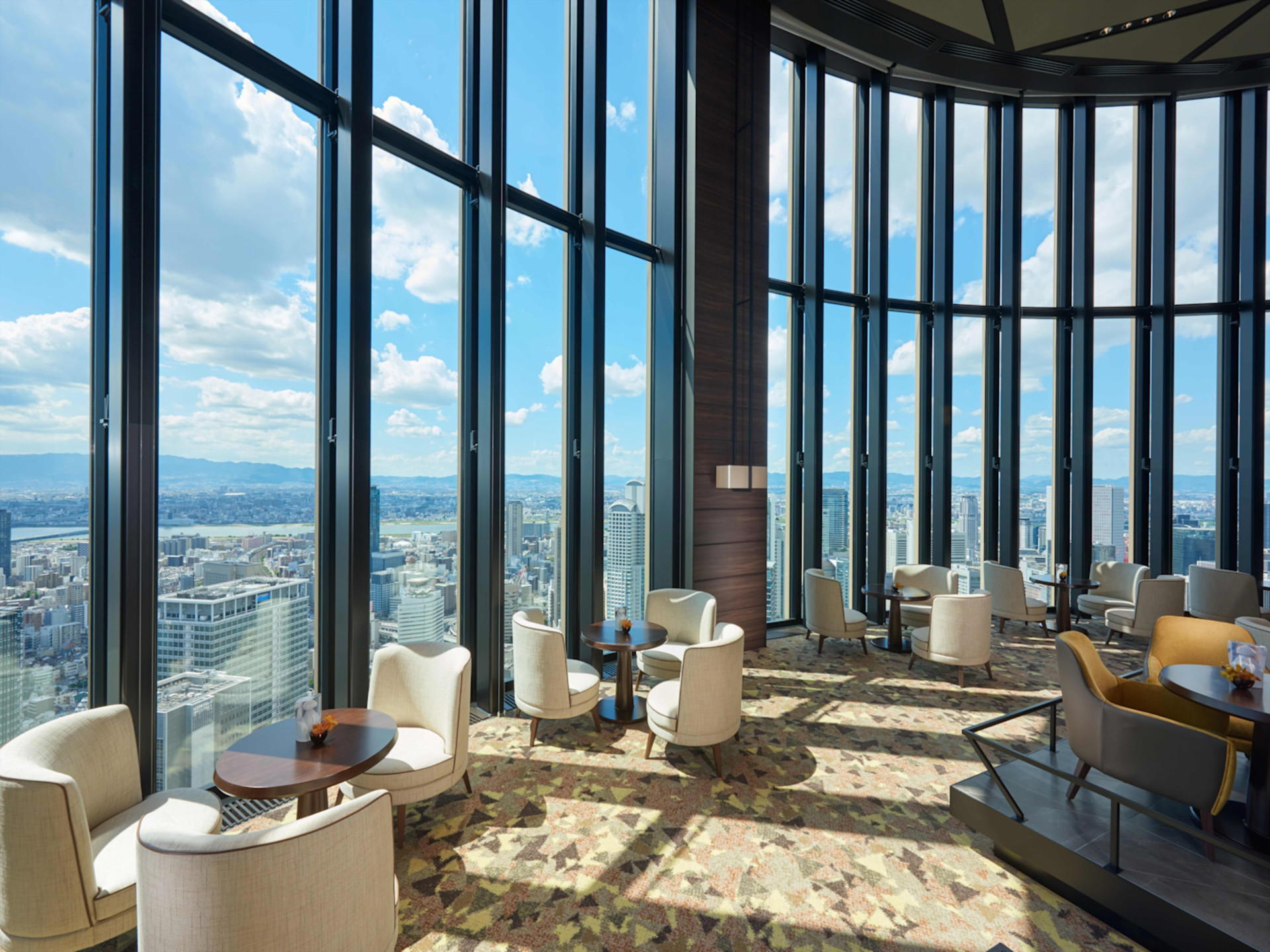




Wineries in Osaka
Browse all →
At a Glance
- Intimate
- Elegant
- Cozy
- Sophisticated
- Date Night
- Special Occasion
- Solo
- After Work
- Chefs Counter
- Standalone
- Design Destination
- Sake Program
- Beer Program
- Local Sourcing
Current opening hours
- Monday
- 6–8:30 PM
- Tuesday
- 6–8:30 PM
- Wednesday
- 6–8:30 PM
- Thursday
- 6–8:30 PM
- Friday
- 6–8:30 PM
- Saturday
- 6–8:30 PM
- Sunday
- Closed
Hours can change for holidays and private events. Last verified .
A serene, adult-oriented counter space inspired by a Japanese tea room, with a minimalist, stylish interior and a calm, unhurried atmosphere suited to quiet, contemplative dining.