
Osaka yakitori operates on precision, timing, and a tight exchange between grill, drinks, and room. Ishii Jr. belongs to the city’s small-format, higher-spend yakitori tier, with Tabelog 100 Yakitori WEST recognition in 2025 and a compact counter-and-private-room setup that puts service rhythm in close view.
Pearl is the En Primeur Club membership app — saves, bookings, and concierge access live there. Same editors, same standards.
- Address
- Japan, 〒530-0047 Osaka, Kita Ward, Nishitenma, 3 Chome−11−4 2F
- Phone
- +81 6-6130-9480
- Website
- tabelog.com
 Saves & bookings on Pearl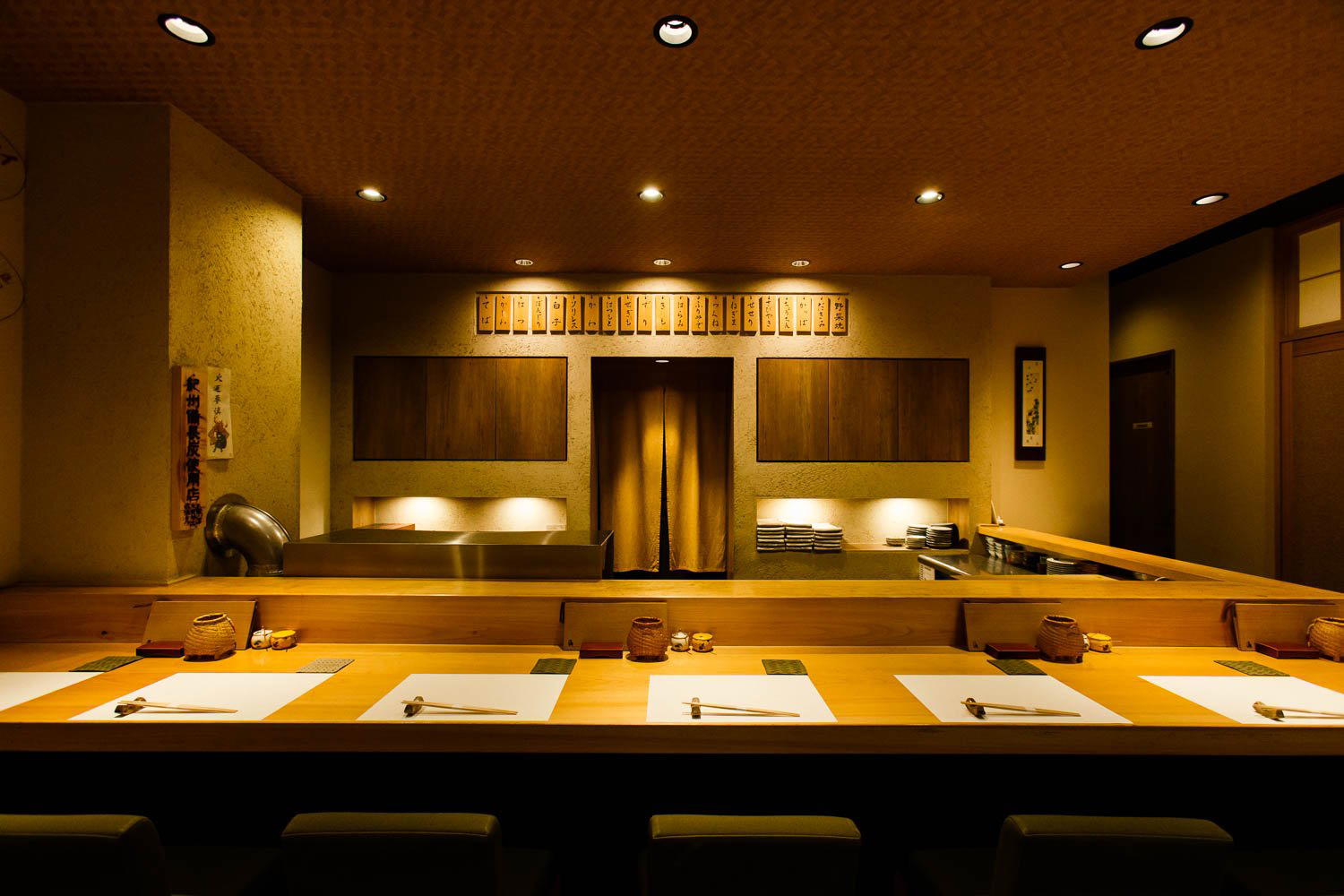
In Nishitenma, the mood changes quickly from office Osaka to small-room dining. The district sits close enough to the city’s commercial core to draw business tables, yet its better restaurants often work at a quieter register: fewer seats, sharper pacing, and menus that ask guests to follow the room rather than perform over it. That context matters for Ishii Jr. because serious yakitori in Osaka is not just about charcoal and chicken. It is about sequencing, drink temperature, plate timing, and the front-of-house judgment needed to keep a compact room moving without making it feel managed.
Osaka’s dining identity is often reduced to street-side ease, but the city’s higher-spend yakitori counters tell a different story. They borrow the discipline of sushi and kappo without copying either form: the grill becomes the focal point, the skewer order becomes the menu logic, and the drinks list has to carry more weight than an afterthought. Ishii Jr. sits in that bracket, supported by selection for Tabelog 100 Yakitori WEST 2025 and a Tabelog score of 3.82. Those signals place it closer to destination yakitori than to casual after-work grilling.
Small-room yakitori where timing is the main luxury
The format here is built around a compact room: six counter seats and a private room with four to five seats. That scale changes the meal. At a larger izakaya, yakitori can be social background; in a small counter setting, the interval between skewers becomes part of the experience. The grill team, drink service, and floor have to work as one unit, because a late glass or a mistimed skewer is more visible when the room is this tight.
The listed categories are yakitori, chicken dishes, and mizutaki, which gives the kitchen a focused vocabulary rather than a sprawling menu. The house selection skewer format starts from five skewers, while à la carte ordering is also available. That combination is useful: guests can let the room set the first rhythm, then adjust appetite and preference after the initial sequence. In Osaka, where value is often judged by generosity, this kind of controlled format makes a different argument. It says restraint can be the point when the grill, counter, and drinks program are aligned.
Drinks side also reads as more considered than the category average. Sake, shochu, wine, and cocktails are listed, with particular attention to sake, shochu, and wine. For yakitori, that range is not decorative. Smoke, fat, tare, salt, and broth-based chicken dishes pull in different directions; a narrow drinks list can make the meal feel repetitive. A broader program gives the service team room to steer rather than simply refill.
Nishitenma's quiet advantage over Osaka's louder dining zones
Nishitenma is useful for restaurants that want city access without the theatre of Dotonbori or the velocity of Umeda station dining. The area’s appeal is less about spectacle and more about control: offices nearby, serious regulars, and enough distance from tourist foot traffic to reward advance planning. That helps explain why a business-occasion signal appears naturally here. Small rooms in this part of Osaka can work for conversation as much as for culinary focus.
The comparison set around Osaka also clarifies the positioning. Torisho Ishii represents the yakitori lane at a serious spend level, while P greco pushes Italian into a similar premium bracket. Naniwa Okina, by contrast, shows how soba can remain tightly priced and culturally precise, and La bonne tâche gives French dining a more moderate frame. Ishii Jr. belongs to the first camp: a focused category, a controlled room, and recognition that suggests diners are comparing it with specialist counters rather than broad-service restaurants.
For readers mapping a wider Osaka itinerary, the useful move is to separate meal types by energy. A counter yakitori night in Nishitenma pairs better with a quieter bar or hotel-led evening than with a long food crawl. For broader planning, EP Club’s Our full Osaka restaurants guide, Our full Osaka hotels guide, and Our full Osaka bars guide give the city-level view, while Our full Osaka experiences guide and Our full Osaka wineries guide cover the surrounding itinerary logic.
How to read the menu without over-ordering
Yakitori rewards patience more than volume. The first skewers usually establish seasoning direction and grill rhythm; ordering heavily at the start can flatten that progression. Here, the presence of a stop-style selection format is the clue: begin with the house sequence, then add only if the table still has appetite. Mizutaki in the category mix also matters, because chicken restaurants with broth-based dishes can shift the meal from pure skewer progression into something more rounded. That is especially relevant for business dinners or small private-room groups, where the table may want conversation to continue beyond the counter’s tempo.
The counter is the more revealing choice for diners interested in the collaboration behind the meal. The private room serves a different purpose: conversation, small-group privacy, and a softer pace. Neither is inherently superior; they simply answer different questions. Choose counter seating when the grill is the point. Choose the private room when the company at the table matters as much as the sequence of skewers.
Osaka’s food range is broad enough that one yakitori reservation should not carry the whole trip. To see the city’s casual and cross-cultural spread around more specialist meals, compare it with 551 Horai (551蓬莱), 52CHO-ME BAKERY.cafe, 99 Pizza Napoletana Gourmet, and a canto (Italian). For a wider Japan-to-global reading list, the same editorial map runs through -Grilled beef Sukiyaki- KAMAKURA TANUKIAN 鎌倉 たぬき庵 in Kamakura. 鮪と炭火焼き うお炭 秋葉原店 in Tokyo.know in Kumamoto, (Shoku) Vietnam in Kawasaki, [Curry Senmon Ten] Maruyama Kyoju. in Sapporo, [ki:] in Kyoto, Jōdo Saké Bar in Los Angeles, and Onigiri Time in Pasadena.
The Minimal Set
Comparable venues at a similar level for quick context.
| Venue | Cuisine | Price | Notes |
|---|---|---|---|
| Ishii Jr.This venue — the venue you are viewing | Kita, Yakitori & Chicken Dishes Omakase | $$$ | Not listed |
| Sushi Akazu | Not listed | $$$ | Kita, Traditional Edomae Omakase Sushi with Red Vinegar Rice |
| Yakitori Tokei | Not listed | $$$ | Higashiosaka (Yoshita), Premium Yakitori Omakase |
| Soba Kappou Soba Fuji | Not listed | $$$ | Toyonaka (Seifu-so residential area), Soba-focused Kappou & Kaiseki |
| Osaka Teppanyaki Kobe Beef TATARA | Not listed | $$$ | Kita, Kobe beef teppanyaki with French-influenced courses |
| Riki Chan Oosaka toyonaka ten | Not listed | $$$ | Toyonaka, Yakiniku (Japanese BBQ) |
Recognition history
Dated appearances from independent guides and award organizations, with the underlying list record or original source where available.
Tabelog 100 #98 · No. 98
Tabelog · Tabelog 100 - Yakitori - WEST - 2025
Continue exploring
More in Osaka
Restaurants in Osaka
Browse all →




Bars in Osaka
Browse all →




Hotels in Osaka
Browse all →




Wineries in Osaka
Browse all →
At a Glance
- Modern
- Cozy
- Intimate
- Elegant
- Business Dinner
- Date Night
- Special Occasion
- Group Dining
- After Work
- Private Event
- Chefs Counter
- Private Dining
- Standalone
- Sake Program
- Extensive Wine List
Small and stylish with a relaxed, modern Japanese feel; counter-focused seating, a private sunken-kotatsu room, and a calm atmosphere suited to focused yakitori and sake enjoyment.