
A counter-only sushi address in Dojima with Tabelog Sushi WEST 100 recognition in 2025, 2022, and 2021. Sushi Uchida belongs to Osaka’s serious mid-to-premium sushi bracket: compact, fish-led, and better judged against nearby kappo, soba, and sushi counters than against the city’s casual street-food mythology.
Pearl is the En Primeur Club membership app — saves, bookings, and concierge access live there. Same editors, same standards.
- Address
- 大阪府大阪市北区堂島1-3-40 スタッフ堂島ビル 2F
- Phone
- +81663450057
- Website
- tabelog.com
 Saves & bookings on Pearl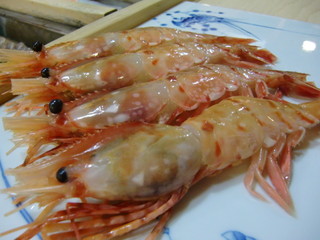
Dojima changes register after dark. The office towers and Kitashinchi edges bring a particular Osaka rhythm: suits leaving late, small elevators opening onto compact dining rooms, and counters where the evening is measured less by spectacle than by sequence, temperature, and restraint. In that setting, Sushi Uchida reads as a disciplined counter rather than a destination built for display.
Osaka sushi is often discussed through contrast with Tokyo, but the more useful comparison is within the city itself. Osaka’s dining culture rewards breadth: kaiseki-leaning Japanese rooms, izakaya counters, soba specialists, and seafood-led restaurants all compete for the same serious dinner slot. A place in the Tabelog Sushi WEST 100 in 2025, with earlier selections in 2022 and 2021, puts this counter inside a regional sushi conversation rather than a passing neighbourhood mention.
A Dojima counter priced for serious sushi, not ceremony for its own sake
The value proposition here is clear: this is a counter-only sushi format in the city’s higher dinner band, but not in the ultra-luxury register that has come to define some Ginza and Kyoto counters. That matters for travellers building an Osaka itinerary. The meal sits in a tier where technique, sourcing, and pacing have to justify the spend, while the room remains compact enough to keep attention on the counter.
The available category signals point to sushi, seafood, and Japanese cuisine, with a stated emphasis on fish and a drinks program oriented toward sake and shochu. That combination places the restaurant closer to a fish-first Osaka counter than to a theatrical omakase room built around luxury ingredients as shorthand. In a city where diners can move from takoyaki queues to serious kappo in a single evening, this is the register where Osaka becomes more interesting: less postcard, more craft.
Within the nearby comparison set, the positioning is useful. Sushi Akazu sits in the same spending band, while Konishi occupies a Japanese dining lane at a lower stated tier, and Roan Oosaka doujima ten or Sobadokoro Toki answer different needs entirely. Kasane belongs to the izakaya side of the city’s dining spectrum. That spread shows why the decision is less “sushi or not” than what kind of Osaka evening is being built: counter concentration, Japanese breadth, casual drinking, or a lighter noodle-led stop.
Recognition that matters in western Japan's sushi conversation
Tabelog’s Sushi WEST 100 selection is a relevant trust signal because it filters by region and category rather than treating Japanese sushi as a single national hierarchy. For a Kansai itinerary, that distinction matters. Western Japan’s sushi culture has its own cadence, and Osaka’s stronger counters often serve diners who already understand the difference between a high-spend meal and a high-attention meal.
The restaurant’s repeated appearances in 2021, 2022, and 2025 suggest more than a single burst of online attention. It places the counter among venues that sustain enough regional interest to keep appearing in a competitive sushi category. The listed Tabelog score of 3.72 is another directional signal: not a substitute for judgment, but a useful marker in a market where local diner evaluation carries unusual weight.
The counter-only setup is also part of the argument. Seventeen seats keeps the room in the intimate-service category without making it a rarefied micro-counter. For diners, that usually means the experience depends on pacing and counter management as much as ingredient cost. Private rooms are not part of the format, so the meal belongs to the shared-counter tradition rather than the corporate-entertainment model common in parts of Kita.
How it fits into an Osaka itinerary
Dojima and the Kitashinchi orbit work well for travellers who want the grown-up version of Osaka dining without leaving the central grid. The area is not the snack-heavy Osaka of Dotonbori, nor the youthful café circuit around other neighbourhoods. It is better understood as a dinner district where small buildings hold serious rooms, and where sushi, Japanese cuisine, bars, and late-night drinking sit close together.
That makes the broader plan important. A sushi counter like this should anchor an evening rather than sit between several heavy stops. For a wider read on the city’s dining range, start with Our full Osaka restaurants guide, then compare the low-stakes end of the spectrum through 551 Horai (551蓬莱), bakery culture at 52CHO-ME BAKERY, café pacing at .cafe, Neapolitan cooking at 99 Pizza Napoletana Gourmet, and Italian dining at a canto (Italian).
The same trip planning logic extends beyond restaurants. Osaka rewards travellers who pair one serious dinner with a nearby hotel and a measured drinking plan, rather than chasing a long checklist. Use Our full Osaka hotels guide, Our full Osaka bars guide, Our full Osaka wineries guide, and Our full Osaka experiences guide to shape the rest of the night.
For a broader Japan and beyond-Japan comparison, the contrast is instructive rather than directly competitive: sukiyaki in Kamakura at -Grilled beef Sukiyaki- KAMAKURA TANUKIAN 鎌倉 たぬき庵 in Kamakura, charcoal tuna in Tokyo at. 鮪と炭火焼き うお炭 秋葉原店 in Tokyo, regional dining at.know in Kumamoto, Vietnamese cooking at (Shoku) Vietnam in Kawasaki, Sapporo curry at [Curry Senmon Ten] Maruyama Kyoju. in Sapporo, Kyoto dining at [ki:] in Kyoto, sake-bar culture at Jōdo Saké Bar in Los Angeles, and Japanese casual form in California at Onigiri Time in Pasadena.
The critical read: choose this counter when the goal is a fish-led Osaka dinner with regional recognition and a contained room, not when the night calls for looseness or variety. The price makes sense for diners who want a focused sushi evening in Dojima and are comfortable letting the counter set the rhythm.
Recognition, Side-by-Side
Comparable venues at a glance for context.
| Venue | Cuisine | Price | Notes |
|---|---|---|---|
| Sushi UchidaThis venue — the venue you are viewing | Seasonal Osaka Sushi Omakase | $$$$ | Not listed |
| Kita Mura | Traditional Kansai-style Sukiyaki | $$$$ | Chūō |
| Nikushou Nakata Honten | High-End Wagyu Yakiniku & Steak | $$$$ | Chūō |
| Tempura Kissho | High-End Tempura Counter | $$$$ | Kita |
| takigawa | High-End Yakiniku (Japanese BBQ) | $$$$ | Kita |
| ZEN | Yakitori & Japanese Izakaya | $$$ | Fukushima |
Recognition history
Dated appearances from independent guides and award organizations, with the underlying list record or original source where available.
Tabelog 100 #11 · No. 11
Tabelog · Tabelog 100 - Sushi - WEST - 2025
Continue exploring
More in Osaka
Restaurants in Osaka
Browse all →




Bars in Osaka
Browse all →




Hotels in Osaka
Browse all →




Wineries in Osaka
Browse all →
At a Glance
- Cozy
- Classic
- Intimate
- Lively
- Date Night
- Business Dinner
- Family
- Special Occasion
- After Work
- Solo
- Chefs Counter
- Standalone
- Sake Program
- Local Sourcing
- Sustainable Seafood