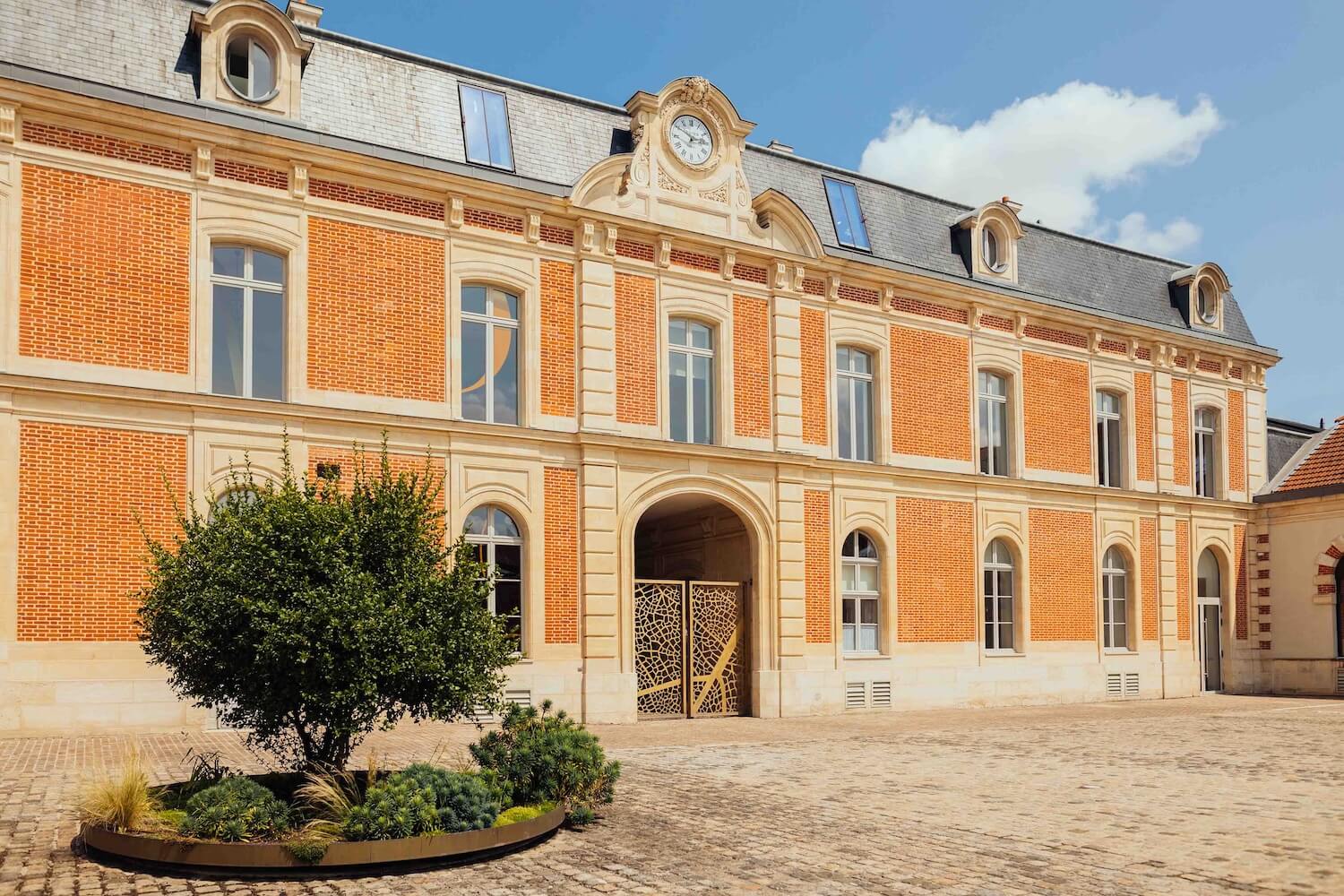
Our verdict
On Rue Letellier in the 15th arrondissement, Odori Restaurant sits at a considered distance from the more trafficked dining corridors of central Paris. The address places it within a neighbourhood that rewards those who move beyond the obvious, where the cooking tends to speak more directly than the surroundings. An address worth tracking for anyone following where Paris dining is heading.

Pearl is the En Primeur Club membership app — saves, bookings, and concierge access live there. Same editors, same standards.
- Address
- 18 Rue Letellier, 75015 Paris, France
- Phone
- +33145778812
- Hours
- Mon–Sat 12–2:30 PM, 7–10:30 PMSun Closed
- Website
- opentable.com
- Directions
- Get directions
- Booking
- Book on OpenTable
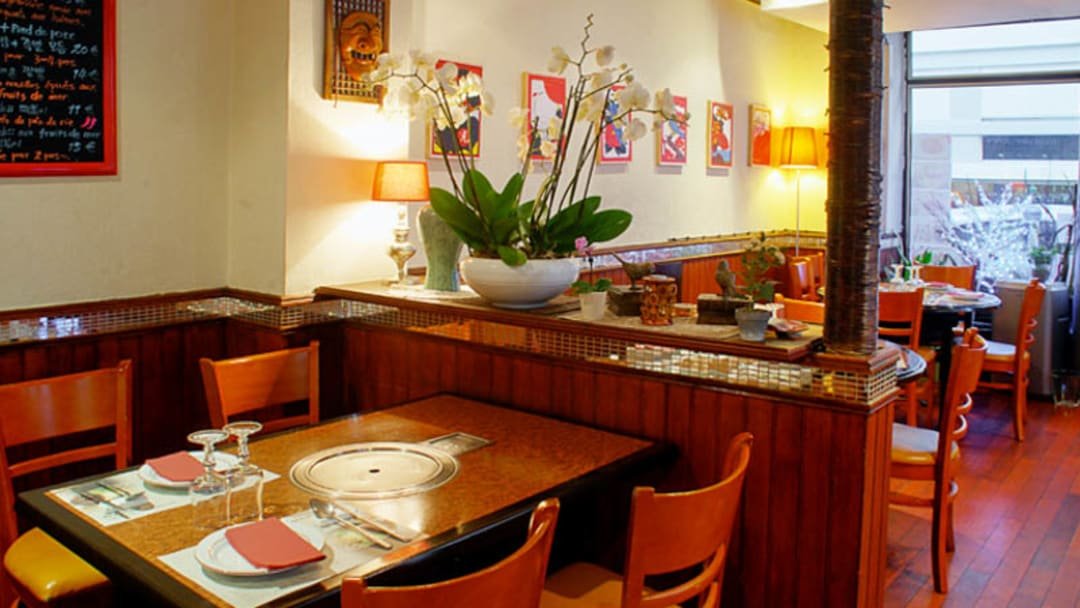
The menu
What to order
- Jae Yuk Gui
- Bibimbap
- Galbi
- Korean BBQ Platter
- Kimchi
A Restaurant in the 15th: Context Before the First Course
Paris dining has long operated on a clear geographic hierarchy. The 8th arrondissement draws the trophy rooms: Alléno Paris au Pavillon Ledoyen and Le Cinq at the Four Seasons George V anchor a corridor where address and accolade reinforce each other. The left bank's 7th has Arpège. The 4th holds L'Ambroisie, whose Place des Vosges setting doubles as a credential. Against that geography, the 15th arrondissement operates as a different proposition entirely. It is a residential district, dense with working Parisians, where the overhead is lower and the cooking does not lean on a postcode for legitimacy. Odori Restaurant, at 18 Rue Letellier, belongs to this quieter tier of the city's dining map, and the implication of that address is worth sitting with before any assessment of the food.
The broader French dining conversation has shifted considerably over the past two decades. The rigidly classical sequence — amuse, entrée, poisson, viande, fromage, dessert — has opened up. Chefs trained in the long tradition of French haute cuisine, comparable to those behind Troisgros in Ouches or Flocons de Sel in Megève, have increasingly borrowed from Japanese and Nordic precision to reframe how a meal unfolds in time. The question for a restaurant in the 15th is whether it participates in that conversation or holds to an older register. On the limited data currently available for Odori, the honest position is that the specifics of format and menu remain unverified.
The Architecture of a Meal: What Multi-Course Sequencing Communicates
In serious Parisian restaurants, the tasting menu has become less a format and more an argument. Each course is a position. The progression from lighter, more acidic preparations through richer, more structural dishes and on to something restorative at the close is not incidental, it reflects a culinary intelligence about how appetite, attention, and palate interact over two or three hours. This is what separates a sequence of dishes from a meal that has been thought through.
For comparison: Kei, in the 1st, built a case for French-Japanese sequencing that earned three Michelin stars, demonstrating that the multi-course argument can be made from a position of cultural synthesis rather than classical purity alone. AM par Alexandre Mazzia in Marseille pushed the progression format in a more fragmented, high-frequency direction, with dozens of small courses replacing the traditional architecture. These are the poles of contemporary French multi-course dining, and any serious independent in Paris today is implicitly taking a position somewhere between them.
The 15th Arrondissement as a Dining Register
What the 15th offers that the prestige arrondissements do not is a certain freedom from spectacle. Restaurants here do not need to perform their own importance. The neighbourhood is not a destination in the way that the Palais-Royal quarter or the Marais are destinations; the guest arriving on Rue Letellier has made a deliberate choice rather than a convenient one. That self-selection changes the room. The guests tend to be regulars or researchers, and the cooking can proceed without the performance layer that high-footfall tourist corridors require.
This dynamic is visible in other French cities too. Auberge du Vieux Puits in Fontjoncouse draws serious diners to a village with no other reason to visit. Au Crocodile in Strasbourg operates at a remove from the city's most obvious tourist infrastructure. In each case, the address functions as a filter. The 15th operates similarly within Paris, and Odori's Rue Letellier location places it within that filtered-guest logic.
Paris in a Wider Frame
It is worth noting that Paris-trained precision travels. Le Bernardin in New York carries a direct lineage from the French classical tradition; Atomix, also in New York, demonstrates how multi-course discipline exports into entirely different culinary vocabularies. The rigour of French sequencing, the attention to course arc and pacing, has become a shared grammar across serious restaurants in multiple cities. A restaurant in Paris's 15th that engages with that grammar seriously is participating in something larger than its postcode suggests.
For those tracking where independent Paris dining sits relative to the Michelin-decorated circuit, comparisons like Paul Bocuse's Auberge du Pont de Collonges and Assiette Champenoise in Reims help calibrate expectations. Both represent a French fine dining register in which classical technique and local product are the primary arguments. Odori's position within this broader map depends on specifics not yet in the public record, which is precisely why it warrants closer attention from those who track the category. See our full Paris restaurants guide for a more complete view of how the city's dining scene is structured by arrondissement and price tier.
Know Before You Go
- Address: 18 Rue Letellier, 75015 Paris, France
- Arrondissement: 15th, residential district; not adjacent to major tourist corridors
- Getting There: The 15th is served by several Métro lines; Émile Zola (line 10) and Commerce (line 8) are the closest stations to Rue Letellier
- Booking:Kei, Arpège, and L'Ambroisie
Frequently asked questions
Where is Odori Restaurant in Paris?
Odori Restaurant is located at 18 Rue Letellier, 75015 Paris, France, Paris.
Is Odori Restaurant a good option for a special occasion dinner in Paris outside the tourist-heavy arrondissements?
Odori's address in the 15th arrondissement — at 18 Rue Letellier — places it in a part of Paris where restaurants earn their reputation through the room rather than the postcode. The 15th has no Eiffel Tower adjacency premium to absorb, which historically means kitchens in this district are priced and paced for a local clientele that returns regularly. For a city like Paris, that dynamic is one of the more reliable indicators of a kitchen cooking to a consistent standard.
What's the signature dish at Odori Restaurant?
What the restaurant's placement at 18 Rue Letellier in Paris's 15th arrondissement does suggest is a kitchen working outside the performative register of the prestige arrondissements — where signature dishes tend to be the point — rather than a supporting act to room or reputation. For current menu specifics, contacting the restaurant directly is the most reliable route.
Do they take walk-ins at Odori Restaurant?
No booking policy is publicly confirmed for Odori at 18 Rue Letellier, Paris 15th. Serious Paris restaurants at this address tier typically operate on reservations, particularly for dinner service. Arriving without a booking on a weekend is a risk; a weekday lunch is a more reasonable gamble if the dining room is smaller format.
A Minimal comparable set
Comparable venues nearby, for context on price, style, and recognition.
| Venue | Cuisine | Price | Notes |
|---|---|---|---|
| Odori RestaurantThis venue — the venue you are viewing | Authentic Korean Barbecue | $20–30 | Not listed |
| Go Oun | Korean Fusion | $20–30 | Louvre / Palais-Royal, Korean Fusion |
| Hangari (Hang-A-Li) | Authentic Korean | $20–30 | Vivienne, Authentic Korean |
| JOAYO Montparnasse | Authentic Korean BBQ & Karaoke | $20–30 | Montparnasse, Authentic Korean BBQ & Karaoke |
| Sobane Restaurant | Korean-French Fusion | $30–50 | South Pigalle, Korean-French Fusion |
| JJIN | Korean Barbecue | $20–30 | Montparnasse, Korean Barbecue |