Oberbilker Grill
Located on Oberbilker Allee in Düsseldorf's working-class Oberbilk district, Oberbilker Grill occupies a neighbourhood that has seen significant demographic and culinary change over the past decade. The venue sits within a corridor of independent food operators where grill traditions from multiple cultures converge, placing it inside one of the city's more interesting grassroots dining scenes.
Pearl is the En Primeur Club membership app — saves, bookings, and concierge access live there. Same editors, same standards.
- Address
- Oberbilker Allee 101, 40227 Düsseldorf, Germany
- Phone
- +4949211725998
- Website
- facebook.com
- Directions
- Get directions
 Saves & bookings on Pearl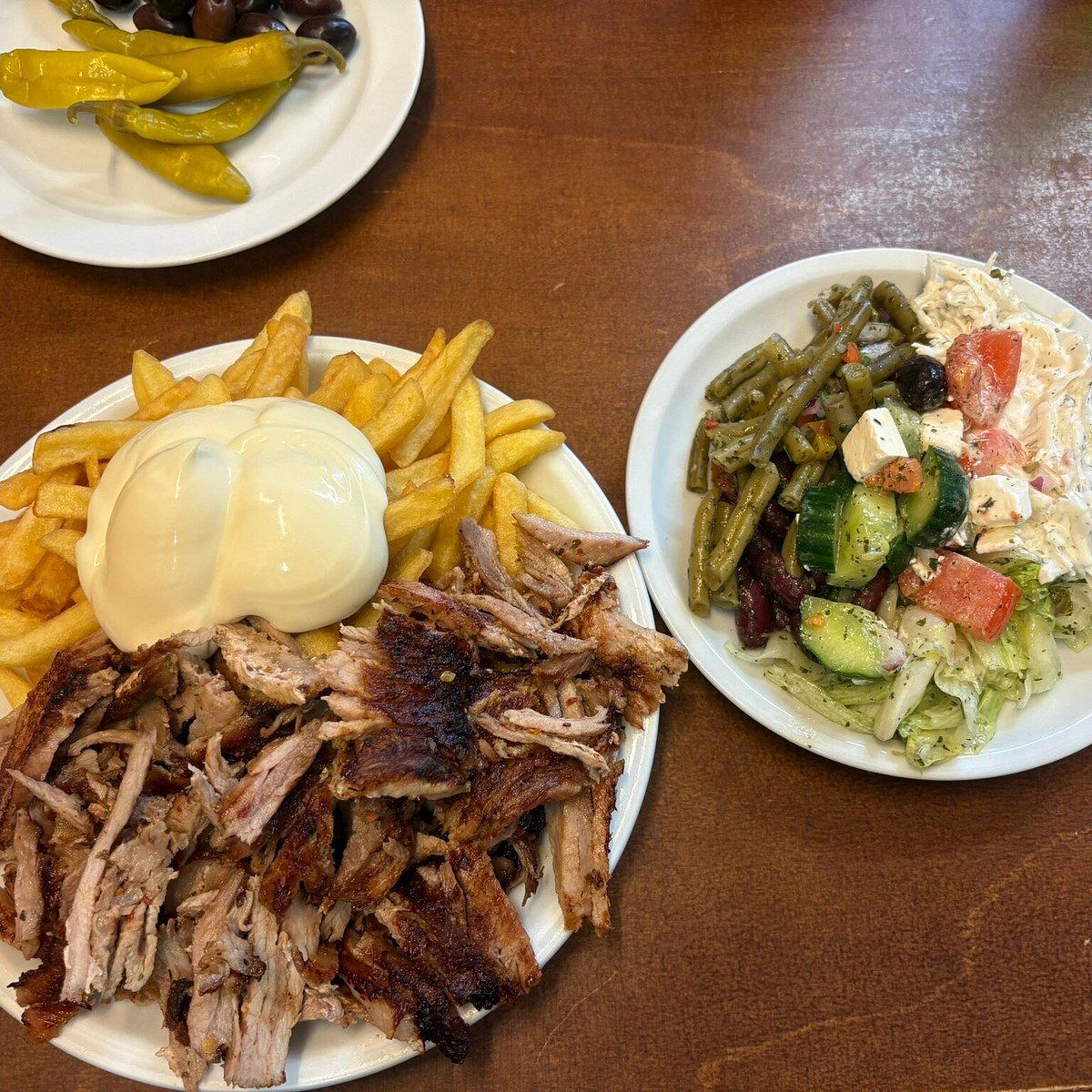
Oberbilk's Grill Culture and What It Signals About Düsseldorf's Eating Habits
Oberbilk is not the part of Düsseldorf that appears in glossy travel features. The district runs south of the Hauptbahnhof along Oberbilker Allee, a long commercial artery lined with independent shops, döner counters, and small restaurants that serve the neighbourhood's dense, mixed population rather than visitors with itineraries. That's precisely what makes it worth attention. In cities like Düsseldorf, where fine dining gravitates toward Altstadt and Pempelfort, the working southern districts often preserve a directness in cooking that more fashionable postcodes have traded away. Oberbilker Grill, at number 101 on that same alley, is a Greek Grill & Street Food restaurant in Düsseldorf: a grill operation in a district where grill culture has long been the dominant communal format.
Grill-format restaurants occupy a specific and durable position in the German urban eating scene. Unlike the tasting-menu segment, which has expanded significantly in cities like Düsseldorf, Wolfsburg, and Munich over the past fifteen years, neighbourhood grill houses have remained relatively stable in format, smoke, fire, and direct heat applied to meat, fish, or vegetables, with sides and sauces doing secondary work. At the high end of the German dining spectrum, places like Aqua in Wolfsburg and JAN in Munich operate in an entirely different register, but both exist because the appetite for fire-forward cooking runs deep across German dining culture, from the formal kitchen to the utilitarian street-side grill.
A Neighbourhood in Transition, a Format That Holds Its Ground
Oberbilk has absorbed significant demographic change since German reunification, and particularly since EU expansion in the 2000s brought new waves of residents from southern and eastern Europe, Turkey, and the Middle East. That diversity is directly legible on Oberbilker Allee itself, where the food offering shifts from Turkish grill houses to Asian canteens to Balkan burek shops within a few hundred metres. Alanya Döner, operating nearby, represents the Turkish grill tradition that has been present in this corridor for decades. Arca Alacati extends that Anatolian register in a slightly more sit-down format.
What this street-level diversity produces, in culinary terms, is competitive pressure on quality and price simultaneously. Independent operators on corridors like Oberbilker Allee don't survive on location advantage or brand recognition, they survive because the cooking is consistent enough that local residents return. That pressure tends to sharpen rather than degrade quality at the individual operator level, and it's one reason that districts like Oberbilk often yield more honest eating than the restaurant clusters that have been designed for visitor traffic.
Sustainability and Sourcing in the Neighbourhood Grill Context
The sustainability conversation in German dining has largely been dominated by fine dining kitchens, where chefs have the purchasing scale and public platform to make sourcing choices visible. At Schwarzwaldstube in Baiersbronn or Vendôme in Bergisch Gladbach, sourcing narratives are built into the menu structure itself. At neighbourhood level, the dynamics are different but not necessarily less considered. Grill operators in urban districts often source from wholesale markets where regional produce cycles through in volume, a less curated but often geographically proximate supply chain compared to the international import logistics that supply some premium restaurant kitchens.
The environmental calculus of a neighbourhood grill is also shaped by waste reduction at the operational level. Grill formats, by their nature, tend toward whole-cut and portion-based cooking rather than the elaborate prep waste associated with multi-course menus. Bones and trim become stock; off-cuts become staff meals or specials. This is not a sustainability narrative that gets told loudly in this tier of the market, but it reflects a kind of embedded efficiency that predates the contemporary sourcing conversation by decades. Independent urban grill houses like Oberbilker Grill operate in a tradition where waste is controlled not by ideology but by economics, and the outcome, in terms of nose-to-tail use and minimal over-ordering, often aligns with what more expensive operations achieve through deliberate policy.
Düsseldorf's broader food scene has begun to absorb sustainability as a marketing position across multiple price tiers, from Amuni Wein- und Käsebar's focus on natural wine and small-producer dairy to the sourcing transparency at Anfora. At the neighbourhood level, the same instincts show up without the vocabulary.
Where Oberbilker Grill Sits in the Düsseldorf Eating Map
For a city with genuine fine dining ambition, including entries that place Düsseldorf in the same regional conversation as Restaurant Haerlin in Hamburg and Schanz in Piesport, the neighbourhood grill tier serves a distinct function: it's where the city actually feeds itself on a Tuesday night. Oberbilk's concentration of independent operators makes it one of the more densely competitive corridors in Düsseldorf for this format, sitting alongside places like 3h's burger & chicken in the fast-casual grill segment. The range across the street signals how seriously the neighbourhood takes cooked-to-order food at accessible price points.
Internationally, the tradition of the urban neighbourhood grill has strong parallels across culinary cultures, the South Korean barbecue house, the Argentine parrilla, the Lebanese mashawi counter. What Düsseldorf's version shares with those formats is an emphasis on the cooking process as the event itself: fire and heat are not infrastructure, they are the point. For visitors who have covered the fine dining circuit and want to read the city at street level, the Oberbilk corridor offers a different kind of intelligence about how Düsseldorf eats. The same curiosity that drives interest in CODA Dessert Dining in Berlin or ES:SENZ in Grassau at the conceptual end of German dining applies here, just aimed at a different set of questions about what a city's food culture actually looks like from the ground up.
Planning a Visit
Oberbilker Grill is located at Oberbilker Allee 101, 40227 Düsseldorf, accessible from Düsseldorf Hauptbahnhof by a short tram or S-Bahn connection south toward Oberbilk. The neighbourhood is walkable once you arrive, and the allee itself rewards spending time across multiple stops rather than a single destination visit. The restaurant is walk-in friendly and open Tue to Sun from 12 to 9 PM. For broader context on where this fits within the city's dining geography, consult a Düsseldorf restaurants guide that maps the scene across neighbourhoods and price tiers.
Category Peers
Comparable venues nearby, for context on price, style, and recognition.
| Venue | Cuisine | Price | Notes |
|---|---|---|---|
| Oberbilker GrillThis venue — the venue you are viewing | Greek Grill & Street Food | $$ | Not listed |
| Askitis greekcuisine | Authentic Greek Cuisine | $$$ | Düsseltal |
| Bulle Burger | Handmade Smash Burgers | $$ | Stadtmitte |
| Takumi 2nd Tonkotsu | Authentic Japanese Tonkotsu Ramen | $$ | Stadtmitte |
| Amuni Wein- und Käsebar | Sicilian Wine & Cheese Bar | $$ | Altstadt |
| Le Bánh Mì | Vietnamese Street Food | $$ | Stadtmitte |
Continue exploring
More in Düsseldorf
Restaurants in Düsseldorf
Browse all →
Bars in Düsseldorf
Browse all →
At a Glance
- Lively
- Classic
- Cozy
- Casual Hangout
- After Work
- Standalone
Current opening hours
- Monday
- Closed
- Tuesday
- 12–9 PM
- Wednesday
- 12–9 PM
- Thursday
- 12–9 PM
- Friday
- 12–9 PM
- Saturday
- 12–9 PM
- Sunday
- 12–9 PM
Hours can change for holidays and private events. Last verified .
Casual and welcoming street food spot with a down-to-earth atmosphere featuring sports memorabilia.