Askitis greekcuisine
Greek cuisine in Düsseldorf's Flingern district, where Askitis greekcuisine addresses Herderstraße 73 with the kind of neighbourhood-anchored cooking that positions it firmly outside the city's fine-dining circuit. The address places it among a cluster of independent, ethnically diverse restaurants that define mid-city Düsseldorf's casual dining character, direct, specific, and oriented toward the cuisine rather than the spectacle around it.
 Discover on Pearl
Pearl is the En Primeur Club membership app — saves, bookings, and concierge access live there. Same editors, same standards.
- Address
- Herderstraße 73, 40237 Düsseldorf, Germany
- Phone
- +492116020713
- Website
- askitis.com
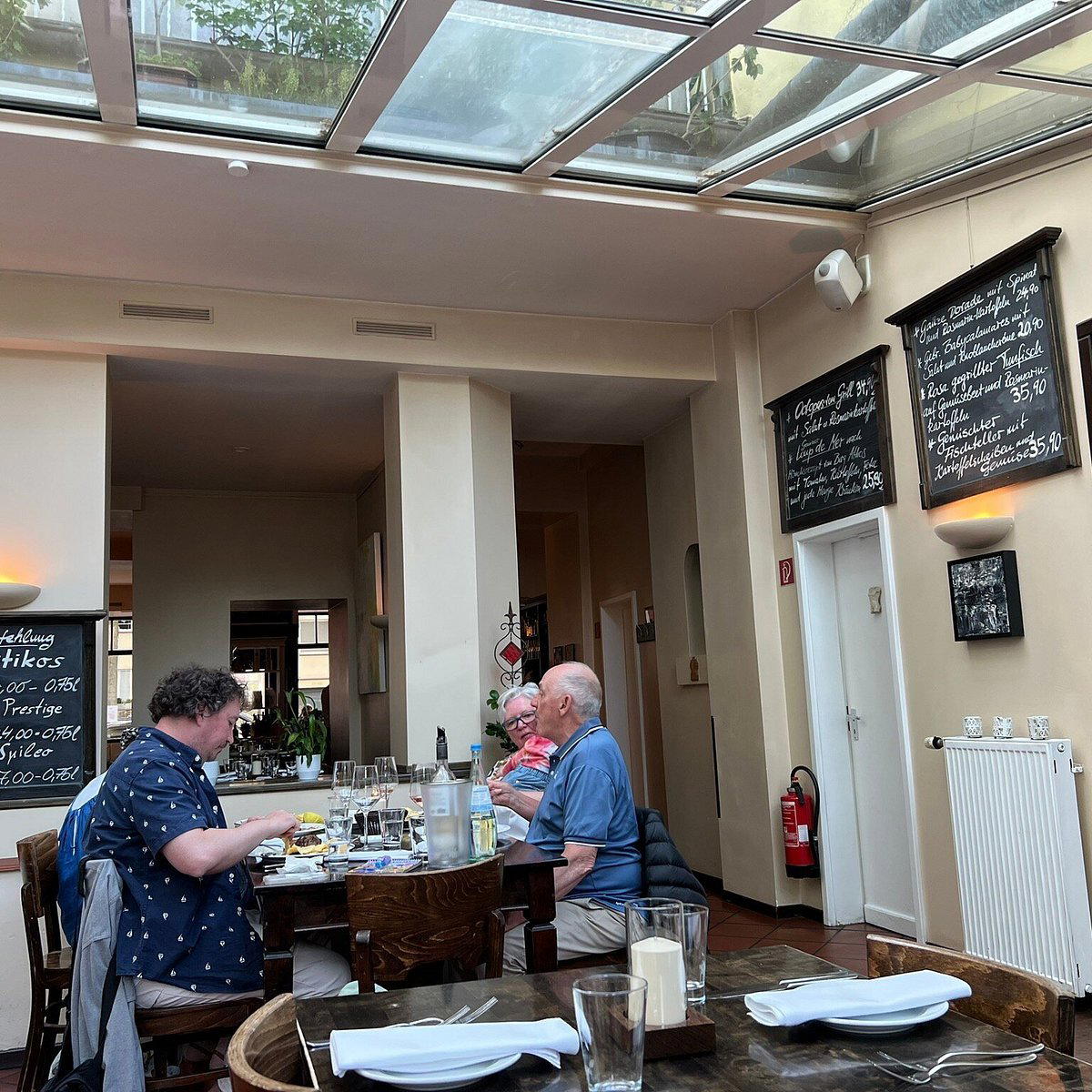
Greek Cooking in a City That Rewards Specificity
Düsseldorf's dining scene has spent the past decade pulling in two directions: upward toward the highly technical, multi-course format represented by Germany's Michelin constellation (with properties like Aqua in Wolfsburg and Vendôme in Bergisch Gladbach defining that ceiling regionally), and laterally toward the kind of culturally specific, neighbourhood-rooted cooking that doesn't require a reservation concierge. Askitis greekcuisine is a restaurant serving Authentic Greek Cuisine at Herderstraße 73, 40237 Düsseldorf, Germany. Greek cuisine in German cities has followed a recognisable arc: the generic taverna format that dominated the 1980s and 1990s has gradually given way to more focused operations that draw on regional Greek traditions rather than pan-Hellenic greatest-hits menus. That evolution is worth understanding before arriving at any address claiming Greek cooking in 2024.
The Flingern Context
Herderstraße and the wider Flingern district represent a particular kind of Düsseldorf neighbourhood, one that absorbed waves of independent food businesses precisely because it sat outside the pressure zones of Altstadt tourist traffic and Carlstadt fine-dining rents. The streets around this address carry a density of independent, ethnically varied restaurants that includes everything from döner specialists like Alanya Döner to concept-driven formats. Within that mix, a Greek restaurant at this address competes less on theatre and more on the quality of what actually arrives at the table. The neighbourhood rewards operations that know their lane. Diners arriving from the Altstadt via the U73 or U83 tram lines will find the area walkable from the nearest stop, with street parking available in the evenings for those coming by car.
How Greek Restaurant Cooking Has Shifted in Germany
The broader shift in how Greek cuisine is interpreted across German cities matters for understanding where a place like Askitis greekcuisine fits. The generic souvlaki-and-moussaka format, which once dominated Greek restaurants across Düsseldorf, Cologne, and Frankfurt, has contracted. In its place, some operators have moved toward regional specificity, Cretan olive oil traditions, Macedonian wine pairings, the fish-forward cooking of the Aegean islands, while others have stayed closer to the taverna format but sharpened execution. This mirrors a broader pattern visible in other Mediterranean-cuisine niches: compare the evolution of Spanish cooking in Germany, where the paella-and-sangria format has similarly given way to sharper, more regionally anchored menus. Askitis greekcuisine operates within this shifting context. The address in Flingern, away from the tourist-heavy areas where lowest-common-denominator menus persist longest, suggests a positioning closer to the neighbourhood-specialist end of that spectrum. For comparison, the wine-and-cheese format at Amuni Wein- und Käsebar in Düsseldorf shows how operators in this city increasingly build identity around a specific product category rather than broad ethnic coverage.
What the Address Signals About Format
Restaurants that establish themselves on residential-commercial streets like Herderstraße in Flingern typically operate on a different business logic than those in high-footfall central districts. Lower fixed costs allow for tighter menus and better sourcing ratios. The dining room tends toward the practical rather than the theatrical. This is where Greek cooking, at its most honest, often performs leading: grilled fish priced against the actual cost of sourcing, olive oil treated as an ingredient worth specifying rather than an anonymous kitchen staple, herbs that function as flavour architecture rather than garnish. Other Düsseldorf addresses operating in this neighbourhood-anchored format include Anfora and Arca Alacati, both of which have carved out specific identities within the city's mid-market independent sector. The contrast with Germany's highest-registered fine-dining addresses, Schwarzwaldstube in Baiersbronn, JAN in Munich, or Victor's Fine Dining by Christian Bau in Perl, is complete. Askitis greekcuisine does not compete in that register, nor should it.
The Evolution of This Type of Operation
Greek restaurants in German cities that have survived beyond two decades have generally done so by evolving rather than staying static. The ones that haven't adapted tend to close or retreat into the catering-and-delivery model. Those that have evolved typically show one of several signals: a wine list that references specific Greek appellations (Assyrtiko from Santorini, Xinomavro from Naoussa) rather than just country of origin; a menu structure that distinguishes between cold mezze, hot mezze, and main courses as distinct courses rather than collapsed into one undifferentiated spread; or a sourcing narrative that specifies olive oil provenance or cheese type. These are not premium gestures, they are simply markers of an operation that has moved past the generic phase. Against the backdrop of Germany's broader restaurant evolution, which you can trace through venues like ES:SENZ in Grassau, Schanz in Piesport, or the format-breaking CODA Dessert Dining in Berlin, the neighbourhood Greek specialist occupies a modest but durable position in the ecosystem.
Düsseldorf's Independent Restaurant Tier
The city's independent mid-market has absorbed significant pressure from delivery platforms and post-pandemic cost increases, but Flingern has retained a relatively stable cluster of neighbourhood operators. The proximity of addresses like 3h's burger & chicken on the same circuit illustrates the range: fast-casual and sit-down dining coexist in the same streets because the neighbourhood draws mixed-income residents who eat out regularly rather than occasionally. For a Greek restaurant in this environment, regulars matter more than destination diners. That shapes the menu logic: portions tend to be calibrated for satisfaction rather than restraint, and the wine program, if present, typically operates at accessible price points. Internationally, the contrast is sharp, venues like Le Bernardin in New York City or Atomix in New York City and Restaurant Haerlin in Hamburg operate in a category where the dining occasion itself is the product. Askitis greekcuisine operates in a category where the food is the product, full stop.
Planning Your Visit
The address at Herderstraße 73, 40237 Düsseldorf, places the restaurant in a residential pocket of Flingern accessible by tram from the city centre. The restaurant is recommended for reservations and is priced at about $40 per person.
Continue exploring
More in Düsseldorf
Restaurants in Düsseldorf
Browse all →
Bars in Düsseldorf
Browse all →
Hotels in Düsseldorf
Browse all →
Wineries in Düsseldorf
Browse all →
At a Glance
- Cozy
- Classic
- Intimate
- Date Night
- Special Occasion
- Group Dining
- Extensive Wine List
Inviting atmosphere with cozy vaulted ceilings, modern art, charming winter garden, and warm family-like hospitality.