Le Bánh Mì
Le Bánh Mì on Immermannstraße sits in Düsseldorf's Japantown-adjacent corridor, where the city's most concentrated run of Asian food addresses draws a knowing crowd. The focus here is the Vietnamese sandwich in its most direct form: a vehicle of French-colonial bread tradition and Southeast Asian aromatics that has become one of the world's most replicated street foods. For a quick, no-ceremony lunch in central Düsseldorf, it earns its place on a short list.
Pearl is the En Primeur Club membership app — saves, bookings, and concierge access live there. Same editors, same standards.
- Address
- Immermannstraße 48, 40210 Düsseldorf, Germany
- Phone
- +4921115899198
- Directions
- Get directions
 Saves & bookings on Pearl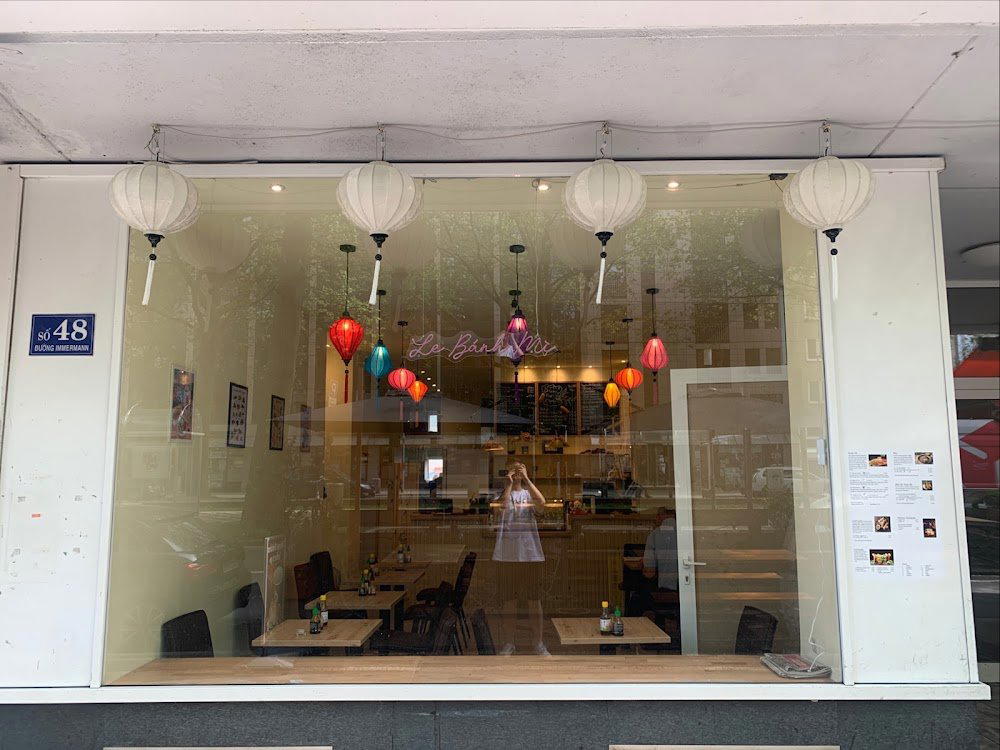
Immermannstraße and the Asian Food Mile
Düsseldorf's Immermannstraße is the spine of what the city's residents call Little Tokyo, though that label has long since become too narrow. The stretch running north from the central station holds the densest concentration of Japanese, Korean, Vietnamese, and pan-Asian addresses in any German city outside Berlin. Within that corridor, Vietnamese food occupies a particular niche: it attracts both the Japanese expat population that has lived here since the 1970s and a broader dining public that has moved past Vietnamese food as novelty and now treats it as a reliable mid-week staple. Le Bánh Mì, at Immermannstraße 48, positions itself squarely within that everyday register.
The bánh mì as a category is worth pausing on, because it is one of the more instructive case studies in culinary transfer. The sandwich emerged from French colonial presence in Vietnam: a baguette tradition grafted onto local proteins, herbs, and pickled vegetables, producing something that is neither French nor purely Vietnamese but entirely its own thing. That hybridity is now the point. The leading versions balance the crunch of a short-fermented baguette crust against the yielding interior, with daikon and carrot pickle providing acidity, fresh coriander and chilli cutting through fat from pâté or grilled meat. The result is a format so precisely engineered that deviation from the core ratio tends to diminish it. In a city where the sandwich culture skews heavily German, a dedicated bánh mì counter represents a meaningful editorial statement about where Düsseldorf's appetite has shifted.
Where It Sits in the City's Casual Dining Picture
Düsseldorf's casual dining scene has broadened considerably over the past decade. The same Immermannstraße corridor that once meant ramen and conveyor-belt sushi now accommodates Korean fried chicken, Sichuan hot pot, and, at venues like Xiao Long Kan nearby, elaborate hotpot formats that fill tables from noon to late. At the counter-service and quick-lunch end of the market, the competition is different in character: addresses like 3h's Burger & Chicken and Alanya Döner operate in the same price tier and the same grab-and-go rhythm.
In that context, a venue focused on a single, precisely defined format has a structural advantage. Specialisation in this category tends to produce better results than generalist menus that add bánh mì as a side offering. The question for any dedicated bánh mì counter is whether the bread sourcing and the filling ratios are consistent enough to merit repeat visits. That repeatability, rather than ambition or ceremony, is what defines success in this format.
For those working through Düsseldorf's broader Asian food corridor, Arca Alacati and Anfora cover the Mediterranean end of the city's casual dining range, while Amuni Wein- und Käsebar sits in a different register entirely. The full Dusseldorf restaurants guide maps all of these across the city's neighbourhoods.
The Cultural Weight of a Sandwich
It would be a mistake to read Le Bánh Mì as simply a convenience stop. The bánh mì carries a specific cultural history that gives even a modest counter operation a degree of seriousness. Vietnam's colonial period left an architectural and culinary imprint that persists: French bread technique, the incorporation of pâté, the use of mayonnaise as a binding agent. What Vietnamese cooks did with those inputs was not imitation but transformation, producing a sandwich that travels globally because its internal logic is so sound. The pickled vegetables provide the acid contrast that French mustard does in a jambon-beurre; the fresh herbs function as a textural counterpoint that no European sandwich tradition had thought to include in quite the same way.
In Germany, Vietnamese communities have been established since the 1980s, initially concentrated in eastern cities but now well distributed across the west. Düsseldorf's Vietnamese food scene benefits from the city's general cosmopolitanism and from the proximity of a Japanese community with high standards for Asian food quality. That audience pressure tends to keep standards at Vietnamese addresses in this corridor higher than in cities where the cuisine is consumed mainly by non-Vietnamese diners with fewer reference points.
German Fine Dining as Context
Düsseldorf sits within reach of some of Germany's most decorated formal dining. Aqua in Wolfsburg and Vendôme in Bergisch Gladbach represent the multi-Michelin end of the North Rhine-Westphalia food scene, while nationally, addresses like Schwarzwaldstube in Baiersbronn, Victor's Fine Dining by Christian Bau in Perl, and Waldhotel Sonnora in Dreis define the upper tier. Further afield, JAN in Munich, ES:SENZ in Grassau, Schanz in Piesport, and Restaurant Haerlin in Hamburg map the country's serious dining geography. CODA Dessert Dining in Berlin represents a distinct conceptual strand. None of that formal apparatus applies to Le Bánh Mì, which operates at the opposite end of the ceremony scale. But understanding where a city's fine dining pressure sits helps contextualise why casual formats like this one carry genuine weight: in a market that does formal dining at a high level, good casual food is never incidental. Internationally, comparisons might be drawn with the precision-focused counter formats at Le Bernardin in New York or the cultural specificity of Atomix, though the scale and register are entirely different.
Planning a Visit
Le Bánh Mì is at Immermannstraße 48, 40210 Düsseldorf, a short walk from Düsseldorf Hauptbahnhof and inside the city's most navigable stretch for Asian food. As a counter-service format, it suits a lunch or early-afternoon visit rather than an evening out; the bánh mì format is inherently a daytime food, leading consumed immediately after preparation when the bread retains its crust. No dress code applies at this format level. For allergy and dietary queries, direct contact with the venue before arrival is the appropriate route, as counter operations in this category vary considerably in how they handle modifications.
Booking and Cost Snapshot
| Venue | Price |
|---|---|
| Le Bánh MìThis venue — the venue you are viewing | This venue |
Continue exploring
More in Düsseldorf
Restaurants in Düsseldorf
Browse all →
Bars in Düsseldorf
Browse all →
Hotels in Düsseldorf
Browse all →
Wineries in Düsseldorf
Browse all →
At a Glance
- Cozy
- Trendy
- Casual Hangout
- Standalone
Small, cozy, and friendly atmosphere run by mother and son.
Know Before You Go
- Getting there
- Immermannstraße 48, 40210 Düsseldorf, Germany