
Tokyo’s cafe culture often splits between design-led rooms and small specialist counters with serious local followings. Nutty’s Caff belongs to the latter group in Koishikawa, carrying a Tabelog Cafe EAST 100 selection for 2025 and a compact, low-key format that rewards daytime planning over spontaneity.
Pearl is the En Primeur Club membership app — saves, bookings, and concierge access live there. Same editors, same standards.
- Address
- 4 Chome-17-17 Koishikawa, Bunkyo City, Tokyo 112-0002, Japan
- Phone
- +81368738096
- Website
- instagram.com
 Saves & bookings on Pearl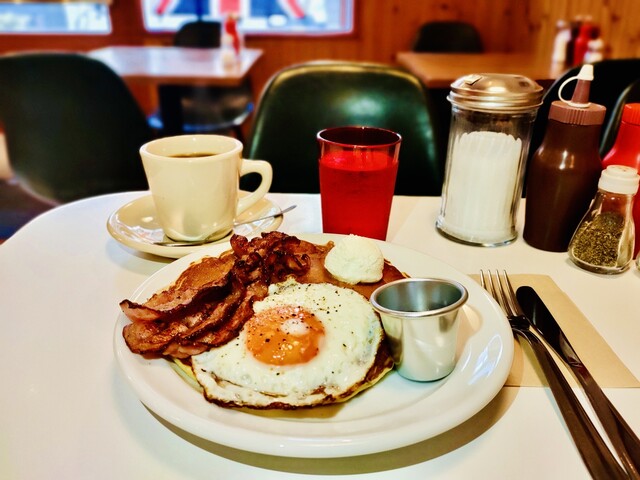
Koishikawa sets the tempo before the first order. Around Myogadani, the streets carry a quieter Bunkyo rhythm: schools, old residential blocks, pocket parks, and small food businesses driven less by spectacle than repeat local use. In that setting, Nutty’s Caff belongs to Tokyo’s disciplined cafe tradition: compact room, daytime pace, and a ritual closer to a considered pause than a long restaurant sitting.
Tokyo’s cafe scene is often misunderstood from outside. Attention tends to fall on photogenic concept rooms or kissaten nostalgia, but much of the serious cafe map sits between them: small independent addresses with short service windows, limited seating, and reputations built through patient local traffic. A 2025 Tabelog Cafe EAST 100 selection places Nutty’s Caff in that narrower bracket, not as a luxury restaurant substitute, but as a cafe whose appeal depends on consistency, restraint, and a format scaled to a small room.
A small-room cafe ritual in residential Bunkyo
The ritual is shaped by scale. A 15-seat cafe changes the meal: arrivals matter, turnover matters, and lingering must coexist with only a handful of parties being seated at once. That differs from a large Harajuku or Shibuya cafe, where volume and visual identity often lead. In Koishikawa, the point is more practical and more Tokyo: come during the day, order within the room’s rhythm, and treat the visit as a focused stop rather than a sprawling afternoon camp.
The JPY 1,000 to JPY 1,999 price band also matters. In Tokyo terms, it sits below the tasting-menu economy and far from the premium counter circuit, yet above a convenience-led coffee break. This is the zone where ingredients, preparation, and room management must carry the argument without a long menu or high bill. That middle tier is one of Tokyo’s quiet strengths, and explains why cafe awards are useful: they identify modest formats judged with the seriousness usually reserved for restaurants.
Koishikawa supports that argument. Bunkyo is not built on late-night dining energy; it rewards daytime routes, university-adjacent habits, and neighbourhood businesses that make sense before evening. Compared with heavier restaurant spend at Edogawa Ishibashi, or the more traditional dining context around Koishikawa Nakasei and IkkoAn, a cafe like this occupies a different slot in the area’s eating day. It is not competing for the same occasion, but for a smaller, exacting ritual: a short daylight meal or coffee-led stop that justifies crossing a neighbourhood boundary.
Where cafe recognition sits in Tokyo's food hierarchy
Tabelog’s Hyakumeiten lists matter in Japan because they capture categories Michelin-style systems often flatten or ignore. Cafe recognition does not imply white-tablecloth ambition; it signals performance within a genre. For Nutty’s Caff, the 2025 Cafe EAST 100 listing and Tabelog score of 3.65 place it in a competitive field where consistency and local approval matter more than dramatic reinvention. That distinction helps travellers used to reading awards only through fine-dining language.
The comparison set around Tokyo cafe culture is broad. 2D Cafe leans into visual concept, while SUPER FRUTTO sits in a lower price band and points to another branch of casual specialist eating. チョコ, IkkoAn, and other Bunkyo-adjacent names show how compact, category-specific addresses shape the area’s food map without behaving like conventional destination restaurants. The interesting point is not that every cafe must become a restaurant; it is that Tokyo diners often treat focused cafe formats with restaurant-level scrutiny.
That scrutiny changes expectations. The room is neither a flexible all-day lounge nor a stage for elaborate service choreography. Read it instead as a small-format daytime address precise inside its lane. The award signal supports that view, but the category sets the terms: cafe pacing, modest spend, limited capacity, and a neighbourhood location best understood within a wider Bunkyo or Marunouchi Line day rather than a single-purpose cross-city dash.
How to fold it into a Tokyo food day
Tokyo rewards clustering. A Koishikawa cafe stop can sit before a more formal dinner elsewhere, or act as a quiet counterpoint to denser eating districts. For broader planning, Our full Tokyo restaurants guide gives the restaurant frame, while Our full Tokyo hotels guide, Our full Tokyo bars guide, Our full Tokyo wineries guide, and Our full Tokyo experiences guide place the stop inside a fuller city plan.
The practical choice is less about chasing a famous dish than choosing the right occasion. A compact cafe with no reservation availability favours patience and timing; it suits a flexible daytime route better than a tight meal before a museum ticket or train departure. The no-smoking format and small seating count make it more controlled than many casual stops, but the etiquette is simple: arrive prepared, order cleanly, and read the room’s pace.
For contrast within Tokyo, 鮪と炭火焼き うお炭 秋葉原店, 12/10 Shinjuku ten, 124. KAGURAZAKA (Yakitori), and 3 Chome no Curry Ya San show how sharply the city’s casual and specialist categories diverge. Beyond Tokyo, the same logic appears in small-format Japanese dining at -Grilled beef Sukiyaki- KAMAKURA TANUKIAN 鎌倉 たぬき庵 in Kamakura.cafe in Osaka.know in Kumamoto, (Shoku) Vietnam in Kawasaki, [Curry Senmon Ten] Maruyama Kyoju. in Sapporo, and [ki:] in Kyoto. For a transpacific comparison in Japanese-led casual formats, Jōdo Saké Bar in Los Angeles and Onigiri Time in Pasadena remind us that outside Japan, the category often becomes a concept; in Tokyo, it can remain a daily ritual and still be judged with precision.
The editorial case for the restaurant is strongest framed that way. It is a small Koishikawa cafe with 2025 category recognition, modest pricing, and a format asking for daytime attention rather than spectacle. In a city where serious eating is not confined to dinner, that makes the address relevant.
At a Glance
Comparable venues to place this listing in its category.
| Venue | Cuisine | Price |
|---|---|---|
| Nutty’s CaffThis venue — the venue you are viewing | Not listed | $ |
| BEAVER BREAD | Chūō, Bakery | $ |
| 12/10 Shinjuku ten | Shinjuku, Japanese Bakery | $ |
| moonbow | Shibuya, Curry bar | $ |
| ORIMINE BAKERS Tsukiji nanachome ten | Chūō, Neighborhood bakery & bread shop | $ |
| Komugi to Kobo Hamada Ya Sangenjaya honten | Setagaya, Japanese neighborhood bakery | $ |
Recognition history
Dated appearances from independent guides and award organizations, with the underlying list record or original source where available.
Tabelog 100 #93 · No. 93
Tabelog · Tabelog 100 - Cafe - EAST - 2025









At a Glance
- Cozy
- Classic
- Intimate
- Brunch
- Casual Hangout
- Solo
- Family
- Standalone
- Beer Program
Current opening hours
- Monday
- Closed
- Tuesday
- Closed
- Wednesday
- Closed
- Thursday
- 10 AM–4 PM
- Friday
- 10 AM–4 PM
- Saturday
- 10 AM–4 PM
- Sunday
- 10 AM–4 PM
Hours can change for holidays and private events. Last verified .
Retro British-inspired, cozy, and old-school, with a relaxed café atmosphere.