Noor Indian Fusion Kitchen
Our verdict
At 1398 University Ave, Noor Indian Fusion Kitchen sits in one of Berkeley's most contested corridors for independent dining, where the city's appetite for ingredient-driven cooking meets the subcontinent's layered spice traditions. The kitchen works within a fusion register that has become increasingly common in the Bay Area, drawing on California's produce culture alongside classical Indian technique. A practical starting point for anyone tracing Berkeley's evolving South Asian dining scene.

Pearl is the En Primeur Club membership app — saves, bookings, and concierge access live there. Same editors, same standards.
- Address
- 1398 University Ave, Berkeley, CA 94702
- Phone
- (510) 903-5001
- Hours
- Mon–Thu 11 AM–2:30 PM, 4–9 PMFri–Sat 11 AM–2:30 PM, 4–9:30 PMSun 11 AM–2:30 PM, 4–9 PM
- Website
- noorfusionkitchen.com
- Directions
- Get directions
- Booking
- Book on OpenTable
The menu
What to order
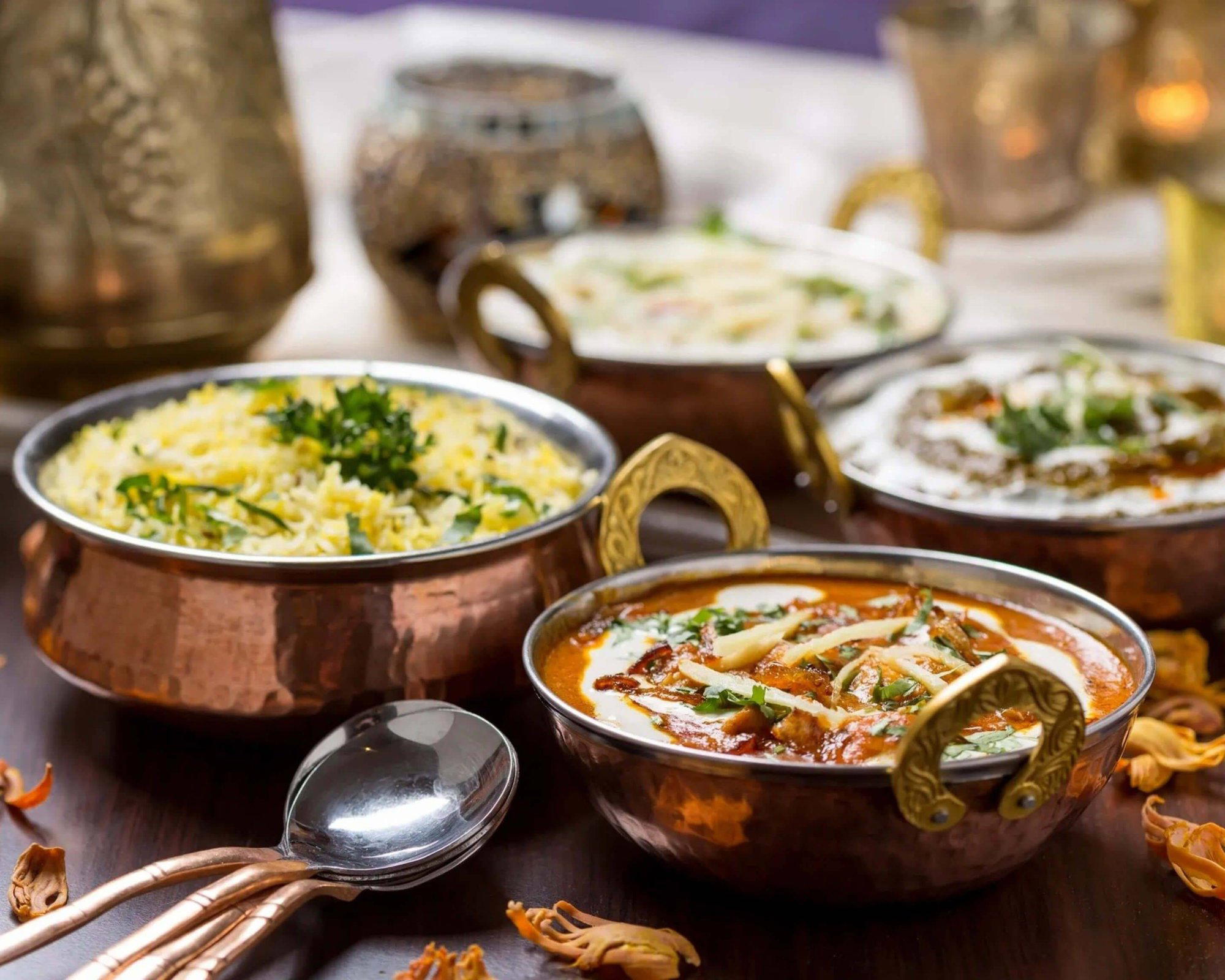
- Butter Chicken
- Lamb Biryani
- Paneer Tikka Masala
University Avenue and the Fusion Question
Berkeley's University Avenue has long functioned as a pressure test for independent restaurants. The corridor runs from the bay flats up toward the campus edge, collecting an unusually wide range of cuisines in a relatively compressed stretch. Indian and South Asian kitchens have been part of that mix for decades, and the question facing any new entrant in this category is how to position within a scene that already has depth. The broader Bay Area has seen a steady push toward what might be called California-inflected South Asian cooking: kitchens that draw on the region's agricultural infrastructure while working within spice and preparation traditions rooted in the subcontinent. Noor Indian Fusion Kitchen, at 1398 University Ave, operates inside that conversation.
The fusion framing matters here because it signals something specific about sourcing philosophy, even when the details of a given menu are not fully documented. In the Bay Area context, fusion rarely means arbitrary combination. More often, it reflects a kitchen's proximity to exceptional raw material and a willingness to adapt classical frameworks to what is seasonally available. The Central Valley's farms, the Bay's fishing grounds, and the network of specialty producers that have grown up around the demand created by restaurants like Single Thread Farm in Healdsburg and The French Laundry in Napa have raised the floor for ingredient quality across Northern California, including in neighborhood-scale restaurants like those on University Avenue.
Where the Ingredients Come From, and Why That Shapes the Menu
The editorial case for ingredient sourcing as the primary lens on a kitchen like Noor is direct: Indian cooking's layered spice architecture is one of the few culinary traditions that can genuinely absorb California's seasonal produce without losing its structural identity. A Rajasthani dal framework works as well with locally grown lentils as with imported ones. A coastal fish preparation built around coconut and curry leaf reads differently when the fish was pulled from Monterey Bay that morning versus sourced from a distant cold-chain supplier. These are not abstract distinctions.
Berkeley's dining community has been particularly attentive to this kind of sourcing transparency. The city's restaurants exist in a market where diners have been conditioned, over decades, to ask where things come from. That culture, shaped in part by the agricultural philosophy that defined the early Chez Panisse model, has spread well beyond fine dining. It now informs the expectations brought to a neighborhood Indian fusion kitchen in the same way it shapes what customers expect from a Californian tasting menu. For reference, kitchens as technically rigorous as Blue Hill at Stone Barns in Tarrytown and Alinea in Chicago have demonstrated that sourcing transparency can anchor a restaurant's identity across very different price tiers and formats. At the neighborhood level in Berkeley, that same principle applies even if the execution is less formally documented.
The Berkeley Context: South Asian Dining and Its Range
Berkeley has a layered South Asian dining scene, with restaurants covering regional Indian subgenres in ways that go beyond the generic curry-house model that still dominates in many American cities. Ajanta has operated in the city for years with a focus on regional Indian cooking that shifts with the season, an approach that placed it ahead of the sourcing curve for Indian restaurants in the Bay Area. That context is relevant because it sets a benchmark: Berkeley diners have access to Indian cooking with genuine regional specificity, which raises the standard for any kitchen describing itself as fusion.
The fusion designation also places Noor in a different competitive tier from purely traditional regional kitchens. Fusion, done with discipline, can occupy a distinct position in a dining scene by creating combinations that neither a classical Indian kitchen nor a California-produce restaurant would generate independently. The risk, always, is that fusion becomes a hedge, a way of avoiding the commitment required to execute either tradition with depth. The better fusion kitchens in the Bay Area, and there are several, resolve this by being specific about what they are combining and why. Restaurants like Atomix in New York City have shown that cross-cultural kitchens can achieve critical recognition when the conceptual framework is sufficiently rigorous. The question for any Indian fusion kitchen in Berkeley is whether the combination has an internal logic that goes beyond novelty.
The Neighborhood and the Walk In
University Avenue's western stretch, where Noor sits, has a different character from the blocks closer to campus. The foot traffic is more residential, the pace slower, and the restaurants here tend to rely more heavily on return business from the surrounding neighborhoods than on the student and visitor traffic that sustains dining closer to the university. That dynamic tends to reward kitchens that have a consistent identity and a reason for regulars to keep coming back. It also places a premium on value legibility: a diner who returns twice a month needs to feel that the exchange is reliable, not just occasionally impressive.
Other restaurants along and near University Avenue serve as useful reference points for understanding what the corridor offers. 900 Grayson and Angeline's Louisiana Kitchen operate in the neighborhood with distinct culinary identities that have built loyal followings over time. Agrodolce and AKEMI represent the range of cuisine types that Berkeley's dining corridors now support. Noor enters this mix as the specifically Indian-fusion entry point, a category that has room to grow given how underdeveloped the subgenre remains in many American cities relative to the depth of the underlying culinary tradition.
Planning Your Visit
For diners building a wider Berkeley itinerary, the EP Club Berkeley restaurants guide covers the full range of options across neighborhoods and cuisine types. If your travel extends to San Francisco, Lazy Bear represents the city's tasting-menu end of the spectrum. Southward, Providence in Los Angeles and Addison in San Diego anchor California's fine-dining tier. Internationally, Le Bernardin in New York City, Emeril's in New Orleans, The Inn at Little Washington, and 8 1/2 Otto e Mezzo Bombana in Hong Kong all appear in EP Club's broader coverage for those tracking cross-regional dining contexts.
Frequently asked questions
What's Noor Indian Fusion Kitchen's location?
Noor Indian Fusion Kitchen is located at 1398 University Ave, Berkeley, CA 94702, Berkeley.
How does Noor Indian Fusion Kitchen differ from traditional Indian restaurants in Berkeley?
Where most South Asian restaurants in Berkeley anchor to a specific regional tradition, such as North Indian or South Indian cuisine, Noor's fusion identity signals a deliberate departure from that framework. The kitchen at 1398 University Ave works Indian spice architecture into a format shaped by California's produce-driven restaurant culture, which is a different operating logic than a menu built around a fixed regional canon. That distinction matters for diners choosing between an authentic regional experience and a kitchen actively reinterpreting subcontinental cooking through a local lens.
What should I order at Noor Indian Fusion Kitchen?
The kitchen's name signals the approach: Indian cooking reframed through a fusion lens, which typically means spice-forward dishes where subcontinental technique meets California ingredient sourcing. Without a published static menu to cite, the safest move is to ask the kitchen what is running that day. Restaurants working this format in Berkeley tend to rotate dishes around seasonal availability, so the daily specials are usually where the kitchen's current thinking is clearest.
Do I need a reservation for Noor Indian Fusion Kitchen?
University Avenue restaurants in this stretch of Berkeley draw a residential crowd rather than a campus rush, which can mean more walk-in flexibility than venues closer to UC Berkeley. Checking the restaurant's current listings directly before visiting is the practical step, particularly on weekend evenings.
What is Noor Indian Fusion Kitchen known for?
The restaurant operates at the intersection of Indian culinary tradition and California fusion sensibility, a positioning that Berkeley's dining scene has room for given that most South Asian options in the area stay closer to regional subcontinental formats. The University Avenue address places it in a neighbourhood with steady local foot traffic rather than tourist volume, which shapes the kind of kitchen it is. Fusion-led Indian cooking at this level tends to draw its identity from sourcing and spice architecture rather than a fixed canon of dishes.
Do they accommodate allergies at Noor Indian Fusion Kitchen?
Indian cooking broadly involves complex spice blends, dairy, and gluten-containing elements that vary dish to dish, so the standard practice is to speak directly with the kitchen before ordering. Contacting Noor at their 1398 University Ave location ahead of your visit is the most reliable way to confirm what accommodations are available.
Is Noor Indian Fusion Kitchen overpriced or worth every penny?
Fusion formats in the Bay Area typically price above traditional curry-house models but below tasting-menu operators, reflecting the sourcing overhead that California ingredient culture brings. The value question is most accurately answered by confirming the current menu and price point directly with the restaurant before visiting.
City Peers
Comparable venues nearby, for context on price, style, and recognition.
| Venue | Cuisine | Price | Notes |
|---|---|---|---|
| Noor Indian Fusion KitchenThis venue — the venue you are viewing | Indian Fusion | $20–30 | Not listed |
| Taste of the Himalayas | Indian & Nepali Fusion | $10–20 | Gourmet Ghetto |
| Bangalore Blues | Authentic South Indian Street Food | $10–20 | North Berkeley |
| Ajanta | Creative Regional Indian | $30–50 | Solano Avenue |
| Breads of India | Classic Indian Breads & Curries | $20–30 | Central Berkeley |
| Angeline's Louisiana Kitchen | Louisiana Cajun & Creole | $30–50 | Downtown |