Domaine Carneros

Domaine Carneros has anchored the southern end of Napa Valley since its first vintage in 1987, producing sparkling wine and Pinot Noir from one of California's coolest growing districts. The château-style tasting room sits above its vineyards on a hillside and operates as one of the region's more formal sparkling wine destinations.
Pearl is the En Primeur Club membership app — saves, bookings, and concierge access live there. Same editors, same standards.
- Address
- 1240 Duhig Rd, Napa, CA 94559
- Phone
- +1 707-257-0101
- Website
- domainecarneros.com
- Directions
- Get directions
 Saves & bookings on Pearl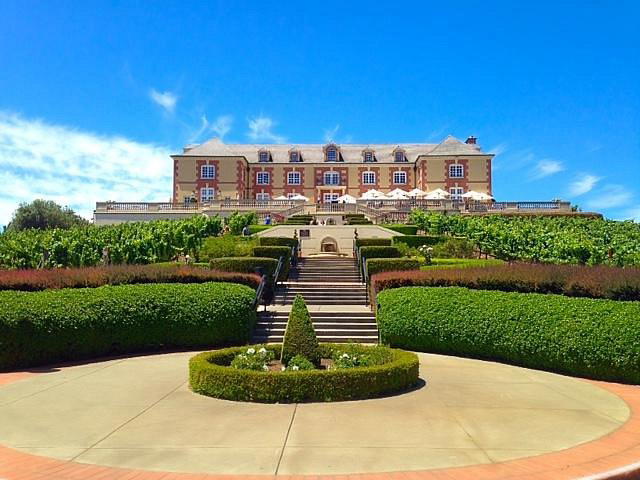
The Château on the Hill: What Carneros Looks Like From the Leading
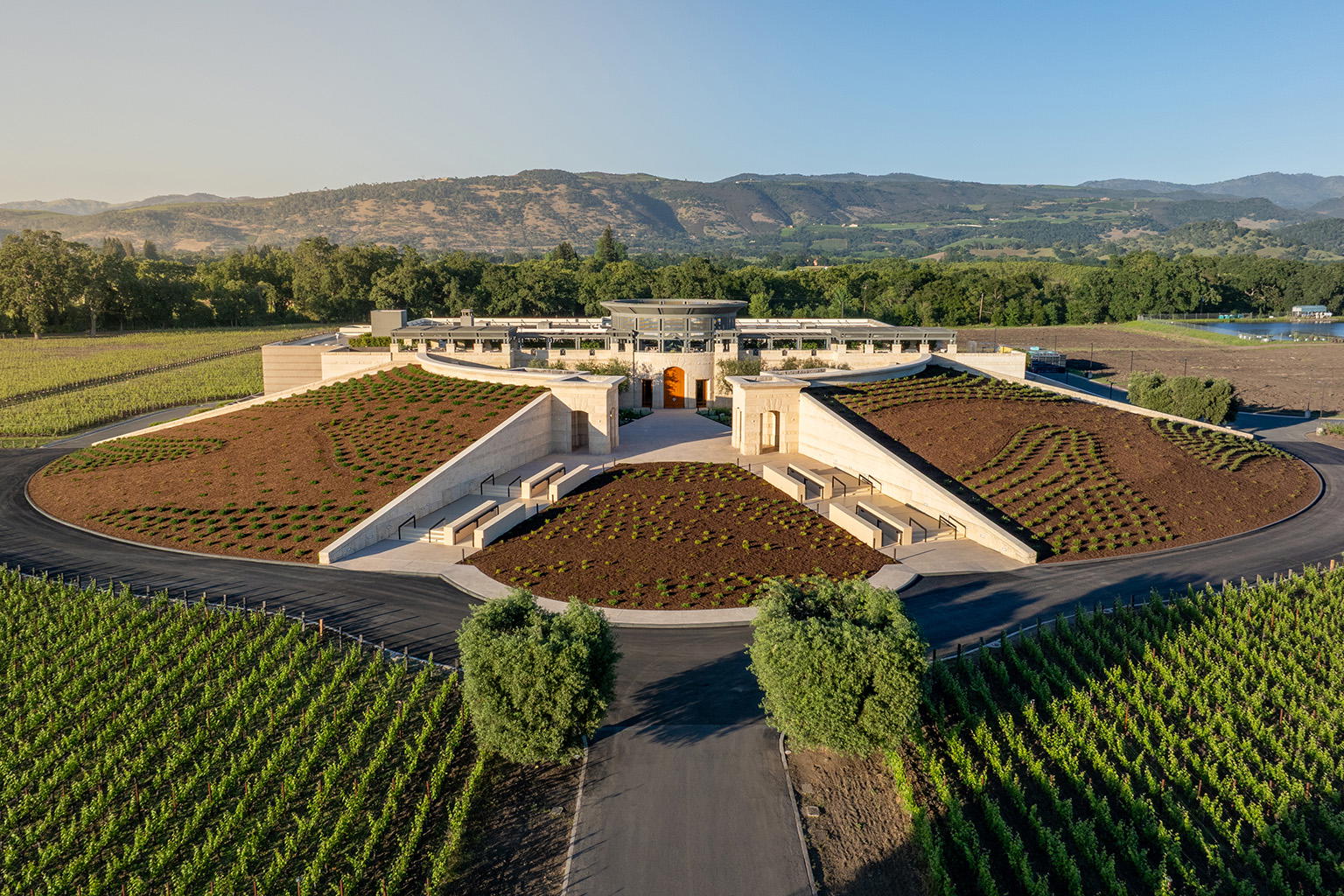
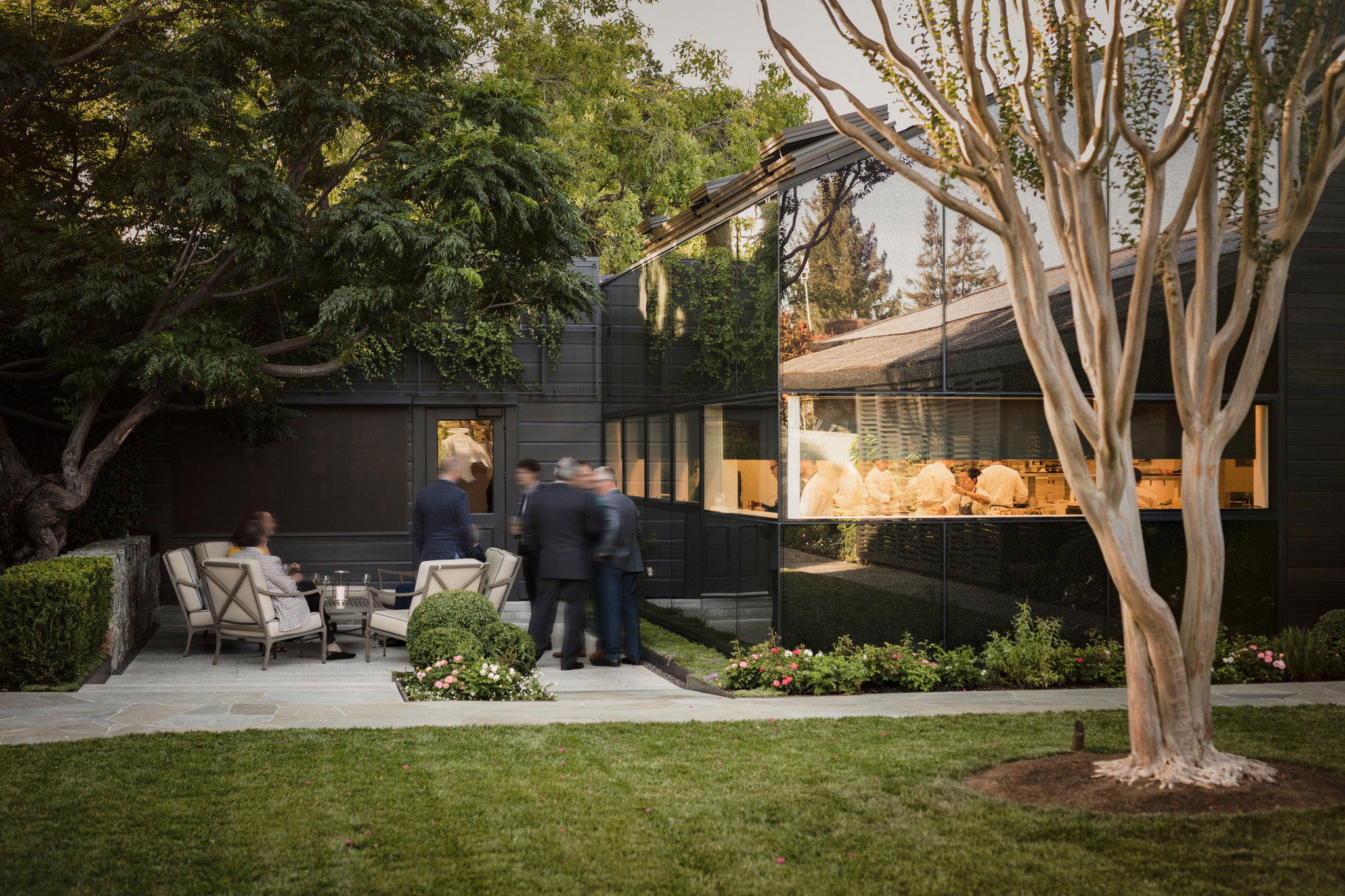
The approach along Duhig Road gives you the picture before you arrive. Domaine Carneros is a winery in Napa, California, with a price tier of 4 and a typical tasting price of about $75 per person. A formal château rises from the vineyard floor, modeled loosely on the 18th-century Château de la Marquette in Champagne and positioned to face south across a rolling patchwork of low-trained vines. Carneros, the appellation that spans the cooler southern reaches of both Napa and Sonoma, built its reputation on exactly the conditions visible from that terrace: persistent morning fog, afternoon bay winds, and a growing season long enough to develop acidity alongside fruit. The architecture announces what the wines intend to argue.
Tasting rooms in Carneros divide into two broad formats: the casual barn-style pour and the more structured seated experience. Domaine Carneros occupies the latter category firmly. Guests are received on a grand stone terrace or inside a formal salon, depending on the season, and the format leans toward seated service rather than a walk-up bar. That choice signals something about the wines being poured: sparkling wine made in the traditional method, with secondary fermentation in bottle, requires more explanation and more attention than a quick stand-up flight of Cabernet. The room is built to support that conversation.
Carneros Sparkling Wine: What the Region Does Differently
California's sparkling wine identity has always been complicated by the state's reputation for warm-climate reds. Carneros is where that identity gets its clearest counterargument. The appellation sits at the northern tip of San Pablo Bay, and the marine influence drops average temperatures significantly below the valley floor further north. Chardonnay and Pinot Noir, the two grapes that anchor traditional-method sparkling wine, perform here at a tension between ripeness and acidity that is difficult to replicate in warmer zones.
Domaine Carneros was established in 1987 as a joint venture between Champagne Taittinger and Kobrand Corporation, placing it among the earliest serious attempts to transplant Champagne-method production to California at scale. That 1987 first vintage puts the estate in a small cohort of California sparkling producers with more than three decades of continuous production from a single appellation. For context, that kind of site-specific continuity is common in Champagne but less so in California, where producer consolidation and shifting wine trends have reshuffled the sparkling category repeatedly. Peers like Bouchaine Vineyards and Truchard Vineyards have also built long records in Carneros, though both focus primarily on still wines, leaving Domaine Carneros in a narrower competitive tier for the sparkling program specifically.
Winemaker Zak Miller oversees production across both the sparkling and still Pinot Noir lines. In traditional-method sparkling wine, the winemaker's role extends well beyond harvest decisions: riddling, disgorgement timing, dosage calibration, and reserve wine blending all shape the final wine in ways invisible at the vine.
The Tasting Room Experience: Format and What to Expect
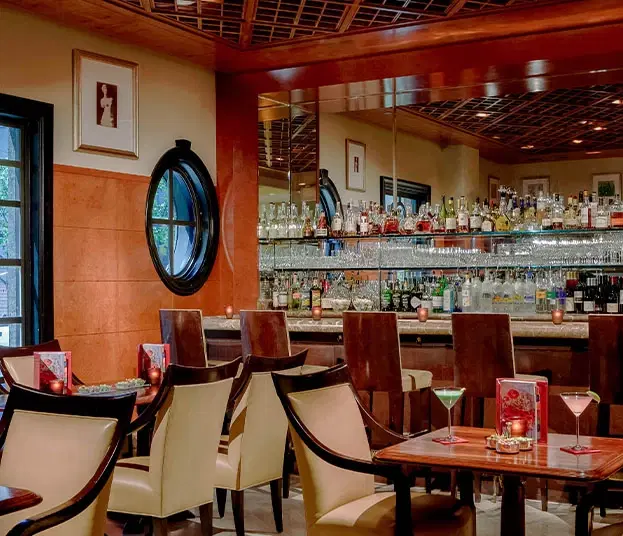
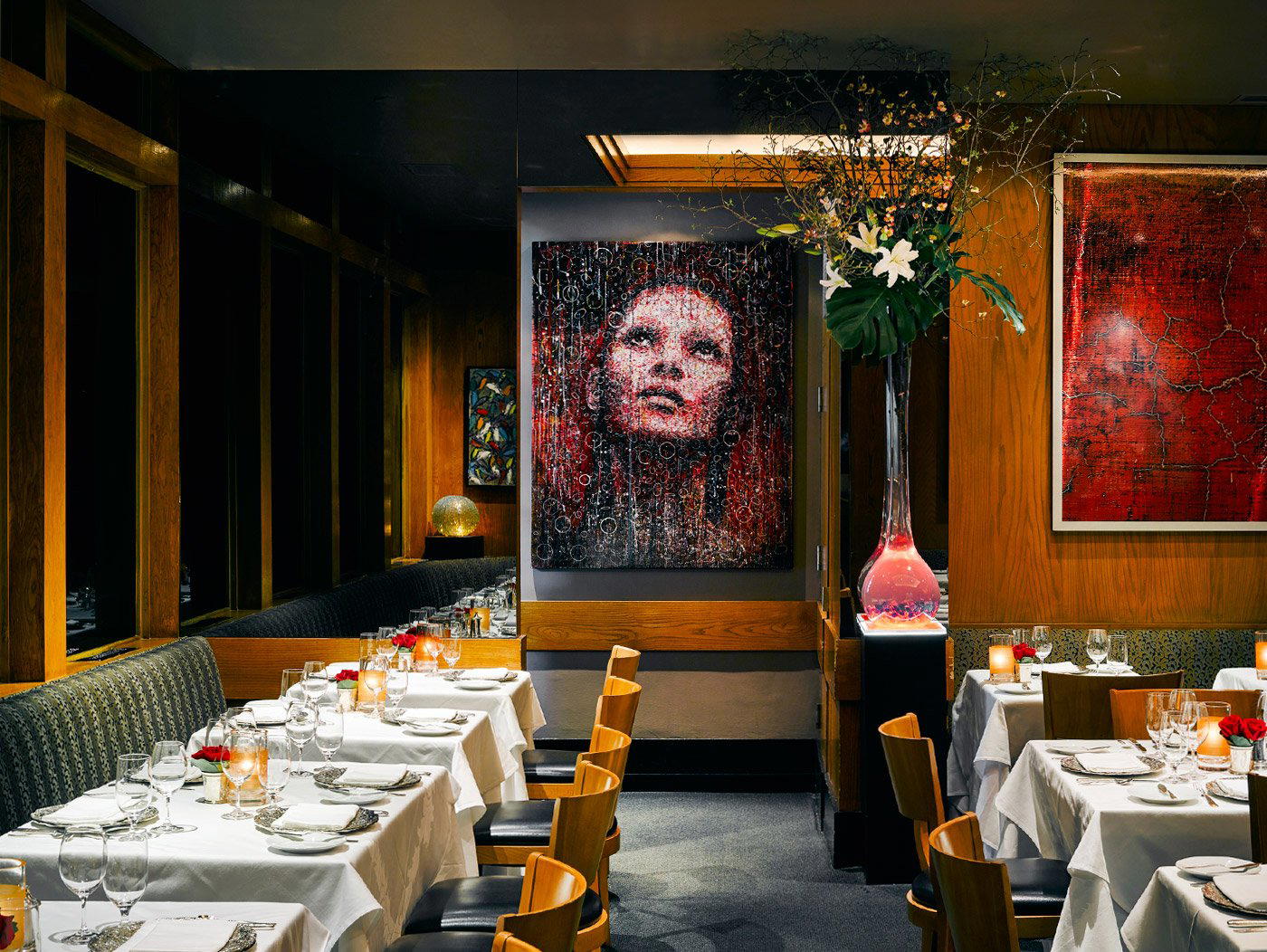
The tasting room at the winery operates in a register that is closer to a fine-dining room than a winery barn. Seating is arranged around the salon and terrace, service is table-based, and the pacing is deliberate. That format suits sparkling wine better than most, because the wines reward temperature and timing in ways that a rushed bar pour tends to obscure. A traditional brut served too warm, or poured before it has settled after opening, loses half the argument it was trying to make.
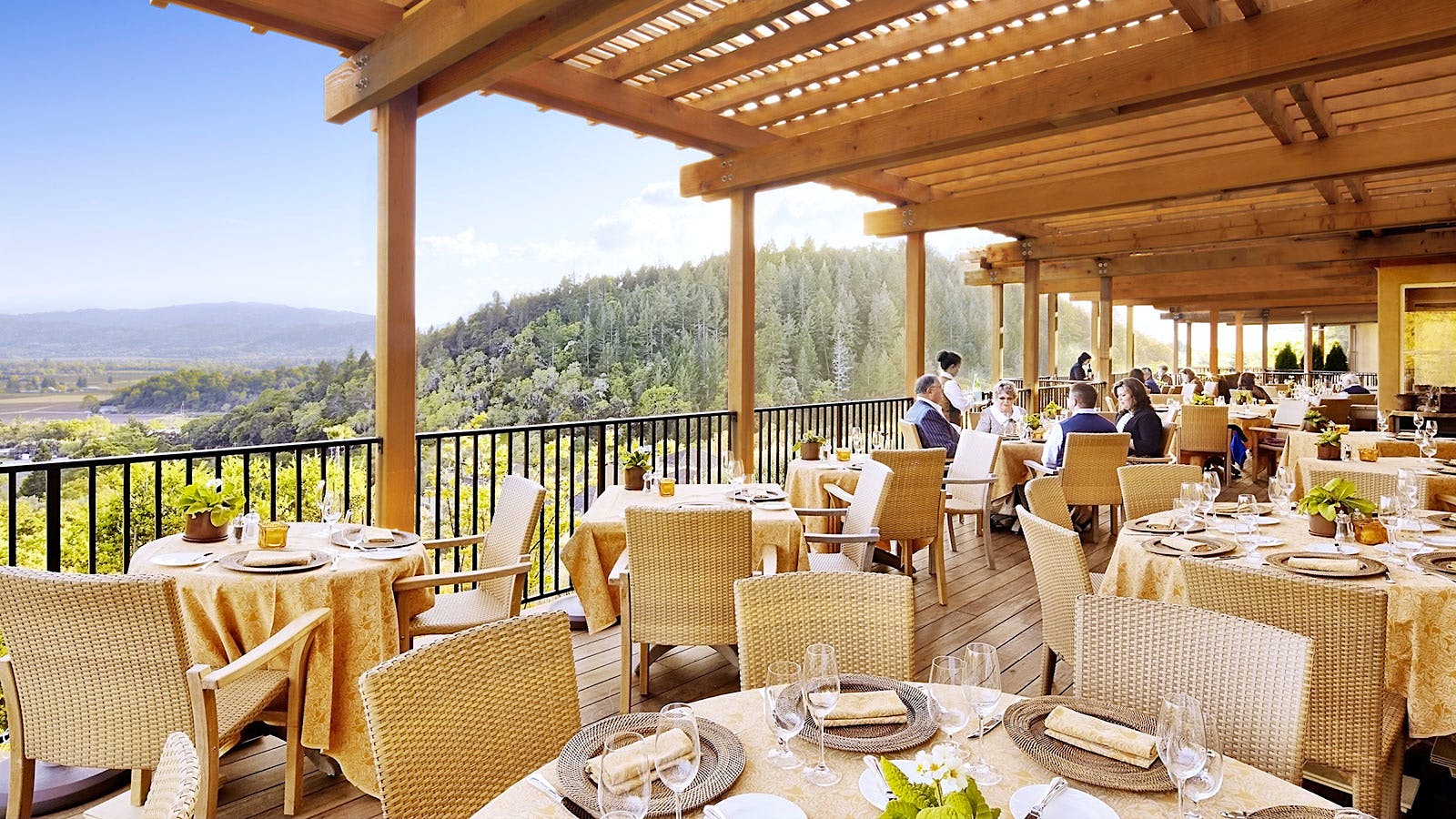
The terrace experience, when weather allows, positions guests above the estate vineyards with a clear sightline toward the bay. This is a detail worth noting for visitors planning their timing: morning visits tend to involve more fog and lower temperatures, which can make the outdoor terrace less appealing; afternoon visits, once the fog burns off, offer the terrace at its leading. The appellation's famous afternoon winds also pick up by mid-afternoon, so the sweet spot for outdoor seating is roughly late morning to early afternoon on most days.
Visitors should arrive with bookings confirmed in advance. Reservations are essential, particularly on weekends. Walk-in availability at the winery, as with comparable seated-format rooms in the region, cannot be assumed on Saturdays and Sundays during the peak spring-to-harvest season. The estate sits at 1240 Duhig Road in Napa.
Placing Domaine Carneros in the Southern Napa comparable set
Southern Napa's producer community operates differently from the valley floor estates further north. The appellation emphasis here runs toward Pinot Noir, Chardonnay, and sparkling wine rather than Cabernet Sauvignon, which places Carneros producers in a different price-tier conversation and a different stylistic tradition. Estates like Arietta, Hyde Vineyard Estate, and Hudson Napa Valley each work within that cooler-climate paradigm, though with different varietal emphases and production scales. For visitors constructing a Carneros itinerary, these producers form a coherent circuit, and
Among California's traditional-method sparkling producers specifically, the winery occupies a position defined by appellation specificity and production continuity. The estate's identity is tied to Carneros fruit and Carneros conditions. That narrower focus distinguishes it from larger California sparkling brands and aligns it more closely with how Champagne houses think about terroir fidelity. Elsewhere in California's premium wine geography, producers like Accendo Cellars in St. Helena and Alpha Omega Winery in Rutherford define the upper tier of valley-floor Cabernet production, illustrating how different the stylistic and pricing conversations become once you move north from Carneros. Further afield, Adelaida Vineyards in Paso Robles, Adelsheim Vineyard in Newberg, and Alban Vineyards in Arroyo Grande each represent how appellation-specific production plays out in other cool or moderate California and Oregon zones, with the winery holding a comparable position within its own district.
Planning Your Visit
The winery is located at 1240 Duhig Road, Napa, CA 94559, at the intersection of the Napa and Sonoma county lines along the Highway 12/121 corridor. The château's position makes it a natural first or last stop on a Carneros circuit, and the terrace orientation means afternoon light is particularly favorable for the outdoor seating areas. Reservations should be made ahead of any weekend visit; the seated tasting format leaves less room for walk-in accommodation than a bar-style room.
Where It Fits
Comparable venues nearby, for context on price, style, and recognition.
| Venue | Cuisine | Price | Notes |
|---|---|---|---|
| Domaine CarnerosThis venue — the venue you are viewing | Pinot Noir, Chardonnay | $$$$ | Not listed |
| Covert Estate | Cabernet Sauvignon, Cabernet Franc | $$$$ | Coombsville |
| The Vice | Cabernet Sauvignon, Pinot Noir | $$$$ | St. Helena |
| Arietta | Cabernet Sauvignon, Cabernet Franc | $$$$ | Carneros |
| Mayacamas Vineyards and Winery | Cabernet Sauvignon, Chardonnay | $$$$ | Mt. Veeder |
| Palmaz Vineyards | Cabernet Sauvignon, Cabernet Franc | $$$$ | Coombsville |
Recognition history
Dated appearances from independent guides and award organizations, with the underlying list record or original source where available.
Falstaff Winery - Listed
Falstaff
Continue exploring
More in Napa
Wineries in Napa
Browse all →
Bars in Napa
Browse all →
Restaurants in Napa
Browse all →
At a Glance
- Elegant
- Scenic
- Sophisticated
- Romantic
- Classic
- Romantic Getaway
- Celebration
- Special Occasion
- Wine Education
- Corporate Event
- Terrace
- Panoramic View
- Estate Grounds
- Sustainable
- Vineyard
- Garden
- Carneros AVA
- Pinot Noir
- Chardonnay
- Pinot Gris
- Pinot Blanc
- Sparkling
- Still Red
- Still White
- Still Rosé
- Flight
- Paired Tasting
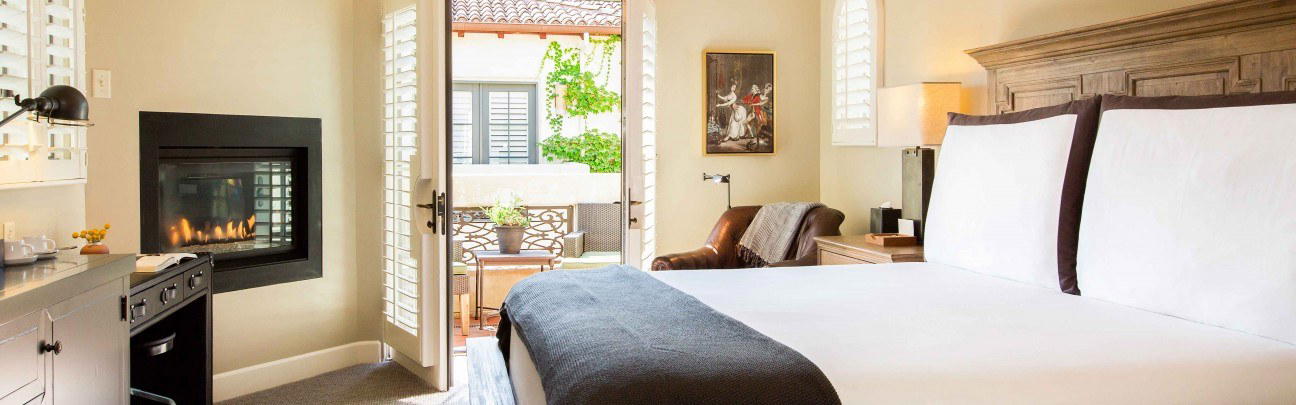
Elegant Louis XV-style salon with crackling fires and glass conservatory, or sunny terrace overlooking rolling vineyards and hills, offering a sophisticated and scenic tasting atmosphere.