Nonna Ema Pizzaria e Restaurante Cachoeirinha
Our verdict
Pizza and Community in Rio Grande do Sul In the municipalities that ring Porto Alegre, the pizza tradition runs deep and runs Italian. Cachoeirinha, a city of roughly 130,000 on the northern edge of the metropolitan region, carries a strong...

Pearl is the En Primeur Club membership app, where members save venues, book tables and use the concierge.
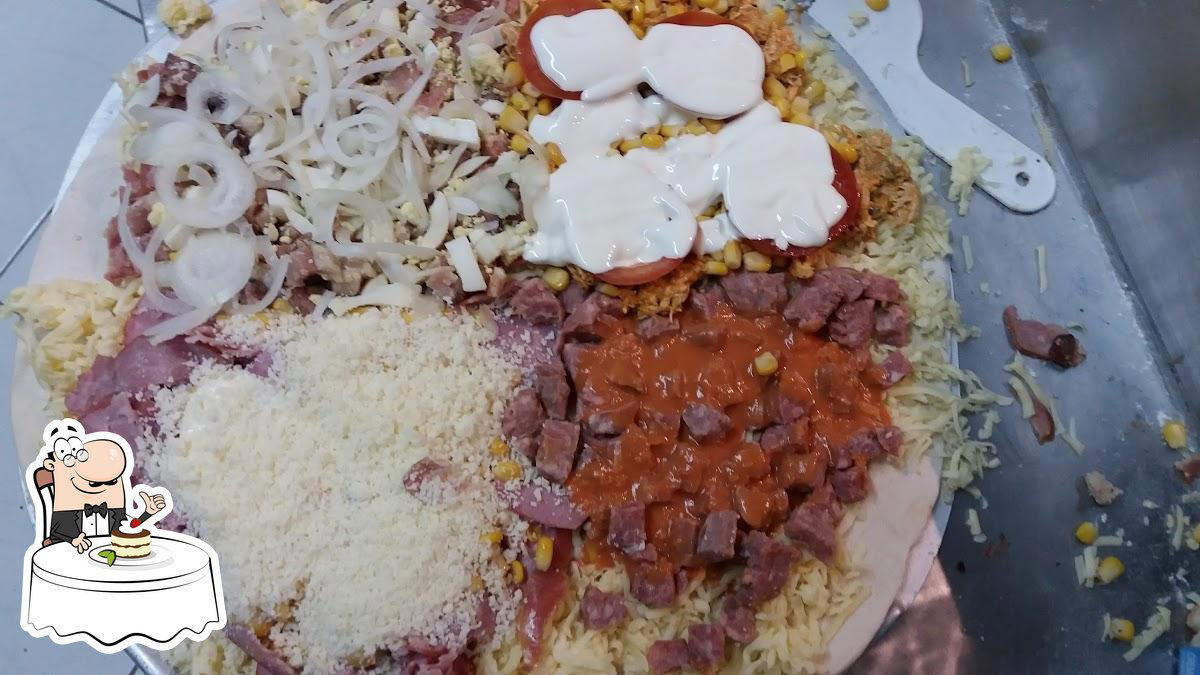
Pizza and Community in Rio Grande do Sul
In the municipalities that ring Porto Alegre, the pizza tradition runs deep and runs Italian. Cachoeirinha, a city of roughly 130,000 on the northern edge of the metropolitan region, carries a strong thread of Gaúcho-Italian heritage, and that ancestry shows up most clearly in neighborhood restaurants where recipes travel through families rather than culinary schools. Nonna Ema Pizzaria e Restaurante on Rua Papa João XXIII sits squarely in that tradition: a place whose name signals immediately that the food here is framed as something passed down, not invented.
The address, Vila Cachoeirinha, a residential district away from the commercial corridors, places this restaurant in the category of locals-first dining that defines so much of Brazil's interior city food culture. You are not arriving at a destination address designed for tourists or food-media coverage. You are arriving at a neighborhood anchor, the kind of place where the dining room fills with the same families on the same nights each week, and where the measure of quality is consistency over time rather than innovation for its own sake.
Sourcing and the Gaúcho-Italian Table
Rio Grande do Sul's Italian-descended communities have maintained some of the most intact regional food traditions in Brazil. The Serra Gaúcha to the north produces wheat, grapes, and dairy products that supply much of the state's restaurant supply chain, and the flatlands closer to Porto Alegre add beef, pork, and vegetables from small-scale producers. In this context, a pizzaria and restaurant combination is not a generic format, it is a specific expression of how Italian-Brazilian communities eat across occasions, moving between pizza shared at the table and the kind of plate-based dishes that carry the weight of Sunday cooking.
The nonna framing of the restaurant's name is culturally precise for this region. Across the Italian-settled municipalities of Rio Grande do Sul, the figure of the grandmother as keeper of recipes and standards remains a genuine reference point, not a marketing device. It signals flour handled in a particular way, sauce made from tomatoes sourced with some attention to variety and ripeness, and a kitchen that measures itself against a family standard rather than a trend cycle. Whether Nonna Ema delivers on that promise at every service is the kind of detail that repeat visits confirm, and that the neighborhood's loyalty tends to communicate more honestly than any external review.
For comparison, the premium end of Brazil's restaurant spectrum, venues like D.O.M. in São Paulo or Lasai in Rio de Janeiro, builds ingredient sourcing into an explicit editorial and tasting-menu narrative. At the neighborhood level, sourcing tends to be structural rather than declared: the proximity of producers in Rio Grande do Sul means that fresh, regional ingredients flow into kitchens like Nonna Ema's as a matter of supply chain geography rather than a deliberate farm-to-table program. That distinction matters when assessing what kind of restaurant this is.
The Format: Pizzaria and Restaurant Together
The dual designation, pizzaria and restaurante, is common across Brazilian cities of this size and speaks to how families and groups eat across different occasions. A Friday night might call for pizza shared communally; a Sunday lunch, for a more substantial plate. Restaurants that hold both formats under one roof serve a scheduling function in their neighborhoods that single-concept venues cannot. The combination also reflects the broader Gaúcho-Italian inheritance: wheat-based cooking and slow-braised or grilled protein are not separate traditions in this region, they are two registers of the same culinary inheritance.
This format also positions Nonna Ema alongside a wider set of Brazilian regional restaurants worth tracking. Cantina Pozzobon in Santa Maria operates in similar Italian-descended territory further west in Rio Grande do Sul. Fornazzo Pizzaria in Passo Fundo represents the pizzaria-focused end of that same regional tradition. And in the broader Brazilian context, venues like Famosa Pizza in Ribeirão Preto show how the pizza category in Brazil operates at a serious level well outside the major capitals. Our full Cachoeirinha restaurants guide maps how Nonna Ema fits into the city's dining options more broadly.
Other Brazilian regional restaurants worth contextualizing alongside neighborhood anchors of this type include Bistrô Fitz Carraldo in Manaus, Camarões Potiguar in Natal, and Casa da Flor Restaurante in Dourados, each representing how Brazilian cities of varying sizes sustain serious, community-rooted restaurants outside the capital-city fine dining conversation. For more metropolitan reference points, Madê in Santos and Bistrô Vila Graziella in Bauru show how mid-sized Brazilian cities develop their own dining identities. At the other end of the global spectrum, the precise sourcing discipline of venues like Le Bernardin in New York City or the produce-led focus at Atomix illustrate how ingredient provenance can be built into a restaurant's entire operating logic, a different register, but a useful comparison for understanding where the sourcing conversation starts and ends in neighborhood restaurants.
Planning a Visit
Nonna Ema is located at Rua Papa João XXIII, 108 in Vila Cachoeirinha, a residential neighborhood within the city. Arriving early in a service period, or during weekday lunch when competition for tables is lower, is the practical approach. No pricing information is available in the public record, but the neighborhood context and format position this clearly in the accessible, family-oriented price tier that characterizes restaurants of this type across Rio Grande do Sul. Cachoeirinha is accessible from Porto Alegre via the BR-290 and BR-020 corridors, and the city is served by local bus routes connecting to the capital's transit network.
For those building a broader itinerary across the region's restaurant scene, Kampeki Sushi in Canoas and Aero Burguer e Grill in Santa Cruz do Sul offer a sense of how the greater Porto Alegre metropolitan area handles different cuisine categories. Further afield in Brazil, Casa da Picanha Penedo in Itatiaia and Casa da Dika Restô e Eventos in Bragança show regional anchors operating in similarly local-first contexts across different Brazilian states.
Frequently asked questions
Is Nonna Ema Pizzaria e Restaurante Cachoeirinha suitable for children?
The dual pizzaria-and-restaurant format that defines Nonna Ema is exactly the kind of setup Brazilian families rely on for group meals across generations. A residential neighbourhood address in Vila Cachoeirinha, at Rua Papa João XXIII, 108, places the venue squarely in a community context rather than a late-night dining strip, which generally means a family-oriented environment. Pizza-centred menus in this category across Rio Grande do Sul tend to be accessible for all ages.
What should I expect atmosphere-wise at Nonna Ema Pizzaria e Restaurante Cachoeirinha?
Nonna Ema sits in Vila Cachoeirinha, a residential district of a city of roughly 130,000 on Porto Alegre's northern edge, context that points toward a neighbourhood gathering place rather than a destination-dining room. The combined pizzaria-and-restaurant designation is characteristic of mid-sized Brazilian cities, where the same address feeds pizza orders alongside full table-service meals, producing a practical, multi-generational atmosphere.
How does Nonna Ema fit into the Italian food tradition of Rio Grande do Sul's metropolitan region?
Cachoeirinha sits within the broader Porto Alegre metropolitan area, a region where Italian immigration from the late nineteenth century left deep culinary roots that remain active across both domestic kitchens and neighbourhood restaurants. Venues operating under the pizzaria-e-restaurante designation in cities like Cachoeirinha occupy a specific role in that tradition: maintaining a table-centred, multi-course approach to pizza and pasta that differs from the fast-turnaround model common in larger urban centres. Nonna Ema's address in Vila Cachoeirinha places it within this community-restaurant continuum rather than the tourist or gastronomy-district circuit.
What's the best thing to order at Nonna Ema Pizzaria e Restaurante Cachoeirinha?
Specific menu details are not published online, so the safest approach is to ask staff directly on arrival. What the dual format signals is that both pizza and broader restaurant dishes are central offerings, not afterthoughts, in the Rio Grande do Sul Italian-descended tradition, that typically means dough-focused preparations alongside the kind of shared plates that anchor long family meals in the region.
Where do I go for Nonna Ema Pizzaria e Restaurante Cachoeirinha?
Nonna Ema Pizzaria e Restaurante Cachoeirinha is located at R. Papa João XXIII, 108 - Vila Cachoeirinha, Cachoeirinha - RS, 94935-450, Brazil, Cachoeirinha.
What's the best way to book Nonna Ema Pizzaria e Restaurante Cachoeirinha?
No booking platform, phone number, or website is currently listed for Nonna Ema at Rua Papa João XXIII, 108, Vila Cachoeirinha. Visiting in person during service hours is the most reliable approach. For venues of this type in Brazilian residential neighbourhoods, walk-in is standard practice, particularly outside peak weekend dinner hours.
What's the signature at Nonna Ema Pizzaria e Restaurante Cachoeirinha?
The defining characteristic is the combined pizzaria-and-restaurante model, which reflects how communities in cities like Cachoeirinha eat rather than a single headline dish. Rio Grande do Sul's Italian-descended municipalities have preserved regional food traditions with unusual consistency, and venues that carry the 'nonna' framing in their name typically position that heritage, home-style, generational cooking, as the core identity.
Comparable Venues
Comparable venues nearby, for context on price, style, and recognition.
| Venue | Cuisine | Price | Notes |
|---|---|---|---|
| Nonna Ema Pizzaria e Restaurante CachoeirinhaThis venue (the venue you are viewing) | Traditional Italian Pizzaria | $10–20 | Not listed |
| Di Paolo Garibaldi | Traditional Italian Galeto | $20–30 | Garibaldi |
| Capone Drinkeria | American Speakeasy Cocktail Bar | $20–30 | Independência |
| Cantina Pozzobon | Italian-Brazilian Cantina | Not listed | Arroio Grande |
| Le Grand Burger | French-Inspired Gourmet Burgers | $10–20 | Moinhos de Vento |
| Casa 97 | Italian Brazilian | Not listed | Iririú |
Continue exploring
More in Cachoeirinha
Restaurants in Cachoeirinha
All restaurants in Cachoeirinha →
Bars in Cachoeirinha
Browse all →
Details
- Cozy
- Rustic
- Classic
- Family
- Casual Hangout
- Group Dining
- Open Kitchen
- Local Sourcing
- A La Carte
Current opening hours
- Monday
- Closed
- Tuesday
- 6:30–11:30 PM
- Wednesday
- 6:30–11:30 PM
- Thursday
- 6:30–11:30 PM
- Friday
- 6:30–11:30 PM
- Saturday
- 6:30–11:30 PM
- Sunday
- 6:30–11:30 PM
Hours can change for holidays and private events. Hours as of .
Ótimo ambiente with a welcoming, family-oriented atmosphere rooted in local Gaúcho-Italian heritage.