Ossala
Our verdict
Ossala occupies a residential address in Porto Alegre's Três Figueiras district, where the dining scene increasingly favours intimate, neighbourhood-anchored formats over central showcase venues. The address on Rua Desembargador Espiridião de Lima Medeiros places it within a quieter tier of the city's restaurant circuit, where floor team cohesion and repeat-guest culture tend to define the experience as much as what arrives on the plate.

Pearl is the En Primeur Club membership app, where members save venues, book tables and use the concierge.
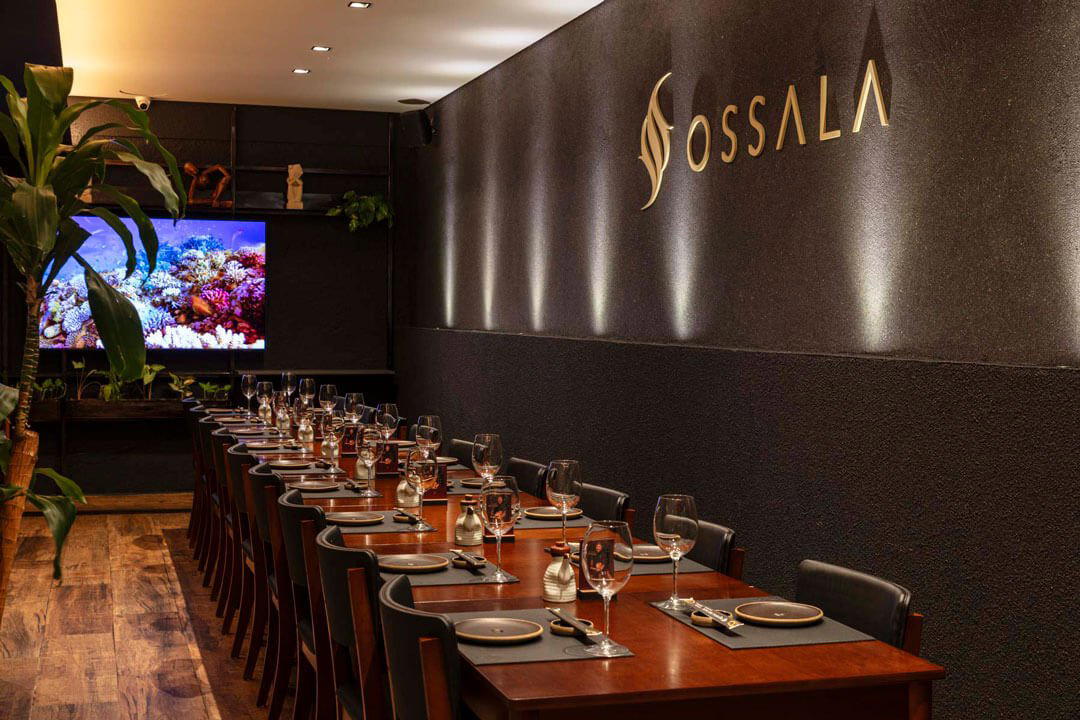
Três Figueiras and the Neighbourhood Restaurant Format
Porto Alegre's dining scene has quietly split along a recognisable fault line. On one side sit the central showcase restaurants, designed for visibility and suited to single visits. On the other, a smaller cohort of neighbourhood-anchored venues has taken root in residential districts like Três Figueiras, where the logic of the room is built around return guests rather than first impressions. Ossala, at Rua Desembargador Espiridião de Lima Medeiros 317, belongs to the latter category. The address itself signals something: this is not a venue chasing foot traffic or proximity to the city's hotel corridor.
Três Figueiras functions as one of Porto Alegre's more composed residential neighbourhoods, and the restaurants that have established themselves here tend to operate with a different set of priorities than those closer to the centre. The format that succeeds in this context is typically smaller in scale, more deliberate in service rhythm, and dependent on the kind of floor team that can read a room accurately. In cities across South America, this neighbourhood-restaurant model has proven more durable than the high-volume central model, partly because the guest relationship compounds over time in ways that a single table turn cannot replicate.
The Case for Floor Team Cohesion
At venues operating in this residential register, the collaboration between kitchen and front-of-house carries more structural weight than in larger, more transactional operations. When a room is small and the clientele recurring, the margin for floor misreads is narrower. A sommelier or service lead who understands the kitchen's current direction, and who can translate that to returning guests without rehearsed phrasing, becomes as central to the experience as whoever is plating.
This dynamic is well-documented across the restaurant tier that Ossala appears to occupy. In Brazilian cities where this format has worked most consistently, from neighbourhood bistros in São Paulo's Vila Madalena to similar operations in Belo Horizonte's Savassi, the through-line is almost always a tightly coordinated team rather than a single dominant creative figure. Restaurants like Lasai in Rio de Janeiro have demonstrated at a higher price point what floor-kitchen alignment can produce when it is treated as a core operating principle rather than an afterthought. The same logic, applied at the neighbourhood scale, is what defines the better examples of this format in Porto Alegre.
Porto Alegre itself has a well-established culture of Italian-inflected cooking, a legacy of Gaúcho immigration patterns that shaped the state's food traditions across generations. Venues like Cantina Pastasciutta Boulevard Laçador represent one strand of that inheritance. The neighbourhood bistro format, by contrast, tends to sit adjacent to that tradition rather than inside it, drawing on broader Brazilian and European references while remaining rooted in the city's specific ingredient culture and eating habits.
How Ossala Sits Within Porto Alegre's Current Scene
Porto Alegre's restaurant circuit in Três Figueiras and adjacent neighbourhoods has developed a recognisable character over the past decade. The venues that have held their position longest are generally those that avoided the temptation to overextend on format or ambition, staying within the scale that their team could execute consistently. Compared to the more expansive operations along the city's central corridors, this tier operates with tighter seat counts and service teams where individual roles are more visible to the guest.
For context, the Porto Alegre scene includes a range of formats that illustrate the city's breadth. Koh Pee Pee represents a distinct culinary register, while Le Bateau Ivre and Iaiá Bistrô occupy the bistro-adjacent space where Ossala also operates. The Capone Drinkeria addresses a different need within the same neighbourhood circuit. Each of these venues positions itself within a specific part of the city's dining logic; Ossala's residential address and the format implied by its location place it in the cohort where hospitality texture and repeat-guest relationships are the primary product.
At the national level, the gap between Porto Alegre's better neighbourhood restaurants and the flagships that define Brazilian fine dining, venues like D.O.M. in São Paulo, remains wide in terms of formal recognition. But the neighbourhood format has never been designed to compete on that axis. Its measure is different: consistency across seasons, a front-of-house team that remembers preferences, and a kitchen that doesn't overreach its supply chain. Those are the signals worth reading when assessing a venue in this category.
Planning a Visit
Ossala's address in Três Figueiras, a residential district rather than a dining destination in the conventional sense, means that most visitors arrive by design rather than by proximity. Porto Alegre's taxi and rideshare infrastructure makes the neighbourhood direct to reach from the city's hotel clusters and the central area. For those building a broader Porto Alegre itinerary, the full Porto Alegre restaurants guide maps the city's dining options across neighbourhoods and formats.
Internationally, points of reference for the neighbourhood-intimate format this address suggests include venues across Brazil's secondary dining cities, from Cantina Pozzobon in Santa Maria to Bistro Fitz Carraldo in Manaus, and further afield to precision-driven operations like Le Bernardin in New York City or Atomix in New York City, which demonstrate what floor-kitchen coordination looks like when it is taken to its furthest point. The comparison is not one of scale or ambition, but of operating principle: in each case, the guest experience is built on team cohesion rather than a single element.
Frequently asked questions
How do I find Ossala?
Ossala is located at Rua Desembargador Espiridião de Lima Medeiros, 317 - Três Figueiras, Porto Alegre - RS, 91330-020, Brazil, Porto Alegre.
What kind of dining experience does Ossala offer compared to Porto Alegre's central restaurants?
Where Porto Alegre's central showcase venues are designed around visibility and occasion dining, Ossala's location in the residential Três Figueiras district places it firmly in a different register: a neighbourhood room where the kitchen and floor team operate as a cohesive unit for a returning local crowd. This format, well established across the adjacent streets of south Porto Alegre, typically prioritises consistency over spectacle. It suits those who prefer a meal that fits the neighbourhood rather than one that announces itself.
Do I need a reservation for Ossala?
Walk-in availability at Porto Alegre's tighter neighbourhood venues shifts considerably across the week, and Ossala's address in Três Figueiras suggests a room sized for the local community rather than high-volume covers. Booking ahead for weekend evenings is the safer approach. A direct call to the venue will give you the clearest picture of current capacity.
Cost and Credentials
Comparable venues nearby, for context on price, style, and recognition.
| Venue | Cuisine | Price | Awards | Notes |
|---|---|---|---|---|
| OssalaThis venue (the venue you are viewing) | Modern Japanese Sushi and Seafood | $50–100 | Not listed | Not listed |
| CIAO | Traditional Neapolitan Pizzeria | $20–30 | 50 Top Pizza Latin America #47 | Not listed |
| Ratskeller Restaurante | Traditional German | $20–30 | Not listed | São Geraldo, Traditional German |
| Le Grand Burger | French-Inspired Gourmet Burgers | $10–20 | Not listed | Moinhos de Vento, French-Inspired Gourmet Burgers |
| NB Steak | Modern Brazilian Steakhouse Rodízio | $50–100 | Not listed | Boa Vista, Modern Brazilian Steakhouse Rodízio |
| Yakuza Sushi 893 | Japanese Sushi Fusion | Not listed | Not listed | Moinhos de Vento, Japanese Sushi Fusion |
Continue exploring
More in Porto Alegre
Restaurants in Porto Alegre
All restaurants in Porto Alegre →

Bars in Porto Alegre
All bars in Porto Alegre →
Details
- Elegant
- Sophisticated
- Modern
- Date Night
- Business Dinner
- Special Occasion
- Private Dining
- A La Carte
- Family Style
- Small Plates
- Gluten Free Options
Current opening hours
- Monday
- 6:30–11 PM
- Tuesday
- 6:30–11 PM
- Wednesday
- 6:30–11 PM
- Thursday
- 6:30–11 PM
- Friday
- 6:30–11 PM
- Saturday
- 6:30–11 PM
- Sunday
- 6:30–11 PM
Hours can change for holidays and private events. Hours as of .
High-end atmosphere with beautiful decor and notable attentive service.