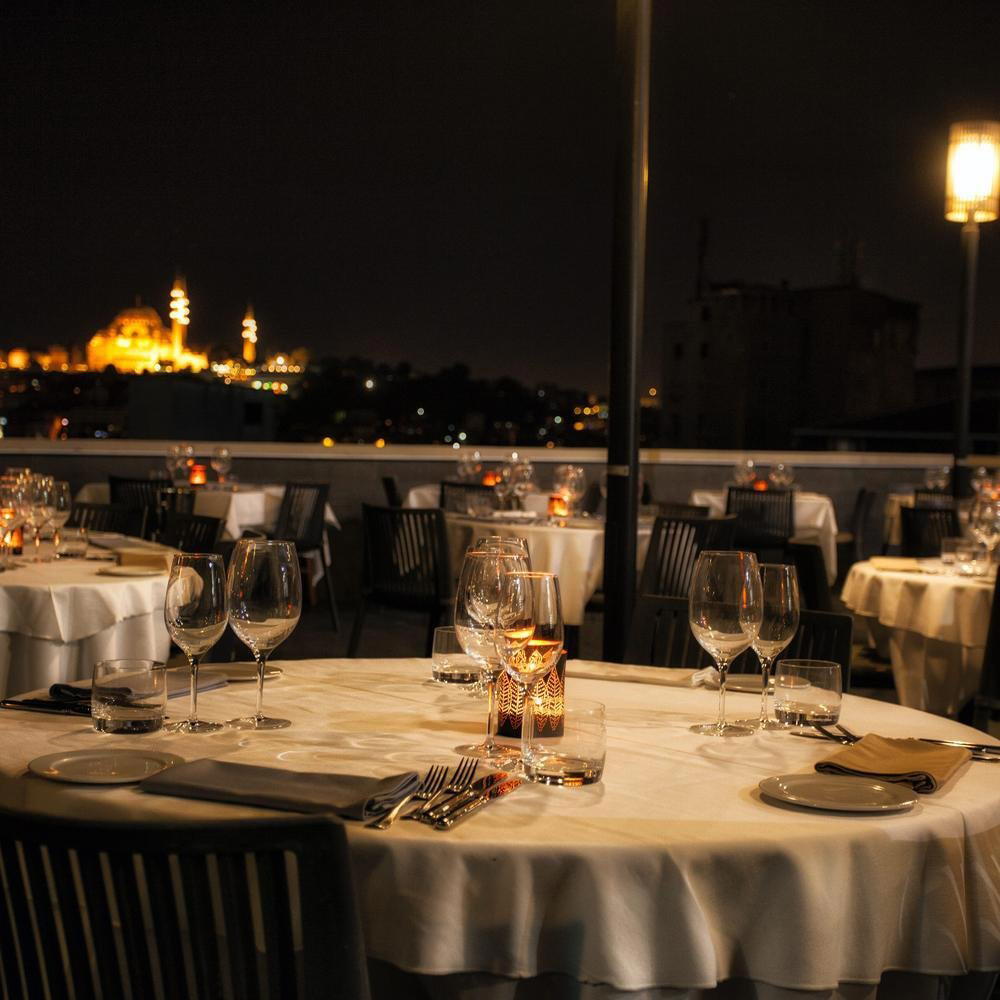
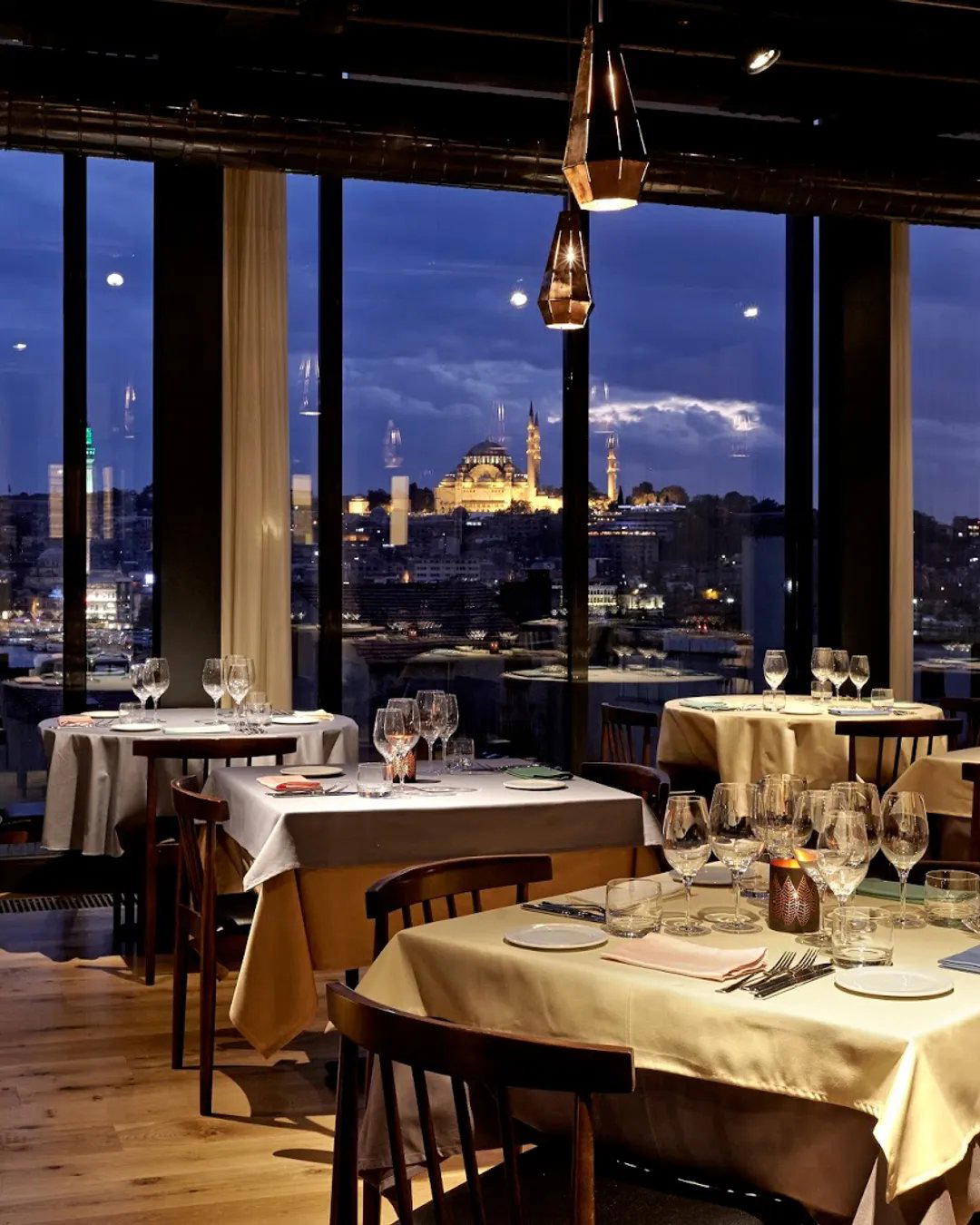
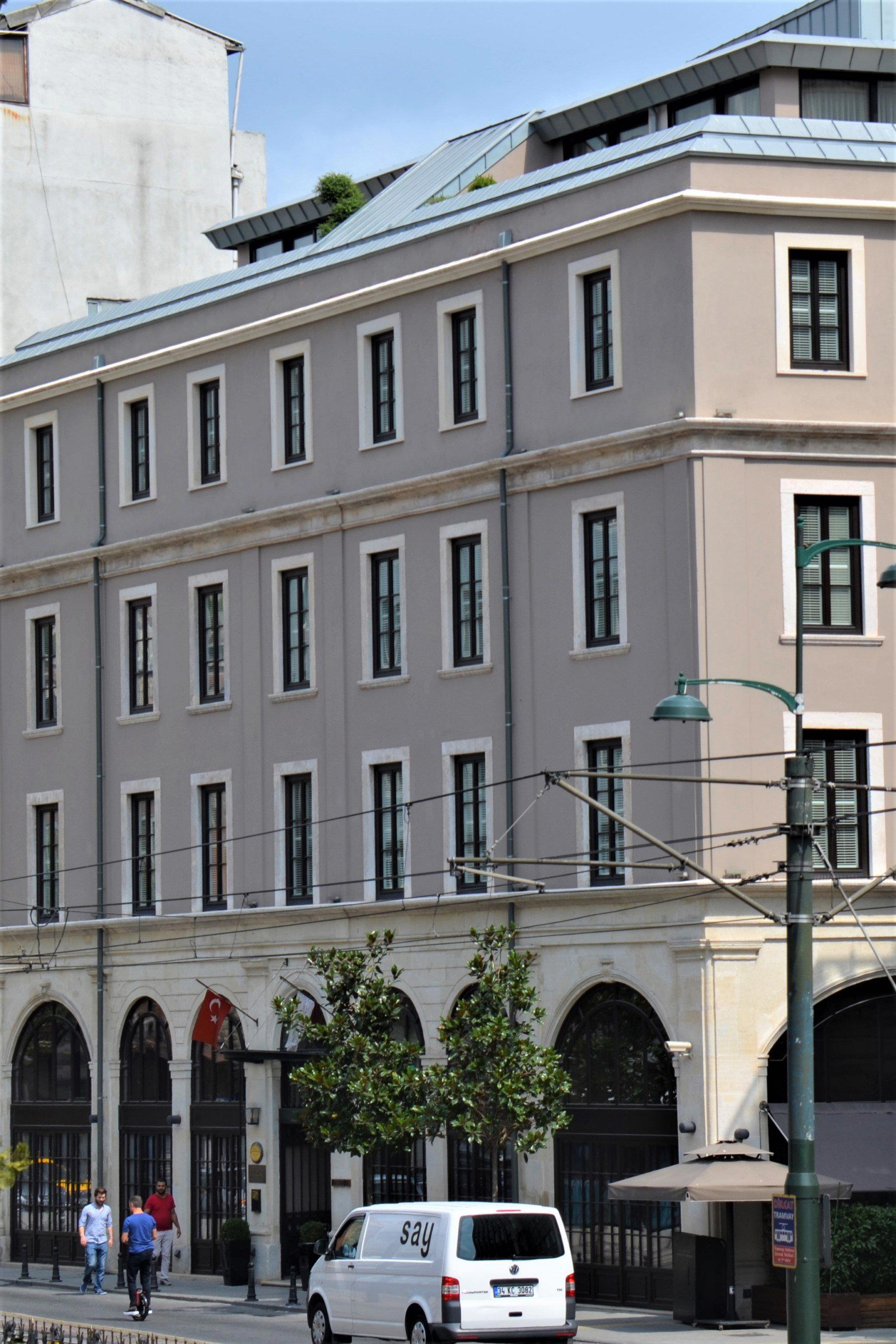
Positioned along the Cankurtaran ridge in Fatih, No7 Rooftop Restaurant trades on one of Istanbul's most charged vantage points: Hagia Sophia to the west, the Sea of Marmara ahead, and the old city's roofline in every direction. The address alone places it inside a small peer group of refined dining in the historic peninsula, where the setting does as much editorial work as the kitchen.
Pearl is the En Primeur Club membership app — saves, bookings, and concierge access live there. Same editors, same standards.
- Address
- Cankurtaran, Bayram Fırını Sk. No
- Phone
- +902124586800
- Website
- amiralpalacehotel.com
- Directions
- Get directions
 Saves & bookings on Pearl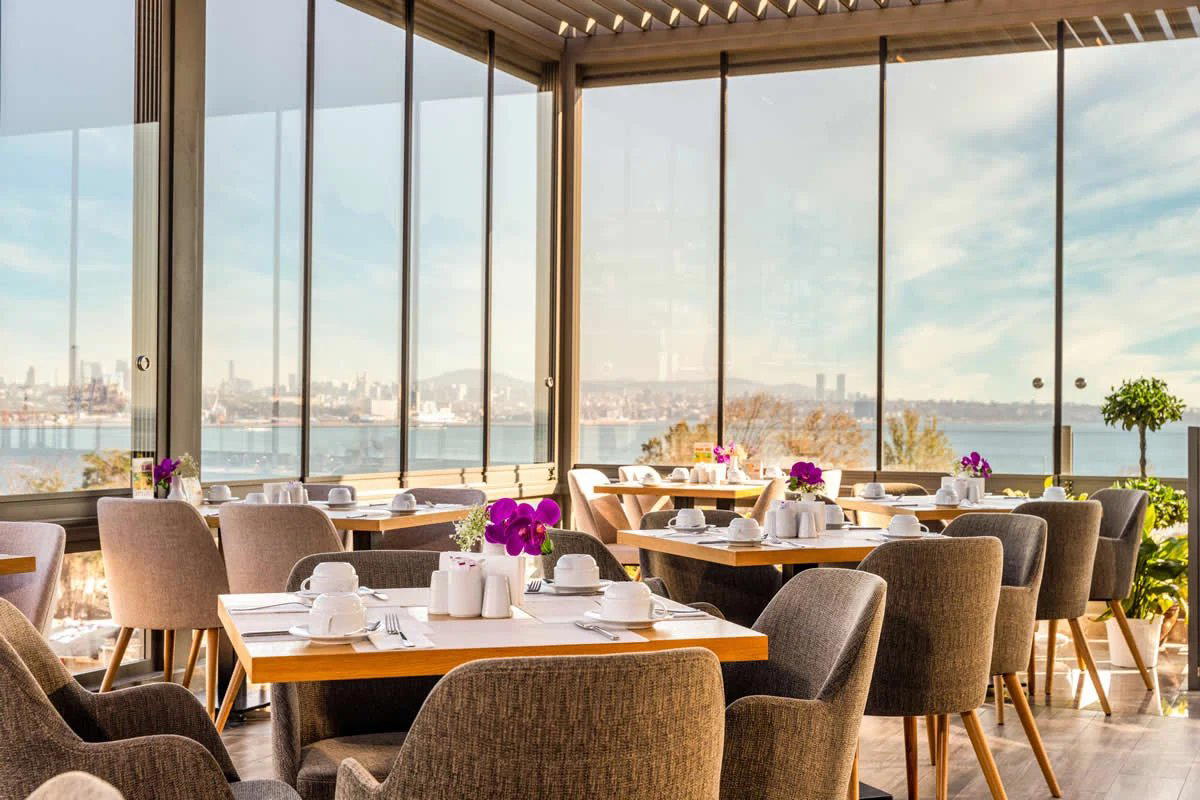
Fatih at Eye Level: What Rooftop Dining in the Historic Peninsula Actually Means
Istanbul's historic peninsula carries a density of monuments that few cities can match, and Fatih sits at its core. The district's skyline is not decorative backdrop, it is the accumulated physical record of Byzantine and Ottoman urban ambition, compressed into a walkable ridge above the Marmara coastline. Rooftop dining here operates in a category apart from the standard refined-terrace format found in Karaköy or Beşiktaş. The view is not merely pleasing; it frames a specific argument about where you are and why that matters. No7 Rooftop Restaurant, on Bayram Fırını Sk. No in Cankurtaran, occupies this charged geography directly.
Cankurtaran is the quarter immediately south of Sultanahmet, pressed between the old Byzantine sea walls and the rail line that runs along the Marmara shore. It is a residential pocket that most visitors pass through on the way to somewhere else, which means the restaurants that establish themselves here tend to draw a deliberate crowd rather than an accidental one. That selectivity shapes the dining register. A rooftop in this location is not competing with Taksim's volume trade or Bosphorus-view spectacle; it is operating in a quieter, more historically saturated context where the Hagia Sophia dome and the Blue Mosque's minarets appear close enough to read the stonework.
The Sourcing Question in Ottoman Istanbul's Kitchen
Turkish cuisine has a more direct relationship between geography and plate than most European traditions acknowledge. The country's agricultural spread, Aegean olive groves, Black Sea anchovy fisheries, southeastern Anatolian grain belts, Aegean herb cultivation, means that a kitchen paying attention to sourcing can draw from genuinely distinct regional terroirs within a single national tradition. This is the broader context in which Istanbul's rooftop restaurants operate when they make ingredient provenance part of their identity.
For a venue in Fatih, sourcing decisions carry additional historical resonance. The district's covered markets and neighbourhood traders have long supplied restaurants that value proximity and continuity over centralised wholesale. The Spice Bazaar sits less than two kilometres north. The Mısır Çarşısı has channelled dried goods, pulses, and regional spices into the peninsula's kitchens for centuries. A rooftop restaurant in Cankurtaran that draws on this supply geography is participating in something older than its own fit-out would suggest. Across Turkey, venues that lean into this supply logic, Hiç Lokanta in Urla, for instance, with its Aegean-coastal sourcing discipline, or Narımor in Izmir with its regional focus, have found a loyal audience precisely because ingredient traceability now functions as a credibility signal rather than a marketing note.
At the higher end of Istanbul's scene, venues like Turk Fatih Tutak have made Anatolian ingredient research the central editorial project of their menus, pulling from regional producers and historical recipe archives in ways that have attracted international critical attention. No7's position within this broader Istanbul conversation is shaped by its Fatih address as much as by any specific kitchen programme.
The comparable set in Fatih
Fatih's restaurant scene divides into roughly three operating registers. The first is the neighbourhood lokanta model: lunch-focused, meat-heavy, built around daily specials and a rotating clientele of local tradespeople and residents. Emek Saray Restaurant sits closer to this tradition. The second is the heritage-research format, of which Asitane is the clearest local example, drawing Ottoman palace recipes into a contemporary dining context and attracting food scholars and historically curious visitors alongside regular diners. The third is the view-led format, where the architectural environment of Sultanahmet and Cankurtaran provides a setting that draws international visitors and occasion diners.
No7 Rooftop operates in this third register. That places it alongside a small cohort of refined-terrace venues near the historic peninsula rather than in direct competition with the neighbourhood lokanta trade or the heritage-research category. The comparison set is determined by geography and format rather than by price tier or cuisine type alone. Within Fatih, By Kinyas Restaurant and Cafe Amedros represent adjacent casual options in the same neighbourhood circuit.
Turkey's broader casual dining spectrum stretches considerably. BURGERMOON in Fatih signals that the district also accommodates a younger, more informal demographic. What distinguishes the rooftop format from these alternatives is the deliberate occasion architecture: the refined sightline, the open-air element, and the implicit understanding that the setting is part of the transaction.
Placing No7 in Istanbul's Wider Dining Geography
Istanbul's premium dining energy has historically concentrated on the European shore's northern neighbourhoods and along the Bosphorus. The historic peninsula has operated as a magnet for heritage tourism but a quieter space for serious kitchen ambition, with exceptions. That dynamic is shifting incrementally, partly because real estate costs in Beyoğlu and Nişantaşı have driven some operators toward the peninsula, and partly because international visitors are spending longer in Sultanahmet-adjacent areas and demanding more from the dining options there.
Comparable dynamics play out in other Turkish cities: in Bodrum, Maçakızı has demonstrated that a view-led property can sustain serious kitchen credibility; in Beyoğlu, Dürümzade has shown that neighbourhood specificity builds longer-term loyalty than tourist-facing positioning. No7 Rooftop, by virtue of its Cankurtaran address, sits at the intersection of these two pressures: a setting that reads immediately to international visitors and a neighbourhood character that rewards diners willing to look past the monument sightlines.
Further afield, the EP Club network covers the full range of Turkish dining ambition, from Kocak Baklava in Gaziantep and Kısmet Etliekmek ve Lahmacun Salonu in Karaman at the regional speciality end, to Kritikos Meyhane in Mudanya, Bayramoğlu Döner in Beykoz, and Casa Lavanda in Sile across the wider metropolitan and coastal zones.
Planning a Visit
Cankurtaran is a ten-minute walk from Sultanahmet square, following the slope southward toward the sea walls. The neighbourhood is low-traffic by Istanbul standards, which makes arrival on foot direct from most historic-peninsula accommodation. Rooftop venues in this district generally perform differently across the day: lunch service captures the full midday light over the Marmara, while dinner shifts the emphasis to illuminated mosque silhouettes and the cooler air that comes off the water after sunset. For context on comparable international fine dining formats and how occasion restaurants calibrate their offer, see Le Bernardin in New York City and Atomix in New York City as reference points for how setting and sourcing interact at the premium end of the market.
A Quick Peer Check
Comparable venues nearby, for context on price, style, and recognition.
| Venue | Cuisine | Price | Notes |
|---|---|---|---|
| No7 Rooftop RestaurantThis venue — the venue you are viewing | Turkish with International Influences | $$$ | Not listed |
| Fine Dine İstanbul | Palace-Influenced Istanbul Cuisine | $$$ | Fatih |
| Asitane | Ottoman Palace Cuisine | $$$ | Edirnekapi |
| Seasons Restaurant | Turkish with Mediterranean and Italian Influences | $$$ | Sultanahmet |
| Tarihi Sultanahmet Köftecisi | Traditional Turkish Köfte | $ | Sultanahmet |
| By Kinyas Restaurant | Turkish Seafood with Marmara Sea Views | $$ | Fatih |
At a Glance
- Scenic
- Elegant
- Romantic
- Date Night
- Special Occasion
- Rooftop
- Terrace
- Panoramic View
- Skyline
Current opening hours
- Monday
- 1–11 PM
- Tuesday
- 1–11 PM
- Wednesday
- 1–11 PM
- Thursday
- 1–11 PM
- Friday
- 1–11 PM
- Saturday
- 1–11 PM
- Sunday
- 1–11 PM
Hours can change for holidays and private events. Last verified .
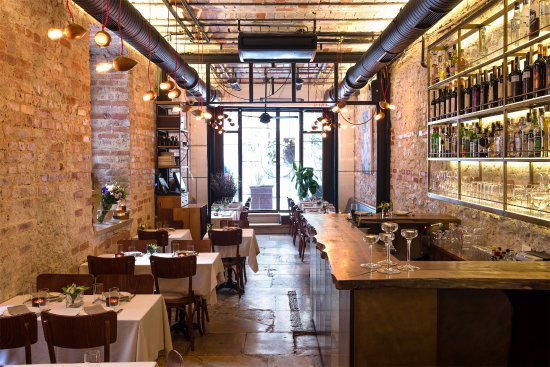
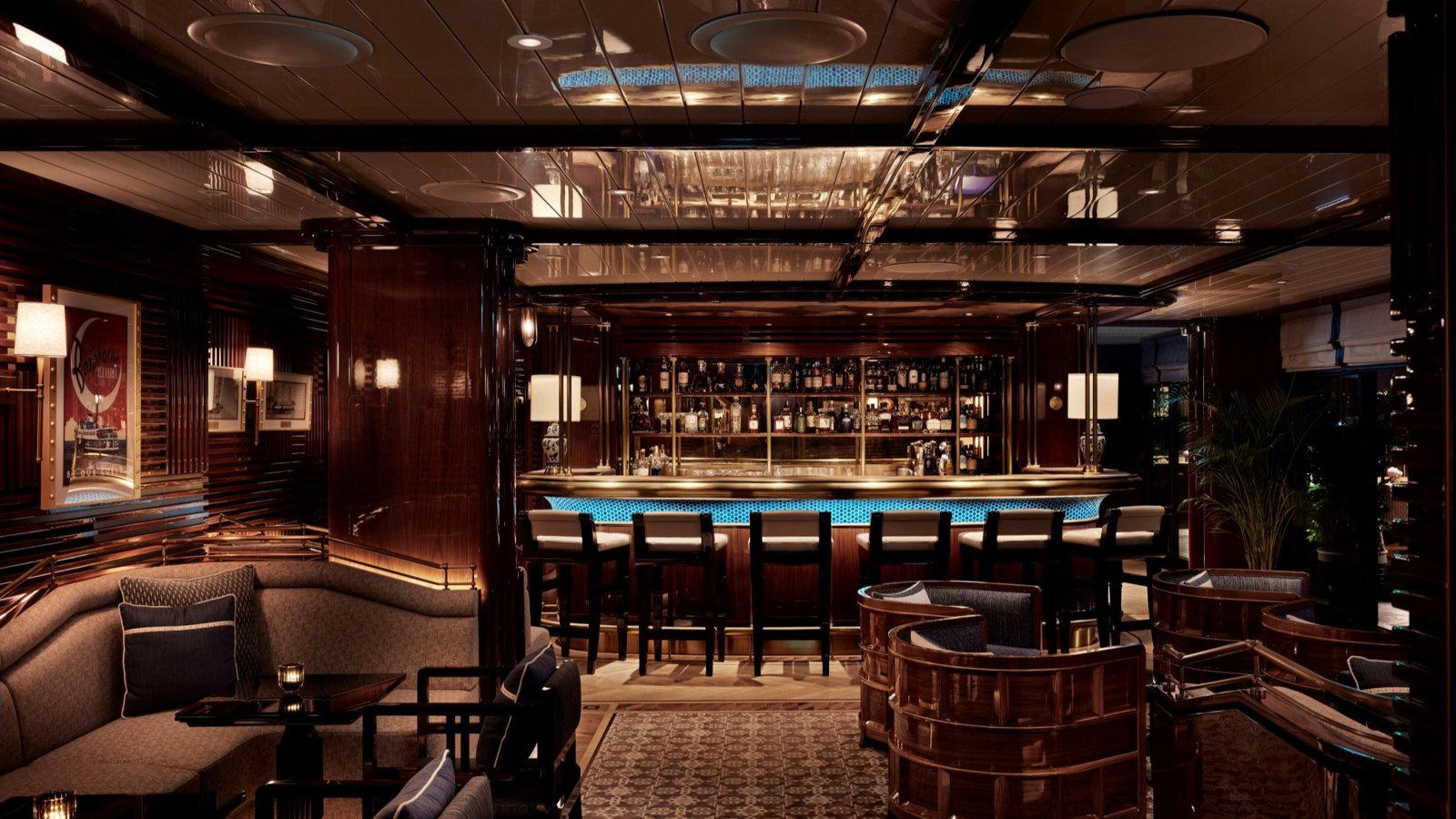
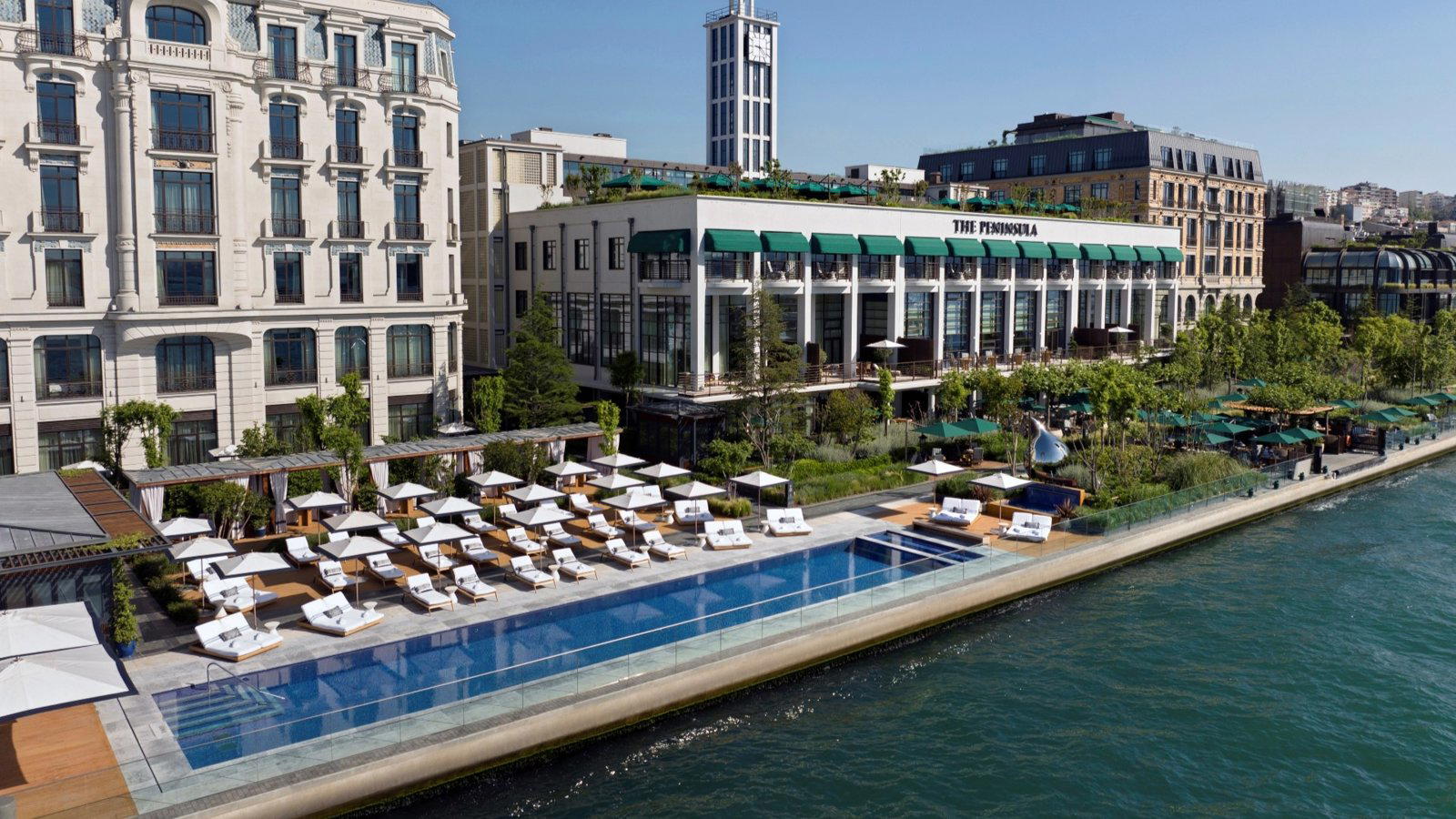
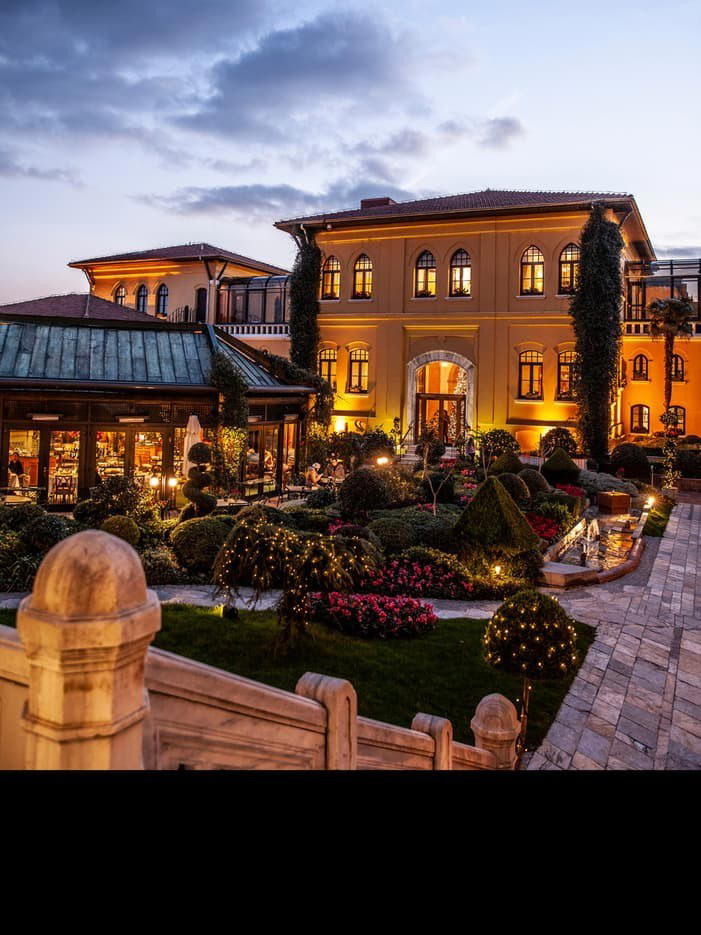
Open terrace with dramatic city skyline views, elegant rooftop setting well-suited for scenic dining.