Michelin Bib Gourmand
Our verdict
A Michelin Bib Gourmand recipient in 2024 and 2025, No Name Noodle brings Japanese ramen sensibility to Bangkok's Khlong Toei district, where chef Shinji Inoue builds bowls around a fermented three-shoyu blend and signature recipes that each draw on more than 30 ingredients. The ฿฿ price point makes it one of the more accessible entries in Bangkok's growing Japanese-influenced noodle scene.

Pearl is the En Primeur Club membership app, where members save venues, book tables and use the concierge.
The menu
What to order
- Tokusei Shio Soba
- Asari and Hotate Shio Soba
- Wagyu Don
A Japanese Noodle Counter in the Heart of Khlong Toei
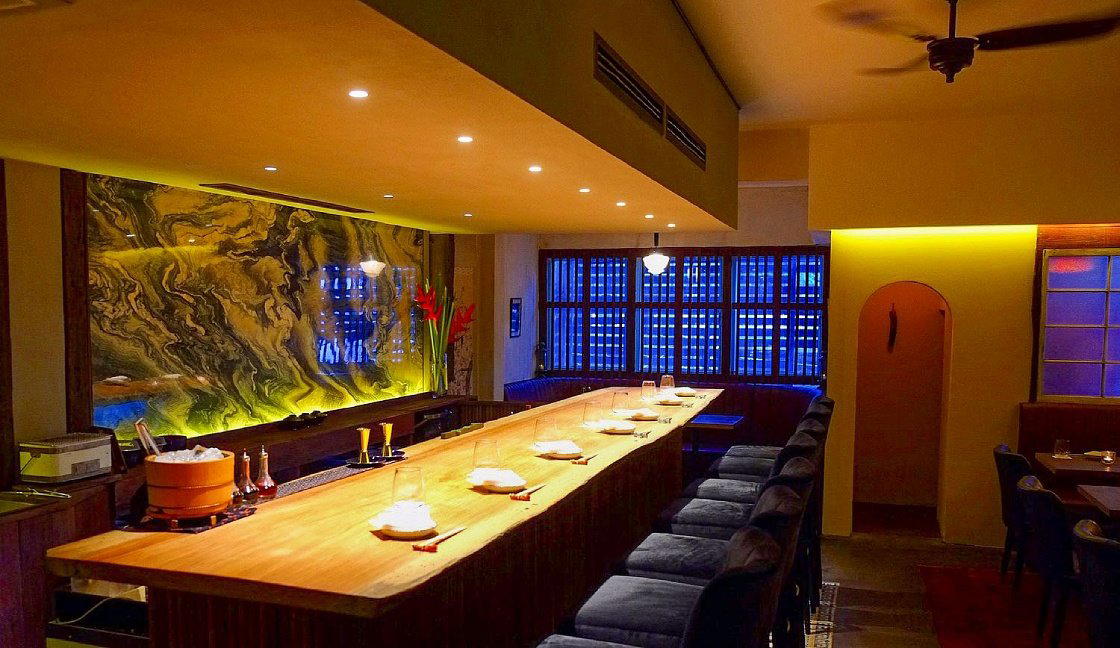
Bangkok's Khlong Toei district does not advertise itself. The neighbourhood runs along the city's eastern canal grid, a working-class quarter where fresh markets open before dawn and lunch crowds fill plastic-stool shops before noon. It is exactly the kind of address where a focused, technically serious noodle counter can operate without the overhead or visibility of Silom or Sukhumvit, drawing its audience by reputation rather than foot traffic. No Name Noodle sits at 2 Attha Kawi 1 Alley in that neighbourhood, and the address itself signals something about the venue's priorities: the cooking, not the location, is doing the work.
That bet has paid off twice over. Michelin's Bib Gourmand designation in both 2024 and 2025 places No Name Noodle in a specific and instructive category: cooking that inspires a detour, at a price point that does not require planning around. The Bib Gourmand tier sits below the star levels but above the casual recommendation, and in Bangkok's noodle scene it is a meaningful signal. Both confirm that this is not a local secret so much as a small, specialist counter that has earned cross-cultural recognition.
Where Bangkok's Noodle Scene Meets Japanese Craft
Bangkok has always absorbed outside noodle traditions without apology. The city's Chinese-Thai noodle houses, documented for decades in the Gim Nguan Noodle tradition and the fermented-pink broths of places like Jay Jia Yentafo, reflect a long history of culinary layering. Japanese ramen culture arrived more recently, and it has split into two identifiable tracks: high-volume chains and small, chef-driven counters where the bowl is the entire editorial point. No Name Noodle sits firmly in the latter group.
Chef Shinji Inoue's approach connects to a tradition of Japanese ramen craft that prizes stock construction, noodle texture, and the architecture of toppings as seriously as any tasting-menu kitchen. The difference between a Bib Gourmand counter in this category and an unremarkable competitor is rarely the protein or the noodle width; it is almost always the depth of the broth and the discipline of the seasoning. At No Name Noodle, that discipline shows up in the formulation: a fermented blend of three types of shoyu, used across the seasonal rice bowls and noodle dishes, provides the kind of layered umami that requires time and intention to build. It is not a shortcut flavour.
For context on where Bangkok places ramen-style craft within its broader dining conversation, compare the ฿฿ price tier here against the ฿฿฿฿ end of the market, where venues like Sorn, Côte by Mauro Colagreco, Baan Tepa, Gaa, and Sühring operate. No Name Noodle is not competing with that tier, nor trying to. It occupies a different but equally intentional position: high craft at accessible pricing, which is exactly what the Bib Gourmand framework was designed to recognise. Across Thailand, similar logic applies to venues like AKKEE in Pak Kret and PRU in Phuket, each making a case for serious cooking outside the luxury bracket.
The Menu: Two Signatures, One Technical Foundation
The two dishes that define No Name Noodle's reputation are the Shio Soba and the Shoyu Tsuke Soba. Both are built on the same principle: each recipe draws on more than 30 ingredients. In Japanese noodle craft, that ingredient count at the broth and tare level is not unusual for serious houses; what matters is the coherence of the result, which is where the Michelin acknowledgment carries weight.
Shio Soba, the salt-based variant, is typically the clearest expression of a kitchen's stock quality. Without soy to provide colour or fermented depth as a crutch, a shio bowl lives or dies on the clarity and flavour of its broth. Shoyu Tsuke Soba shifts the format entirely: tsuke means dipping, so the noodles arrive separate from the concentrated broth, allowing the diner to control the ratio and temperature of each mouthful. It is a format that demands attention from the eater as much as the cook. The seasonal noodle and rice bowls rotate the three-shoyu fermented blend through different applications, keeping the menu from settling into repetition.
For Bangkok noodle eaters tracking the broader scene, No Name Noodle's Japanese-craft orientation sits in a different register from the city's Thai-Chinese houses. Guay Jub Mr. Jo and Jao Nai Fish Ball work within distinctly Thai-Chinese traditions; No Name Noodle is doing something structurally different, importing Japanese ramen philosophy into a Bangkok context. That gap is worth understanding before you visit, because the two experiences are not interchangeable. Internationally, the comparison extends further: A Bing Bao Shan Mian in Hangzhou and A Kun Mian in Taichung represent how different Chinese noodle traditions approach similar questions of craft and broth construction.
Planning Your Visit
No Name Noodle's Khlong Toei address places it in a neighbourhood that most Bangkok visitors do not cover on a standard itinerary. That is not a reason to skip it; it is a reason to plan. The venue operates at the ฿฿ price range, which in Bangkok's context means you are spending more than a standard market stall but substantially less than a full sit-down restaurant. Booking details and current hours are not listed online, so a direct visit or local enquiry is advisable before making a dedicated trip from across the city.
| Venue | Cuisine Type | Price Tier | Award | Neighbourhood |
|---|---|---|---|---|
| No Name Noodle | Japanese Noodles | ฿฿ | Michelin Bib Gourmand 2024, 2025 | Khlong Toei |
| Gim Nguan Noodle | Chinese-Thai Noodles | ฿ | Michelin-recognised | Bangkok central |
| Kolun.h | Contemporary | ฿฿฿ | Michelin-recognised | Bangkok |
| Jay Jia Yentafo | Thai-Chinese Noodles | ฿ | Michelin-recognised | Bangkok |
For wider planning across the city, our full Bangkok restaurants guide covers the range from street-level noodle houses to fine dining. If you are also building an itinerary around accommodation, drinking, or cultural programming, see our Bangkok hotels guide, our Bangkok bars guide, and our Bangkok experiences guide. For those extending beyond the capital, Aeeen in Chiang Mai, Agave in Ubon Ratchathani, Angeum in Phra Nakhon Si Ayutthaya, and The Spa in Lamai Beach round out Thailand's wider Michelin-tracked scene. Bangkok's wine scene is smaller but present; our Bangkok wineries guide covers what exists.
Frequently asked questions
Is there a head chef associated with No Name Noodle?
The chef associated with No Name Noodle is Shinji Inoue.
How do I find No Name Noodle?
No Name Noodle is located at 2 Attha Kawi 1 Alley, Khlong Tan, Khlong Toei, Bangkok 10110, Thailand, Bangkok.
What should I eat at No Name Noodle?
Order the Shio Soba or the Shoyu Tsuke Soba, the two dishes that secured the venue's Michelin Bib Gourmand in both 2024 and 2025. Each recipe draws on more than 30 ingredients, with seasonal bowls built around a fermented blend of three types of shoyu. The Shoyu Tsuke Soba is a dipping-style dish, which gives the broth more concentration than a standard ramen format.
What type of food is No Name Noodle known for?
Is No Name Noodle expensive?
Pricing at No Name Noodle is listed as ฿฿.
What kind of recognition has No Name Noodle received?
No Name Noodle has received recognition including: Those lucky enough to secure a spot are treated to signature noodle dishes, Shio Soba and Shoyu Tsuke Soba, each with over 30 ingredients. The seasonal noodle and rice bowls use a fermented blend of three types of shoyu for deep umami.; Mic….
A Quick Peer Check
| Venue | Cuisine | Price | Awards | Notes |
|---|---|---|---|---|
| No Name NoodleThis venue (the venue you are viewing) | Modern Japanese Ramen | $20–30 | Michelin Bib Gourmand | Not listed |
| Sorn | Fine Southern Thai | $200–300 | 3 Michelin Stars · World's 50 Best #12 | Southern Thai, ฿฿฿฿ |
| Côte by Mauro Colagreco | Riviera Mediterranean Fine Dining | $200–300 | 2 Michelin Stars · World's 50 Best #91 | Mediterranean, Modern Cuisine, ฿฿฿฿ |
| Baan Tepa | Creative Thai Fine Dining | $150–200 | 2 Michelin Stars · World's 50 Best #53 | Thai contemporary, ฿฿฿฿ |
| Gaa | Modern Indian Fine Dining with Thai Influences | $150–200 | 2 Michelin Stars · World's 50 Best #95 | Modern Indian, Indian, ฿฿฿฿ |
| Sühring | Modern German Fine Dining | $200–300 | 3 Michelin Stars · World's 50 Best #18 | German, ฿฿฿฿ |
Recognition history
Dated appearances from independent guides and award organizations, with the underlying list record or original source where available.
Michelin Bib Gourmand
Michelin
Full recognition history (3 entries)
Michelin Bib Gourmand
Michelin
Michelin Bib Gourmand
Michelin