
Nishi Mura brings Tokyo’s tonkatsu culture into a compact Ginza counter setting, with 14 counter seats and recognition in Tabelog’s Tonkatsu 100 for 2026. The appeal is format as much as frying: a small lunch-focused room, counter service, and a price band that keeps it closer to everyday Tokyo dining than Ginza’s luxury shorthand suggests.
Pearl is the En Primeur Club membership app — saves, bookings, and concierge access live there. Same editors, same standards.
- Address
- 3 Chome-12-6 Ginza, Chuo City, Tokyo 104-0061, Japan
- Phone
- +81 3-5565-2941
- Website
- tabelog.com
 Saves & bookings on Pearl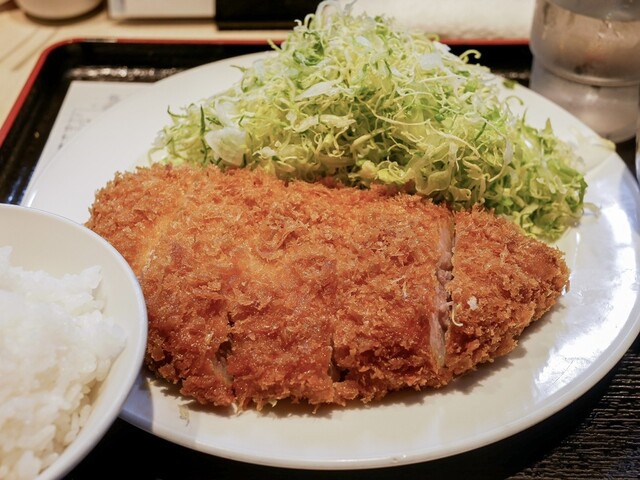
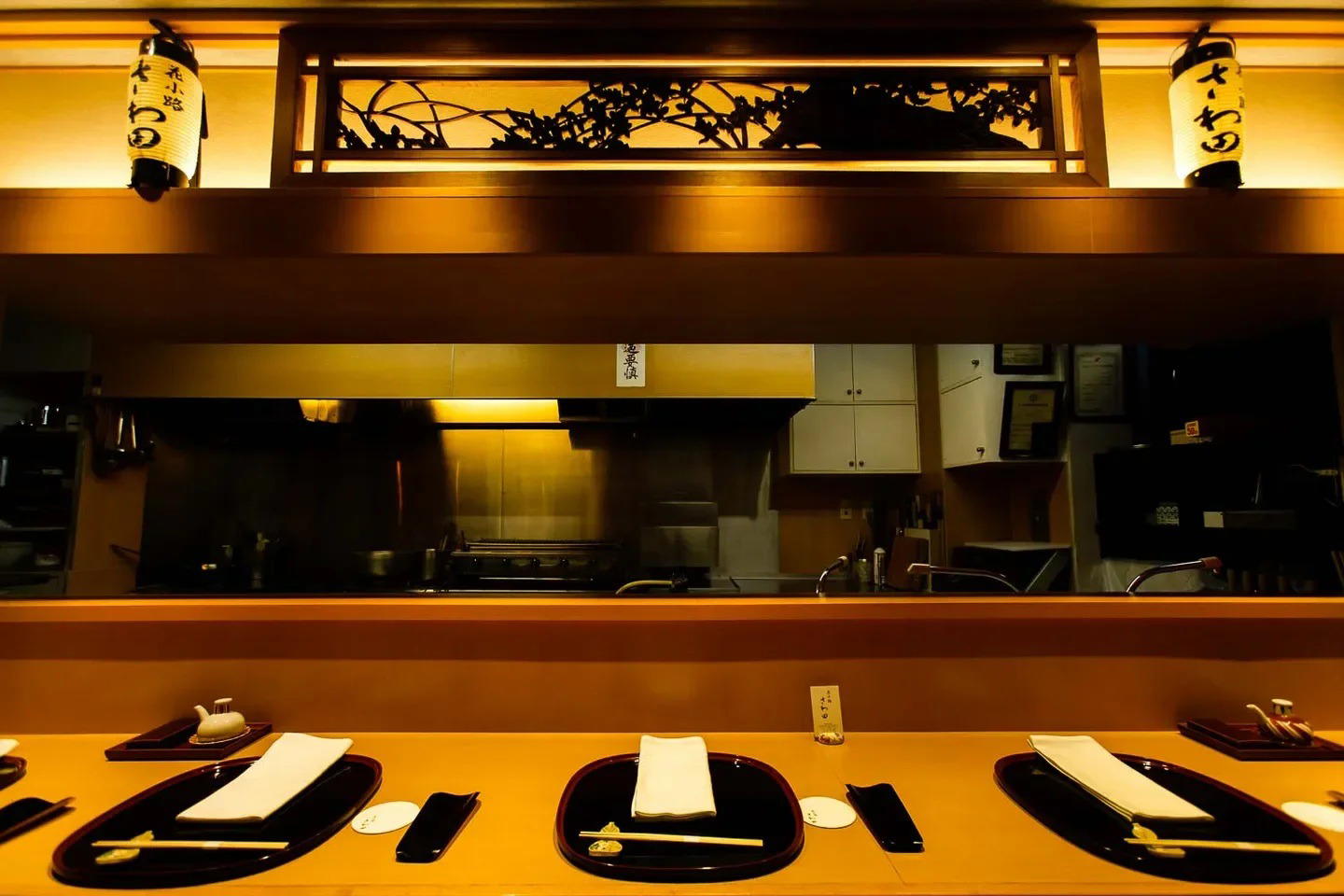
Ginza can make even simple food feel staged, but the better tonkatsu rooms in Tokyo work against that instinct. The format is narrow, functional, and built around the fryer rather than the dining room as theatre. At Nishi Mura, the physical proposition is unusually clear: 14 counter seats, no private rooms, and a pork-cutlet specialist format that compresses the meal into a close-range view of service. In a neighbourhood better known internationally for sushi counters, department-store dining floors, and polished French rooms, tonkatsu here reads as a different kind of Ginza confidence.
That distinction matters because tonkatsu is often misread by visitors as casual comfort food alone. In Tokyo, the category has its own hierarchy: breading technique, oil management, pork selection, rice, cabbage, sauce, and pacing all become points of separation. A counter room intensifies that scrutiny. There is little architectural distraction, and little room for a kitchen to hide behind ceremony. Nishi Mura sits in that compact, specialist tier, supported by selection for Tabelog’s Tonkatsu 100 in 2026 and earlier selections across multiple years. The signal is not luxury in the conventional Ginza sense; it is category authority inside a city that takes fried pork cutlets seriously.
A Ginza counter built for tonkatsu, not ceremony
The room’s 14-seat counter layout places Nishi Mura closer to Tokyo’s craft-lunch tradition than to the long-form tasting-menu culture that dominates much of premium travel writing about the city. Counter seating changes the rhythm of a meal. It privileges sequence, turnover, and proximity to the work. For tonkatsu, that is an advantage: the dish depends on timing and texture, and the format keeps attention on what the category demands rather than on decorative service language.
Ginza’s dining identity is not one thing. Sushi Ogawa belongs to the sushi-counter lineage; IBAIA brings French structure into the district’s dining mix; Tokihami points toward izakaya flexibility; LA BOTTEGAIA sits in the Italian bracket; Ginza HARU CHAN Ramen reflects the city’s appetite for specialist noodle counters. Tonkatsu occupies another lane, less export-famous than sushi but deeply legible to Tokyo diners. The restaurant’s recognition in a tonkatsu-specific list places it in conversation with category specialists rather than with the broader luxury restaurants around it.
The design point is restraint by necessity. A counter-only room narrows the experience to chair, plate, and pace. There is no private-room buffer and no large dining room to soften the transaction. That can be exactly the right container for tonkatsu, a cuisine where the pleasure is tied to immediacy and where the room should not outtalk the food. The better version of this format is not austere for its own sake; it is efficient because the dish rewards efficiency.
Why the price tier changes the Ginza calculation
The budget band also changes how the venue should be read. Ginza’s reputation can condition travellers to expect high ceremony and high spend, yet Tokyo’s food culture has long made room for category specialists operating at accessible prices. In that context, a tonkatsu counter with repeated Tabelog 100 recognition becomes a useful corrective to the idea that the neighbourhood’s serious meals are confined to omakase sushi, French tasting menus, or hotel dining rooms.
This is where the restaurant has editorial relevance beyond its own address. Tokyo’s mid-priced specialists often carry more cultural information than a heavily scripted luxury meal. A narrow menu category forces a sharper comparison: not whether the room feels grand, but whether the format serves the dish. The counter configuration, take-out availability, non-smoking policy, and lunch-focused operating pattern all point toward a restaurant built for repeat local use rather than destination choreography.
The absence of a broad chef narrative is not a weakness in this category. Tonkatsu culture does not need every counter to be explained through personality. In Tokyo, the more useful reading is comparative: what does the room ask of the diner, what does the format prioritize, and how does the price sit against the neighbourhood? Here, the answer is practical and persuasive. It is a small Ginza specialist where the recognition is category-specific and the physical space keeps the meal close to its core.
How to place it in a Tokyo food itinerary
For travellers building a Tokyo dining plan, this kind of stop works as a counterweight to reservation-heavy evenings. The city rewards mixing registers: a specialist lunch in Higashi-Ginza, a more formal dinner elsewhere, and a bar or hotel lounge after dark. The sharper itinerary is not built by chasing only famous formats; it comes from understanding how Tokyo distributes seriousness across price tiers and room types.
Readers comparing categories can use Our full Tokyo restaurants guide as the main anchor, then branch by mood and format. Nearby and citywide references such as . 鮪と炭火焼き うお炭 秋葉原店, 12/10 Shinjuku ten, 124. KAGURAZAKA (Yakitori), 2D Cafe, and 3 Chome no Curry Ya San show how granular Tokyo dining becomes once the lens shifts from prestige alone to specialization. For broader trip planning, Our full Tokyo hotels guide, Our full Tokyo bars guide, Our full Tokyo wineries guide, and Our full Tokyo experiences guide map the rest of the city’s hospitality frame.
The same logic extends beyond Tokyo. A traveller interested in focused Japanese formats might compare the discipline here with -Grilled beef Sukiyaki- KAMAKURA TANUKIAN 鎌倉 たぬき庵 in Kamakura.cafe in Osaka.know in Kumamoto, (Shoku) Vietnam in Kawasaki, [Curry Senmon Ten] Maruyama Kyoju. in Sapporo, and [ki:] in Kyoto. Outside Japan, Jōdo Saké Bar in Los Angeles and Onigiri Time in Pasadena illustrate how Japanese food formats change when translated overseas. The restaurant’s value is that it does not need translation: it belongs to the compact Tokyo specialist tradition, where the room is small, the category is precise, and the evidence sits in the format.
Budget Reality Check
Comparable venues in the metro at similar price points.
| Venue | Cuisine | Price | Notes |
|---|---|---|---|
| Nishi MuraThis venue — the venue you are viewing | Chūō, Tonkatsu | $ | Not listed |
| Uogashi Nihon-ichi (魚がし日本一) | Shibuya, Standing Sushi Bar | $ | Not listed |
| American | Not listed | $ | Chūō, Classic Ginza kissaten & sandwich café |
| Cuit Bonne | Not listed | $ | Chūō, Japanese European-style curry & dining bar |
| Curry Ya Banbi | Not listed | $ | Chiyoda, Japanese curry & Indian curry izakaya |
| 月 | Minato, japanese | $ | Not listed |
Recognition history
Dated appearances from independent guides and award organizations, with the underlying list record or original source where available.
Tabelog 100 #4 · No. 4
Tabelog · Tabelog 100 - Tonkatsu - 2026











At a Glance
- Classic
- Cozy
- Solo
- Family
- Casual Hangout
- Standalone
- Sake Program
Current opening hours
- Monday
- 11 AM–2:30 PM
- Tuesday
- 11 AM–2:30 PM
- Wednesday
- 11 AM–2:30 PM
- Thursday
- 11 AM–2:30 PM
- Friday
- 11 AM–2:30 PM
- Saturday
- Closed
- Sunday
- Closed
Hours can change for holidays and private events. Last verified .
Compact, direct, and old-school, with a counter-focused setup that suggests a no-frills, focused lunch experience.