
Tabelog 100 #41
Our verdict
Nigiri Zushi 150 brings a counter-led sushi format to Takahama with a value structure that differs sharply from Japan’s high-ticket omakase circuit. Its Tabelog Sushi EAST 100 selection in 2025 gives it a recognition signal beyond the local market, while the house-restaurant setting and family-friendly policies keep the experience grounded rather than ceremonial.

Pearl is the En Primeur Club membership app, where members save venues, book tables and use the concierge.
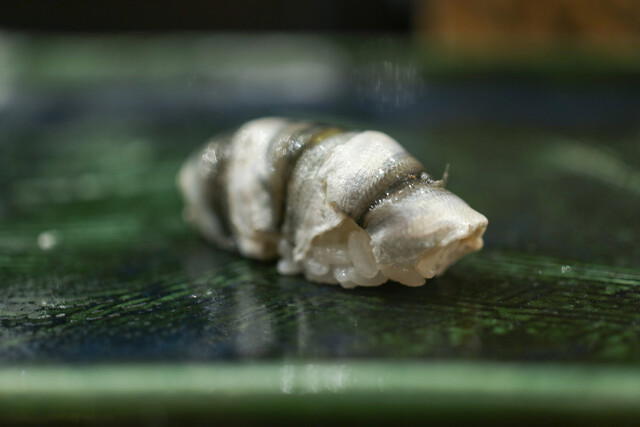
Approaching sushi in Takahama is different from approaching it in Japan’s largest dining destinations. The cues are quieter: a local setting, a smaller-city rhythm, and immediacy rather than theatre. Nigiri Zushi 150 is best understood as a Takahama sushi address, placing the meal in a local, craft-forward environment rather than the export version of luxury sushi many international travellers imagine first.
The address is best read through sourcing discipline and price logic. Japan’s sushi culture spans rarefied destination counters, casual formats where speed matters, and a smaller category applying focused sushi work to accessible meals. Takahama’s contribution is not spectacle, but a sushi venue where selection, pacing, and a listed budget profile remain approachable by national sushi standards.
A sushi format built around ingredient access, not ceremony
The name gives away the thesis. Nigiri Zushi 150’s proposition is a focused sushi experience in Takahama rather than a long-form luxury performance. That structure changes the meal. Instead of approaching the restaurant as a prestige omakase stage, the diner focuses on what is available, how the meal is paced, and how a local sushi restaurant can deliver interest without leaning on metropolitan ceremony.
That format helps explain why the restaurant has travelled beyond neighbourhood attention. Tabelog selected it for its Hyakumeiten recognition in 2025, and its Tabelog score is listed at 3.66. In Japan, Tabelog’s Hyakumeiten lists often reward a different seriousness from Michelin-style fine dining: places where local diners return, a category is handled consistently, and a specific format has earned confidence within a regional field.
Ingredient sourcing matters because sushi is, before anything else, a procurement cuisine. Rice, vinegar, fish handling, and topping allocation decide more than decoration. For travellers used to tasting-menu economics, Nigiri Zushi 150 is a useful corrective: the appeal is not only in luxury signalling, but in how a Takahama sushi address can make selection, pacing, and value part of the experience.
Within Aichi, the restaurant is more interesting than a simple value play. Nearby comparison venues show how sharply local dining can range, from accessible specialists such as Yakiimo Maru Jun and Jikaseimen Ramen Kariya to higher-spend meals such as Ittou or Shichirin Yakiniku Tanoshiira. Nigiri Zushi 150 belongs to the sushi conversation, but its accessibility places it closer to a democratic local tradition than to ceremonial omakase.
Why Takahama changes the sushi equation
Takahama resists the lazy shorthand often applied to Japanese dining destinations. The value of eating here is local scale. A sushi restaurant outside a major tourist corridor must satisfy regular diners first, producing different pressure: repeatability, approachable service, and a format that works beyond the one-off destination meal. The result is a room better read through proximity and consistency than through grandeur.
The family and service expectations should be checked directly before visiting, especially for travellers with children or larger groups. What can be said from the available recognition is simpler: Nigiri Zushi 150 has earned attention as a sushi venue in Takahama, and that recognition sits alongside a budget profile that remains relatively accessible for the category.
Payment, access, and reservation details should also be confirmed with the restaurant before arrival. These practicalities matter because smaller-city dining in Japan can operate differently from the frictionless hospitality model built for overseas visitors. Plan the meal around Takahama rather than assuming a major-city rhythm. For wider city planning, start with broader Takahama restaurant research, then layer in local accommodation, drinks, and experiences planning if the visit extends beyond lunch or dinner.
The reader decision: value sushi with a serious recognition signal
The case for Nigiri Zushi 150 is not that it replicates the prestige codes of Japan’s famous sushi counters. It does something more specific: presents sushi in a format where ingredient choice, local demand, and listed value carry the experience. The Tabelog Hyakumeiten 2025 selection is a credible external marker, but the draw is the tension between recognition and restraint. This is a place to understand how sushi quality can be pursued without the full ceremony of a long omakase menu.
Travellers building a Japan food itinerary often over-index on metropolitan names and under-read smaller cities where category specialists develop loyal local followings. For contrast across Japan’s dining range, EP Club also tracks unnamed dining rooms in larger cities, regional specialists, casual venues, and destination restaurants elsewhere in the country. The point is not comparison by cuisine, but by travel behaviour: some meals justify a detour because they reveal how a city actually eats.
For overseas context on Japanese casual formats, the same question appears abroad in different forms, though Takahama keeps the discussion closer to source: local diners, category focus, and sushi considered piece by piece. Nigiri Zushi 150 is therefore less about importing a luxury script and more about reading what a recognised local sushi venue can do on its own terms.
Frequently asked questions
Does Nigiri Zushi 150 work for a family meal?
Family arrangements are not specified in the available venue facts. Travellers visiting with children should confirm seating and service details directly with Nigiri Zushi 150 before booking.
Is Nigiri Zushi 150 formal or casual?
It reads as more accessible than a formal luxury sushi address, with listed budgets of Dinner: JPY 3,000 - JPY 3,999; Lunch: JPY 2,000 - JPY 2,999. The better frame is a recognised Takahama sushi venue rather than a ceremonial omakase room.
Is Nigiri Zushi 150 expensive?
Pricing at Nigiri Zushi 150 is listed as Dinner: JPY 3,000 - JPY 3,999; Lunch: JPY 2,000 - JPY 2,999.
What are the opening hours for Nigiri Zushi 150?
Specific opening hours are not included in the available venue facts. Confirm current hours directly with Nigiri Zushi 150 before visiting.
What's the address for Nigiri Zushi 150?
Takahama.
What's the signature at Nigiri Zushi 150?
The defining draw is recognised sushi in Takahama with an accessible listed budget. Its Tabelog Hyakumeiten 2025 recognition and 3.66 score are the clearest external reasons to pay attention.
Snapshot
Comparable venues by cuisine and price in the same metro.
| Venue | Cuisine | Price | Awards | Notes |
|---|---|---|---|---|
| Nigiri Zushi 150This venue (the venue you are viewing) | Budget counter sushi (150 yen nigiri) | Not listed | Tabelog 100 #41 | Not listed |
| 利尻富士町レストハウス | Japanese Lakeside Seafood | Not listed | Not listed | 利尻富士町 |
| ラーメン にっこう 本店 | Chicken Pottage Ramen | Not listed | Not listed | 宇尾町 |
| Tonjinchi (貪瞋癡) | Himi niboshi ramen & casual dining bar | $1–10 | Tabelog 100 #52 | Himi |
| 屋宜家 | Traditional Okinawan Soba | $10–20 | Not listed | 八重瀬町大頓 |
| Yayoi (やよい軒 筑紫口店) | Japanese Teishoku | $1–10 | Not listed | Hakata |
Recognition history
Dated appearances from independent guides and award organizations, with the underlying list record or original source where available.
Tabelog 100 #41 · No. 41
Tabelog · Tabelog 100 - Sushi - EAST - 2025
Continue exploring
More in Takahama
Restaurants in Takahama
All restaurants in Takahama →
Details
- Cozy
- Lively
- Solo
- Casual Hangout
- Family
- Group Dining
- Chefs Counter
- Standalone
- Sake Program
- A La Carte
- Counter Dining
- Sake
- Pescatarian Friendly
Current opening hours
- Monday
- Closed
- Tuesday
- 11 AM–2 PM, 5–8 PM
- Wednesday
- 11 AM–2 PM, 5–8 PM
- Thursday
- 11 AM–2 PM, 5–8 PM
- Friday
- 11 AM–2 PM, 5–8 PM
- Saturday
- 11 AM–2 PM, 5–8 PM
- Sunday
- 11 AM–2 PM, 5–8 PM
Hours can change for holidays and private events. Hours as of .
A small, counter-focused neighborhood sushi shop where guests watch the chef prepare fresh nigiri in an informal but focused atmosphere, more functional than design-driven.