
Niboshi Ranbu is a six-seat, counter-only ramen shop in Kasukabe built around the assertive logic of niboshi, the dried-sardine stock that gives the genre its marine depth. Its repeated selection for Tabelog Ramen EAST “Tabelog 100” places it in a serious regional conversation, while the compact format keeps the experience close to ramen’s working-counter roots.
Pearl is the En Primeur Club membership app — saves, bookings, and concierge access live there. Same editors, same standards.
- Address
- 埼玉県春日部市大場1114-1
- Website
- tabelog.com
 Saves & bookings on Pearl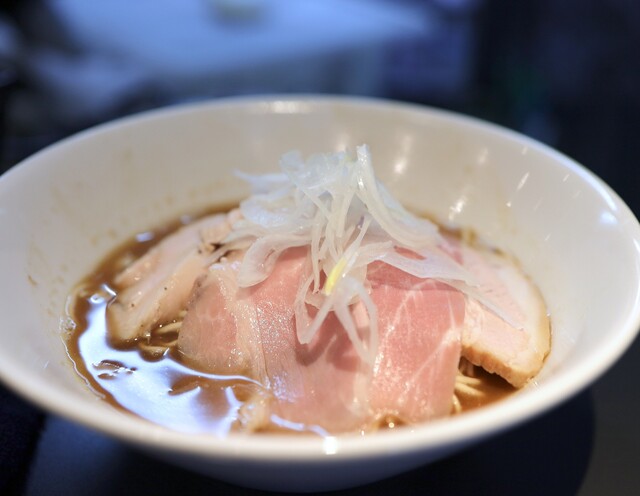
Approach in Kasukabe and the first read is scale: this is not the theatrical ramen room built for queues, cameras, and branded merchandise. It is a compact counter operation, six seats only, where the entire meal is compressed into the short distance between kitchen rhythm and bowl. That scale matters because niboshi ramen is not a neutral style. Dried sardines bring bitterness, salinity, and a firm marine register when handled with intent; the appeal is not softness, but control. Niboshi Ranbu belongs to the branch of Japanese ramen culture where the stock announces itself before any broader hospitality narrative can take over.
In the Tokyo orbit, ramen has split into several serious subcultures: polished shoyu shops chasing clarity, chicken-paitan counters working with density, regional miso rooms, and niboshi specialists that ask diners to accept a more forceful kind of umami. Kasukabe is not central Tokyo, yet this is exactly why the address is interesting. The commuter-belt ramen scene often keeps prices accessible while pushing technique hard, and recognition here has to come through repeat performance rather than neighbourhood glamour. A Tabelog score of 3.77 and selection for Tabelog Ramen EAST “Tabelog 100” in 2025 put the shop inside that higher-scrutiny field.
Dried sardine stock, not luxury theatre, defines the meal
The ingredient story is the point. Niboshi, small dried fish used across Japanese cooking, can read clean and savoury or dark and challenging depending on extraction, blend, and concentration. In ramen, it carries a different cultural signal from pork-heavy tonkotsu or the light soy-and-chicken registers associated with older Tokyo styles. It is less about richness for its own sake than about the tension between brine, bitterness, and noodle structure. A counter devoted to this style asks the diner to judge balance rather than novelty.
That makes the format as important as the bowl. Six counter seats create a meal with little buffer: no private rooms, no table service theatre, no long wine conversation, no tasting-menu pacing. The shop’s repeated Tabelog Ramen EAST “Tabelog 100” selections from 2017 through 2025, described as nine consecutive years, are meaningful because ramen rankings in Japan tend to reward consistency across a wide public audience. This is not a single-year spike. It signals a shop that has remained legible to serious ramen diners through changing trends.
Compared with Kasukabe’s broader dining options, the value proposition sits in a different lane. 3931WORKS. and Oak wood occupy the same accessible local price tier, while BurgerPOLICE Kasukabe operates at a higher spend. That comparison is useful because it shows how ramen can function as both everyday eating and specialist pursuit in the same city. Niboshi Ranbu is not priced like a destination counter, but its recognition places it closer to a specialist ramen itinerary than an incidental station meal.
A six-seat counter changes the tempo
Small ramen shops are often misunderstood by travellers. The appeal is not privacy or lingering; it is compression. Counter seating makes the cadence clear, with diners arriving, eating, and making room for the next person. For solo diners, this can be an advantage: Japan’s ramen culture is built for single-seat eating, and the format removes the awkwardness that can come with more formal restaurants. For groups, the same format is a constraint. A six-seat room is not designed for extended conversation or multi-course social dining.
The location also frames the experience. Kasukabe, in Saitama, sits outside the dense restaurant circuits that dominate English-language Tokyo dining coverage. That distance changes expectations. A bowl here is less about checking off a famous central-city name and more about understanding how serious ramen recognition spreads across the Kanto region. Tabelog’s EAST ramen selection covers a broad competitive zone, so inclusion places the shop in conversation with counters beyond its immediate neighbourhood, not merely with nearby casual restaurants.
The absence of an official website and the counter-only setup reinforce the old-school side of the category. In Japan, many serious ramen shops still communicate primarily through their physical operation and third-party listings rather than polished digital channels. For travellers, that means the meal should be treated with the same practical discipline as any small-format specialist: arrive with flexibility, assume a brisk pace, and do not build the day around a large-party plan.
How to fold it into a Kasukabe day
Smart way to read Niboshi Ranbu is as a focused ramen stop rather than a long-form dining event. Its strength lies in a narrow promise: a niboshi-driven bowl, served in a room scaled for concentration. Diners chasing plush service, alcohol-led dining, or a relaxed family table will be better served elsewhere in the city. Diners interested in Japanese ramen as a technical category, especially the dried-fish branch of the form, have a clear reason to pay attention.
For a wider read on the city’s dining map, use Our full Kasukabe restaurants guide, with nearby context from Our full Kasukabe hotels guide, Our full Kasukabe bars guide, Our full Kasukabe wineries guide, and Our full Kasukabe experiences guide. Readers building a broader Japan itinerary can also compare how single-category specialists differ from destination formats such as -Grilled beef Sukiyaki- KAMAKURA TANUKIAN 鎌倉 たぬき庵 in Kamakura. 鮪と炭火焼き うお炭 秋葉原店 in Tokyo.cafe in Osaka.know in Kumamoto, (Shoku) Vietnam in Kawasaki, [Curry Senmon Ten] Maruyama Kyoju. in Sapporo, and [ki:] in Kyoto. For an overseas counterpoint to Japanese drink-and-snack culture, Jōdo Saké Bar in Los Angeles and Onigiri Time in Pasadena show how tightly defined Japanese formats translate outside Japan.
A Quick Peer Check
Comparable venues by cuisine and price in the same metro.
| Venue | Cuisine | Price | Notes |
|---|---|---|---|
| Niboshi RanbuThis venue — the venue you are viewing | Japanese Ramen | $ | Not listed |
| Hosoi | Japanese Traditional Sweets | $ | Kasukabe |
| BurgerPOLICE Kasukabe | Wagyu Burger & Steak Bistro | $$ | Chuo |
| 3931WORKS. | Modern Ramen & Tsukemen | $$ | Ichinowari |
| Oak wood | Patisserie Cafe | $$ | Hachichome |
| カツカレーの店 KAPPA | カツカレー専門洋食 | $ | 倉敷えびす通り商店街 |
Recognition history
Dated appearances from independent guides and award organizations, with the underlying list record or original source where available.
Tabelog 100 #30 · No. 30
Tabelog · Tabelog 100 - Ramen - EAST - 2025






At a Glance
- Cozy
- Minimalist
- Well Known
- Solo
- Casual Hangout
- Standalone
Sparse, compact, and no-frills counter-service ramen shop atmosphere with a quiet, focused feel.