
Tabelog 100 #44
Our verdict
Niboshi Chuka Soba Senmon Niboshi Maru is a compact Omiya ramen counter built around the disciplined ritual of niboshi chuka soba. Its Tabelog Ramen EAST 100 selection in 2025, counter-only format, ticket-machine ordering, and sub-¥1,000 listed budget place it in a different register from Saitama’s longer-form sushi and yakiniku meals.

Pearl is the En Primeur Club membership app, where members save venues, book tables and use the concierge.
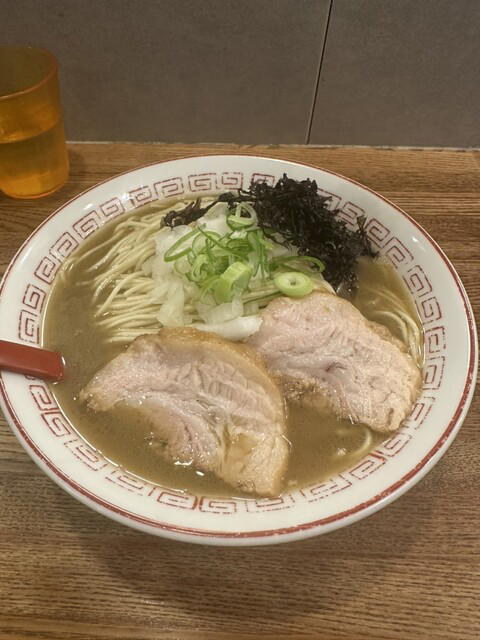
In Saitama, the ramen ritual is best understood as a focused exchange between kitchen rhythm and diner attention. Niboshi Chuka Soba Senmon Niboshi Maru belongs to that practical Japanese ramen culture where ceremony is not theatrical. It is procedural, quick in spirit, and exacting in its own way: the emphasis falls on the bowl, the pacing of the meal, and the compact pleasure of a specialist ramen stop rather than on turning a weekday lunch into a banquet.
The defining cue is in the name. Niboshi Chuka Soba Senmon Niboshi Maru presents itself as a focused ramen specialist rather than a broad, all-purpose dining room. In ramen terms, that marks a different appetite from more expansive comfort-bowl categories. The point is directness: a bowl-led format associated with concentration, noodle texture, and pacing that asks the diner to pay attention while the meal is at its best. That makes the format less about lingering and more about focus.
Saitama ramen discipline in a specialist format
Saitama’s dining identity is often read through proximity to Tokyo, but the city has its own commuter-city grammar: practical meals, compact specialist addresses, and formats designed for straightforward eating as much as for food-focused detours. A ramen specialist fits that pattern cleanly. It is not trying to compete with destination dining rooms on duration or ceremony; it competes on repetition, clarity, and how well a narrow idea survives service after service.
The recognition matters because ramen rankings in Japan are crowded, regional, and unforgiving. Recognition in the 2025 Tabelog Hyakumeiten context puts this shop within a broader Japanese ramen conversation rather than only a local one. The listed Tabelog score of 3.72 adds another signal: not a luxury marker, but a consumer-review measure in a category where small, focused shops can be assessed with unusual intensity. For ramen, that is often more useful than imported fine-dining language.
Niboshi Maru also shows how Saitama’s serious food culture can sit at a much lower spend than its more leisurely formats. In the same city, Toyo Zushi, Yakiniku New Hiuchi, and Sumibi Yakiniku Niku no Takumi Hiuchi represent different specialist registers, while other dining in Saitama broadens the map further. Ramen works by another economy: a tight budget, fast turnover in spirit, and a single-bowl decision rather than an extended sequence.
The meal is casual, but the etiquette is exact
The ramen format sets expectations. Ordering and seating customs can vary by shop, but the room’s purpose is usually clear: arrive ready to eat, keep the pace considerate, and treat the counter or dining area as a working space rather than a lounge. That informality should not be mistaken for looseness. In Japan’s ramen shops, the etiquette is practical: decide promptly, follow the house rhythm, and keep attention on the bowl.
For travellers used to reservation-led restaurants, a ramen stop changes the decision. This is a meal to fold into a Saitama itinerary, not an evening to build around ceremony. Its appeal is strongest for diners who like specialist formats and are comfortable with a direct, casual style of eating. The category itself remains approachable, but the pleasure depends on accepting the compactness of the experience rather than expecting the cues of a formal restaurant.
The shop’s identity is better read through its stated ramen focus than through unsupported mythology. Saitama ramen is not a single style with a neat tourist label. It is a network of specialists, local loyalties, and everyday food routines. In that context, Niboshi Chuka Soba Senmon Niboshi Maru’s value lies in the clarity of its specialist brief and its place within the city’s larger pattern of focused, affordable eating.
How it fits into a Saitama eating day
The smart way to use a shop like this is to let it solve a specific problem: a precise ramen meal in Saitama rather than a long lunch that consumes the afternoon. Visitors mapping a wider Saitama food day can treat it as the savory anchor, then look outward to the city’s other specialist addresses. Other Saitama dining rooms, bakeries, casual counters, and everyday food stops sketch a different side of the area’s eating culture without needing to turn every meal into a destination.
For broader planning, Our full Saitama restaurants guide is the useful companion, with adjacent city pages for Our full Saitama hotels guide, Our full Saitama bars guide, Our full Saitama wineries guide, and Our full Saitama experiences guide. Readers comparing Japanese casual formats beyond Saitama can also think more generally about how ramen, grilled meat, sushi, curry, rice-ball counters, and other everyday dining styles translate across different cities, from domestic food districts to overseas Japanese dining scenes.
The editorial read is simple: this is not where Saitama performs luxury. It is where the city’s ramen culture shows discipline at low spend, using a narrow specialist brief to make the meal feel complete without expanding it. For diners who understand ramen as a ritual of timing rather than decoration, that is the point.
Frequently asked questions
Is Niboshi Chuka Soba Senmon Niboshi Maru good for families?
The provided listing does not specify family amenities. It is best approached as a casual ramen stop in Saitama, with expectations shaped by the practical pace and focused format of ramen dining.
Is Niboshi Chuka Soba Senmon Niboshi Maru formal or casual?
Casual. It is listed in the ramen category in Saitama, and the 2025 Tabelog Hyakumeiten recognition signals quality in a focused ramen context rather than formal dining ceremony.
What's the pricing like at Niboshi Chuka Soba Senmon Niboshi Maru?
Pricing at Niboshi Chuka Soba Senmon Niboshi Maru is listed as - JPY 999 - JPY 999.
What's Niboshi Chuka Soba Senmon Niboshi Maru's location?
Saitama.
Cuisine and Recognition
Comparable venues by cuisine and price in the same metro.
| Venue | Cuisine | Price | Awards | Notes |
|---|---|---|---|---|
| Niboshi Chuka Soba Senmon Niboshi MaruThis venue (the venue you are viewing) | Niboshi Ramen | Not listed | Tabelog 100 #44 | Not listed |
| Shokujidokoro Tarafuku | Japanese Teishoku / Cafeteria | Not listed | Tabelog 100 #98 | Chuo Ward |
| Ono Udon | Traditional Sanuki Udon | Not listed | Tabelog 100 #98 | Not listed |
| Hibi Shushu | Creative Japanese Tachinomi & Small Plates | $20–30 | Tabelog 100 #9 | Omiya |
| Mendokoro Harada | Japanese Ramen | $1–10 | Tabelog 100 #45 | Minami Urawa |
| Ramen Jiro Oomiya kouen ekimae ten | Jiro-style Ramen Shop | $10–20 | Tabelog 100 #64 | Omiya Koen |
Recognition history
Dated appearances from independent guides and award organizations, with the underlying list record or original source where available.
Tabelog 100 #44 · No. 44
Tabelog · Tabelog 100 - Ramen - EAST - 2025
Continue exploring
More in Saitama
Restaurants in Saitama
All restaurants in Saitama →



Bars in Saitama
Browse all →








Details
- Classic
- Cozy
- Solo
- Family
- Casual Hangout
- Standalone
- Counter Dining
- A La Carte
A small, counter-only ramen shop with a direct, no-frills atmosphere that feels focused on quick service and the bowl rather than lingering.