Nha Trang One
Our verdict
Nha Trang at 87 Baxter Street sits at the functional core of Manhattan's Chinatown dining strip, where Vietnamese food has held ground against decades of neighborhood flux. The room is direct and unadorned, the kind of space where the cooking does the work without design as distraction. For visitors oriented toward the tasting-menu tier represented by venues like Le Bernardin or Masa, Nha Trang offers a clear counterpoint in format, price, and atmosphere.

Pearl is the En Primeur Club membership app, where members save venues, book tables and use the concierge.
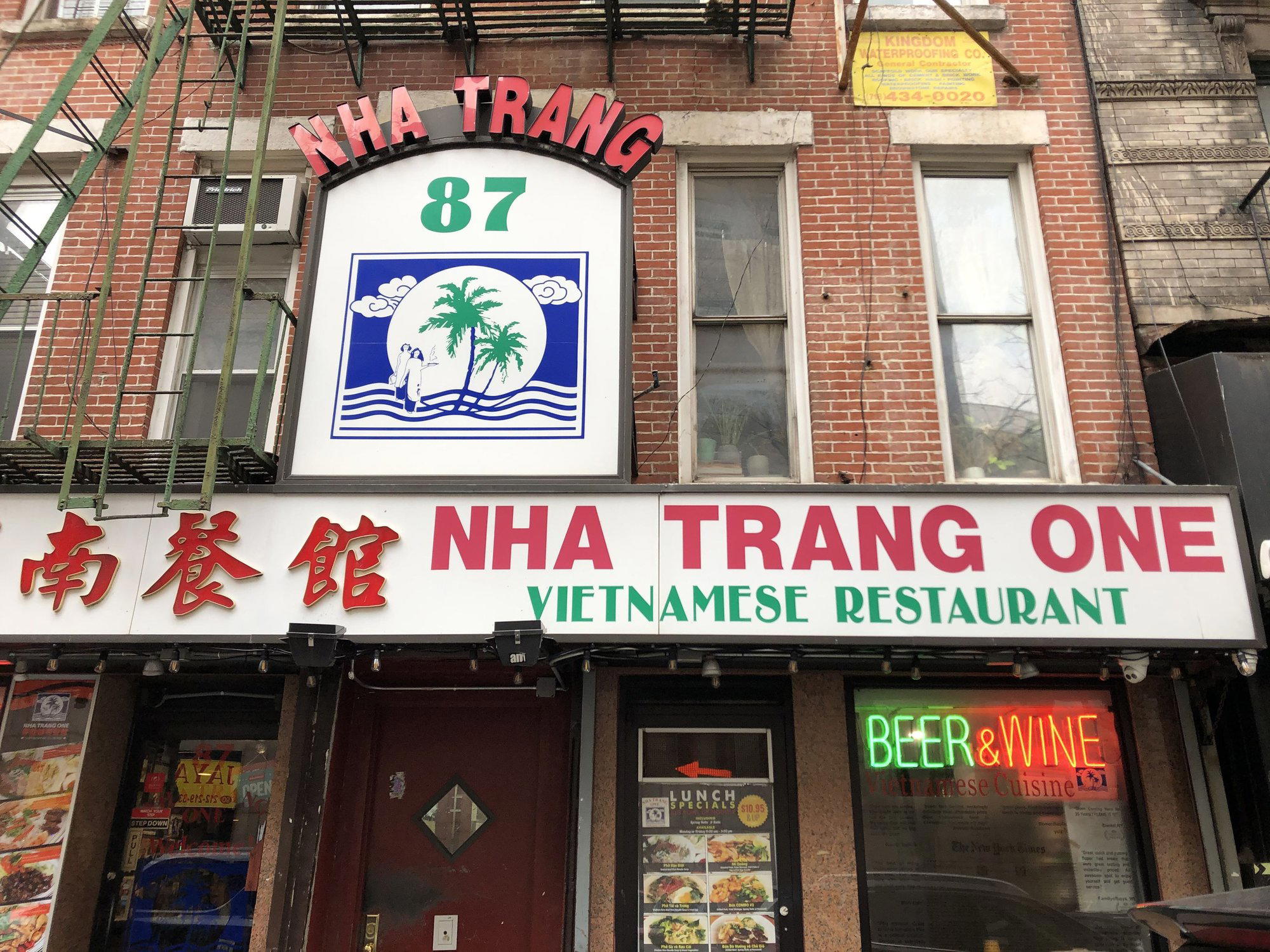
Baxter Street and the Vietnamese Anchor in Manhattan's Chinatown
Manhattan's Chinatown has never operated as a single, coherent dining district. It is a layered accumulation of cuisines, waves of immigration, and commercial pressures that have periodically reshaped which food cultures hold the most prominent street-level presence. Vietnamese cooking occupies a specific position in that history, arriving through community settlement patterns that concentrated on Baxter and Doyers Streets and establishing a cluster of canteen-style restaurants that operate on logic entirely different from the tasting-menu houses of Midtown. Where venues like Per Se or Atomix are built around controlled scarcity and multi-course progression, the Baxter Street Vietnamese model is built around volume, accessibility, and speed of service. Nha Trang at 87 Baxter Street is among the most durable representatives of that model.
The Room: Utility as Architecture
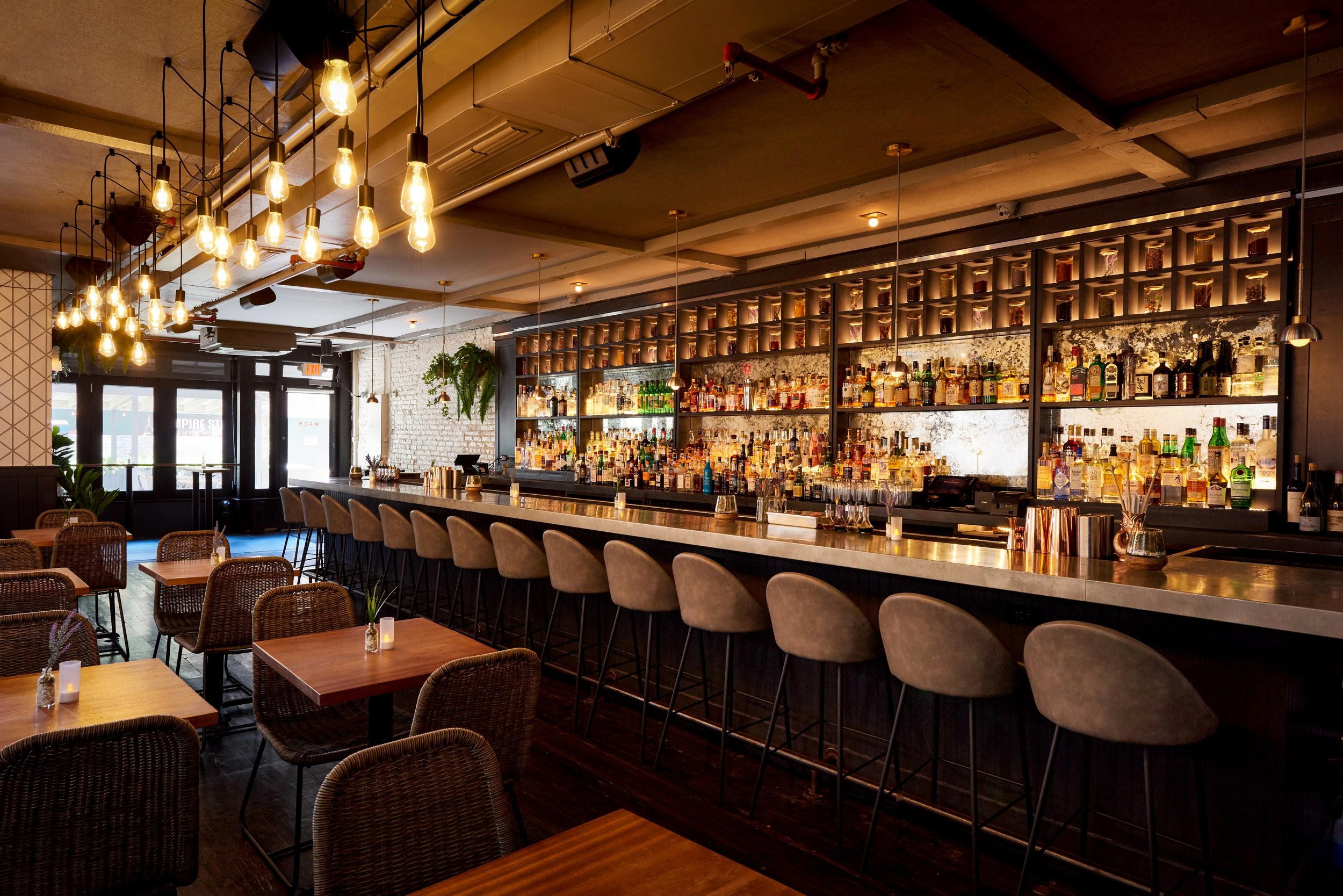
The editorial angle here is the physical container itself, because at Nha Trang the space communicates something that design-forward restaurants work hard to manufacture: the absence of pretension as a deliberate condition. This is not a room that has been styled to appear casual. It is a room that reflects the operational logic of a high-turnover Vietnamese canteen, where seating arrangements prioritize capacity over comfort differentials, lighting is functional rather than atmospheric, and the surface materials are chosen for durability and ease of cleaning rather than tactile interest.
The comparison is not meant to diminish either category. It is meant to clarify that the Chinatown canteen format carries its own spatial intelligence, one where the absence of considered design is itself a form of honesty about what the transaction is. You come for the soup and the company at the table. The room does not attempt to be the experience.
Tables are arranged to seat the most people efficiently in a compact floor plan. There is no counter seating, no chef's table, no architectural gesture toward theatre. The room works because it does not try to be anything other than what it is: a container for a meal that does not require a container with opinions.
Vietnamese Canteen Cooking in the Context of New York's Vietnamese Scene
New York's Vietnamese restaurant population is smaller and less geographically concentrated than in cities with larger Vietnamese American communities, such as Houston or the San Gabriel Valley corridor outside Los Angeles. What Manhattan has instead is the Chinatown cluster, where a handful of restaurants have operated for decades in close proximity, competing on the same dishes and the same lunch-traffic economics. The category staples in this context are pho, bun bo Hue, banh mi served from adjacent storefronts, and the kind of rice and noodle plates that function as workday meals for the surrounding residential and business community.
Nha Trang's position within that cluster is as one of the area's longer-standing Vietnamese addresses. What is documentable is the format: a multi-item menu served at prices that sit far below the midpoint of Manhattan dining, in a room that turns tables at a pace suited to the neighborhood's pedestrian traffic patterns.
For a reader whose frame of reference is the four-star dining tier, represented locally by venues like Le Bernardin, the Nha Trang experience requires a complete recalibration of what a successful meal looks like. The signals of quality here are consistency, speed, and the degree to which the cooking matches the expectations of a community that has been eating this food since childhood. Those are harder standards to meet than they appear.
Chinatown's Position in New York's Broader Dining Geography
New York's premium dining conversation gravitates toward Midtown, Tribeca, and the West Village, where flagship restaurants with the budget and the bookings to support elaborate service models have concentrated. The immigrant dining districts of lower Manhattan, including Chinatown, Koreatown, and the fringes of the Lower East Side, operate outside that conversation and are generally undercovered by the publications that shape mainstream dining opinion.
That gap creates a category of restaurants that are well-known within their communities and largely invisible to the broader food media ecosystem. Nha Trang sits in that category. It does not have the awards infrastructure of a Blue Hill at Stone Barns or the editorial visibility of a French Laundry. What it has is longevity on a block that has seen considerable turnover, and a regulars base that makes decisions on taste and value rather than on recognition signals.
Visitors who have been through the equivalent experience in other cities, the no-frills regional specialist that sustains on neighborhood loyalty rather than tourist traffic, will recognize the format immediately. The Vietnamese canteen model in American cities occupies the same structural role as the ramen-ya in a Japanese neighborhood or the taqueria in a Mexican American commercial corridor: affordable, repeatable, culturally anchored, and serving a purpose that the tasting-menu tier does not attempt to address. For readers planning a broader New York itinerary that spans the full price spectrum, our full New York City restaurants guide maps the relevant venues across categories.
Planning Your Visit
87 Baxter Street puts Nha Trang at the center of the Chinatown strip, walkable from the Brooklyn Bridge and Canal Street subway stations. The format is walk-in friendly; the canteen model does not generally support reservation infrastructure in the same way that a venue like Alinea or Single Thread Farm would. Lunch service draws the heaviest foot traffic from the surrounding neighborhood, while dinner tends to be less crowded.
Frequently asked questions
How do I find Nha Trang?
Nha Trang is located at 87 Baxter St, New York, NY 10013, New York City.
Is Nha Trang in Chinatown good for solo diners or large groups?
The canteen format at 87 Baxter Street suits solo diners and small parties better than coordinated large-group visits, given the utility-focused room and high table turnover typical of Chinatown's Vietnamese spots. New York's Vietnamese restaurant scene is smaller and less concentrated than in cities like Houston or San Jose, which makes an established Chinatown address like this one a practical anchor for the cuisine in Lower Manhattan.
What do people recommend at Nha Trang?
Nha Trang has a reputation in Chinatown's Vietnamese dining circuit for its soups and rice plates, the categories that anchor canteen-style Vietnamese cooking in New York. Given the format at 87 Baxter Street, regulars tend to order directly and efficiently, this is not a menu built for extended deliberation. The kitchen's throughput model favors dishes that travel fast and hold consistent across a busy room.
What's the best way to book Nha Trang?
Nha Trang at 87 Baxter Street operates as a walk-in canteen rather than a reservation-driven room. For peak lunch hours, when Chinatown foot traffic from Canal Street and the Brooklyn Bridge corridor converges, arriving early or off-peak is the practical approach. No booking infrastructure is listed in available venue records.
Compact Comparison
Comparable venues nearby, for context on price, style, and recognition.
| Venue | Cuisine | Price | Awards | Notes |
|---|---|---|---|---|
| Nha TrangThis venue (the venue you are viewing) | Authentic Vietnamese Pho | $10–20 | Not listed | Not listed |
| Xe May Sandwich Shop | Vietnamese Banh Mi Sandwiches | $10–20 | Not listed | East Village, Vietnamese Banh Mi Sandwiches |
| Nam Son | Authentic Vietnamese Pho House | $10–20 | Not listed | Lower East Side, Authentic Vietnamese Pho House |
| Cô Lac | Modern Central Vietnamese | $30–50 | Grub Street Best Food of 2026 (So Far) | East Village, Modern Central Vietnamese |
| Banh Mi Zon | Vietnamese Banh Mi Sandwiches | $10–20 | Not listed | East Village, Vietnamese Banh Mi Sandwiches |
| Lucy's Vietnamese | Vietnamese Fusion with Smoked Meats | $20–30 | Not listed | Bushwick (East), Vietnamese Fusion with Smoked Meats |
Continue exploring
More in New York City
Restaurants in New York City
All restaurants in New York City →
Bars in New York City
All bars in New York City →





Details
- Casual
- Casual Hangout
- A La Carte
- Vegetarian Friendly
- Vegan Options
Current opening hours
- Monday
- Closed
- Tuesday
- 11 AM–8:45 PM
- Wednesday
- 11 AM–8:45 PM
- Thursday
- 11 AM–8:45 PM
- Friday
- 11 AM–9:30 PM
- Saturday
- 11 AM–9:30 PM
- Sunday
- 11 AM–8:45 PM
Hours can change for holidays and private events. Last verified .
Casual and friendly with a welcoming atmosphere for quick meals.