Banh Mi Zon
Our verdict
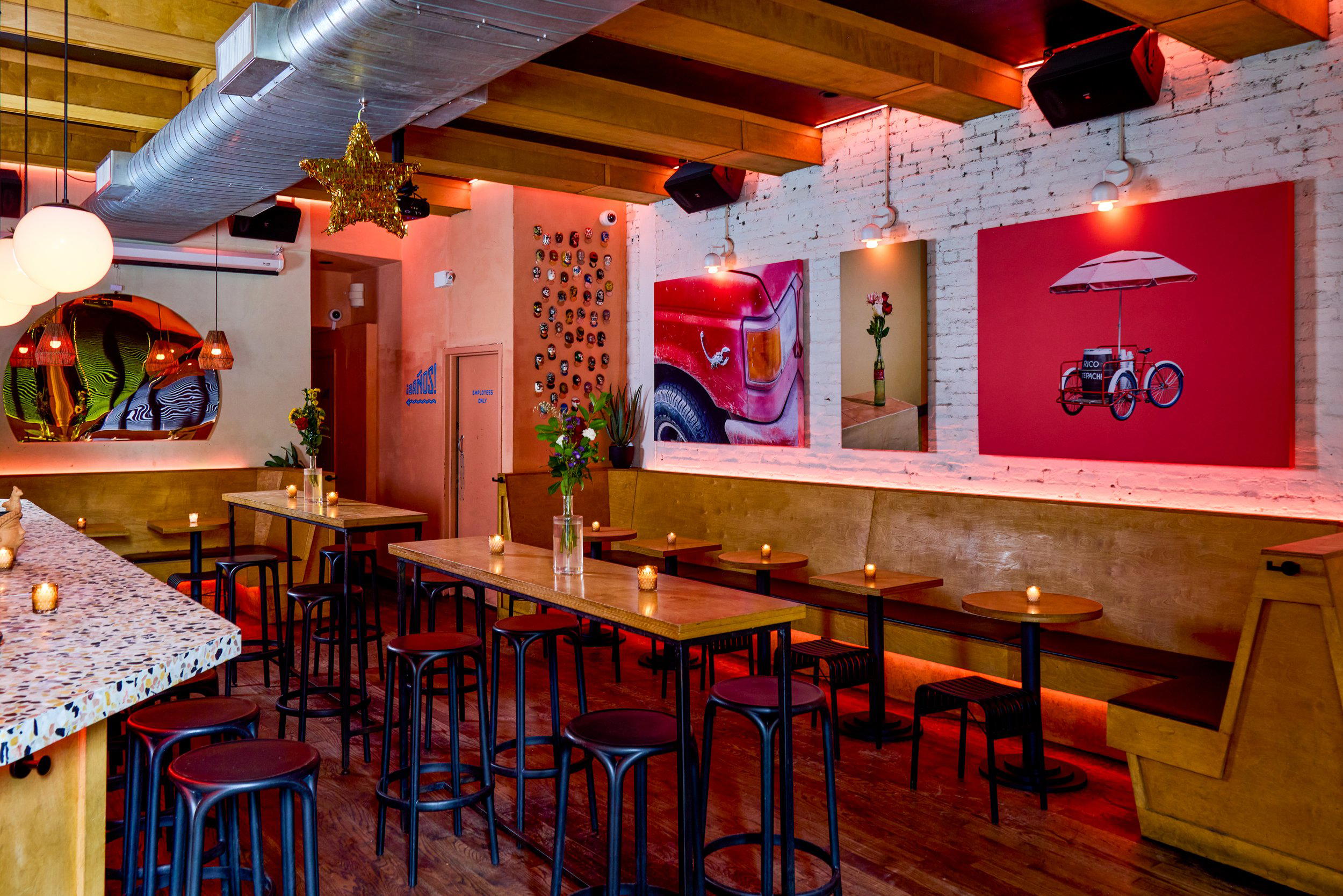
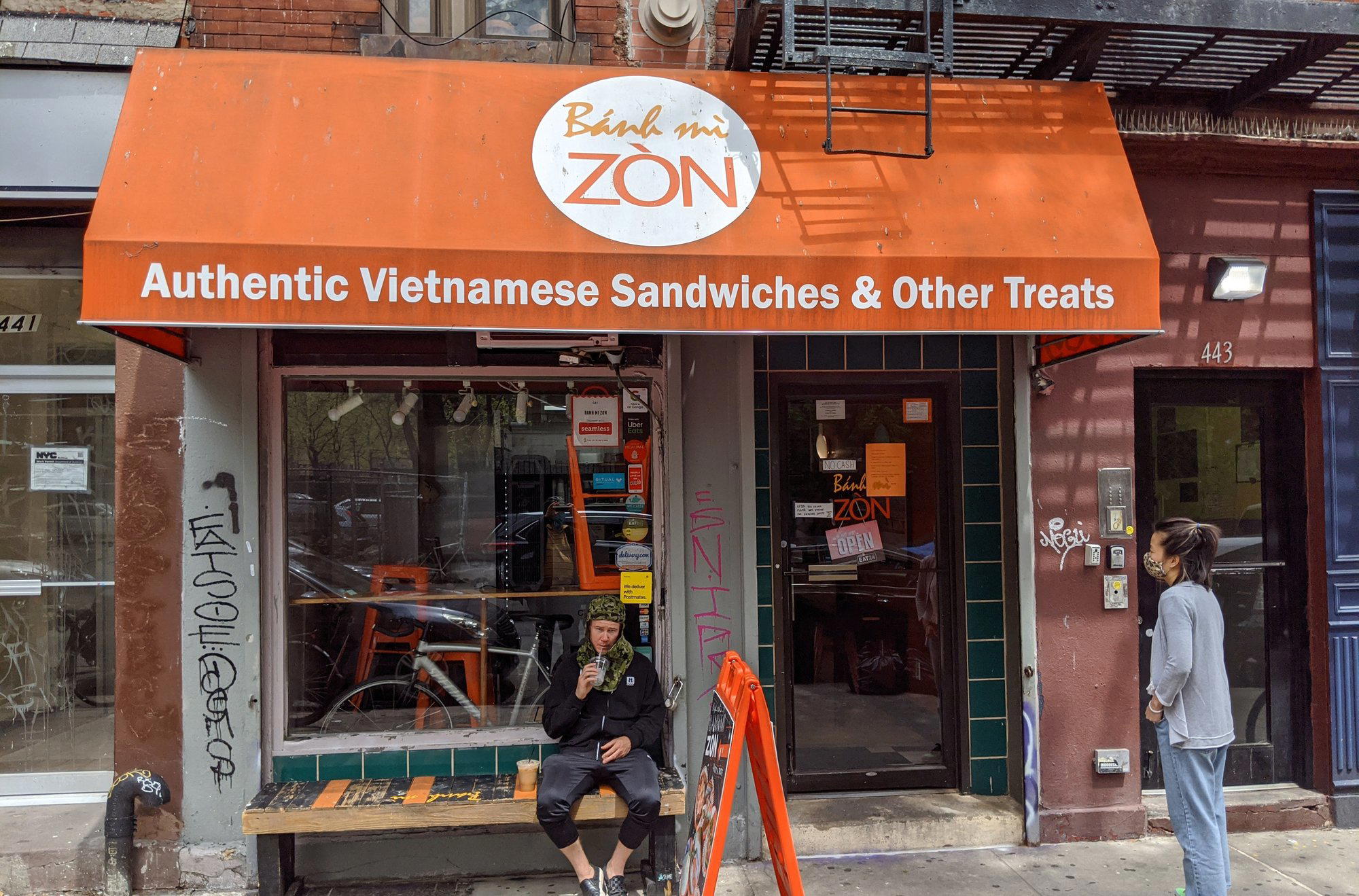
Banh Mi Zon at 443 E 6th St serves Vietnamese banh mi sandwiches in a casual, quick-bite format that works for lunch or dinner.

Pearl is the En Primeur Club membership app, where members save venues, book tables and use the concierge.
The menu
What to order
- Zon Sandwich
- Grilled Pork Patties Sandwich
- Chicken Sandwich
East Village Banh Mi: A Neighbourhood Fixture on East 6th Street
The East Village has absorbed waves of immigrant food culture since the mid-twentieth century, from Ukrainian diners along Second Avenue to the Bangladeshi restaurants that gradually colonised Sixth Street. Vietnamese sandwich shops arrived later, but in a neighbourhood that has always rewarded unpretentious, high-output cooking, the banh mi format found natural ground. Banh Mi Zon, at 443 East 6th Street, operates within that tradition: a counter-service spot in a part of Manhattan where the density of dining options is high and the competition for repeat customers is relentless.
What sustains a banh mi shop in the East Village is not novelty. The format itself is fixed: a French-influenced Vietnamese sandwich, its baguette adapted over generations in Saigon to local flour and baking conditions, filled with some combination of pork, pate, pickled daikon, carrot, cucumber, cilantro, and chili. The Vietnamese diaspora brought that format to the United States, and cities with large Vietnamese communities developed their own regional expressions. New York's version tends toward a slightly denser roll than the Californian style, and the city's leading examples hold their own against the banh mi shops of Boston's Dorchester or Houston's Midtown. Banh Mi Zon operates in that urban-Vietnamese sandwich tradition, on a block that has seen enough restaurant turnover to establish longevity as a meaningful credential in itself.
What Regulars Return For
Regulars at a banh mi shop form a different kind of loyalty than the reservation-list devotees of the dining rooms that define New York's premium tier. At spots like Le Bernardin, Atomix, or Masa, return visits are planned events. At a neighbourhood counter on East 6th Street, regulars arrive because the sandwich is consistent, the price is right, and the transaction is frictionless. That kind of loyalty is harder to manufacture than a Michelin star and, in its own way, more revealing of a kitchen's discipline.
The banh mi regulars' unwritten order is typically one of the pork-forward combinations: char siu, pate, or the mixed meat option that Vietnamese delis have served for decades. The quality signal is in the bread. A roll that has lost its crust integrity by the time it reaches the customer indicates a kitchen cutting corners on sourcing or timing. Regulars know within the first bite whether the kitchen is having a good day, and they return when it consistently is.
The East Village context matters here. A neighbourhood that contains, within a few blocks, everything from late-night ramen counters to long-established wine bars has trained its residents to be precise about what they want and where to get it. Banh Mi Zon's position on East 6th Street places it within walking distance of a resident population that eats out frequently and has learned to value execution over concept.
The Banh Mi in New York's Broader Food Context
New York's Vietnamese food scene has historically been concentrated in specific corridors: Chinatown on Mott and Baxter Streets, Sunset Park in Brooklyn, and parts of Flushing in Queens. Manhattan's East Village location is somewhat removed from those clusters, which means a shop in this neighbourhood draws from a different customer base: local residents, workers, and the kind of destination-seeker who prefers eating well for under fifteen dollars to booking six weeks ahead for a tasting menu.
That price tier sits at the opposite end of the spectrum from the city's most-discussed dining rooms. Eleven Madison Park and Per Se represent New York dining at its most formally constructed; a banh mi counter represents the other structural pillar of what makes a city's food culture genuinely broad. Across the country, similar dynamics play out: Lazy Bear in San Francisco, Smyth in Chicago, and Providence in Los Angeles anchor their cities' fine dining tiers, while the Vietnamese delis and counter shops operating in their shadows serve the daily rhythm of urban eating. Both are necessary; neither replaces the other.
Vietnamese sandwich culture in the United States carries a documented history tied to post-1975 resettlement, when Vietnamese families opened bakeries and delis in cities across the country. That history is part of what gives the banh mi its cultural weight beyond the sandwich itself. In New York specifically, shops that have maintained presence in transitioning neighbourhoods carry the evidence of that longer arc.
East 6th Street and the Neighbourhood It Sits In
East 6th Street between First and Avenue A has long functioned as a transitional block in the East Village, bordering Alphabet City and drawing foot traffic from the park to the west and the residential streets to the east. The block's restaurant mix has shifted considerably over the past two decades, with some of the Indian restaurant row that defined the street in the 1990s replaced by a more varied set of operations. A banh mi shop at this address operates in a neighbourhood that rewards consistency above all: the customer pool is local enough that a bad run of sandwiches will show up in foot traffic within weeks.
For visitors arriving from other cities with established Vietnamese dining corridors, the frame of reference matters. The banh mi at a New York East Village counter will not replicate the experience of a first-generation Vietnamese bakery in Westminster, California or Houston's Bellaire Boulevard. Each city's Vietnamese food culture has its own character, shaped by the demographics of its diaspora community and the local supply chain. New York's version has its own logic, and East Village shops are part of that logic.
For the broader picture of where Banh Mi Zon fits among New York's dining options, the EP Club New York City restaurants guide covers the full range. Elsewhere in the country, similar editorial coverage is available for Emeril's in New Orleans, The French Laundry in Napa, Blue Hill at Stone Barns in Tarrytown, Addison in San Diego, Single Thread Farm in Healdsburg, The Inn at Little Washington, Frasca Food & Wine in Boulder, and internationally at Atelier Moessmer Norbert Niederkofler in Brunico and Dal Pescatore in Runate.
Planning Your Visit
Address: 443 East 6th Street, New York, NY 10009. Reservations: Counter-service format; no reservations required. Dress: Casual. Budget: Counter-service pricing typical of the banh mi category in New York; expect to pay in the range consistent with neighbourhood Vietnamese sandwich shops. Getting there: The closest subway stops are the L train at First Avenue or the F/M at Second Avenue, both within a short walk. The 6 train at Astor Place is also accessible on foot.
Frequently asked questions
What's Banh Mi Zon's location?
Banh Mi Zon is located at 443 E 6th St, New York, NY 10009, New York City.
Is Banh Mi Zon a good lunch option near Tompkins Square Park?
Banh Mi Zon sits at 443 East 6th Street in the East Village, roughly a short walk from Tompkins Square Park, making it a practical counter-service stop for the area. The no-reservation, walk-in format means there's no lead time required, useful for anyone moving through the neighbourhood midday. It fits within the East Village's longer tradition of affordable immigrant-driven street food, alongside the Ukrainian and South Asian spots that have operated along nearby corridors for decades.
What's the best thing to order at Banh Mi Zon?
Banh Mi Zon is a counter-service shop on East 6th Street in New York City's East Village, and the menu centres on banh mi sandwiches. Counter-service formats like this typically turn over specials quickly.
Is Banh Mi Zon reservation-only?
No. Banh Mi Zon operates on a counter-service format at 443 East 6th Street, meaning walk-ins are the norm and no reservations are taken. That format is standard for East Village banh mi shops and keeps turnover fast during lunch rushes.
What's Banh Mi Zon best at?
Banh Mi Zon holds a consistent neighbourhood presence on East 6th Street, a block that draws foot traffic from both the East Village and the edge of Alphabet City. Its counter-service model positions it as a go-to for quick, affordable Vietnamese-style sandwiches without the overhead of a sit-down dining room. That operational simplicity is what keeps regulars returning on routine rather than occasion.
How does Banh Mi Zon handle allergies?
Allergen policies for Banh Mi Zon are not formally documented publicly. For any specific dietary requirements, visiting the counter at 443 East 6th Street and speaking directly with staff is the most reliable route, as counter-service kitchens can usually clarify ingredients on request.
Price Lens
Comparable venues nearby, for context on price, style, and recognition.
| Venue | Cuisine | Price | Awards | Notes |
|---|---|---|---|---|
| Banh Mi ZonThis venue (the venue you are viewing) | Vietnamese Banh Mi Sandwiches | $10–20 | Not listed | Not listed |
| Hanco's | Vietnamese Banh Mi & Pho | $10–20 | Not listed | Downtown Brooklyn-DUMBO-Boerum Hill, Vietnamese Banh Mi & Pho |
| Saigon Shack | Vietnamese Pho & Banh Mi | $10–20 | Not listed | Greenwich Village, Vietnamese Pho & Banh Mi |
| Cô Lac | Modern Central Vietnamese | $30–50 | Grub Street Best Food of 2026 (So Far) | East Village, Modern Central Vietnamese |
| Asian Bowl | Casual Burmese & Asian Bowls | $10–20 | Not listed | Forest Hills, Casual Burmese & Asian Bowls |
| Blank Street Coffee | Not listed | $10–20 | Not listed | Greenwich Village, Modern coffee & matcha cafe |