Nest


Michelin Plate · The Good Food Guide GFG Very Good
Our verdict
A Michelin Plate-recognised restaurant on Old Street, Nest runs a tightly edited tasting menu format from a 24-seat horseshoe dining room. The kitchen rotates its entire focus every three months around a single seasonal theme, past editions have included 'Sea & Coastline' and 'Highlands', delivering precise, playful Modern British cooking at £70–£90 per head. Walk-ins are welcome at the Nest Cellar bar when tables are free.

Pearl is the En Primeur Club membership app, where members save venues, book tables and use the concierge.
Old Street's Rotating Kitchen
London's tasting menu circuit has long sorted itself into tiers: the flagship rooms of Mayfair and Notting Hill, where three-figure covers are baseline and the Michelin count runs to two or three stars, and a second tier of smaller, neighbourhood-anchored operations that trade on precision and personality rather than postcode prestige. CORE by Clare Smyth, Cornus, and Ormer Mayfair occupy the first bracket. Nest, on Old Street's eastern stretch, has carved out a position in the second, and it does so with a format discipline that few rooms at any price point match.
The restaurant opened as a collaboration between a group of friends, and that founding structure has shaped everything about the room's character. When a kitchen team and a front-of-house team share a genuine investment in the project rather than operating as hired components inside someone else's vision, the dynamic tends to show in the room. At Nest, it shows in the synchronisation between what arrives on the plate, how it is described, and how the pace of an evening is managed across 24 seats. That coordination is not accidental, it is the dividend of a team that designed the experience together.
The Rotating Theme Format
The single most consequential decision Nest has made as a restaurant is structural: the kitchen does not run a static menu. It rotates its entire culinary focus roughly every three months, committing fully to a single thematic territory, 'Sea & Coastline', 'River & Valley', 'Highlands', before dismantling it and rebuilding around the next. This approach is rarer than it sounds. Seasonal ingredient rotation is standard practice across Modern British cooking; complete thematic reinvention, where every dish on the menu answers to a single organising idea, is something different.
Format places real pressure on team coherence. Front-of-house needs to understand each iteration well enough to present it fluently to guests encountering the concept for the first time, while the kitchen needs to execute a wholly new set of dishes at the standard the Michelin Plate, awarded in both 2024 and 2025, implies. The fact that the rotation works as a repeating proposition, rather than as a one-off stunt, is evidence of a kitchen and service team operating in close alignment.
Broader trend this sits within is worth noting. Modern British restaurants at the £70–£90 price point have increasingly moved toward format-led identities as a way of differentiating from both the starred rooms above them and the à la carte casual operators below. Dorian and others in this mid-tier have made similar commitments to a defined format. Nest's version is more overtly thematic than most.
A Room That Earns Its Name
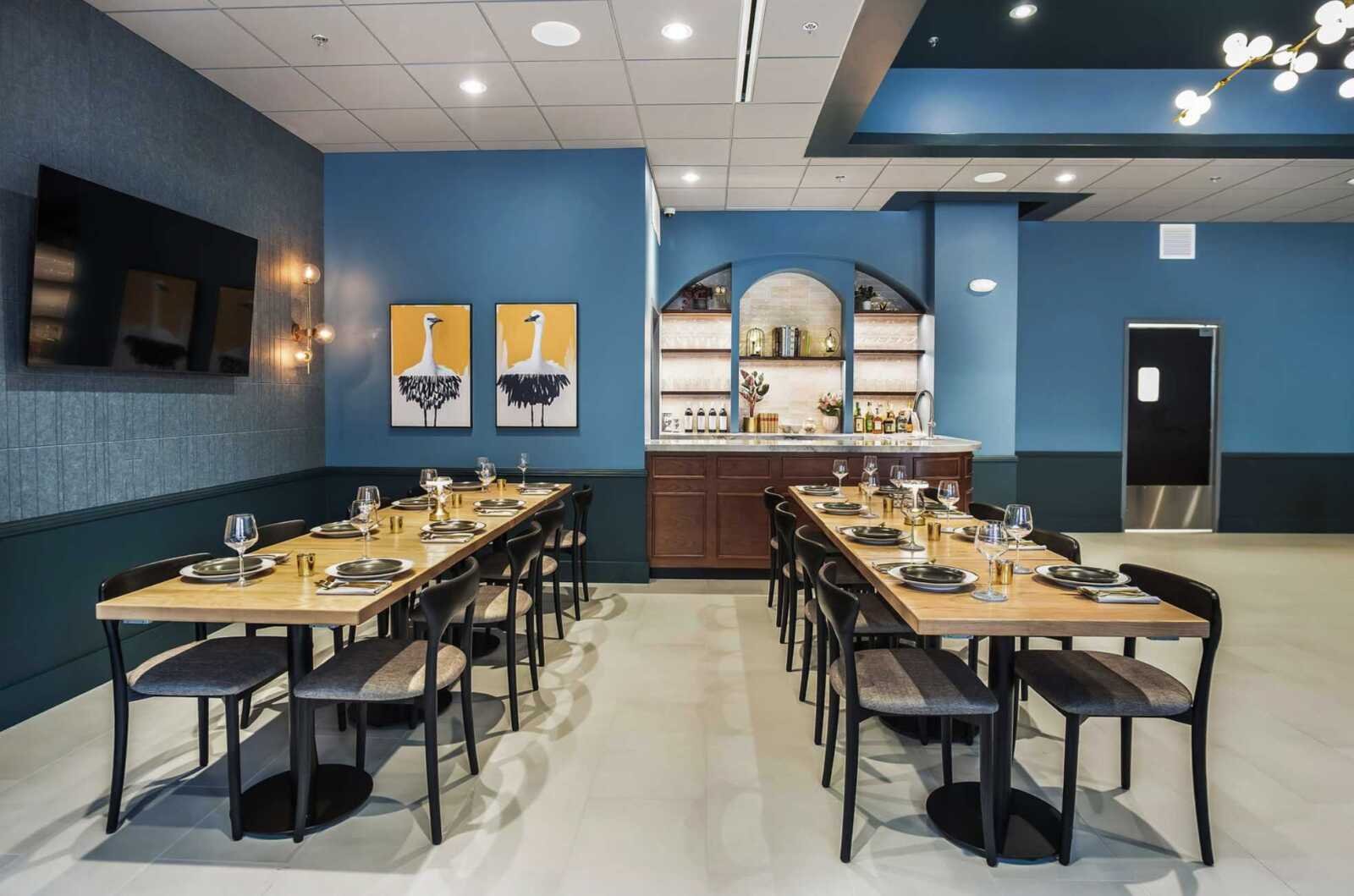
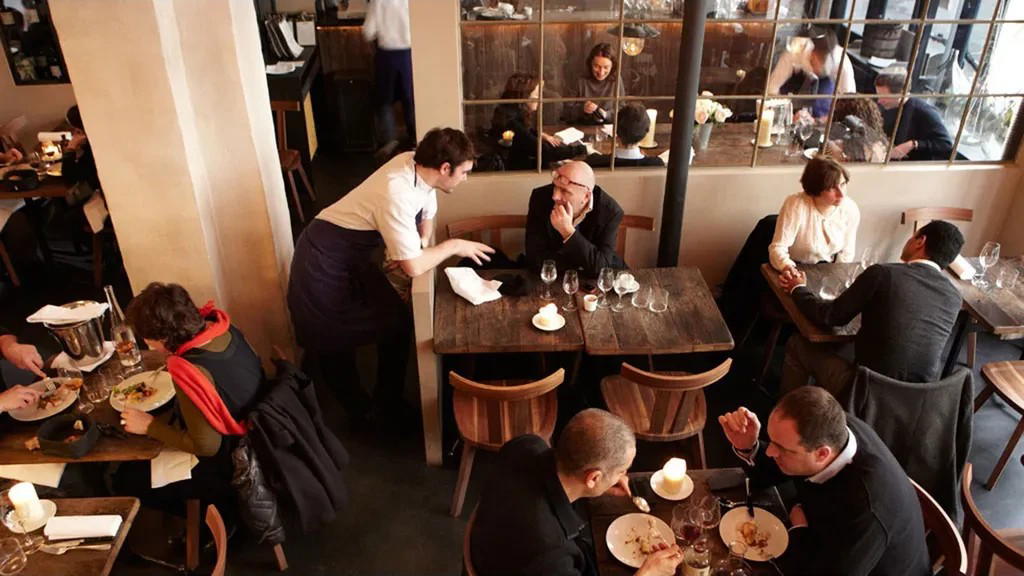
Physical design of the dining room does real work. Twenty-four seats arranged around a horseshoe configuration creates a geometry that suits the tasting menu format well: sightlines across the room allow the front-of-house team to monitor every cover simultaneously without hovering, and the intimate scale means that service adjustments happen quietly rather than theatrically. Tree trunks lining the walls, branches overhead, dusky green paint, ceramic tile floors, and stacked jars give the room a texture that reads as considered rather than styled. The 'nest' reference is literal rather than metaphorical, which tends to produce more coherent results than the reverse.
Nest Cellar bar operates as a walk-in overflow when tables are available, which serves two functions: it extends the restaurant's revenue window beyond its booked-out dining room, and it gives the neighbourhood a low-commitment entry point to a kitchen that is otherwise fully committed to the tasting menu format. This is a sensible piece of design for an East London address where the walk-in bar culture is more established than it is in the West End.
The Menu in Context
11-course tasting menu at £90 contracts to seven courses at £70 for midweek dinners and lunches. That flexibility is worth noting in the context of London's tasting menu market. At the starred level, The Ritz Restaurant and the rooms occupying the ££££ bracket, there is little appetite for tiered formats, and the cover price is fixed regardless of day or time. Nest's midweek reduction is a practical concession to the economics of an EC1 postcode and the reality that its clientele skews toward local professionals rather than expense-account visitors.
Thematic approach to each iteration produces menus where contrasts are deliberate and creative rather than incidental. Documented dishes from the 'Sea & Coastline' edition illustrate the kitchen's method: barbecued kale against St Austell mussels; poached cod in dialogue with yuzu kosho; grey mullet crudo with sansho peppercorn and fig. These are not combinations assembled for novelty alone, they are evidence of a kitchen working with flavour logic that crosses culinary boundaries without abandoning coherence. The soda bread with cultured butter, and a custard tart with preserved elderflower ice cream, indicated that the kitchen knows when to step outside its own thematic frame and when to commit fully to it.
For comparison, the format-led Modern British rooms that draw the most attention in the wider UK context, L'Enclume in Cartmel, Moor Hall in Aughton, The Fat Duck in Bray, operate at price points and with resource bases that are not comparable to a 24-seat room on Old Street. Closer in scope and ambition are Hide and Fox in Saltwood and Ben Wilkinson at The Pass in Horsham, both Michelin Plate holders working in the same register. Nest's Michelin Plate recognition in consecutive years positions it clearly within that cohort of kitchens producing careful, well-framed cooking without yet reaching the starred tier.
Rooms at Gidleigh Park in Chagford, Hand and Flowers in Marlow, and Le Manoir aux Quat' Saisons in Great Milton represent a different strand of the Modern British tradition, one grounded in country house formality and long-established reputations. Nest is emphatically not that. Its identity is urban, collaborative, and structured around a repeating format that demands new thinking every quarter.
The Team Dynamic in Practice
The collaboration-founded model at Nest produces a service culture that is less hierarchical than the brigade structure of larger, chef-led rooms. In practical terms for the guest, this tends to manifest as front-of-house staff who can speak with genuine knowledge about the kitchen's decisions rather than delivering scripted descriptions. With a 24-seat room cycling through new thematic menus every three months, the front-of-house team is essentially re-briefed on an entirely new set of dishes four times a year. That frequency of change rewards the kind of engaged, invested service approach that a collaborative founding structure tends to produce.
At a 24-seat capacity, sustaining that score across a meaningful review sample requires repeatability, not just occasional excellence.
Explore our full London restaurants guide, our full London hotels guide, our full London bars guide, our full London wineries guide, and our full London experiences guide for further planning across the city.
Know Before You Go
- Address: 374–378 Old St, London EC1V 9LT
- Cuisine: Modern British (rotating seasonal themes)
- Price range: £££, tasting menus from £70 (seven courses, midweek) to £90 (eleven courses)
- Awards: Michelin Plate 2024, Michelin Plate 2025
- Capacity: 24 covers in the main dining room
- Bar: Nest Cellar walk-in bar available when dining room tables are free
- Menu format: Tasting menu only (11-course or 7-course depending on session)
- Booking: Tables are bookable; Nest Cellar operates as walk-in
Frequently asked questions
at Nest?
Peers You’d Cross-Shop
A small set of peers for context, based on recorded venue fields.
| Venue | Cuisine | Price | Awards | Notes |
|---|---|---|---|---|
| NestThis venue (the venue you are viewing) | Modern British Seasonal Tasting Menu | $50–100 | Michelin Plate · The Good Food Guide GFG Very Good | Not listed |
| The Ledbury | Modern British Fine Dining | $300–500 | 3 Michelin Stars · World's 50 Best #42 | Modern European, Modern Cuisine |
| Sketch, The Lecture Room and Library | Modern French Fine Dining | $200–300 | 3 Michelin Stars · World's 50 Best #18 | Modern French |
| CORE by Clare Smyth | Modern British Fine Dining | $150–200 | 3 Michelin Stars · World's 50 Best #97 | Modern British |
| Restaurant Gordon Ramsay | French Fine Dining | $200–300 | 3 Michelin Stars · World's 50 Best #13 | Contemporary European, French |
| Dinner by Heston Blumenthal | Historic British Fine Dining | $200–300 | 2 Michelin Stars · World's 50 Best #45 | Modern British, Traditional British |
Recognition history
Dated appearances from independent guides and award organizations, with the underlying list record or original source where available.
Michelin Plate
Michelin
The Good Food Guide GFG Very Good
The Good Food Guide
Full recognition history (4 entries)
Michelin Plate
Michelin
Michelin Plate
Michelin

Continue exploring
More in London
Restaurants in London
All restaurants in London →
Bars in London
All bars in London →





Details
- Cozy
- Intimate
- Elegant
- Rustic
- Date Night
- Special Occasion
- Celebration
- Open Kitchen
- Wine Cellar
- Craft Cocktails
- Beer Program
- Farm To Table
- Local Sourcing
- Zero Waste
- Tasting Menu
- Set Menu
- Wine
- Craft Beer
- Cocktails
- Allergy Accommodating
Current opening hours
- Monday
- Closed
- Tuesday
- 6–10 PM
- Wednesday
- 6–10 PM
- Thursday
- 6–10 PM
- Friday
- 6–10 PM
- Saturday
- 12–3 PM, 6–10 PM
- Sunday
- Closed
Hours can change for holidays and private events. Hours as of .
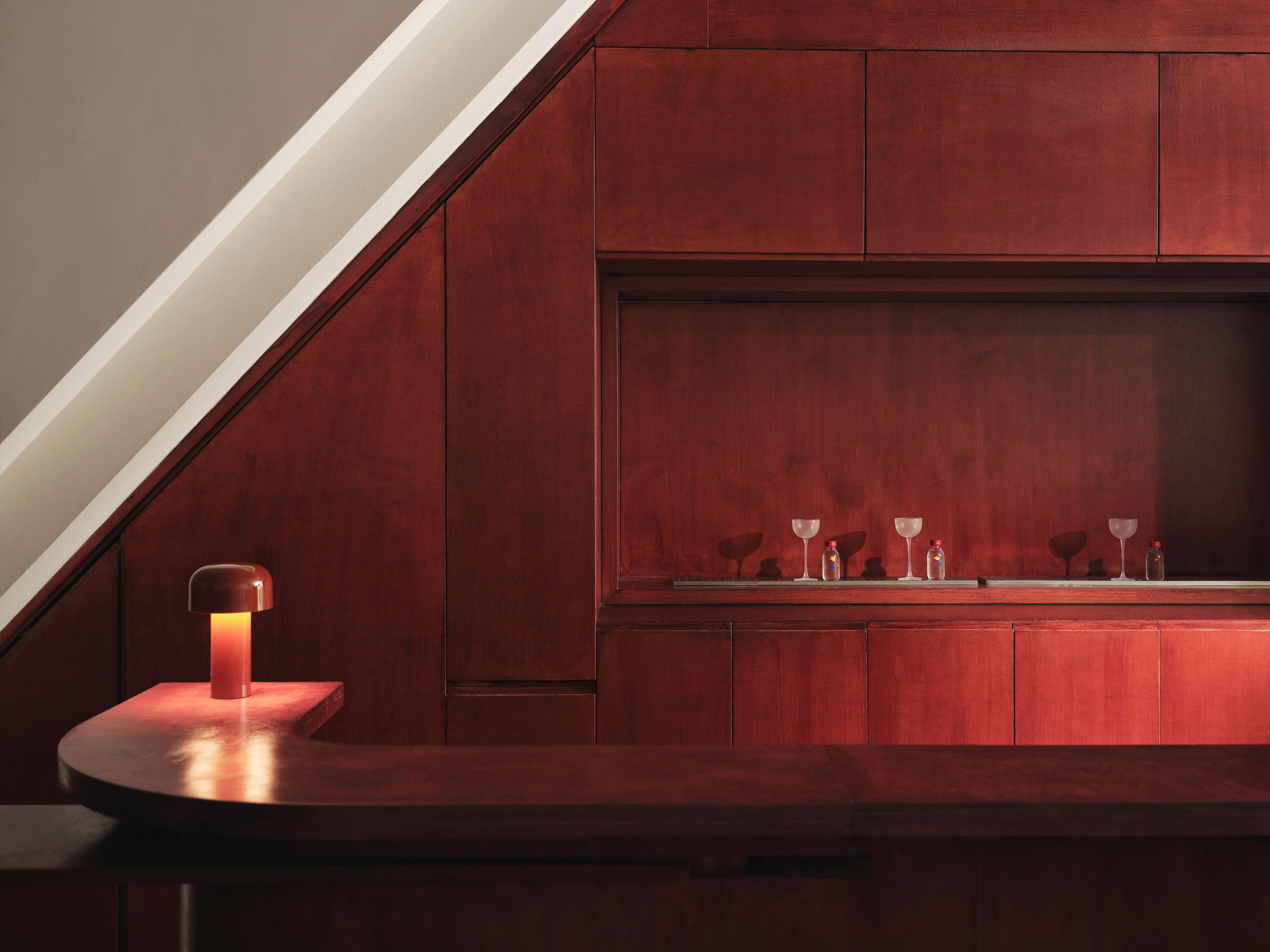
Cosy and intimate with vintage farmhouse décor, hand-made tables, and warm lighting that creates a welcoming yet refined atmosphere.