Tabelog 100 #89
Our verdict
NEPALICO Shibuya ten gives Tokyo’s Nepalese dining scene a practical, sustainability-minded reading: vegetable-forward cooking, vegetarian and Hindu options, and a format that works for lunch, dinner, families, and small groups. Its Tabelog 100 selections for Asian and ethnic cuisine in Tokyo place it among the city’s more credible everyday ethnic tables rather than luxury dining theater.

Pearl is the En Primeur Club membership app, where members save venues, book tables and use the concierge.
The menu
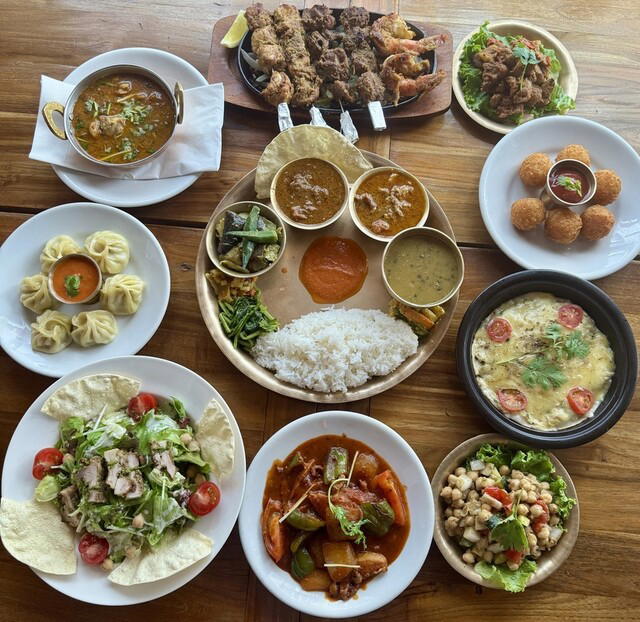
What to order
- Dal bhat set
- Chicken curry dal bhat
- Momo steamed dumplings
- Mix Grill
- Nepali-style gyoza
Tokyo’s dining scene gives office workers, residents, and destination diners many ways to step away from the city’s faster rhythms. Here, Nepalese cooking reads differently from Tokyo’s high-concept tasting rooms. The appeal is not ceremony but balance: spice, warmth, casual pacing, and a rhythm suited to solo lunch, small groups, or longer evenings with drinks.
NEPALICO Shibuya ten belongs to the Tokyo category that rewards consistency over spectacle. Its 2024 Tabelog Hyakumeiten recognition matters in a crowded field, supported by a listed score of 3.69 and a budget range of Dinner: JPY 4,000 - JPY 4,999; Lunch: JPY 1,000 - JPY 1,999. Tokyo has deep South Asian and Himalayan cooking, yet many visitors default to sushi counters, ramen queues, and hotel dining. This restaurant offers a grounded view of how the city eats beyond Japanese cuisine: approachable, weekday-friendly, and useful for diners seeking another register of flavour.
Vegetable-led Nepalese cooking in a curry-heavy city
Tokyo’s curry culture absorbs almost every regional style, from Japanese yoshoku curry to South Asian formats. Nepalese restaurants occupy a distinct lane, often built around spice work, comfort, and everyday ease rather than luxury ingredients. For sustainability-minded diners, that format can feel naturally less showy without turning dinner into a lecture.
The listed categories are more useful than vague ethical claims: Nepalese, dining bar, and curry. They show a restaurant structure that can work for different dining moods, including diners looking beyond meat-led or formal meal formats, without requiring the language of luxury. For Tokyo travelers moving through rich ramen, wagyu, tempura, and late-night drinking food, this table can reset the palate without sacrificing flavour.
The category label also matters: Nepalese, dining bar, and curry. That places the restaurant between casual ethnic dining and a flexible drinking table, with the food program doing the main work rather than ceremony. It is not competing with formal Japanese rooms such as Ryotei Cerulean Tower Sukiya or hotel-adjacent Japanese dining nearby. It sits closer to Tokyo’s democratic restaurant culture, where an award-listed curry or ethnic table can be as useful to a visitor as a reservation-only counter.
For broader Tokyo planning, this stop pairs well with itineraries built across categories rather than prestige alone. EP Club’s Our full Tokyo restaurants guide gives the restaurant context beside Japanese counters, curry specialists, cafés, and casual dining rooms; nearby and related dining can be considered generically alongside the city’s wider range of unnamed curry rooms, cafés, and everyday restaurants.
A Tokyo table for mixed groups, not destination formalwear
The format reads casual rather than severe: a restaurant that can handle a straightforward meal without reducing itself to a solo counter, and one that can also suit relaxed dining decisions without forcing a hushed fine-dining posture. That flexibility is part of the appeal in a city where some serious restaurants ask for more planning, more formality, or more expense.
Practicality matters in Tokyo, where many respected restaurants are small, quiet, or paced for a narrow occasion. Rather than treating NEPALICO Shibuya ten as a luxury room, it is better understood as an approachable city restaurant with enough range to serve different moods. The key is to check the venue’s current channels for practical details before relying on any service feature.
There is also an access story, but it is best kept simple: this is a Tokyo restaurant, and its usefulness comes from fitting into the city rather than demanding a special pilgrimage. That helps a small Nepalese restaurant build repeat local use while also appearing on a citywide recognition list. It is convenient enough for travelers planning around Tokyo dining, but not dependent on spectacle.
Tokyo visitors often over-plan famous names and under-plan recovery meals: lunch after a late bar night, dinner when the group wants something lower-friction, or a meal after a day of trains. NEPALICO Shibuya ten is useful here, offering an easier alternative to high-cost sushi, steak, and hotel restaurants while remaining inside an award-recognized tier of ethnic dining.
Where it fits in a Tokyo food itinerary
The editorial decision is simple: treat this as a serious casual restaurant, not a luxury substitute. Its credibility comes from 2024 Tabelog Hyakumeiten recognition, a clear Nepalese, dining bar, and curry identity, and practical appeal for diners looking beyond the city’s most formal meal structures. The listed price tier keeps it in everyday Tokyo range rather than special-occasion territory, making it easy to slot between formal meals.
Comparison clarifies the choice. Kotaro represents Tokyo’s izakaya grammar; Japanese Cuisine SAKURAGAOKA and Ryotei Cerulean Tower Sukiya speak to Japanese dining in a more formal register; Teppan-yaki SAKURA sits in a different protein-led category. NEPALICO Shibuya ten answers another question: where to eat when the city’s premium dining circuit feels too narrow, too meat-heavy, or too structured.
For adjacent planning, use Our full Tokyo hotels guide, Our full Tokyo bars guide, Our full Tokyo wineries guide, and Our full Tokyo experiences guide; for international perspective, consider the broader idea of casual Japanese-format dining rather than treating any single outside comparison as a direct peer.
The sustainability angle is not polished rhetoric. It is a cuisine category where spice, comfort, and everyday formats can carry the meal; a structure that can accommodate different appetites; and a Tokyo setting serving everyday use rather than only occasion dining. In a city where premium eating can become an endurance sport, that restraint has real value.
Frequently asked questions
Is NEPALICO Shibuya ten a family-friendly restaurant?
NEPALICO Shibuya ten is best understood as an approachable Tokyo restaurant rather than a formal destination room. Check the venue's official channels for the latest practical details before visiting.
How would you describe the vibe at NEPALICO Shibuya ten?
It reads as a casual Tokyo dining bar with a Nepalese and curry focus rather than a formal Nepalese room. The appeal is practical, flavour-led, and well suited to diners looking for an easier counterpoint to the city’s more structured premium meals.
What price level is NEPALICO Shibuya ten?
Pricing at NEPALICO Shibuya ten is listed as Dinner: JPY 4,000 - JPY 4,999; Lunch: JPY 1,000 - JPY 1,999.
What are the opening hours for NEPALICO Shibuya ten?
Current opening hours are not provided in the verified venue facts here. Check the venue's official channels for the latest schedule.
How do I find NEPALICO Shibuya ten?
NEPALICO Shibuya ten is located in Tokyo.
Fast Comparison
Comparable venues for orientation by cuisine and category.
| Venue | Cuisine | Price | Awards | Notes |
|---|---|---|---|---|
| NEPALICO Shibuya tenThis venue (the venue you are viewing) | Traditional Nepalese soul food & curry | $30–50 | Tabelog 100 #89 | Not listed |
| STREAMER COFFEE COMPANY SHIBUYA | Specialty coffee café | $10–20 | Tabelog 100 #3 | Shibuya |
| THEOBROMA | Artisan Chocolatier & Café | $10–20 | Tabelog 100 #78 | Shinjuku |
| Fruits de Saison | Seasonal Fruit Parlor & Cafe | $20–30 | Tabelog 100 #100 | Chiyoda |
| The Auditorium | Japanese Whisky & Cocktail Bar | $20–30 | Not listed | Taitō |
| SERENDIB | Sri Lankan Restaurant & Bar | $10–20 | Tabelog 100 #62 | Taitō |
Recognition history
Dated appearances from independent guides and award organizations, with the underlying list record or original source where available.
Tabelog 100 #89 · No. 89
Tabelog · Tabelog 100 - Asian cuisine / Ethnic cuisine - TOKYO - 2024