Nay Palad Hideaway
Nay Palad Hideaway sits on Siargao Island's quieter edge, where the Surigao Sea supplies the table almost directly. The property operates as a closed, all-inclusive retreat in General Luna, placing it in a small tier of Philippine island stays where the dining experience is inseparable from the land and water surrounding it. For travelers who want remoteness without sacrifice, it sits in a compelling comparable set.
Pearl is the En Primeur Club membership app — saves, bookings, and concierge access live there. Same editors, same standards.
- Address
- Malinao Rd, General Luna, Surigao del Norte, Philippines
- Phone
- +639177017840
- Website
- naypaladhideaway.com
- Directions
- Get directions
 Saves & bookings on Pearl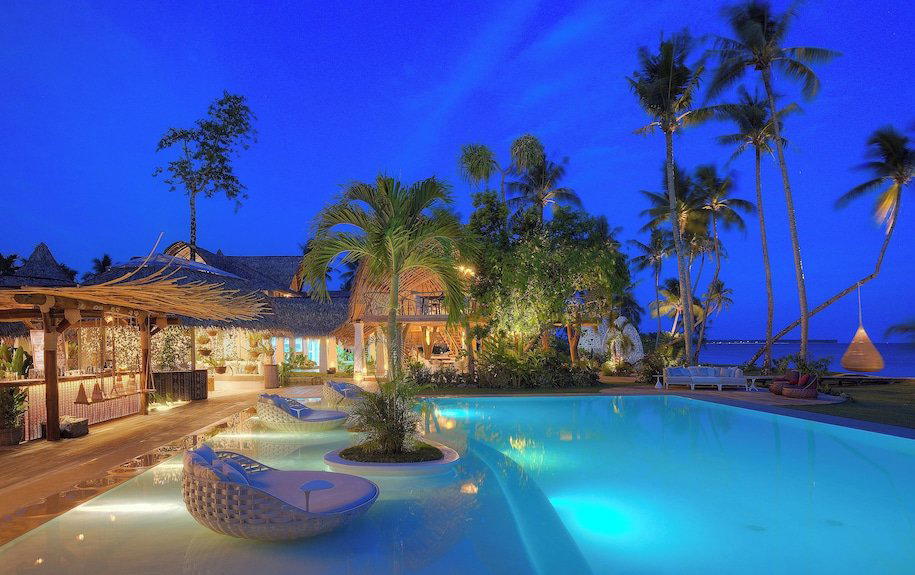
Where the Source Is the Setting
On Siargao Island, the distance between ocean and plate is sometimes measured in minutes rather than miles. Nay Palad Hideaway, positioned along Malinao Road in General Luna, sits within that tight loop. The property's configuration as a private, all-inclusive hideaway places dining firmly at the center of the stay rather than as an ancillary service. The surrounding waters of Surigao del Norte are among the more productive in the country for fish and shellfish, and that geographic fact shapes what arrives at the table more than any menu philosophy.
General Luna has long been the commercial and social anchor of Siargao, drawing surfers to Cloud 9 and feeding a small but growing food scene. Nay Palad operates at a deliberate remove from that energy, functioning as a self-contained world where guests are unlikely to wander off-property for meals. That insularity, common to the global category of ultra-private island retreats, means the kitchen carries more responsibility than it would in an urban dining context. The sourcing story is a logistical reality. Supply chains to a small island require either rigorous local procurement or expensive, fragile cold-chain logistics. Properties at this tier tend to solve that problem by committing to the former.
The Sourcing Logic of Island Kitchens
The broader Philippine archipelago has one of the world's most geographically complex food supply systems. More than 7,600 islands mean that what is local to one province is effectively imported to the next. In Surigao del Norte, the sea is the dominant larder. The Mindanao Sea and the Philippine Sea converge near this region, producing strong currents that sustain rich marine biodiversity. Whole fish, shellfish, and cephalopods from these waters represent the kitchen's most credible sourcing claim, in the same way that island retreats in the Maldives or French Polynesia anchor their menus to the reef rather than flying in protein from the mainland.
This pattern, where the dining program is constrained and defined by geography, produces a different kind of menu discipline than you find at destination restaurants in Manila. Compared to urban modern Filipino programs like Hapag in Makati or Gallery By Chele in Manila, which draw from the full breadth of Philippine regional ingredients and apply contemporary technique, an island hideaway kitchen operates within tighter constraints. Those constraints, when handled well, produce focus rather than limitation. The ingredient list is shorter, but the relationship between kitchen and supplier is often more direct and more legible to the guest.
Within the Philippines, the all-inclusive island retreat format remains a small segment. Properties like Balesin Dining Room in Polillo operate in a similar structural category, where dining is embedded in a private island stay and the sourcing radius is defined by surrounding water. That comparable set is worth understanding when evaluating Nay Palad: the comparison is not with General Luna's street-food stalls or casual surf-town restaurants, but with a handful of Philippine island properties where the all-in price reflects a total experience rather than individual meal covers.
Arriving and Orienting
Siargao is accessed via Sayak Airport, which receives flights from Manila and Cebu. General Luna sits roughly thirty minutes from the airport by road, placing Nay Palad at a manageable distance from arrival without erasing the sense of remove. The island's infrastructure has improved considerably over the past decade, driven by the surf tourism economy and subsequent hospitality investment, but it remains genuinely island-paced. Guests arriving expecting seamless urban-resort efficiency will recalibrate; those arriving with the right expectation will find the slower tempo is part of what they have paid for.
The property's position on Malinao Road places it within the General Luna municipality without being embedded in its commercial strip. That separation is intentional at properties of this type: the physical buffer between hideaway and town functions as part of the product.
How This Fits the Wider Philippine Dining Conversation
The past decade has produced serious critical attention on Philippine cuisine at both the fine-dining and regional levels. Restaurants like Linamnam in Parañaque and Hapag in Makati have built internationally recognized programs around Filipino ingredient identity. At the other end of the accessibility spectrum, national chains like Gerry's Grill and Jollibee represent the everyday infrastructure of Filipino dining across the archipelago. Island hideaway kitchens sit outside both of those frames. They are neither fine-dining destinations in the urban critical sense nor accessible everyday eateries. Their authority comes from place and proximity rather than technique or scale.
That positioning creates a specific kind of value proposition. A guest at Nay Palad is not primarily paying for culinary innovation. They are paying for the condition of eating well in a place that is genuinely difficult to reach and where the food supply chain is honest about its geography. That is a different promise than what drives the critical conversation around Asador Alfonso in Cavite or the tasting menus at urban modern Filipino tables, and it should be evaluated on those terms.
For travelers who want a reference point outside the Philippines, the structural logic of Nay Palad is closer to small-scale private island retreats in Southeast Asia than to the technically ambitious restaurants receiving international recognition. The dining experience is calibrated to the stay, not the other way around, and the sourcing story is one compelling editorial thread running through the property's food program.
Planning Your Stay
Because Nay Palad operates as an all-inclusive retreat, booking the accommodation is effectively booking the dining experience simultaneously. The property is not a standalone restaurant open to outside guests in the conventional sense. Travelers should approach it as a total stay rather than a meal destination. Siargao's peak season runs broadly from March through October. Shoulder months offer quieter conditions and, at a self-contained property, little practical difference in experience. Given the limited capacity typical of hideaways in this format, advance planning is advisable rather than a late decision.
How It Stacks Up
Comparable venues nearby, for context on price, style, and recognition.
| Venue | Cuisine | Price | Awards | Notes |
|---|---|---|---|---|
| Nay Palad HideawayThis venue — the venue you are viewing | Farm-to-Table Fusion | $$$$ | Not listed | Not listed |
| Agni by Mantra | Modern Regional Indian | $$$ | Not listed | Makati |
| Dip | Nikkei Peruvian-Japanese Fusion | $$$$ | Not listed | Punta Engaño |
| Picnic Grove | International Beachside Dining | $$ | Not listed | Long Beach |
| DIP | Nikkei (Japanese-Peruvian Fusion) | $$$ | Michelin Plate | Mactan Island |
| Sariwon | Authentic Korean Barbecue | $$$ | Not listed | Bonifacio Global City |
Continue exploring
More in General Luna
Hotels in General Luna
Browse all →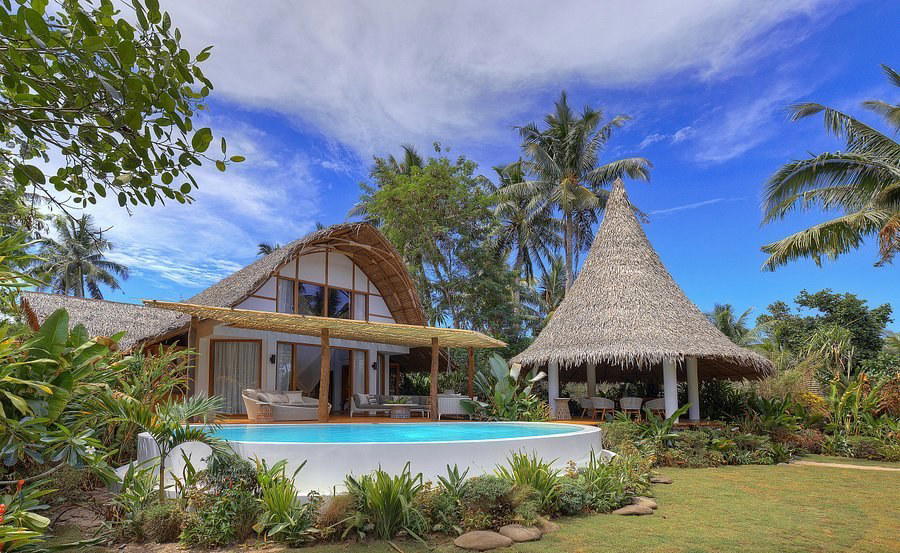
At a Glance
- Romantic
- Intimate
- Elegant
- Scenic
- Ornate
- Date Night
- Special Occasion
- Waterfront
- Garden
- Open Kitchen
- Hotel Restaurant
- Craft Cocktails
- Farm To Table
- Local Sourcing
- Organic
- Sustainable Seafood
- Waterfront
- Garden
Peaceful open-air space with sea views, lantern-lit gardens, and a serene barefoot luxury atmosphere.