
Tabelog Silver #7
Our verdict
A nine-seat counter in Hakata Ward, Narayamachi Ao holds Tabelog Silver for 2025 and 2026 and a score of 4.40 — placing it among Fukuoka's most-cited innovative restaurants. Dinner courses run JPY 30,000–39,999, reservations are by appointment only, and the restaurant is fully booked through the end of 2026.

Pearl is the En Primeur Club membership app — saves, bookings, and concierge access live there. Same editors, same standards.
The menu
What to order
- Black Manjū
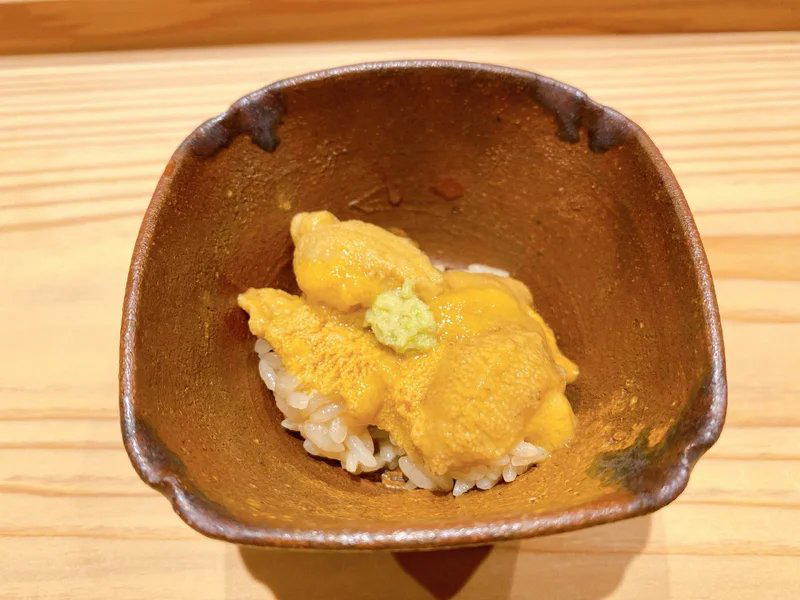
- White Asparagus Mousse with Murasaki Uni
A Counter in Hakata Where the Booking List Tells the Story
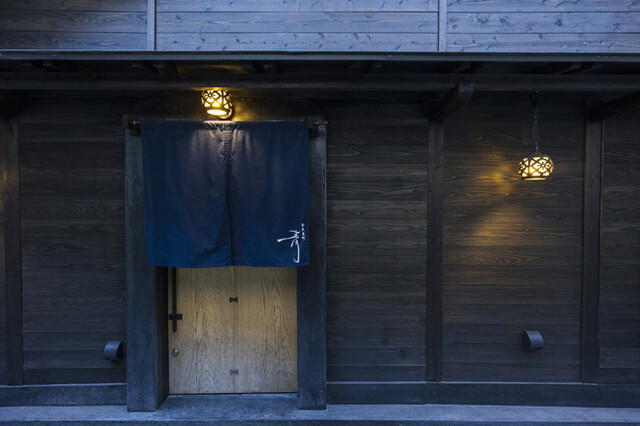
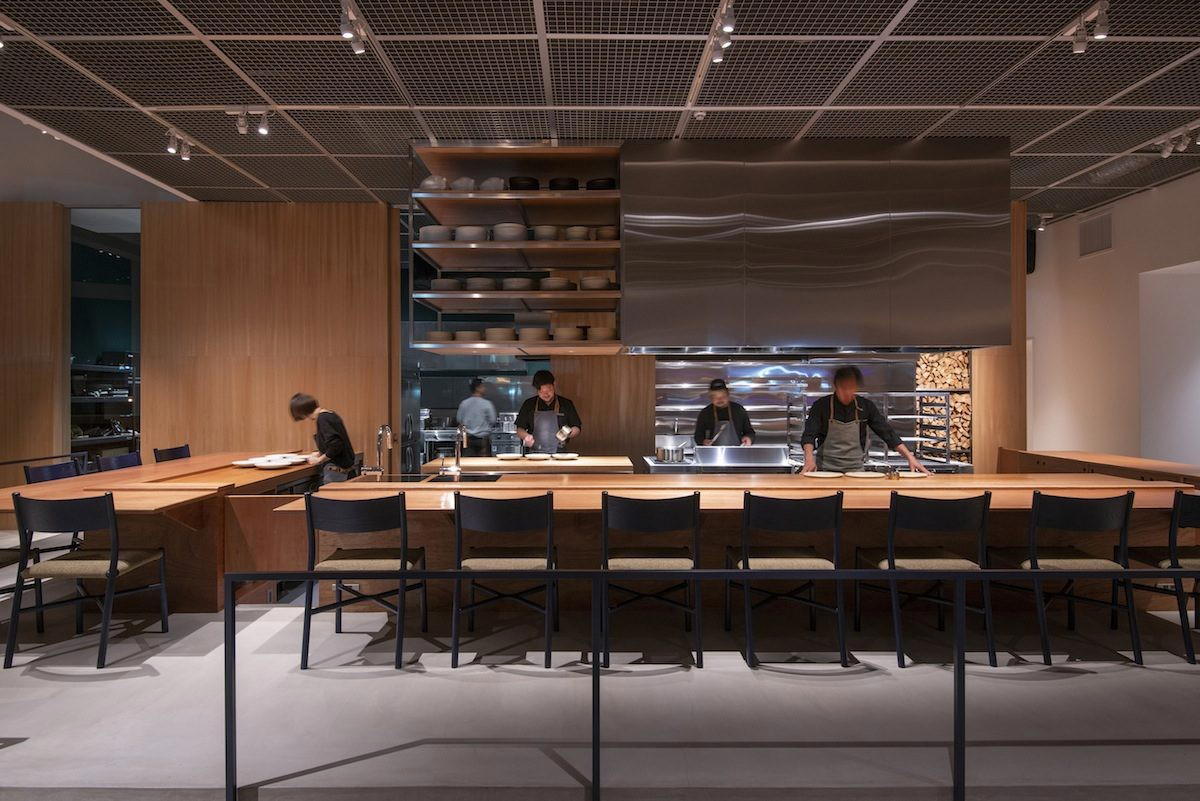
Fukuoka's most serious dining rooms tend to be small, quiet, and structurally indifferent to foot traffic. Narayamachi Ao, a nine-seat counter in the Narayamachi district of Hakata Ward, sits at the far end of that tendency. Course meals begin at 18:00 and the room operates on reservation only. As of 2025, the restaurant is fully booked through the end of 2026 — a detail that, more than any award, communicates the level of demand that has built around this address over six years of operation.
The neighbourhood itself is a short walk from Nakasu-Kawabata Station, sitting between the commerce of Tenjin and the denser residential fabric closer to the port. It is not a destination strip. Restaurants that draw serious diners to this part of Hakata do so on word of mouth and accumulated critical recognition, not on ambient foot traffic or proximity to tourist infrastructure. That dynamic tends to produce tighter, more deliberate cooking environments, where the format serves the food rather than the other way around.
Innovative Japanese in Fukuoka's Competitive Tier
Japan's innovative cuisine category has become one of the more contested in Tabelog's ranking structure, partly because the designation covers significant ground: from omakase counters that layer French technique over Japanese ingredients, to concept-driven tasting menus that move across continental references within a single course. Within Fukuoka specifically, a handful of counters operate at the JPY 30,000-plus dinner tier alongside Ao, including Goh (French) and Bekk — restaurants that approach the same price point from distinct genre positions. Ao's classification as both innovative and Japanese Cuisine signals a specific positioning: rooted in Japanese culinary logic, but not confined by it.
For comparison, Fukuoka's more traditional counter formats, represented at the other end of the cuisine spectrum by establishments like Chikamatsu (Sushi) and Chiso Nakamura, operate within more codified genre constraints. The innovative category gives a kitchen more compositional latitude, and the consistent award history at Ao suggests that latitude has been used with discipline rather than diffused across too many influences. Asago represents another reference point in the city's broader dining circuit worth tracking alongside Ao for anyone building a Fukuoka itinerary from scratch.
The Award Trajectory: Five Years of Upward Recognition
Narayamachi Ao opened on 21 June 2019 and entered the Tabelog award structure almost immediately. The progression is legible: Bronze in 2022, 2023, and 2024, followed by Silver in 2025 and 2026. A Tabelog score of 4.40 and inclusion in the Tabelog Innovative/Creative Cuisine 100 for 2025 further confirm the restaurant's position within a small national cohort of recognised innovative counters, not just within Fukuoka's city limits.
To contextualise that trajectory against national peers: Tabelog Silver in the innovative category places Ao in proximity to restaurants operating at similar recognition tiers in other Japanese cities. HAJIME in Osaka and Gion Sasaki in Kyoto anchor the Kansai end of this conversation, while Harutaka in Tokyo represents the capital's own version of the tightly controlled omakase counter that accrues recognition incrementally over multiple years. The pattern is consistent: small-format counters with a fixed course structure and reservation-only models tend to accumulate Tabelog recognition more slowly but more durably than larger, more commercially oriented formats. Ao's five-year arc fits that pattern precisely.
Internationally, the structural parallel is clear in venues like Atomix in New York City, where a counter format and tightly controlled booking discipline translate into sustained critical standing, or Le Bernardin in New York City, where decades of accumulated recognition produce a booking environment that operates on its own terms. The underlying principle across all of these formats is the same: when seats are genuinely scarce and the product is consistent, the reservation itself becomes the primary trust signal.
On Sustainability and Sourcing in the Innovative Counter Format
Fukuoka's position as Kyushu's largest city gives it unusual access to the island's agricultural and marine produce. Kyushu's farming regions supply vegetables, pork, and grain to markets across Japan, while the surrounding seas, the Genkai Sea to the north, Ariake Bay to the east, produce some of the country's most cited seafood. For an innovative counter in Hakata Ward, that proximity is a structural advantage that the most considered kitchens in this category tend to use deliberately.
In the broader context of Japan's innovative dining scene, the shift toward waste-conscious practice and shorter supply chains has become a distinguishing feature of counters that hold serious critical standing. The nine-seat format at venues like Ao is itself a form of resource discipline: smaller seat counts allow a kitchen to source more precisely, reduce over-preparation waste, and maintain tighter control over ingredient quality across every course. A counter that seats nine can work with smaller quantities from a single producer or a specific daily catch in ways that a fifty-seat restaurant cannot. That structural relationship between scale and sourcing is one reason the small-counter format has become the dominant model for serious innovative cuisine in Japan.
The no-smoking environment, the absence of private rooms, and the single-counter format all reinforce an experience designed around the food itself rather than around hospitality additions. Restaurants in this category that have built durable reputations across Japan, including akordu in Nara and 1000 in Yokohama, tend to share that minimalist operational profile. 6 in Okinawa takes the model even further toward regional produce specificity. In each case, the constraint is the point: removing operational complexity focuses attention on what the kitchen is actually producing.
Planning a Visit: What to Know Before You Try to Book
The most important practical fact about Narayamachi Ao is the one stated on the restaurant's own listings: the venue is fully booked through the end of 2026, and reservations for 2027 and beyond are not currently being accepted. That single line should frame any planning conversation. The website is narayamachiao.com and the listed phone number is +81-92-272-2400, but contacting the restaurant before reservation windows open is unlikely to produce a result. The practical approach is to monitor the website directly for any announcement of 2027 booking openings.
When bookings do become available, the format to expect is a dinner-only counter course beginning at 18:00, priced in the JPY 30,000 to JPY 39,999 range per person. A 10% service charge is added to the bill. Credit cards are accepted; electronic money and QR code payment are not. The nine-seat counter is the entirety of the room, there are no private dining options, though the full space can be reserved for private use as a group. Parking is unavailable on-site, which is standard for this part of Hakata. The five-minute walk from Nakasu-Kawabata Station makes the approach direct by subway.
For those building a broader Fukuoka dining programme around a visit, the full Fukuoka restaurants guide covers the city's range across categories and price tiers. The Fukuoka hotels guide addresses where to stay relative to Hakata's dining districts, and the Fukuoka bars guide covers the city's drinking scene for evenings that don't begin at a counter. The Fukuoka experiences guide and Fukuoka wineries guide round out the city's broader offering for visitors spending more than two nights in Kyushu.
Frequently asked questions
Is Narayamachi Ao award-winning?
Narayamachi Ao has received recognition including: {"Year":"2026","Award Source":"Tabelog","Award Type":"The Tabelog Award","Award Group":"silver","Award Group Rank":"7","Restaurant Name":"Narayamachi Ao","Score":"4.40","Budget":"Dinner: JPY 30,000 - JPY 39,999; Lunch: -","Budget Dinner":"J….
Where do I go for Narayamachi Ao?
Narayamachi Ao is located at Japan, 〒812-0023 Fukuoka, Hakata Ward, Narayamachi, 4丁目11−3, Fukuoka.
What's the best thing to order at Narayamachi Ao?
Narayamachi Ao operates as a reservation-only counter with a single course format starting at 18:00, so there is no à la carte selection. Every guest receives the same course, priced in the JPY 30,000–39,999 range before a 10% service charge. The kitchen's Tabelog category is listed as Innovative/Creative Cuisine, which at this price tier and scoring level (4.40) typically means the course itself is the defining statement.
Do they take walk-ins at Narayamachi Ao?
No. Narayamachi Ao is reservation-only and, as of current listings, is fully booked through the end of 2026, with reservations for 2027 not yet being accepted. The nine-seat counter format leaves no capacity for speculative visits. Contact via the venue's website at narayamachiao.com or phone +81-92-272-2400 to monitor availability.
What has Narayamachi Ao built its reputation on?
A consistent upward trajectory on Tabelog tells a clear story: Bronze in 2022, 2023, and 2024, then Silver in both 2025 and 2026, alongside selection for the Tabelog Innovative/Creative Cuisine Top 100 in 2025. The venue holds a score of 4.40 from the Tabelog community, placing it among Fukuoka's most closely tracked counters in the innovative category. The nine-seat format and dinner-only structure position it firmly in the intimate, course-led tier of Japanese creative dining.
Standing Among Peers
Comparable venues nearby, for context on price, style, and recognition.
| Venue | Cuisine | Price | Awards | Notes |
|---|---|---|---|---|
| Narayamachi AoThis venue (the venue you are viewing) | Modern Japanese Omakase with French Infusion | $300–500 | Tabelog Silver #7 | Not listed |
| 鮨おさむ | Traditional Japanese Omakase Sushi | $150–200 | Tabelog Bronze #342 | Takamiya |
| Tempura Tanaka | Tempura Omakase Counter | $100–150 | Tabelog 100 #96 | Chūō |
| Imoto | Modern Kyoto Kaiseki | $200–300 | Tabelog Bronze #133 | Chūō |
| torila | Yakitori | Not listed | Tabelog Bronze #471 | Chūō |
| Teppanyaki Sazanka | Teppanyaki & Wagyu at Hotel Okura Fukuoka | $100–150 | Tabelog 100 #97 | Hakata |
Recognition history
Dated appearances from independent guides and award organizations, with the underlying list record or original source where available.
Tabelog Silver #7
Tabelog
Full recognition history (2 entries)
Tabelog 100 #16 · No. 16
Tabelog · Tabelog 100 - Innovative / Creative cuisine - 2025
Continue exploring
More in Fukuoka
Restaurants in Fukuoka
All restaurants in Fukuoka →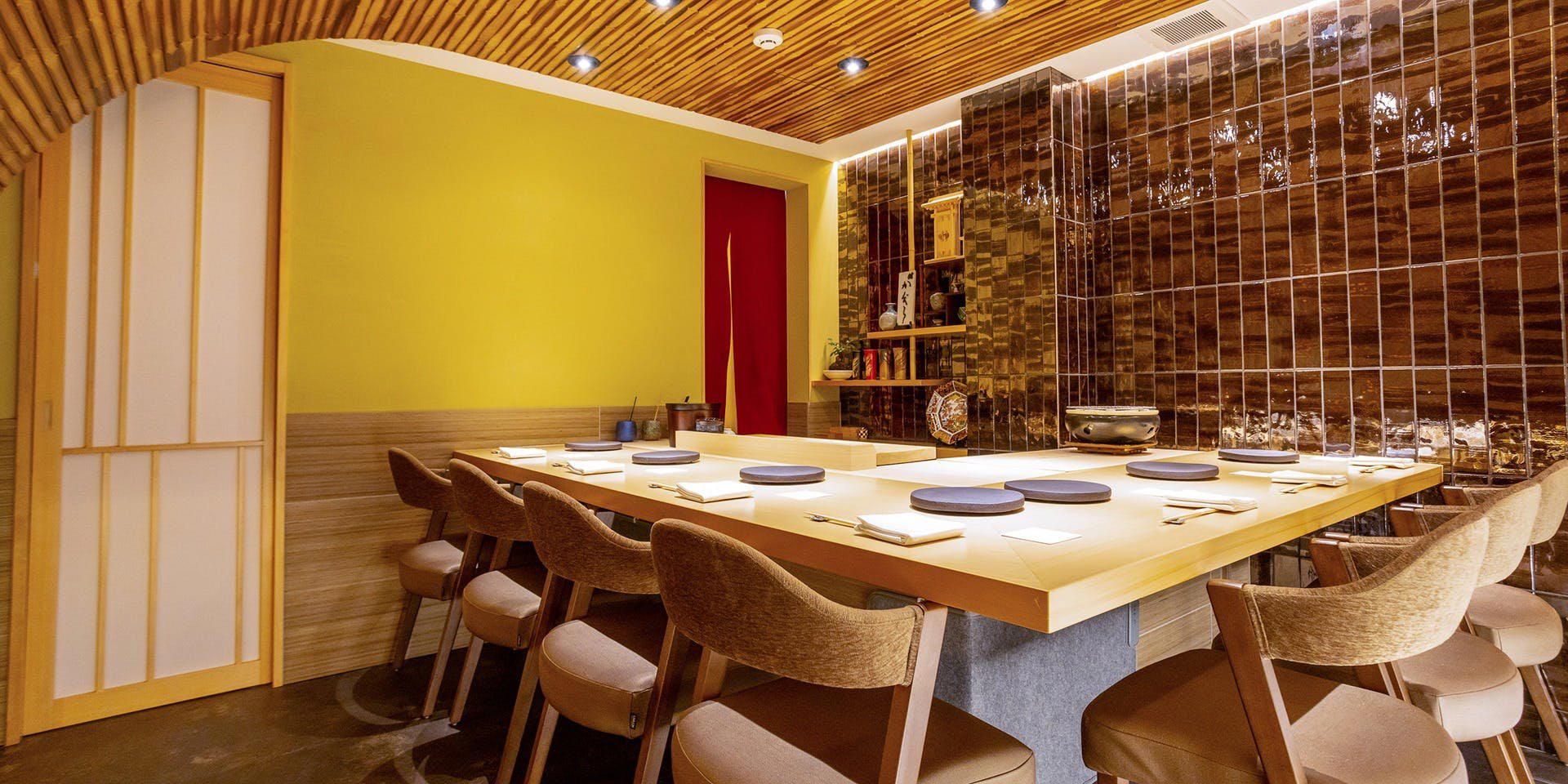
Details
- Quiet
- Elegant
- Minimalist
- Intimate
- Sophisticated
- Special Occasion
- Date Night
- Chefs Counter
- Open Kitchen
- Historic Building
- Sake Program
- Local Sourcing
- Omakase
- Tasting Menu
- Counter Dining
- Sake Program
Subtle lighting highlights the wide wooden counter and open kitchen, creating a refined, focused atmosphere of quiet tension and warmth in a minimalist space.