
The Jiading District outpost of a Shanghai institution that predates the People's Republic, Nanxiang Steamed Bun holds a 2025 Michelin Bib Gourmand and prices at the lowest end of the city's recognised dim sum spectrum. The xiao long bao here are the reference point against which much of Shanghai's steamed-bun tradition is measured, served in a neighbourhood setting far removed from the tourist-dense Yu Garden original.
Pearl is the En Primeur Club membership app — saves, bookings, and concierge access live there. Same editors, same standards.
- Address
- China, Shanghai, Jiading District, 解放街129号
- Phone
- +86 21 6355 4206
- Directions
- Get directions
 Saves & bookings on Pearl
Steam, Dough, and the Weight of a City's Appetite
Before you reach the counter, the signal arrives through the door: warm, yeasty air carrying the faint sweetness of pork broth under pressure. Jiading's Jiefang Street is not a dining destination in the way that Xintiandi or the Bund waterfront are destinations. It is a working district street in a working district, and that is precisely the context that makes the Nanxiang Steamed Bun outpost here worth understanding. The queue, when it forms, is local. The price point keeps it that way.
Shanghai's xiao long bao tradition is one of the more documented and frequently debated in Chinese culinary history. The xiaolongbao, thin-skinned, soup-filled, pleated at the crown, emerged from Nanxiang town, now absorbed into Jiading District, in the late Qing dynasty. The Nanxiang brand has carried that origin story forward for well over a century, and the 2025 Michelin Bib Gourmand recognition formalises what local consensus had long accepted: that among budget-tier steamed bun operations, this is a standout.
The Sensory Architecture of a Steamed Bun Counter
Dim sum at the budget end of the Shanghai market operates through repetition and precision. The visual vocabulary at a counter like this one is consistent: bamboo steamers stacked four or five high, condensation beading on their lids, the faint percussion of chopsticks against ceramic, and the particular silence of diners concentrating. There is no ambient music, no curated lighting scheme. The atmosphere is entirely functional, which is its own form of integrity.
The xiao long bao format demands a specific eating discipline. Bite too fast and the broth scalds. Wait too long and the skin toughens against the bamboo. This is not food that rewards distraction, and the experience of eating it properly, tilting the dumpling onto a ceramic spoon, puncturing the skin carefully, drawing the broth first, is one of the more instructive encounters in Shanghai's street-level food culture. Comparable formats exist across the region: Bao Teck Tea House, Dim Sum in George Town represents the Malaysian iteration of similar bamboo-steamer service culture, and Hongtu Hall, Dim Sum in Guangzhou operates within the Cantonese yum cha tradition that shares the steamer format but diverges sharply on filling philosophy.
Michelin Bib Gourmand and What It Actually Signals
The Bib Gourmand category, awarded in the 2025 Shanghai Michelin Guide, is Michelin's explicit recognition of quality at a price point below the starred tier. It does not imply fine-dining complexity or tasting-menu ambition. What it confirms, in the case of a single-dish specialist operating on the ¥ tier, is consistency and technical merit within a defined and narrow register. For a venue where the price per person rarely exceeds what a coffee costs at a mid-range café, that recognition carries particular weight.
Across the wider Shanghai dim sum and dumpling market, the price and format spectrum is broad. Qiao Ai Lai Lai Xiao Long (Huangpu) operates in a comparable steamed-bun format, while 102 House (Cantonese) and Wu You Xian address different registers of Chinese dining in the same city. At the affordable end of the spectrum, Bib Gourmand status is one of the few externally verifiable signals available to first-time visitors who lack the local knowledge to distinguish between competing counters on instinct alone.
The Jiading Location in Context
Nanxiang Steamed Bun (Yuyuan Road) is the version most international visitors encounter, surrounded by the tourist infrastructure of the Old City. The Jiading District address at Jiefang Street 129 operates closer to the restaurant's geographic origin and draws a substantially different clientele. Jiading is accessible by Metro Line 11, which connects it to central Shanghai, but the journey takes time, around 45 to 50 minutes from People's Square, and that travel cost filters the audience toward those with a specific reason to make the trip rather than visitors filling an afternoon.
That distance is not a deterrent for the food-focused traveller. It is, if anything, a quality signal. The absence of tourist-menu pricing and the presence of a neighbourhood crowd eating the same food in the same way they always have is the kind of atmospheric authenticity that is difficult to manufacture and impossible to preserve once a venue becomes primarily a tourist attraction. Shanghai's food culture at the budget tier is extensive and often documented in local food media without ever surfacing in international hotel concierge recommendations.
Shanghai's Steamed Bun Tradition in a Regional Frame
The xiao long bao has become shorthand for Shanghai cuisine internationally, in the way that Peking duck operates as shorthand for Beijing or dim sum for Hong Kong-Cantonese tradition. That compression does a disservice to the actual range of Shanghai's food culture, but it does accurately identify the steamed bun as the dish where the city has the deepest and most codified tradition. Shanghai-origin techniques have influenced dumpling culture across mainland China and through diaspora communities in Southeast Asia and beyond.
Within mainland China, the regional differentiation in steamed and braised dim sum formats is considerable. Ru Yuan in Hangzhou sits within a Zhejiang culinary tradition that shares some DNA with Shanghainese cooking but diverges on seasoning profiles and dumpling construction. Restaurants like Xin Rong Ji (Xinyuan South Road) in Beijing and Xin Rong Ji in Chengdu represent the eastward and westward dispersal of Ningbo-Zhejiang cooking styles. The Cantonese model, as seen in venues like Imperial Treasure Fine Chinese Cuisine in Guangzhou and Dai Yuet Heen in Nanjing, operates on a different set of technical and aesthetic assumptions entirely.
For visitors who want to understand where Nanxiang sits in the broader Shanghai food picture, Da Hu Chun (Middle Sichuan Road) and Hong Yu Fang provide useful counterpoints within the city's affordable heritage-dining tier.
A Pricing-First Comparison
Comparable venues nearby, for context on price, style, and recognition.
| Venue | Cuisine | Price | Awards | Notes |
|---|---|---|---|---|
| Nanxiang Steamed Bun (Yuyuan Road)This venue — the venue you are viewing | Dim Sum | $$ | Bib Gourmand | Not listed |
| Chic 1699 | Huangpu, Authentic Fujian Cuisine | $$ | Bib Gourmand | Not listed |
| Shanghai | Not listed | $$ | Michelin Plate | Huangpu, Shanghai (Haipai) Cuisine |
| Hai Wei Guan (Jingan) | Jing'an, Modern Shanghainese | $$ | Michelin Plate | Not listed |
| Legend Taste (Jingan) | Jing'an, Yunnanese Folk Cuisine | $$ | Michelin Plate | Not listed |
| Hong Yu Fang | Not listed | $$ | Michelin Plate | Lao Ximen, Authentic Shanghainese Dim Sum |
Recognition history
Dated appearances from independent guides and award organizations, with the underlying list record or original source where available.
Michelin Bib Gourmand
Michelin
At a Glance
- Well Known
- Historic
- Lively
- Casual Hangout
- Family
- Historic Building
- Street Scene
Current opening hours
- Monday
- 9 AM–10 PM
- Tuesday
- 9 AM–10 PM
- Wednesday
- 9 AM–10 PM
- Thursday
- 9 AM–10 PM
- Friday
- 9 AM–10 PM
- Saturday
- 9 AM–10 PM
- Sunday
- 9 AM–10 PM
Hours can change for holidays and private events. Last verified .
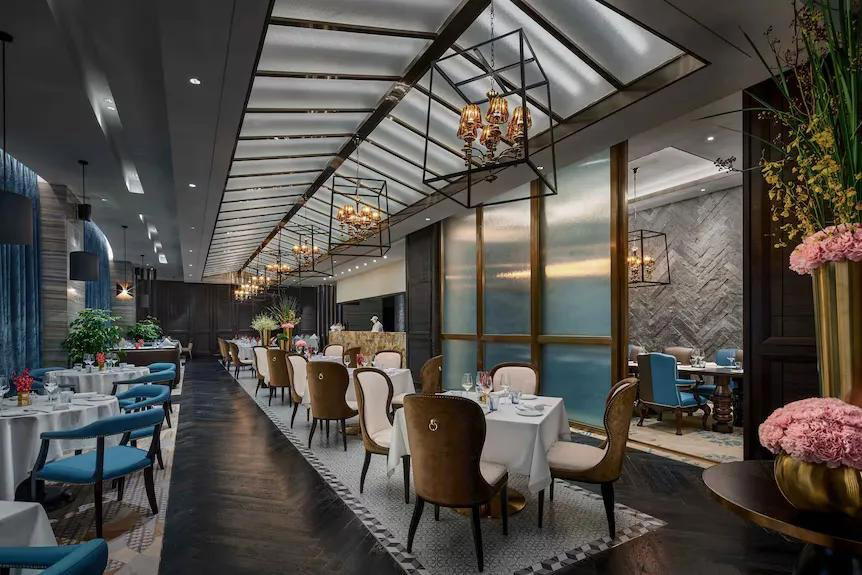
Modern and airy dining room in a multi-floor setup with a bustling, canteen-style atmosphere.