
Tabelog 100 #54
Our verdict
Naniwa Menjiro Zen puts award-listed Osaka ramen inside the controlled rhythm of a department-store basement: compact seating, fast turnover, and a room designed for solo bowls as much as quick pairs. Its selection for Tabelog 100 - Ramen - OSAKA - 2025 places it in the city’s serious ramen conversation without shifting the experience into formal dining.

Pearl is the En Primeur Club membership app, where members save venues, book tables and use the concierge.
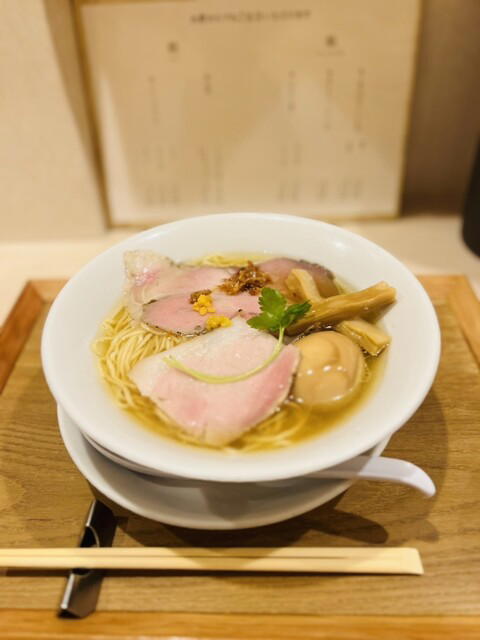
The menu
What to order
- Golden Clam Ramen
- Jidori Shoyu Ramen
- Dai Ginjo Miso Ramen
Osaka’s busy dining scene has its own rhythm: quick meals, steady turnover, and restaurants arranged for diners who do not always want ceremony. In that setting, ramen behaves differently from a destination tasting counter. The experience has to suit office lunches, solo diners, casual meals, and travelers moving through Osaka with limited time. Naniwa Menjiro Zen works within that container rather than resisting it, using a quick-service frame to place recognized ramen inside one of Osaka’s active dining contexts.
Osaka’s ramen culture is often discussed through neighborhood shops and late-night bowls, but the city’s everyday dining adds another layer: high-volume eating infrastructure. Here, the experience needs clarity. A ramen meal is not just about the bowl; it is also about pace, direct service, and a clear sense of purpose. The format remains closer to a focused ramen stop than a lingering restaurant.
A ramen counter built for Osaka's quick-service tempo
The useful way to read this venue is through flow. Busy dining settings in Japan compress casual meals, specialist counters, and short-stop eating into a dense grid, and ramen needs discipline to avoid being swallowed by that pace. Naniwa Menjiro Zen’s format sits between a classic solo ramen stop and a compact casual restaurant. That scale matters editorially: it keeps the experience closer to a specialist shop than a broad casual-dining operation.
The 2025 Tabelog Hyakumeiten recognition for ramen in Osaka is the clearest public signal that the shop is not merely a convenient bowl. Tabelog’s ramen lists tend to reward shops that earn repeat local attention in crowded categories, and Osaka’s ramen field is competitive enough that inclusion carries weight. The point is not that recognition turns a compact ramen venue into fine dining. It confirms that this particular format and price tier can carry serious ramen credibility.
That distinction is useful in Osaka, where the surrounding food choices range from quick counters to sit-down restaurants at higher spend. Nearby comparison venues point to the spread: Raofu Tsai Hanshin umeda ten and CHIKICHIKI Hanshin umeda ten sit in a different meal bracket, Donostia Comeru. moves toward a fuller restaurant format, and Umeda Mix Juice Honten represents the quick-stop end of the area. Against that mix, this ramen counter occupies the narrow middle ground: fast, affordable by central Osaka standards, but recognized enough to justify choosing it over a purely convenient bowl.
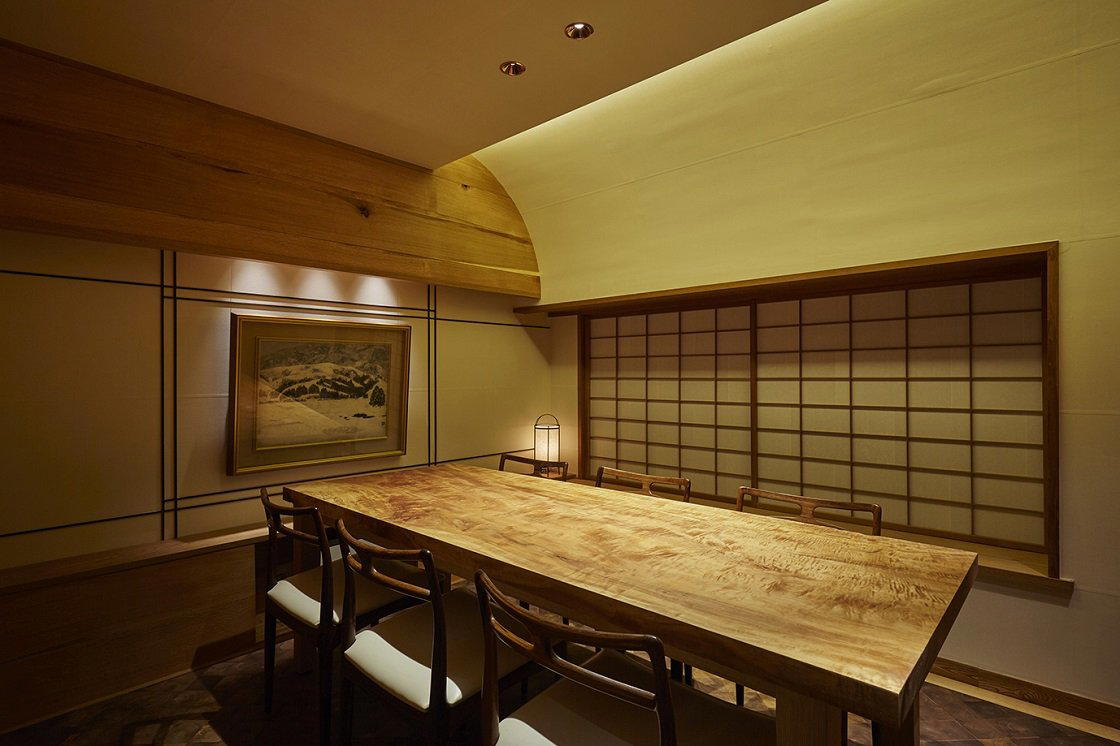
The physical design says more than the menu category
Ramen shops often reveal their priorities through service style before the first order is placed. Focused rooms make the meal feel linear: order, receive, eat, leave. They reduce the social sprawl of a long meal and put attention on timing. In a busy Osaka dining setting, that discipline is not aesthetic minimalism; it is operational survival. The format also suits Osaka travelers who want a serious local meal without building an evening around it.
The practical setup changes the audience slightly. It can allow solo diners and pairs to use the shop without the expectations of a drawn-out restaurant meal, while keeping the experience focused enough to avoid the drift of broader casual dining. For a ramen stop in Osaka, those details shape the experience as much as any abstract claim about atmosphere.
Chef biography is not the story here, and it does not need to be. Osaka ramen is judged as much by format discipline and repeatability as by a founder narrative. A city shop has to make a bowl legible to first-time diners while satisfying locals who know the category. The Tabelog recognition, Osaka setting, and compact-service logic together make the editorial case: this is ramen treated as a specialist urban service, not a decorative dining concept.
How to place it within an Osaka eating day
Osaka rewards strategic eating. The city is useful before transit, after shopping, or between hotel check-in and a later reservation, and ramen fits that rhythm better than a multi-course meal. Naniwa Menjiro Zen is strongest as a focused stop when the day calls for precision rather than duration. It is not the choice for a long conversation over bottles, and that is exactly the point. The room is designed for a bowl with momentum.
For broader Osaka planning, use the city’s range rather than forcing one meal to do everything. A bakery morning, a quick local snack, a fuller dinner, or a lighter coffee stop can each fill a different slot elsewhere in Osaka. The wider city edit sits in Our full Osaka restaurants guide, with parallel planning in Our full Osaka hotels guide, Our full Osaka bars guide, Our full Osaka wineries guide, and Our full Osaka experiences guide.
Travelers mapping food across Japan can also compare how small-format dining changes by city and category through other dining rooms in Japan and beyond. The comparison is less about cuisine than about scale: small rooms succeed when their format is honest about pace, service, and purpose.
Frequently asked questions
Is Naniwa Menjiro Zen child-friendly?
The available venue data points to a casual ramen setup in Osaka. It does not list specific family facilities, but the listed price range of JPY 1,000 - JPY 1,999 for lunch and dinner keeps it accessible for a casual ramen stop.
What kind of setting is Naniwa Menjiro Zen?
It is a ramen venue in Osaka.
What's the price range at Naniwa Menjiro Zen?
Pricing at Naniwa Menjiro Zen is listed as JPY 1,000 - JPY 1,999 JPY 1,000 - JPY 1,999.
When can I go to Naniwa Menjiro Zen?
Specific opening hours are not provided in the available venue data; check current hours before visiting.
What's Naniwa Menjiro Zen's location?
Osaka.
Comparable Options
Comparable venues at the same tier for side-by-side context.
| Venue | Cuisine | Price | Awards | Notes |
|---|---|---|---|---|
| Naniwa Menjiro ZenThis venue (the venue you are viewing) | Japanese Ramen | $10–20 | Tabelog 100 #54 | Not listed |
| LACERBA | Modern Japanese-Italian Fine Dining | $100–150 | Michelin Plate · Tabelog 100 #33 | Italian |
| Raofu Tsai Hanshin umeda ten | Modern Sichuan Chinese | $30–50 | Tabelog 100 #11 | JPY 5,000 - JPY 5,999 JPY 1,000 - JPY 1,999 |
| CHIKICHIKI Hanshin umeda ten | Modern yakitori in Hanshin Umeda | $30–50 | Tabelog 100 #61 | JPY 3,000 - JPY 3,999 JPY 3,000 - JPY 3,999 |
| Umeda Mix Juice Honten | Juice stand / mixed fruit juice | $1–10 | Tabelog 100 #24 | JPY 999 - JPY 999 |
| Donostia Comeru. | Spanish Bar | $20–30 | Tabelog 100 #65 | JPY 4,000 - JPY 4,999 JPY 2,000 - JPY 2,999 |
Recognition history
Dated appearances from independent guides and award organizations, with the underlying list record or original source where available.
Tabelog 100 #54 · No. 54
Tabelog · Tabelog 100 - Ramen - OSAKA - 2025
Continue exploring
More in Osaka
Restaurants in Osaka
All restaurants in Osaka →



Bars in Osaka
All bars in Osaka →




Hotels in Osaka
All hotels in Osaka →




Wineries in Osaka
Browse all →
Details
- Cozy
- Modern
- Lively
- Solo
- Casual Hangout
- Group Dining
- Standalone
- Beer Program
- Street Scene
- A La Carte
- Counter Dining
- Beer
Current opening hours
- Monday
- 11 AM–9 PM
- Tuesday
- 11 AM–9 PM
- Wednesday
- 11 AM–9 PM
- Thursday
- 11 AM–9 PM
- Friday
- 11 AM–9 PM
- Saturday
- 11 AM–9 PM
- Sunday
- 11 AM–9 PM
Hours can change for holidays and private events. Hours as of .
Compact, energetic ramen-stand atmosphere in a department store basement, with a focused, quick-turnover dining experience.