
Nakagawa Komugiten belongs to Kyoto’s quieter bread culture, where small bakeries sit between daily provisions and serious destination eating. Its Tabelog Bread WEST 100 selection and narrow bread-and-bagel focus place it in a specialist tier rather than the café circuit, with ingredient choice and take-out discipline doing the heavy lifting.
Pearl is the En Primeur Club membership app — saves, bookings, and concierge access live there. Same editors, same standards.
- Address
- Japan, 〒606-0816 Kyoto, Sakyo Ward, Shimogamo Matsunokicho, 52−1
- Phone
- +81 75-702-6672
- Website
- nakagawakomugiten.com
 Saves & bookings on Pearl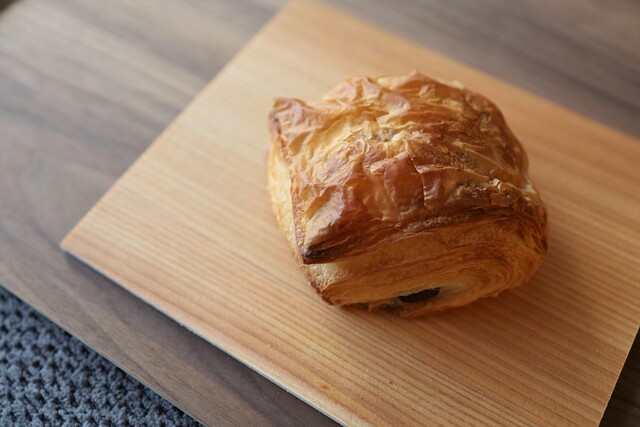
Shimogamo changes the tempo of Kyoto eating. North of the denser shopping grids, the city’s appetite becomes more residential: shrine approaches, university routes, local shopping streets, and bakeries that function as part of the weekly household rhythm rather than as sightseeing stops. Nakagawa Komugiten fits that pattern. The point here is not a long lunch or a plated service sequence; it is the Japanese bakery as a serious food address, where flour choice, fermentation, and small-format production carry the same weight that rice polishing or dashi extraction might carry elsewhere in the city.
Kyoto is often reduced to kaiseki, tofu, wagashi, and tea, but bread has its own local logic. The city has one of Japan’s more developed bakery cultures, shaped by students, commuters, temple visitors, and residents who buy in small quantities and often. In that context, a bread-and-bagel shop in Sakyo Ward is not a novelty. It is part of a daily-food ecosystem that rewards precision without the theatre of a dining room. The comparison is useful: Kamo Mitarashi Chaya and Aburi Mochi Honke Nemoto Kazariya point to Kyoto’s older snack traditions, while places such as Cafe Verdi show how specialist casual formats can carry serious local followings without becoming formal restaurants.
Shimogamo bread culture, measured by flour rather than ceremony
The ingredient-sourcing angle matters more at a bakery than almost anywhere else because the margin for disguise is small. Bread exposes flour, hydration, fermentation, salt, and bake. Bagels are even less forgiving, with structure doing much of the work. Nakagawa Komugiten’s public category is concise: bread and bagel. That narrowness is editorially useful. It places the shop closer to Kyoto’s specialist food counters than to multi-purpose cafés, and it explains why the address reads as a provisions stop rather than a leisure venue.
The recognition signal is concrete: selection for Tabelog Bread WEST “Tabelog 100” in 2022, with prior selections listed across 2017, 2018, 2019, and 2020. Tabelog’s Hyakumeiten lists are not Michelin-style star systems, but they are meaningful in Japan because they identify category strength across highly competitive everyday genres. Bread is a crowded field in western Japan; appearing repeatedly in that set suggests sustained local credibility rather than a single season of attention.
That is also why this sort of shop should be read differently from Kyoto’s destination dining rooms. Kichisen belongs to the city’s formal restaurant conversation; a bakery like this belongs to a lower-priced, higher-frequency ritual. The commitment is measured in return visits, not in a tasting-menu reservation. Within Kyoto, that puts Nakagawa Komugiten near the practical end of the serious-food spectrum: food bought to carry away, consumed on the move or at home, and judged by consistency over spectacle.
A take-out format that suits Sakyo Ward's slower north
Sakyo Ward gives this kind of bakery room to make sense. The area around Shimogamo and Mototanaka has a different food geography from downtown Kyoto. It is less about stacked restaurant itineraries and more about routes: walking toward Demachiyanagi, moving between bus stops, shopping before or after a shrine visit, collecting something to take home. A take-out format belongs to that rhythm. There is no need to invent a grand occasion around it.
For travelers building a Kyoto day, the practical value is precision. This is a short-format stop that can sit between larger meals, rather than compete with them. Pairing it with the wider north-Kyoto circuit makes more sense than forcing it into a downtown restaurant crawl. Readers comparing categories can map it against the broader city guide at Our full Kyoto restaurants guide, then separate bakery errands from dinner addresses such as 3TOKU6MI Shijo karasuma ten, [ki:], or Abbesses. The distinction matters: Kyoto rewards travelers who stop treating every eating decision as the same kind of meal.
There is a second layer to that planning. Small specialist food businesses in Japan often operate with tighter production runs than visitors expect, and take-out addresses can feel casual while being logistically unforgiving. The better approach is to treat bread as a timed errand, not an afterthought. The format also helps families, solo travelers, and anyone building a low-friction day around temples, museums, or the Kamo River corridor.
Where it sits in a Kyoto itinerary
The restaurant is strongest as a signal of Kyoto’s everyday craft, not as a substitute for the city’s formal dining. That makes it useful in an itinerary precisely because it is modest in scale. A traveler can have a high-structure dinner elsewhere, then use a bakery stop to see how Kyoto’s standards operate when the format is simple and the spend is low. This is where the city often teaches more: not through spectacle, but through repetition, restraint, and ingredient clarity.
The surrounding editorial map is broad. Casual Kyoto eating includes pork buns at 551蓬莱, old sweet-shop formats such as Aburi Mochi Honke Nemoto Kazariya, and specialist counters scattered well beyond the hotel districts. For wider trip planning, the city’s hospitality and drinking scenes sit in separate lanes: Our full Kyoto hotels guide, Our full Kyoto bars guide, Our full Kyoto wineries guide, and Our full Kyoto experiences guide help keep those decisions distinct.
Seen nationally, the address also fits a larger Japanese pattern: highly focused, low-price specialist shops can be as revealing as formal restaurants. That pattern runs from regional snack counters to bakeries, curry shops, coffee rooms, and sake bars. For contrast beyond Kyoto, see -Grilled beef Sukiyaki- KAMAKURA TANUKIAN 鎌倉 たぬき庵 in Kamakura. 鮪と炭火焼き うお炭 秋葉原店 in Tokyo.cafe in Osaka.know in Kumamoto, (Shoku) Vietnam in Kawasaki, [Curry Senmon Ten] Maruyama Kyoju. in Sapporo, Jōdo Saké Bar in Los Angeles, and Onigiri Time in Pasadena. The through-line is not luxury; it is specialization. The restaurant earns attention because Kyoto’s bread culture is serious enough to make a small take-out bakery part of the city’s food argument.
Comparison Snapshot
Comparable venues at the same tier for side-by-side context.
| Venue | Cuisine | Price | Notes |
|---|---|---|---|
| Nakagawa KomugitenThis venue — the venue you are viewing | Artisanal Japanese Bakery | $ | Not listed |
| Cafe Verdi | Coffee Shop / Cafe | $ | Sakyō |
| Kew | Dessert Cafe | $ | Ukyō |
| Croa | Artisanal Bakery | $ | Kita |
| COFFEE HOUSE maki | Traditional Kyoto coffee house & sandwich cafe | $ | Kamigyō |
| GOSPEL | Western-style cafe with homemade curry, gratin and baked sweets | $$ | Sakyō |
Recognition history
Dated appearances from independent guides and award organizations, with the underlying list record or original source where available.
Tabelog 100 #60 · No. 60
Tabelog · Tabelog 100 - Bread - WEST - 2022
Continue exploring
More in Kyoto
Restaurants in Kyoto
Browse all →
Bars in Kyoto
Browse all →
Hotels in Kyoto
Browse all →

Wineries in Kyoto
Browse all →
At a Glance
- Cozy
- Classic
- Solo
- Casual Hangout
- After Work
- Standalone
- Local Sourcing
- Street Scene
Current opening hours
- Monday
- Closed
- Tuesday
- Closed
- Wednesday
- Closed
- Thursday
- 10 AM–4 PM
- Friday
- 10 AM–4 PM
- Saturday
- 10 AM–4 PM
- Sunday
- 10 AM–4 PM
Hours can change for holidays and private events. Last verified .
A small, quietly bustling neighborhood bakery near Shimogamo Shrine, with a simple, classic feel focused on the bread itself rather than decor, and an intimate, orderly atmosphere where many items sell out early in the day.