Musashi Tallaght brings Japanese dining to one of Dublin's largest suburban townships, occupying a retail unit at Cross East in Dublin 24. The address places it squarely in everyday Tallaght rather than the city-centre dining corridor, making it a neighbourhood option for a suburb that has historically had limited specialist restaurant choice. For context on the wider local scene, see our full Tallaght restaurants guide.
Pearl is the En Primeur Club membership app — saves, bookings, and concierge access live there. Same editors, same standards.
- Address
- UNIT A3, CROSS EAST, Tallaght, Dublin 24, D24 RX94, Ireland
- Phone
- +35314139965
- Website
- musashi.ie
- Directions
- Get directions
 Saves & bookings on Pearl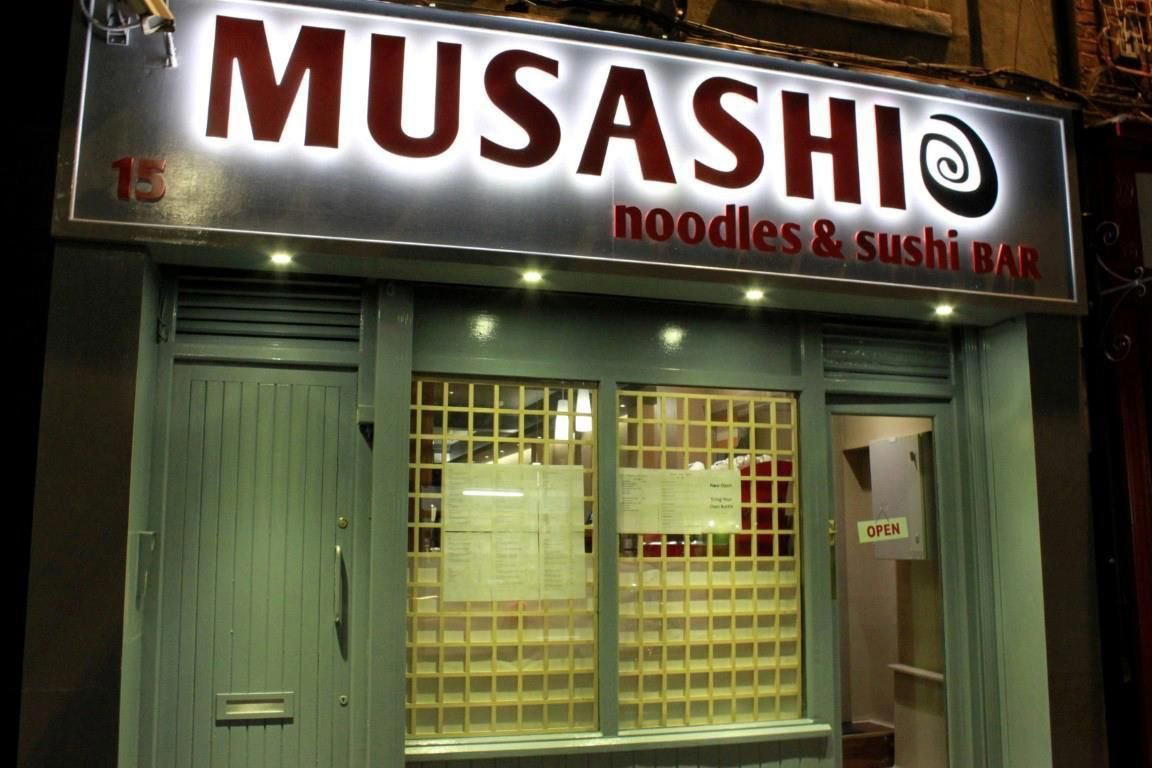
Japanese Dining on the Suburban Fringe: What Musashi Tallaght Represents
Tallaght is not where most food writers look when tracking the evolution of Japanese cuisine in Ireland. That conversation tends to start in Dublin's city centre, where a cluster of ramen counters, sushi bars, and izakaya-style rooms has built up over the past decade, drawing comparisons to the kind of neighbourhood Japanese that fills London's Zone 2 or Melbourne's inner suburbs. Yet the suburban spread of Japanese formats, ramen, katsu, casual sushi, has been one of the quieter stories in Irish dining, and Musashi Tallaght, operating from Unit A3 at Cross East in Dublin 24, is part of that outward movement. The question worth asking is not simply whether the food is good, but what it means for a township of Tallaght's size to have a dedicated Japanese option at all, and what that signals about where Irish appetite for this cuisine has reached.
Tallaght is home to roughly 80,000 people, making it among the more populous urban areas in Ireland outside the city core. Its dining infrastructure has historically skewed toward chain restaurants and casual formats that serve volume rather than specificity. A Japanese restaurant in this context is not competing with the omakase counters of Baggot Street or the tasting-menu ambition of venues like Chapter One by Mickael Viljanen in Dublin. It is operating in a different tier entirely, one where accessibility, price sensitivity, and repeat-visit practicality matter more than any single dining occasion. That positioning is its own editorial story.
The Sourcing Question in Suburban Japanese
Irish Japanese restaurants at the casual end of the market face a structural challenge that their counterparts in Tokyo's outer wards or London's Soho do not: supply chain depth. Japan's ingredient culture, the specificity of regional soy producers, the grading systems for rice, the provenance trails attached to fish, translates unevenly into a suburban Dublin context. City-centre venues with higher price points and larger volumes can sustain relationships with specialist importers. Suburban formats typically work with a narrower supplier base, which shapes what appears on the menu and at what quality threshold.
This is not a criticism distinctive to Musashi Tallaght. It is the operating reality for most mid-market Japanese restaurants in Ireland, and it is why the sourcing decisions made at this level matter. When a venue in a suburban retail unit chooses to serve, say, a tonkotsu-style ramen rather than a simplified noodle soup, or opts for sushi-grade fish over pre-formed supermarket cuts, those are meaningful signals about the kitchen's standards. Without verified menu data for this venue, it would be irresponsible to make specific claims, but the broader point holds: ingredient sourcing at the suburban Japanese level is where the gap between adequate and genuinely good becomes most visible. For a sense of how seriously the sourcing question is taken at Ireland's most committed restaurants, venues like Aniar in Galway and Liath in Blackrock set a benchmark that illuminates what rigorous provenance thinking looks like in an Irish context, even if the cuisine type differs entirely.
Where Musashi Tallaght Sits in the Wider Irish Dining Picture
Ireland's restaurant scene has bifurcated sharply over the past five years. On one side, destination-level tasting menus at venues like Bastion in Kinsale, Campagne in Kilkenny, Terre in Castlemartyr, and Chestnut in Ballydehob have raised the ceiling of what Irish cooking can achieve. On the other side, the everyday dining tier in suburban and rural Ireland has struggled to keep pace, often defaulting to familiar international chains. Casual specialist restaurants, Japanese, Korean, Vietnamese, that land somewhere in the middle represent a third category, one that tends to be undercovered editorially but carries real importance for communities that sit outside the destination-dining circuit.
The restaurant occupies that middle category. It is not competing with LIGИUM in Bullaun or Lady Helen in Thomastown for the same diner. Its comparable set is the growing number of mid-market Asian restaurants serving Dublin's suburban belt, from Tallaght westward toward Clondalkin and northward toward Blanchardstown. Within that frame, a Japanese specialist has a narrower and more defined offering than a pan-Asian format, which is either a strength or a constraint depending on how well the kitchen executes within its lane. For broader context on how the Irish dining scene maps across different price tiers and geographies, see our full Tallaght restaurants guide, alongside comparable suburban-to-rural profiles like Homestead Cottage in Doolin, House in Ardmore, Roundwood House in Mountrath, and The Morrison Room in Maynooth. For an international reference point on what rigorous Japanese-inflected cooking looks like at the highest level, Atomix in New York City and Le Bernardin in New York City both demonstrate how Asian culinary frameworks are being taken seriously in premium Western dining markets. dede in Baltimore and The Oak Room in Adare round out a picture of how different parts of Ireland are approaching the question of what a serious dinner looks like outside the capital.
Planning Your Visit
The restaurant is located at Unit A3, Cross East, Tallaght, Dublin 24 (D24 RX94), a retail-park address that puts it within easy reach of the Tallaght Luas stop on the Red Line, making it accessible from the city centre without needing a car. Weekend demand can be higher.
At-a-Glance Comparison
Comparable venues nearby, for context on price, style, and recognition.
| Venue | Cuisine | Price | Notes |
|---|---|---|---|
| Musashi TallaghtThis venue — the venue you are viewing | Authentic Japanese Sushi & Ramen | $$ | Not listed |
| Musashi Noodle & Sushi Bar | Japanese Noodles & Sushi | $$ | North City |
| Kyodai Izakaya | Japanese Izakaya | $$ | North City |
| Musashi Swords | Authentic Japanese Sushi | $$ | Swords |
| Hana Izakaya | Japanese Izakaya | $$$ | North City |
| Zakura Noodle & Sushi Restaurant | Japanese Noodle & Sushi | $$ | Royal Exchange B |
Continue exploring
More in Tallaght
Restaurants in Tallaght
Browse all →
Bars in Tallaght
Browse all →
Hotels in Tallaght
Browse all →
Wineries in Tallaght
Browse all →
At a Glance
- Cozy
- Casual
- Lively
- Casual Hangout
- Group Dining
- Family
- After Work
- Standalone
- Open Kitchen
- Sake Program
- Craft Cocktails
Current opening hours
- Monday
- 12–10 PM
- Tuesday
- 12–10 PM
- Wednesday
- 12–10 PM
- Thursday
- 12–10 PM
- Friday
- 12–10:30 PM
- Saturday
- 12–10:30 PM
- Sunday
- 12–10 PM
Hours can change for holidays and private events. Last verified .
Cosy and comfortable atmosphere with friendly staff, ideal for casual dining and conversation.