
Tabelog 100 #28
Our verdict
Mori Iro places Tokyo soba in a quieter register: a small Ota address with 19 seats, counter space, and repeat selection in Tabelog’s Soba EAST 100 for 2025, 2024, and 2022. The appeal is less about spectacle than planning: a compact room, weekday-course reservation rules at lunch, and a price tier that keeps it closer to everyday soba culture than luxury tasting-menu dining.

Pearl is the En Primeur Club membership app, where members save venues, book tables and use the concierge.
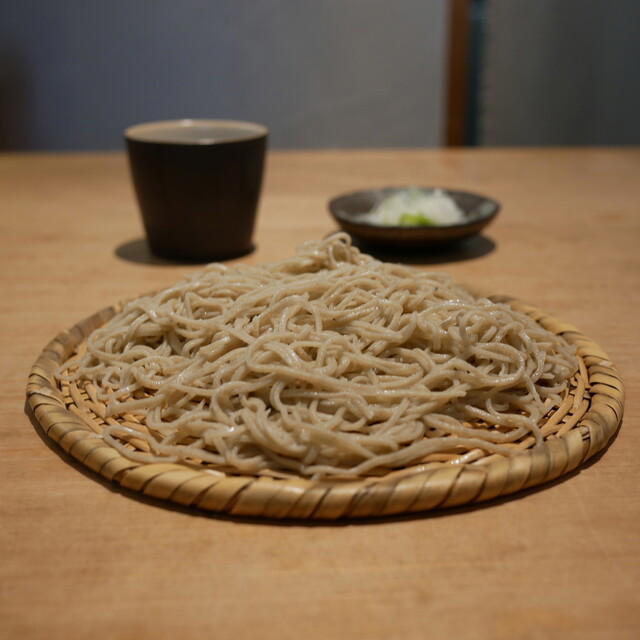
The menu
What to order
- Sudachi soba
- Hand-cut soba
- Tempura
- Dashimaki omelette
- Prosciutto with fig and tofu sauce
- Liver in oil
Approaching a serious soba shop in Tokyo rarely feels theatrical. The cues are smaller: a modest frontage, a room scaled for regulars rather than tour groups, and a pace that rewards diners who arrive knowing the rhythm of the meal. Mori Iro belongs to that register. In Tokyo, away from the gravity that shapes much of the city’s international dining conversation, soba keeps its older identity as a craft food with everyday reach.
That matters because soba in Tokyo occupies a different social space from sushi counters and kaiseki rooms. It can be quick, seasonal, technical, affordable, and exacting at the same time. The better rooms do not need ceremony to announce themselves. They rely on buckwheat handling, broth discipline, timing where relevant, and the basic hospitality of a dining room that turns over without feeling rushed.
Tokyo soba with recognition, not luxury-theatre pricing
The clearest trust signal here is category recognition. Mori Iro has Tabelog Hyakumeiten recognition for soba in 2025, with a listed Tabelog score of 3.71. In Tokyo dining terms, that places it in a competitive soba conversation rather than in the city’s luxury tasting-menu economy. The distinction is useful for travellers: recognition in this category points toward consistency within a highly specific Japanese noodle tradition, not toward the long-form choreography associated with destination restaurants.
The pricing also tells a story. Dinner sits in the JPY 4,000 to JPY 4,999 range, while lunch sits around JPY 1,000 to JPY 1,999. That spread is characteristic of soba’s dual identity in the city: weekday lunch can remain restrained, while dinner allows more time for a broader meal. The result is closer to a focused Japanese dining stop than a luxury-only reservation.
Compared with other Tokyo casual categories, the position is precise. Ramen Tei Hinari Ryuou and Tonjiru to Genmai no Mise Aoki Shokudo sit in lower everyday price bands, while Flowers&Spanish Sonrisa and Tenfuku move into higher dinner territory. Mori Iro’s appeal is the middle ground: enough recognition to justify planning, without the financial or formal weight of a special-occasion counter.
The small-room problem: why planning matters here
Tokyo has thousands of restaurants, but compact dining rooms change the arithmetic. A focused soba room does not absorb casual demand the way a large station-building restaurant can. This is where soba becomes a planning exercise rather than a spontaneous bowl between appointments. The more specific the room, the more useful it is to understand service rhythm, party size, and the difference between lunch and dinner formats before committing a day’s itinerary.
That detail is not administrative trivia; it shapes the experience. Travellers who want a structured meal should plan ahead, while those seeking a simpler visit need to think in terms of timing and flexibility. Tokyo dining often rewards arriving with margin rather than treating posted closing time as the final entry time.
The room also has the practical markers serious diners care about: a clear price band, a defined soba category, and enough recognition to draw intent. These details make the logistics easier, but they do not change the central point: this is a Tokyo soba address with enough recognition to merit planning. The wise move is to avoid treating it like a fallback.
Where it fits in a Tokyo food day
Tokyo gives the meal a broader frame than the city’s most formal dining circuits. The appeal is not luxury shopping traffic or international spectacle, but the way soba can read as part of daily urban life rather than as a museum piece. For visitors building a broader Tokyo itinerary, this is the kind of stop that pairs better with city exploration than with a stacked day of high-formality reservations.
For contrast inside the city, compare the casual range across other Tokyo dining rooms. The comparison is not about ranking them against soba; it is about reading Tokyo through formats: grilled dishes, curry, cafés, seafood, and noodle shops each handle price, pace, and booking pressure differently.
For a fuller map, use the broader Tokyo dining and travel guides alongside other city resources. Travellers extending the itinerary beyond Tokyo can read the same price-and-format logic through dining in other Japanese cities and abroad, where casual formats can still demand the same attention to timing, category, and budget.
The editorial case is simple: Mori Iro is for diners who understand that Tokyo’s serious meals are not always expensive, central, or theatrical. Soba rewards attention at a smaller scale. Here, the combination of Tabelog category recognition and accessible lunch pricing makes the planning feel justified without turning the meal into a project.
Frequently asked questions
What time does Mori Iro open and close?
Current opening hours for Mori Iro should be confirmed directly before visiting, as Tokyo restaurant schedules can change by day and service.
What price level is Mori Iro?
Pricing at Mori Iro is listed as Dinner: JPY 4,000 - JPY 4,999; Lunch: JPY 1,000 - JPY 1,999.
Where exactly is Mori Iro?
Tokyo.
What is Mori Iro known for?
Mori Iro is known for soba in Tokyo and for its Tabelog Hyakumeiten recognition for soba in 2025, with a listed Tabelog score of 3.71.
What if I have allergies at Mori Iro?
Mori Iro serves soba, so any allergy or ingredient concern should be raised before ordering or confirmed directly with the restaurant in advance.
Is Mori Iro good for families?
Mori Iro can work for families that want a low-key soba meal in Tokyo, provided the schedule, availability, and any seating needs are confirmed before visiting.
Cuisine Lens
Comparable venues at a similar level for quick context.
| Venue | Cuisine | Price | Awards | Notes |
|---|---|---|---|---|
| Mori IroThis venue (the venue you are viewing) | Soba & Japanese Small Plates | $20–30 | Tabelog 100 #28 | Not listed |
| たんたん亭 本店 | Classic Tokyo Shina Soba & Wonton Ramen | $10–20 | Tabelog 100 #84 | Hamadayama |
| Niwa Tori | Yakitori & Chicken Izakaya | $30–50 | Tabelog 100 #5 | Shinagawa |
| Yakiniku Dori gg | Chicken-focused Yakiniku Izakaya | $30–50 | Tabelog 100 #52 | Shibuya |
| Okonomiyaki Imari Ebisu | Okonomiyaki & Teppanyaki Izakaya | $30–50 | Tabelog 100 #18 | Shibuya |
| Uoshin Nogizaka | Seafood Izakaya | $50–100 | Not listed | Minato |
Recognition history
Dated appearances from independent guides and award organizations, with the underlying list record or original source where available.
Tabelog 100 #28 · No. 28
Tabelog · Tabelog 100 - Soba - EAST - 2025
Continue exploring
More in Tokyo
Restaurants in Tokyo
All restaurants in Tokyo →



Bars in Tokyo
All bars in Tokyo →






Details
- Cozy
- Modern
- Intimate
- Solo
- Casual Hangout
- Date Night
- Chefs Counter
- Standalone
- Sake Program
- A La Carte
- Counter Dining
- Sake
- Shochu
- Wine
Current opening hours
- Monday
- Closed
- Tuesday
- 11:30 AM–2:30 PM, 5:30–8:30 PM
- Wednesday
- 11:30 AM–2:30 PM, 5:30–8:30 PM
- Thursday
- 11:30 AM–2:30 PM, 5:30–8:30 PM
- Friday
- 11:30 AM–2:30 PM, 5:30–8:30 PM
- Saturday
- 11:30 AM–2:30 PM, 5:30–8:30 PM
- Sunday
- 11:30 AM–2:30 PM
Hours can change for holidays and private events. Hours as of .
A calm, stylish soba shop with a small counter and a few tables, described as refined yet relaxed rather than formal, suitable for quiet meals and solo diners.