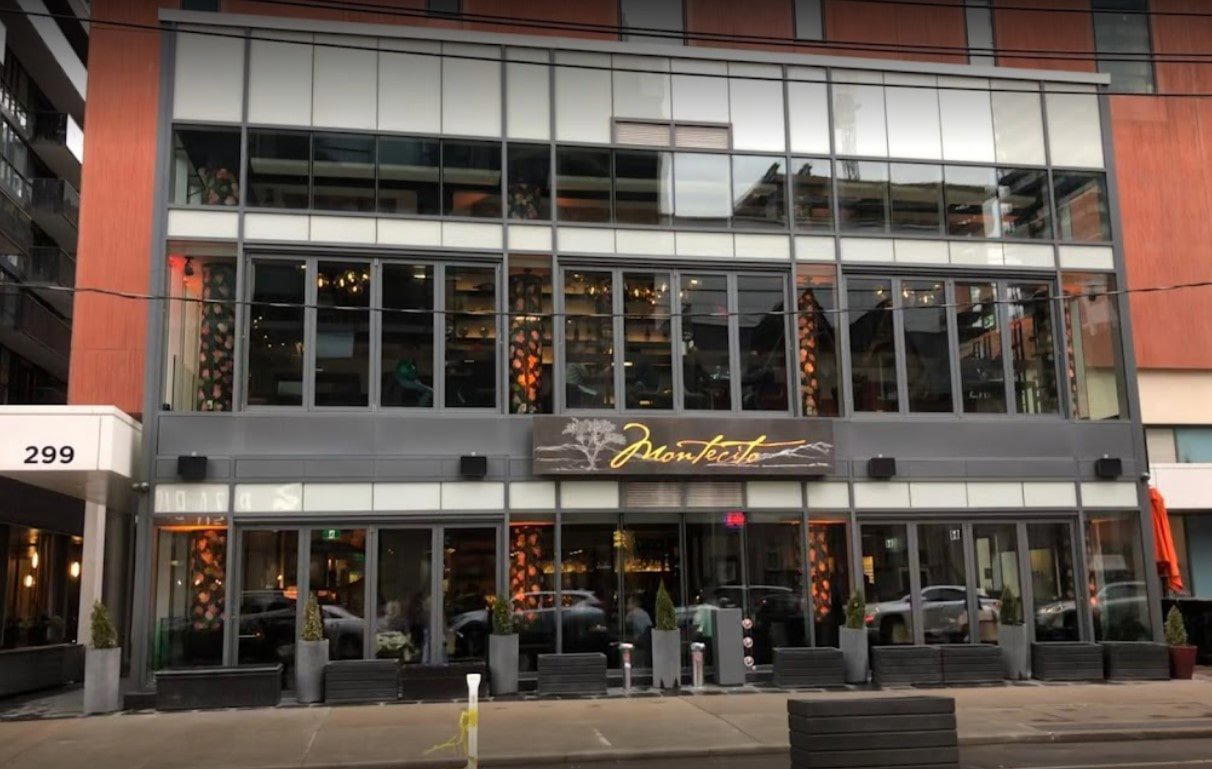
On Adelaide Street West in Toronto's Entertainment District, Montecito Restaurant occupies a stretch of the city where hospitality ambition and industry crossover have long coexisted. The room draws a crowd that moves between film, media, and food circles, making it a consistent reference point in conversations about where Toronto's working creative class actually eats.
- Address
- 299 Adelaide St W, Toronto, ON M5V 1P7, Canada
- Phone
- +1 416 599 0299
- Directions
- Get directions
Adelaide Street West and the Culture of the Working Dinner
Toronto's Entertainment District has never quite settled into a single identity. The blocks around King and Adelaide pull in film festival overflow, agency lunches, post-show industry tables, and the kind of dinner where nobody is quite sure if it counts as work. That ambiguity is the neighbourhood's defining character, and it shapes the restaurants that survive here. Montecito Restaurant, at 299 Adelaide St W, is a Toronto restaurant serving California-Inspired Farm-to-Table cuisine in the Entertainment District. It sits squarely inside that dynamic: a room that has learned to hold multiple kinds of occasion simultaneously, in a city that increasingly expects that flexibility from its mid-to-upper tier dining rooms.
It is which rooms function as genuine social infrastructure, the places where the city's creative and professional classes conduct the business of their actual lives. In Toronto, that tier sits between the pristine formality of something like Alo (Contemporary) and the purely transactional lunch counter. Montecito has historically occupied that middle space on the west side of downtown.
The North American Brasserie Format and What It Asks of a Room
The brasserie model, broadly defined, is among the more demanding formats in hospitality. It asks a kitchen to produce food that works for a solo diner at the bar, a group of six celebrating something, and a two-leading in for a quick pre-theatre meal, all at the same service. The European originals, Parisian brasseries built around zinc bars and tiled floors, solved this through sheer institutional weight: decades of repetition, a fixed menu logic, and a staff culture built around continuity. North American interpretations have to manufacture that sense of inevitability, which is considerably harder.
The Entertainment District addresses this problem in different ways across its restaurant stock. A place like Montecito operates on a different premise, where the room itself has to do more interpretive work, signalling both accessibility and occasion without committing to either extreme.
Toronto's Creative-Industry Dining Circuit
Certain blocks, particularly those west of University between King and Front, became de facto international hospitality zones for ten days every September, and the restaurants on those blocks had to build the operational capacity to handle that volume. The ones that managed it well tended to develop a particular kind of fluency: comfort with high-profile tables, speed of service calibrated to variable deadlines, and a menu that could satisfy a Los Angeles studio executive and a local journalist on the same night.
Montecito's address places it directly in that circuit. That is a harder competitive frame than most Canadian restaurant categories face. For context, the standard being measured against might include rooms like Le Bernardin in New York City or event-driven formats like Lazy Bear in San Francisco, where the relationship between occasion and execution is precisely managed.
The Broader Ontario Dining Conversation
It is worth mapping Montecito against the wider Ontario and Canadian dining picture, because Toronto's premium tier does not exist in isolation. The province has produced some of the country's more interesting restaurant thinking outside the city: Eigensinn Farm in Singhampton operates on a reservation-only farm dinner model that has influenced how the industry thinks about chef autonomy and guest commitment. Restaurant Pearl Morissette in Lincoln has made the case that serious wine and serious cooking can anchor a destination outside a major urban centre.
Within Toronto itself, the Japanese dining tier has grown considerably and now includes rooms operating at a level that invites direct international comparison: Sushi Masaki Saito and Aburi Hana (Kaiseki) both represent the high-commitment omakase and kaiseki formats that have expanded the city's fine-dining vocabulary beyond its European-leaning origins. Montecito's positioning is different: it does not compete in that category but exists in a tier where the evaluation criteria centre on consistency, atmosphere, and social function rather than technical originality.
Nationally, the comparison set extends to rooms like Jérôme Ferrer - Europea in Montreal, which navigates a similar tension between occasion dining and industry crossover in a different cultural context, and AnnaLena in Vancouver, which has built a reputation on a more neighbourhood-rooted identity. At the more remote end of the Canadian dining spectrum, Fogo Island Inn Dining Room and Narval in Rimouski demonstrate how strongly place-driven cooking has become a point of differentiation across the country. Toronto's Entertainment District rooms like Montecito are making a different argument: that urban social infrastructure has its own value, distinct from the destination or terroir-driven model.
The Italian-influenced side of the Toronto dining room picture is worth noting separately. DaNico represents a more intimate, bar-forward take on Italian cooking downtown, while Don Alfonso 1890 anchors the formal end. The range shows how thoroughly the city has absorbed and reinterpreted European dining formats across a full price and formality spectrum.
Know Before You Go
| Address | 299 Adelaide St W, Toronto, ON M5V 1P7 |
|---|---|
| Neighbourhood | Entertainment District, Downtown Toronto |
| Getting There | Osgoode station (Line 1) is the nearest TTC stop, roughly a five-minute walk west along Queen St. Street parking is limited on Adelaide; the area is well served by ride-share drop-off. |
| Leading For | Industry dinners, pre-show meals, group bookings in the Entertainment District |
| Comparable Toronto Options | Alo, DaNico, Don Alfonso 1890 |
| Further Research |
The Quick Read
Comparable venues nearby, for context on price, style, and recognition.
| Venue | Cuisine | Price | Notes |
|---|---|---|---|
| Montecito RestaurantThis venue — the venue you are viewing | Not listed | $$$ | Not listed |
| Richmond Station | Eaton Centre, Modern Canadian Seasonal | $$$ | Not listed |
| The Ballroom Bowl - Yonge & Dundas | Downtown Yonge, Modern Comfort American | $$ | Not listed |
| Roses Social | Not listed | $$$ | Niagara, Modern North American with Tex-Mex influences |
| George's Deli & B B Q | Not listed | $$ | Harbord Village, BBQ & Rotisserie Chicken Deli |
| Holy Chuck | Deer Park, Gourmet Burgers | $$ | Not listed |
Continue exploring
More in Toronto
Restaurants in Toronto
Browse all →
Bars in Toronto
Browse all →
Hotels in Toronto
Browse all →

At a Glance
- Elegant
- Sophisticated
- Cozy
- Group Dining
- Special Occasion
- Open Kitchen
- Terrace
- Extensive Wine List
- Craft Cocktails
- Farm To Table
- Local Sourcing
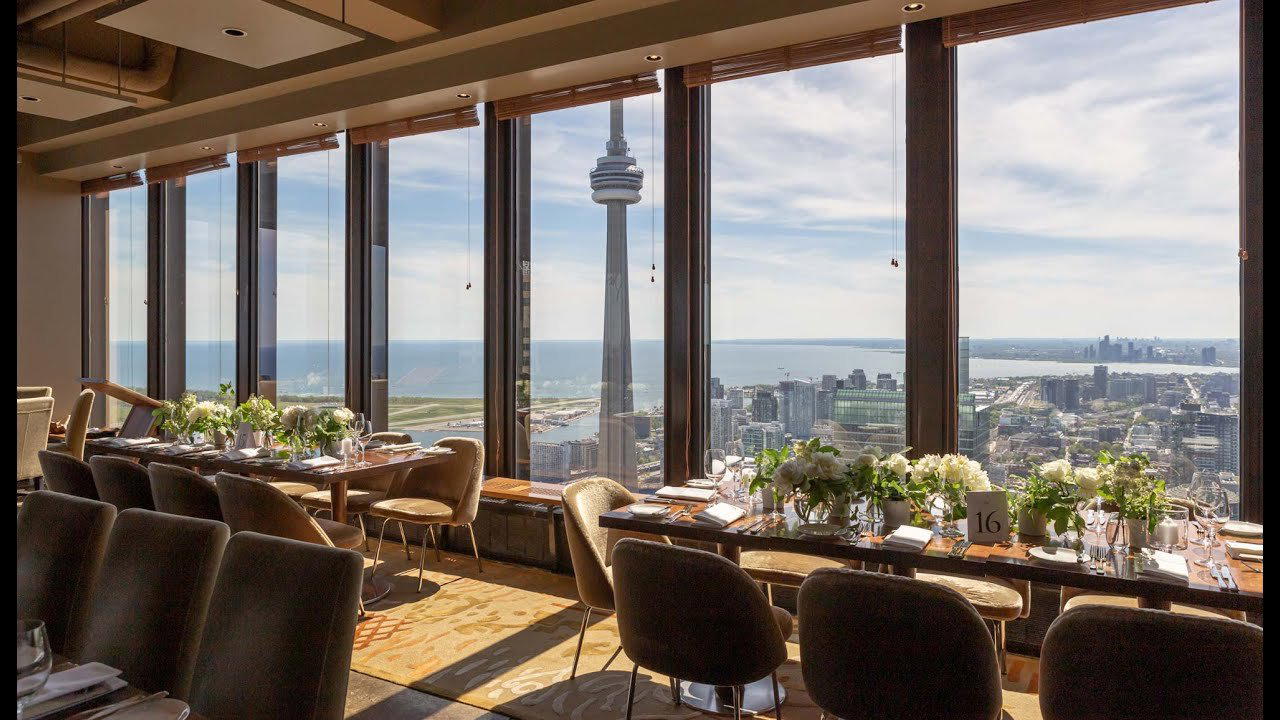
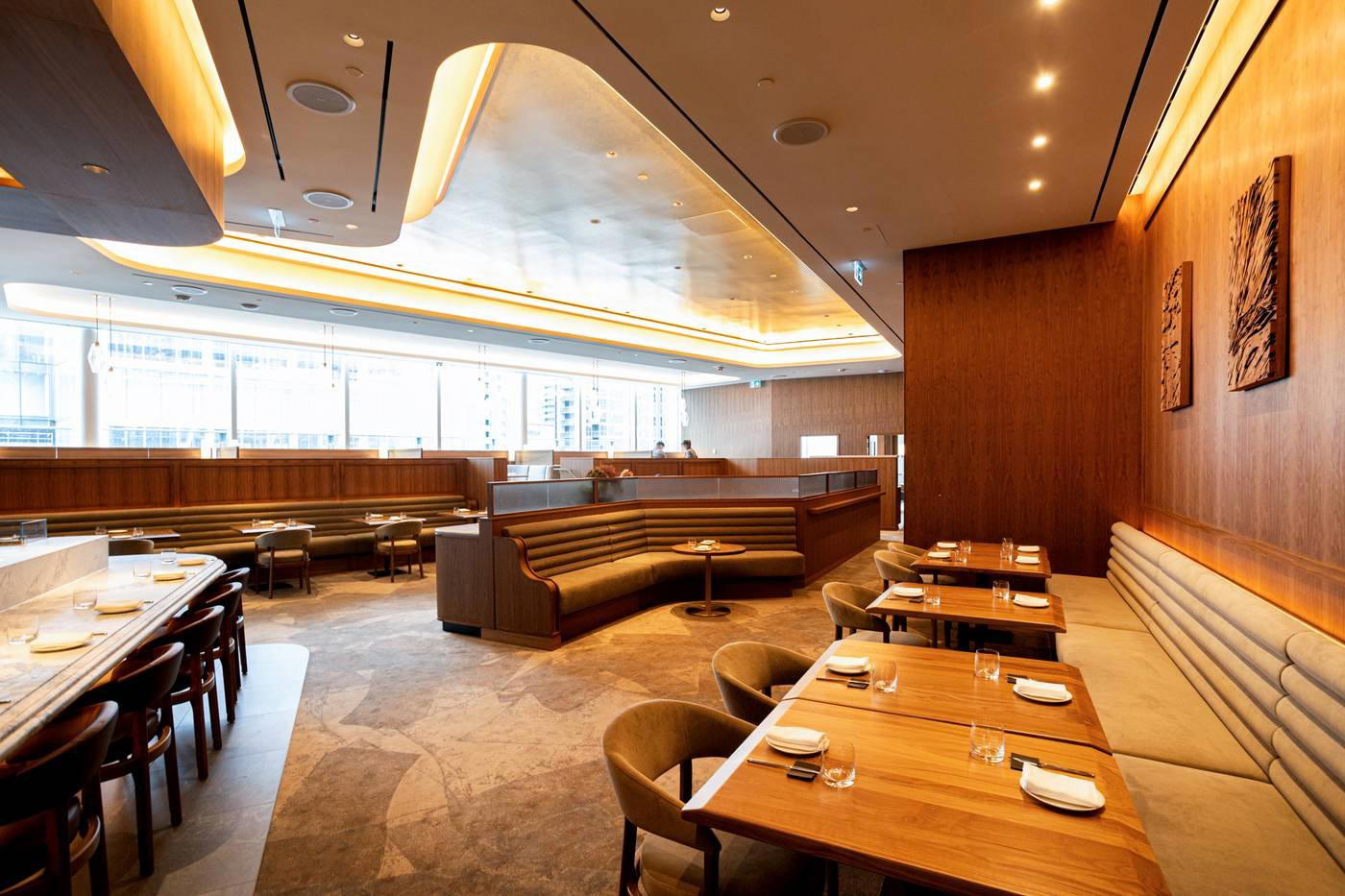
Airy and calming with high ceilings, pale color palette, potted orange trees, raw-edged redwood tables, bespoke loveseats, and soft coastal lighting.