
A compact ramen and tsukemen address in Osaka’s Fukushima ward, Mitsuboshi Seimenjo Fukushima honten sits in the city’s serious noodle conversation with repeated Tabelog 100 Ramen selections, including Osaka 2025. The format is small, casual, and built for focused eating rather than lingering, with counter seating, family-friendly notes, and a price point that keeps it firmly in everyday ramen territory.
Pearl is the En Primeur Club membership app — saves, bookings, and concierge access live there. Same editors, same standards.
- Address
- Japan, 〒553-0003 Osaka, Fukushima Ward, Fukushima, 7 Chome−17−21 ベルメゾン福島
- Phone
- +81 6-6451-9915
- Website
- facebook.com
 Saves & bookings on Pearl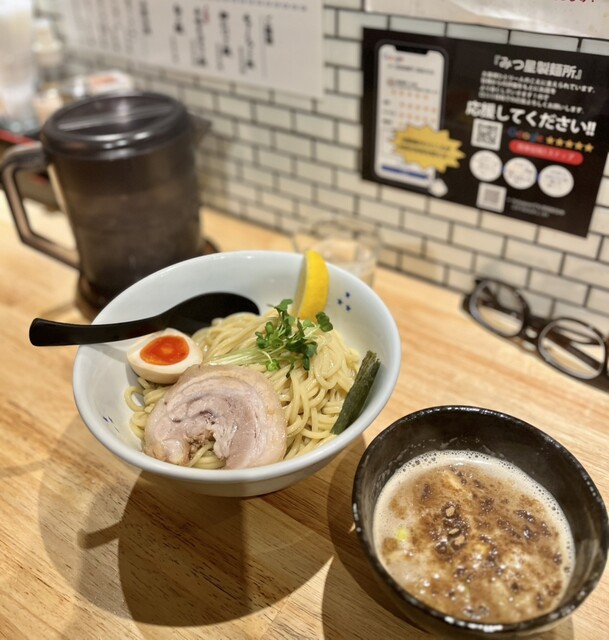
Fukushima’s dining streets run at a lower pitch than Umeda’s department-store food floors: narrow frontages, quick decisions, steam on glass, and short queues because rooms have only so many stools. Here, ramen is not a fallback but one of Osaka’s clearest tests of specialization, with broth, noodle texture, turnover, and local loyalty judged faster than any long tasting menu.
Mitsuboshi Seimenjo Fukushima honten fits that compact Osaka category: ramen and tsukemen in a small room where the meal is built around the bowl, not the occasion. It was selected for Tabelog 100 Ramen Osaka in 2023, 2024, and 2025, after Tabelog 100 Ramen West selections in 2017 and 2020. In Osaka’s dense, restless ramen field, repeated selection signals consistency across changing local taste, not one season of attention.
Osaka ramen culture, read through a 12-seat room
Osaka ramen has never had a single identity. The city quickly absorbs pork, chicken, seafood, miso, shoyu, thick dipping noodles, lighter lunch bowls, and after-work counters. Fukushima sharpens that range because it sits between offices, residential blocks, and destination dining. A ramen shop here competes not only with noodle counters, but with yakitori, izakaya cooking, casual French, curry, and coffee rooms built on repeat custom.
Mitsuboshi Seimenjo Fukushima honten’s format is disciplined. Its listed categories are ramen and tsukemen, placing it in the noodle tradition where soup and noodle are not always inseparable. Tsukemen, with noodles served separately for dipping, demands a different kitchen focus: noodle chew must stand up alone, and the dipping broth must stay persuasive beyond the first lift. That distinction is central to modern Kansai ramen culture, where specialist shops often build loyalty by narrowing the proposition rather than expanding it.
The room’s scale shapes the experience. Twelve seats, including counter seating, put the meal close to the kitchen’s rhythm. This is not Osaka dining built around private rooms or long drinking sessions; it is nearer the craft-counter tradition, where pacing, steam, and bowls landing in front of regulars tell the story. In a city that makes casual food technically exact, that smallness is part of the point.
How Fukushima's noodle address compares with the neighbourhood's wider table
Fukushima helps travellers because it compresses several Osaka dining moods into walking distance. At one end are higher-spend dinners such as Sumiyaki Kobou Gen, listed in a far higher yen bracket; at the other are quick, specialized counters like Ramen Jinsei JET, another Fukushima ramen reference point in a modest price band. Mitsuboshi Seimenjo Fukushima honten sits in the same everyday-accessible lane as the latter, but repeated Tabelog 100 recognition makes it a shop serious eaters track, not an anonymous convenience bowl.
That distinction matters. Japan’s ramen hierarchy does not depend on luxury signals. Low prices, tight seating, and no-frills payment can coexist with deep local credibility. For visitors used to reservation-led dining, this can be counterintuitive: the more casual the format looks, the more exacting the regulars may be. Osaka ramen rewards directness: fast enough for lunch, satisfying enough for dinner, and consistent enough to survive repeat comparison.
The absence of a chef-led narrative is not a weakness. Ramen often expresses craft through systems: noodle sourcing or production, broth management, bowl assembly, seat turnover, and handling two services without diluting focus. Public facts around this address point to that culture of repetition. It opened in 2011, giving it more than a decade in a neighbourhood where casual dining turns quickly, and it remains framed around ramen and dipping noodles rather than drifting into a broader izakaya menu.
For a fuller read on the area’s range, EP Club’s Fukushima coverage places this counter alongside restaurants such as age, Agu Buta Shabushabu Senmon Ten Toriou Bettei, Asia Shokudo Chouku, Bistro Mikasa, and CAFE BAHNHOF. The contrast helps: ramen in Fukushima is not isolated street food but part of a wider neighbourhood grammar of small rooms, specific formats, and repeatable craft.
Planning the meal around pace, not ceremony
The practical read is simple: treat this as a focused noodle stop, not a lingering dinner anchor. The shop is non-smoking, children are welcome, and the occasion notes suit solo diners, families, and friends. Private rooms and private use are not part of the format, reinforcing its counter-first character. Payment is cash-led; credit cards, electronic money, and QR payments are not accepted, so arrive prepared.
Transport adds to the appeal. The address is in Fukushima Ward, near Fukushima Station, making it easy to fold into a wider Osaka day rather than build an evening around one bowl. The listed schedule covers lunch and evening service, with the caveat that service runs until sold out and closures are not fixed. In ramen terms, that is standard intelligence: earlier arrival is safer when a small room meets award attention.
EP Club readers building a broader itinerary can cross-reference Our full Fukushima restaurants guide, Our full Fukushima hotels guide, Our full Fukushima bars guide, Our full Fukushima wineries guide, and Our full Fukushima experiences guide. For a wider Japan-and-beyond comparison of casual formats, see -Grilled beef Sukiyaki- KAMAKURA TANUKIAN 鎌倉 たぬき庵 in Kamakura. 鮪と炭火焼き うお炭 秋葉原店 in Tokyo.cafe in Osaka.know in Kumamoto, (Shoku) Vietnam in Kawasaki, [Curry Senmon Ten] Maruyama Kyoju. in Sapporo, Jōdo Saké Bar in Los Angeles, and Onigiri Time in Pasadena.
The editorial verdict: the restaurant is strongest as a precise Osaka ramen stop: inexpensive, small, award-recognized, and better understood through the city’s specialist-counter culture than luxury dining language. It explains Fukushima’s appeal in miniature, where a compact room can carry more local information than a much longer menu.
Pricing, Compared
Comparable venues by cuisine and price in the same metro.
| Venue | Cuisine | Price |
|---|---|---|
| Mitsuboshi Seimenjo Fukushima hontenThis venue — the venue you are viewing | Fukushima-ku, Ramen & Tsukemen Shop | $ |
| Resshi Shoyu Menkobo Sanku | Fukushima, Niboshi shoyu ramen shop | $ |
| Shoku Pan Kobo Rami Fukushima honten | Fukushima, Japanese shokupan bakery | $ |
| Chuka Soba Mugen | Fukushima, Ramen | $$ |
| Ramen Kozou | Fukushima, Rich Tonkotsu Ramen | $ |
| Sushi Hijiri | Fukushima, Edomae Sushi Omakase | $$$ |
Recognition history
Dated appearances from independent guides and award organizations, with the underlying list record or original source where available.
Tabelog 100 #25 · No. 25
Tabelog · Tabelog 100 - Ramen - OSAKA - 2025
Continue exploring
More in Fukushima
Restaurants in Fukushima
Browse all →




Bars in Fukushima
Browse all →




Hotels in Fukushima
Browse all →



Wineries in Fukushima
Browse all →
At a Glance
- Cozy
- Lively
- Modern
- Solo
- Casual Hangout
- After Work
- Family
- Standalone
Current opening hours
- Monday
- 11 AM–3 PM, 5:30–8:45 PM
- Tuesday
- 11 AM–3 PM, 5:30–8:45 PM
- Wednesday
- 11 AM–3 PM, 5:30–8:45 PM
- Thursday
- 11 AM–3 PM, 5:30–8:45 PM
- Friday
- 11 AM–3 PM, 5:30–8:45 PM
- Saturday
- 11 AM–3 PM, 5:30–8:45 PM
- Sunday
- 11 AM–3 PM, 5:30–8:45 PM
Hours can change for holidays and private events. Last verified .
A compact, non‑smoking ramen shop with about a dozen seats, combining counter and small table seating in a simple but stylish, relaxed setting that feels cozy and often bustling with ramen fans.