
Resshi Shoyu Menkobo Sanku is a counter-only ramen and tsukemen shop in Osaka’s Fukushima ward, selected for Tabelog Ramen OSAKA 100 in 2025 after repeated Hyakumeiten recognition. It sits in the everyday-price ramen tier, but its reputation places it in the serious noodle circuit rather than the casual fallback category.
Pearl is the En Primeur Club membership app — saves, bookings, and concierge access live there. Same editors, same standards.
- Address
- 2 Chome-6-5 Fukushima, Fukushima Ward, Osaka, 553-0003, Japan
- Phone
- +81 6-6451-4115
- Website
- x.com
 Saves & bookings on Pearl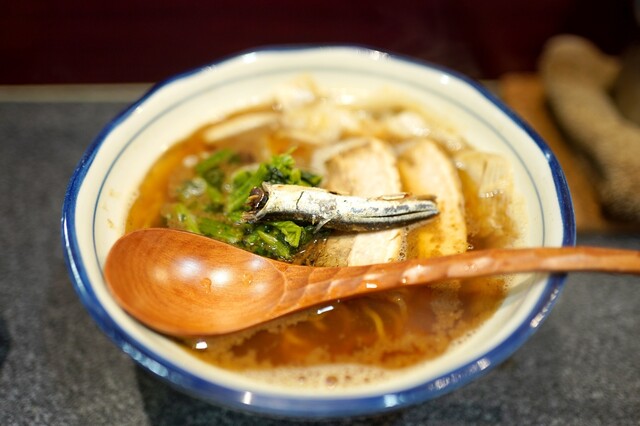
Fukushima’s ramen culture is built at street level: compact shopfronts, counter seats, clipped service rhythms, and a crowd that knows the difference between a quick bowl and a shop worth crossing town for. In that setting, Resshi Shoyu Menkobo Sanku belongs to the latter category. The room is small, counter-led, and disciplined, which suits a genre where the meal is brief but the judgment is exacting.
Osaka’s Fukushima ward has become one of the city’s more useful dining districts because it does not rely on a single mood. French tasting menus, izakaya cooking, Korean tables, coffee specialists, and ramen counters sit within a walkable grid around Shin-Fukushima and Fukushima stations. That mixture matters: ramen here competes not only with other noodle shops, but with a wider after-work dining culture where value, speed, and repeatability carry real weight.
Shoyu ramen in a ward that rewards precision over spectacle
Ramen in Japan is often discussed through regional styles, but the better Osaka conversation is about specialization. Shops narrow their field, then make the execution legible across broth, tare, noodles, and pacing. Sanku is listed under ramen and tsukemen, a pairing that places it inside a familiar Kansai split: soup-led bowls for immediacy, dipping noodles for a more concentrated, interactive format.
The cultural point is simple. Ramen is democratic, but it is not casual in its standards. A shop can price in the everyday range and still be judged with the scrutiny applied to far more formal restaurants. The Tabelog Ramen OSAKA 100 selection in 2025, alongside earlier Hyakumeiten selections across Osaka and West Japan, signals that this is not a novelty stop. It is part of the city’s recurring ramen conversation, where consistency over years counts for more than a single seasonal surge.
That distinction is useful for travelers. Osaka has plenty of loud, late, visually emphatic food experiences, especially around the city’s central entertainment corridors. Fukushima works differently. Its better dining rooms tend to be smaller and more purposeful, and ramen counters fit that pattern neatly. The format asks for attention without ceremony: arrive, order, eat while the bowl is in its intended state, and move on. The reward is not theatrical service, but a clear reading of craft in a compressed window.
The counter format keeps the meal focused
Counter-only ramen changes the social contract. There is little room for lingering, and the kitchen’s cadence becomes part of the experience. At Sanku, the 15-seat format keeps the meal close to the action and reinforces the ramen-shop norm that speed and concentration are not signs of informality, but part of the design. It is a compact shop for people who understand that a bowl can be the whole point of the evening.
Compared with the broader Fukushima set, that price-to-recognition ratio is the editorial hook. Cuisine Française Liaison occupies a far higher spend category in the same district, while Korean Shokudo Iru sits in a mid-priced dinner lane. Ramen Kozou, another Fukushima ramen reference, operates in the same everyday noodle price band. Sanku’s role is different from the formal dining room and sharper than a convenience choice: it gives the area a serious ramen address without pushing the meal into special-occasion territory.
The shop’s etiquette also reflects the genre’s compact intensity. Non-smoking dining, no private rooms, and counter seating all keep the experience narrow and functional. A note asking guests to avoid phone calls or headphones inside the shop reads less like fussiness than like a reminder that small ramen rooms depend on shared attention. In Japan, that kind of restraint is part of how small restaurants protect rhythm, not a decorative rule.
For travelers mapping a day around Fukushima, the smarter move is to treat the ramen stop as one part of a neighborhood circuit rather than the whole evening. Coffee, casual bars, and compact restaurants make the ward easy to sequence. Readers building a wider itinerary can cross-check Our full Fukushima restaurants guide, then branch into Our full Fukushima bars guide, Our full Fukushima hotels guide, Our full Fukushima wineries guide, and Our full Fukushima experiences guide for the surrounding plan.
Where Sanku fits among serious casual dining
The broader lesson is that Osaka’s casual dining is not a lower category; it is a different test. A ramen counter has fewer tools than a tasting-menu kitchen. There is no extended wine pairing, no long room reveal, no sequence of courses to recover from a weak opening. The bowl carries the argument, and the room either supports that focus or gets in the way.
Sanku’s repeated selection history gives it a credible place in that test. The Tabelog Hyakumeiten system is especially relevant for ramen because it captures the depth of Japan’s specialist shop culture rather than treating noodles as a side note to fine dining. For a visitor, that makes the recognition more useful than generic popularity: it points toward a shop that has held attention in a city full of technically serious bowls.
Fukushima also rewards comparison across formats. A night might begin with ramen, continue with drinks, or pivot to a more formal reservation on another date. Nearby and related Osaka-area reading includes age, Agu Buta Shabushabu Senmon Ten Toriou Bettei, Asia Shokudo Chouku, Bistro Mikasa, CAFE BAHNHOF, and.cafe in Osaka. For a wider Japan dining map, useful contrasts include -Grilled beef Sukiyaki- KAMAKURA TANUKIAN 鎌倉 たぬき庵 in Kamakura. 鮪と炭火焼き うお炭 秋葉原店 in Tokyo.know in Kumamoto, (Shoku) Vietnam in Kawasaki, [Curry Senmon Ten] Maruyama Kyoju. in Sapporo, Jōdo Saké Bar in Los Angeles, and Onigiri Time in Pasadena.
The editorial case for Sanku is not that it turns ramen into luxury. It does the opposite. It shows why a modestly priced counter can belong in a premium travel plan when the recognition, format, and neighborhood context line up. In Fukushima, where the strongest meals often hide their seriousness behind small rooms and quick service, that is exactly the point.
Price Lens
Comparable venues by cuisine and price in the same metro.
| Venue | Cuisine | Price | Notes |
|---|---|---|---|
| Resshi Shoyu Menkobo SankuThis venue — the venue you are viewing | Fukushima, Niboshi shoyu ramen shop | $ | Not listed |
| Ramen Jinsei JET | Fukushima, Japanese Ramen | $ | Not listed |
| Ichijuu | Fukushima, Yakitori & Izakaya | $$ | Not listed |
| Shoppe Shoppe | Fukushima, Japanese Ramen | $$ | Not listed |
| Tempura Osakaya Sotetsu | Fukushima, Tempura | $$$ | Not listed |
| Ponshuya Santoku Rokumi Fukushima honten | Not listed | $$ | Fukushima, Standing Japanese sake bar & izakaya |
Recognition history
Dated appearances from independent guides and award organizations, with the underlying list record or original source where available.
Tabelog 100 #7 · No. 7
Tabelog · Tabelog 100 - Ramen - OSAKA - 2025
Continue exploring
More in Fukushima
Restaurants in Fukushima
Browse all →




Bars in Fukushima
Browse all →



Hotels in Fukushima
Browse all →



Wineries in Fukushima
Browse all →
At a Glance
- Lively
- Cozy
- Solo
- After Work
- Casual Hangout
- Late Night
- Standalone
Current opening hours
- Monday
- 11 AM–3 PM, 6:39–10:39 PM
- Tuesday
- 11 AM–3 PM, 6:39–10:39 PM
- Wednesday
- 11 AM–3 PM, 6:39–10:39 PM
- Thursday
- 11 AM–3 PM, 6:39–10:39 PM
- Friday
- 11 AM–3 PM, 6:39–10:39 PM
- Saturday
- 11 AM–3 PM, 6:39–10:39 PM
- Sunday
- 11 AM–3 PM, 6:39–10:39 PM
Hours can change for holidays and private events. Last verified .
A compact, counter-only ramen shop with around 15 seats, non-smoking and often busy, creating an energetic but friendly atmosphere focused entirely on the steaming bowls being prepared in front of guests.