
Agu Buta Shabushabu Senmon Ten Toriou Bettei is a reservation-only pork shabu-shabu specialist in Osaka’s Fukushima ward, selected for Tabelog 100 Hot Pot 2024. The format is compact, adult-oriented and focused on Agu pork rather than a broad izakaya spread, with dinner pricing in the JPY 8,000–9,999 range and a no-children policy.
Pearl is the En Primeur Club membership app — saves, bookings, and concierge access live there. Same editors, same standards.
- Address
- 2 Chome-8-5 Fukushima, Fukushima Ward, Osaka, 553-0003, Japan
- Phone
- +81 90-3810-5473
- Website
- tabelog.com
 Saves & bookings on Pearl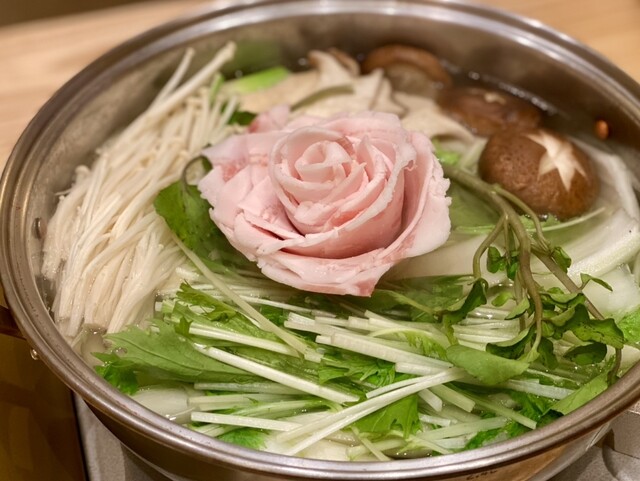
Fukushima’s dining streets reward small rooms and narrow specialisms. Around Shin-Fukushima, the atmosphere shifts quickly from station-side movement to discreet counters, second-floor dining rooms and restaurants whose reputations travel faster than their signage. In that setting, pork shabu-shabu has a different register from Osaka’s louder comfort-food canon: quieter, steam-led, built around timing, dipping sauces and the quality of the meat rather than spectacle.
Japan’s hot-pot traditions are often read through sukiyaki, nabe and beef shabu-shabu, but pork shabu-shabu occupies its own lane. The format asks less of fat marbling as visual drama and more of broth discipline, thin slicing and the speed with which meat passes through heat. Agu pork, associated with Okinawa’s heritage pig culture, gives the meal a regional accent inside an Osaka setting. That is the useful way to read Agu Buta Shabushabu Senmon Ten Toriou Bettei: not as a general Japanese restaurant, but as a tightly defined specialist in a city that often rewards breadth.
Pork shabu-shabu treated as a specialist format
The key signal is category focus. The restaurant is listed for pork shabu-shabu and pork dishes, not for a roaming kaiseki-style menu or a mixed hot-pot offering. That matters in Osaka, where premium dining can mean either chef-led tasting menus or extremely narrow single-product houses. Here the narrowness is the point. It places the meal closer to a specialist counter than to a casual nabe dinner, even though the cultural roots are domestic and communal.
Tabelog’s 2024 Hot Pot 100 selection gives the room a national discovery marker within a category that does not always receive the same international attention as sushi, tempura or French-influenced Japanese fine dining. The listed score of 3.66 also reads differently in Japan than it might elsewhere: Tabelog ratings are conservative, and category-specific recognition often says more about serious local standing than a broad star-chasing narrative. For travelers, the award is useful because it identifies the restaurant within a defined hot-pot field rather than asking it to compete against unrelated genres.
Fukushima’s range helps sharpen that position. Udon Sanku sits at the low-cost noodle end of the neighborhood’s appeal, while Spice Curry Tairiku reflects the area’s affection for compact, high-turnover curry rooms. Sumibi Yakitori Torio pushes into a higher dinner bracket through charcoal chicken. Against that spread, a pork shabu-shabu specialist occupies a middle-to-premium niche: more formal and focused than everyday station dining, less theatrical than grand-course luxury. That is often where Osaka is at its strongest, in rooms that do one thing with confidence and little ceremony.
A small adult room rather than a broad social dining room
The room’s scale reinforces the format. Sixteen seats, divided between a short counter and tables, create a meal rhythm closer to a controlled specialist house than a large hot-pot restaurant. Counter seating matters for shabu-shabu because the act of cooking at the table can easily drift into casual self-service; in smaller rooms, pacing and attention tend to carry more weight. The absence of private rooms and private use also keeps the experience in the shared-room category, not the banquet category.
The drinks program adds another clue. Shochu and wine are both listed, and a sommelier is available. That pairing is more telling than a long drinks inventory would be. Pork shabu-shabu can work with shochu’s clean, distilled profile, while wine service signals that the restaurant is thinking beyond the familiar beer-and-hot-pot script. It does not turn the meal into Western fine dining; it simply places the hot-pot tradition inside a more deliberate adult dinner frame.
There are boundaries to that frame. The restaurant is non-smoking, asks guests to avoid strong perfume and does not admit children. Those policies are not decorative etiquette. In a compact hot-pot room, aroma, steam and shared proximity define the meal, and strong fragrance changes the table for everyone nearby. The policy mix suggests a quiet date-night or small-party setting rather than a family dinner stop.
How to place it in a Fukushima itinerary
For visitors building a Fukushima dining plan, the restaurant makes sense as the focused hot-pot anchor rather than a spontaneous neighborhood add-on. Its appeal is not variety; it is the chance to see a domestic Japanese format handled with the seriousness usually reserved for more internationally legible cuisines. That makes it a stronger fit for travelers who already understand Osaka’s casual side and want a narrower reading of the city’s dining culture.
Useful nearby contrasts include age, Asia Shokudo Chouku, Bistro Mikasa, CAFE BAHNHOF and Chinese Sai Oil, which together show how Fukushima moves between coffee, bistro cooking, Chinese dining and compact Asian kitchens. For wider planning, see Our full Fukushima restaurants guide, plus Our full Fukushima hotels guide, Our full Fukushima bars guide, Our full Fukushima wineries guide and Our full Fukushima experiences guide.
Readers comparing Japanese comfort formats beyond Fukushima can also look at -Grilled beef Sukiyaki- KAMAKURA TANUKIAN 鎌倉 たぬき庵 in Kamakura for a beef sukiyaki counterpoint. 鮪と炭火焼き うお炭 秋葉原店 in Tokyo for tuna and charcoal.cafe in Osaka.know in Kumamoto, (Shoku) Vietnam in Kawasaki, [Curry Senmon Ten] Maruyama Kyoju. in Sapporo, Jōdo Saké Bar in Los Angeles and Onigiri Time in Pasadena. The comparison is not about similarity; it is about how single-format Japanese dining travels, mutates and narrows its promise.
The editorial case for this restaurant is clear: in a district filled with compact choices, it gives pork shabu-shabu a serious platform. The 2024 Tabelog Hot Pot 100 selection, small seat count, sommelier signal and adult-only policy all point in the same direction. Choose it when the aim is a quiet, highly focused hot-pot dinner rather than a broad survey of Osaka flavors.
Pricing, Compared
Comparable venues by cuisine and price in the same metro.
| Venue | Cuisine | Price | Notes |
|---|---|---|---|
| Agu Buta Shabushabu Senmon Ten Toriou BetteiThis venue — the venue you are viewing | Not listed | $$$ | Not listed |
| Wagyu Ryori Isseki Sanchou | Not listed | $$$ | Fukushima Ward, Modern Wagyu Yakiniku & Course Dining |
| Mitsuboshi Seimenjo Fukushima honten | Fukushima-ku, Ramen & Tsukemen Shop | $ | Not listed |
| Sushi Hijiri | Fukushima, Edomae Sushi Omakase | $$$ | Not listed |
| Ponshuya Santoku Rokumi Fukushima honten | Not listed | $$ | Fukushima, Standing Japanese sake bar & izakaya |
| Korean Shokudo Iru | Shin Fukushima, Korean Izakaya | $$ | Not listed |
Recognition history
Dated appearances from independent guides and award organizations, with the underlying list record or original source where available.
Tabelog 100 #22 · No. 22
Tabelog · Tabelog 100 - Hot Pot - 2024
Continue exploring
More in Fukushima
Restaurants in Fukushima
Browse all →



Bars in Fukushima
Browse all →


Hotels in Fukushima
Browse all →



Wineries in Fukushima
Browse all →
At a Glance
- Cozy
- Romantic
- Modern
- Intimate
- Elegant
- Date Night
- Special Occasion
- After Work
- Business Dinner
- Solo
- Chefs Counter
- Standalone
- Sommelier Led
Current opening hours
- Monday
- 5–10:30 PM
- Tuesday
- 5–10:30 PM
- Wednesday
- 5–10:30 PM
- Thursday
- 5–10:30 PM
- Friday
- 5–10:30 PM
- Saturday
- 5–10:30 PM
- Sunday
- Closed
Hours can change for holidays and private events. Last verified .
Small, non-smoking house-like hideout with stylish yet relaxed counter and table seating, suited to quiet, date-like dinners over leisurely shabu-shabu.